Skip to content
Extinction Zone - FPS Level Design - Solo Capstone Project (Level & Game Designer)
Production Details:
- Made in 8 Weeks (Alongside assignments with other courses.)
- Unreal Engine 4
- Based on Low Poly Shooter Pack
Solo Project
Personal Responsibilities:
- Level Design
- Game Design
- Unreal Engien Blueprint Coding
About the game:
This level is set in a ruined human city following an alien invasion. The player takes on the role of Abyss 3, a member of the human military unit “Fire Team Abyss.” During a failed sniper mission, the protagonist falls into the bombed lower levels of the city, severely wounded and cut off from command. Trapped in enemy territory, the player must survive alone, fight back, and find a way to evacuate.
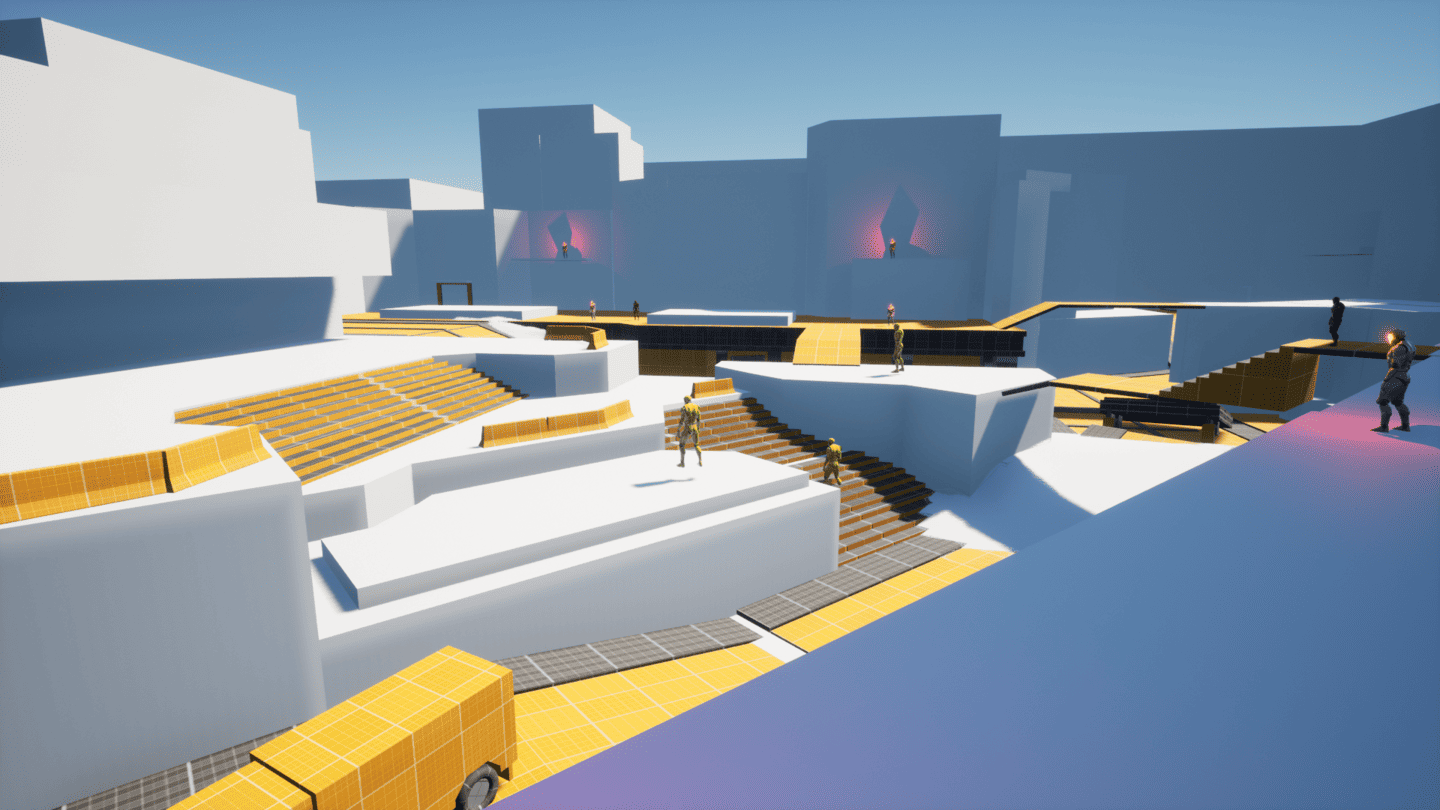
Design Goals:
- Explore the subfield of level design: Encounter Design
- Develop a linear first-person shooter level with a “Hourglass” structure.
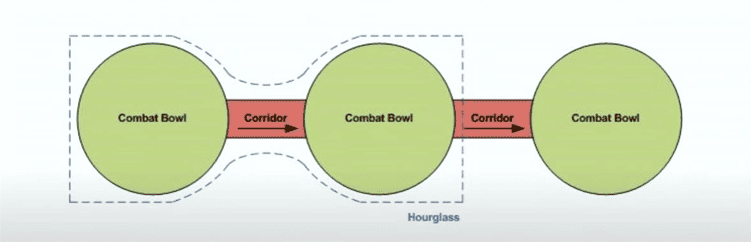
The “Hourglass” level structure
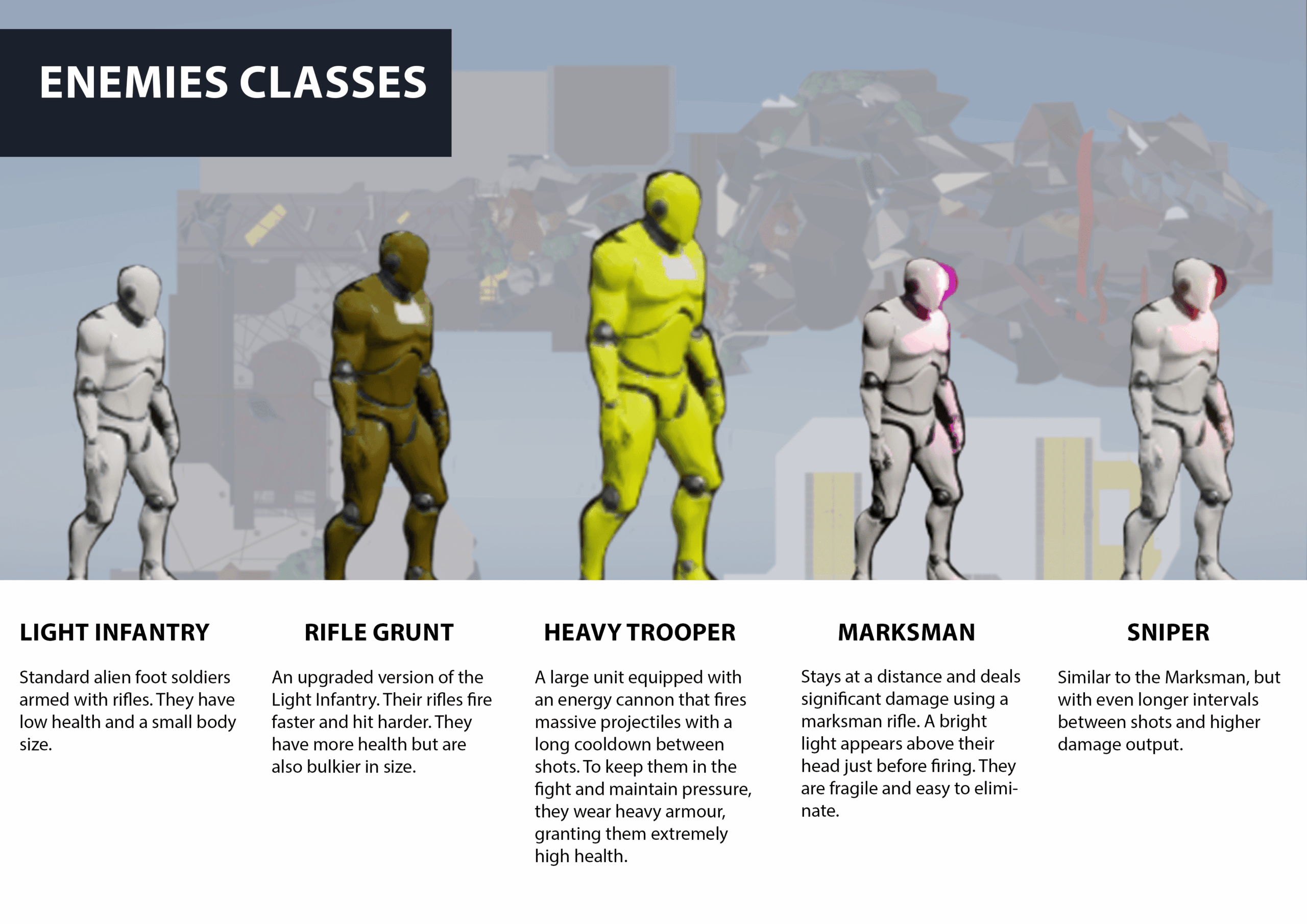
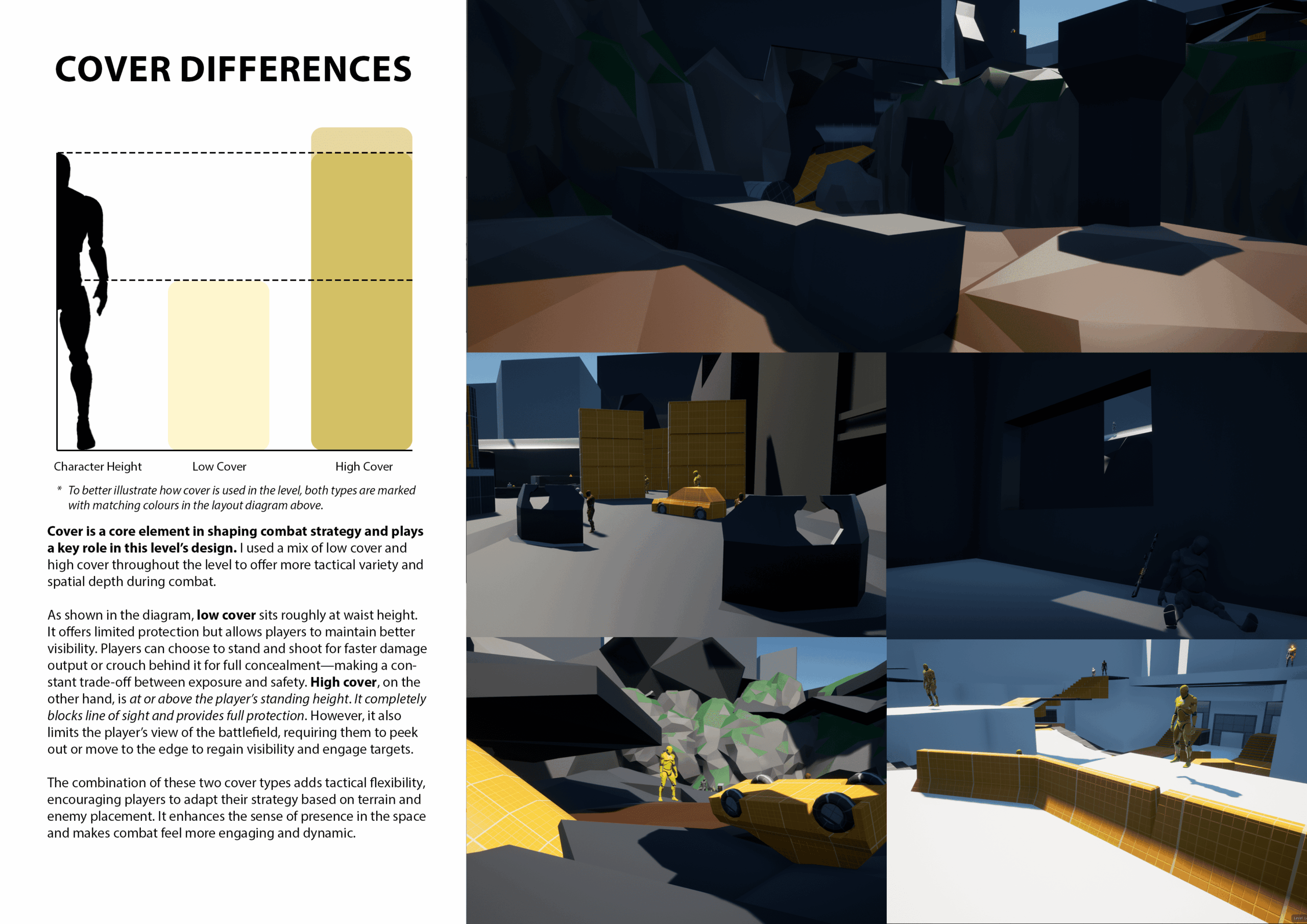
- Design Encounter area with tactical depth by strategically placing enemies, cover, and other level elements—encouraging the player to observe the environment, plan movement routes, and formulate strategies. Aims to enhance the player’s sense of agency and immersion during combat.
Design Idea:

+
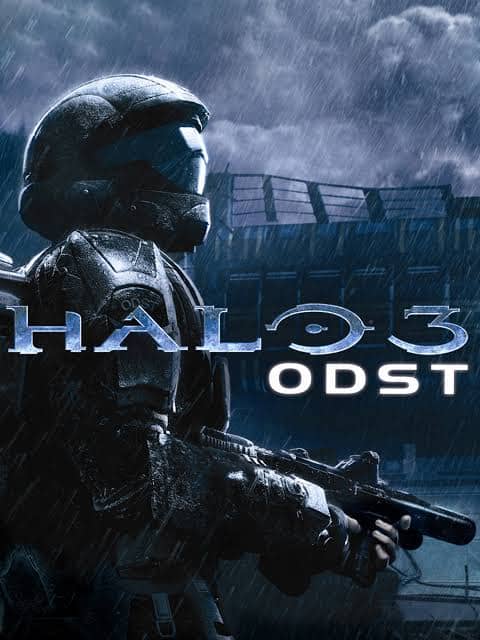
Upon learning that the Capstone project had no restrictions on theme and allowed for free creation, I decided to focus on my personal passion—first-person shooter (FPS) games—and set out to develop a sci-fi shooter inspired by titles such as Halo and Call of Duty. In the game, the player takes on the role of a special forces soldier fighting alien enemies in the ruins of an overgrown human city. Given that the core experience of an FPS is to shoot someone using a gun, soI placed the design emphasis on the “Shooting” part-Encounter Design, exploring how combat area layouts can enhance gameplay. Through early-stage literature review, I clarified my project direction and conducted a case study of Halo 3: ODST, which similarly features a futuristic city setting—New Mombasa.
From this analysis, I identified three key elements of encounter design: Enemy placement, Cover distribution, and Terrain structure. These insights guided my practical level design process, as I aimed to create combat spaces that encouraged strategic decision-making, heightened player agency, and deepened immersion throughout the battle experience.
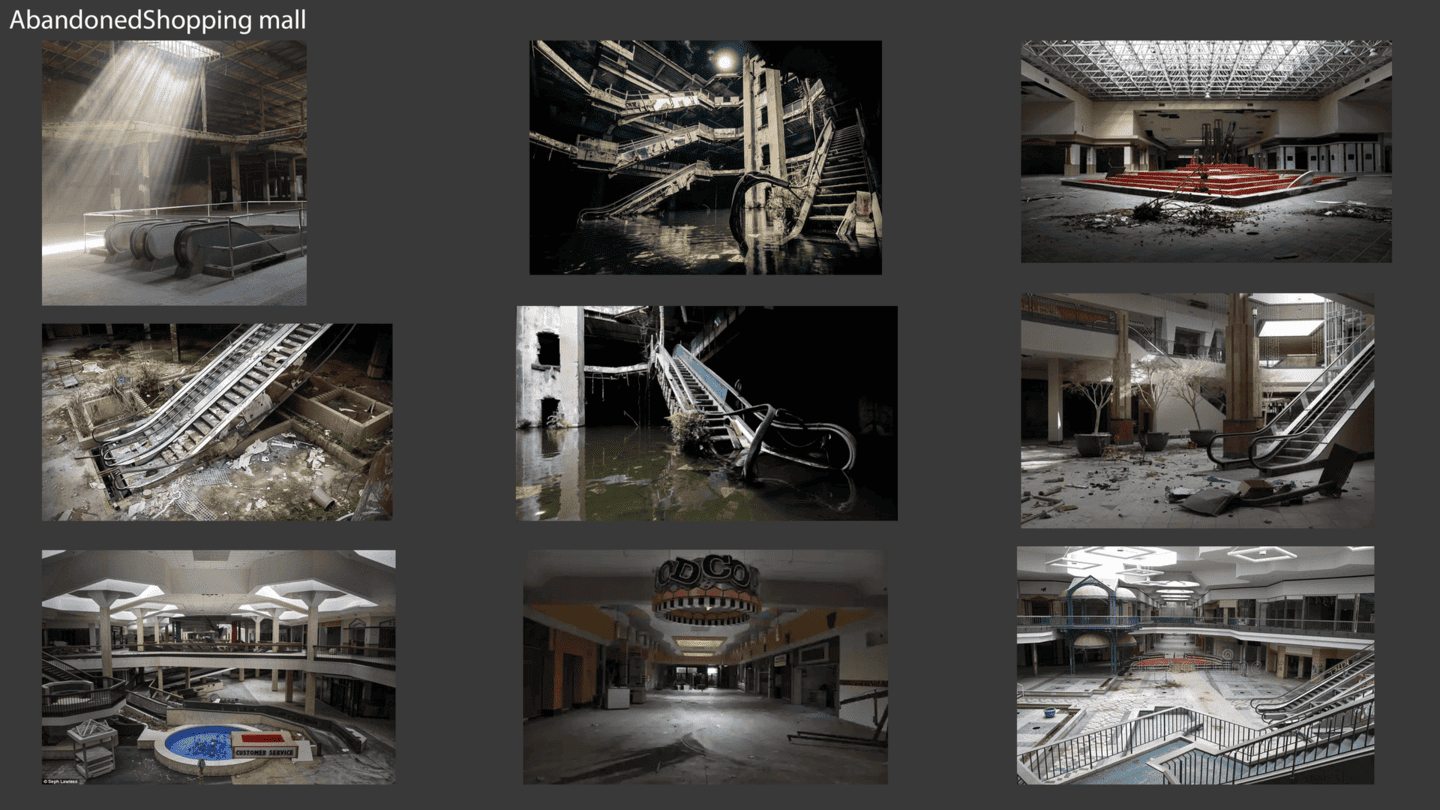
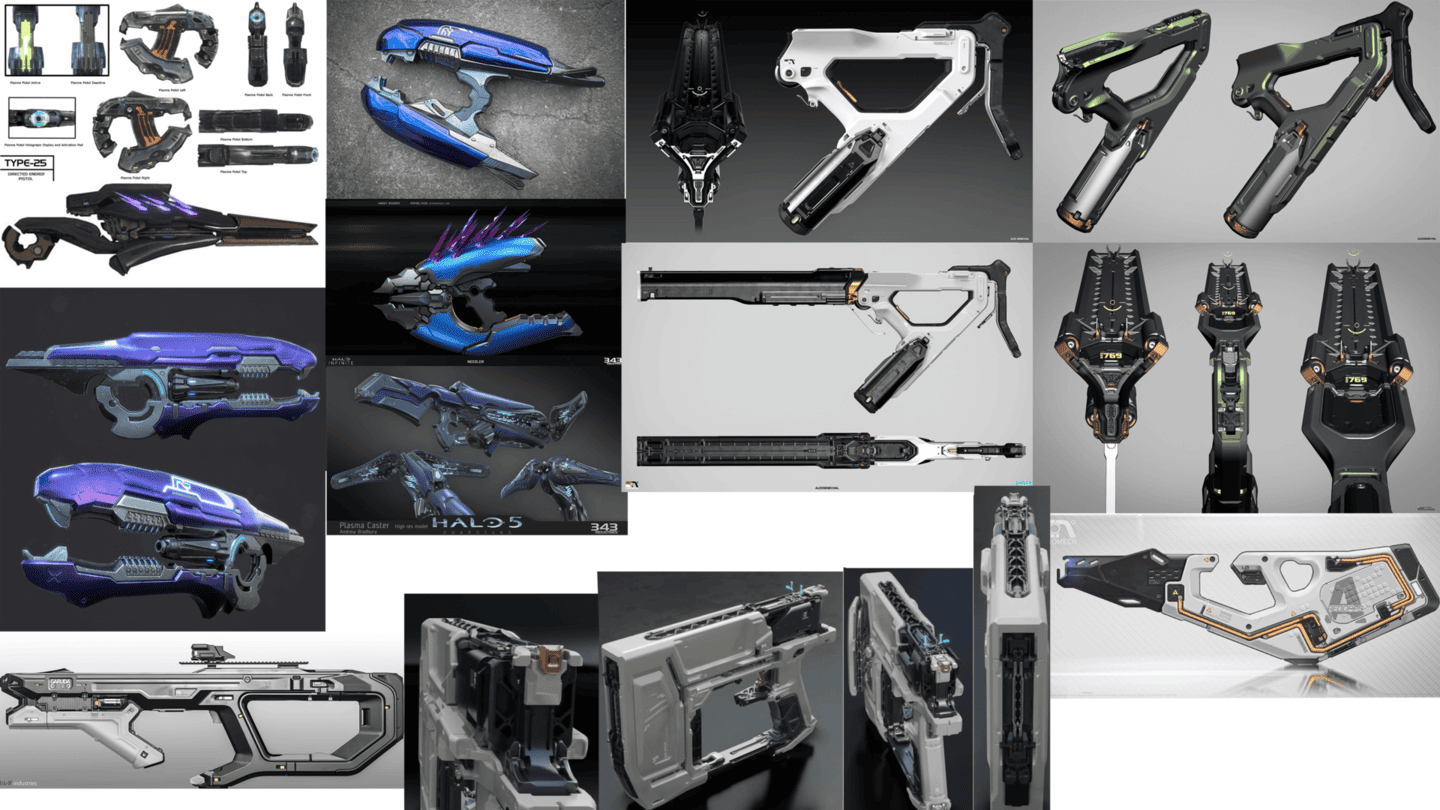
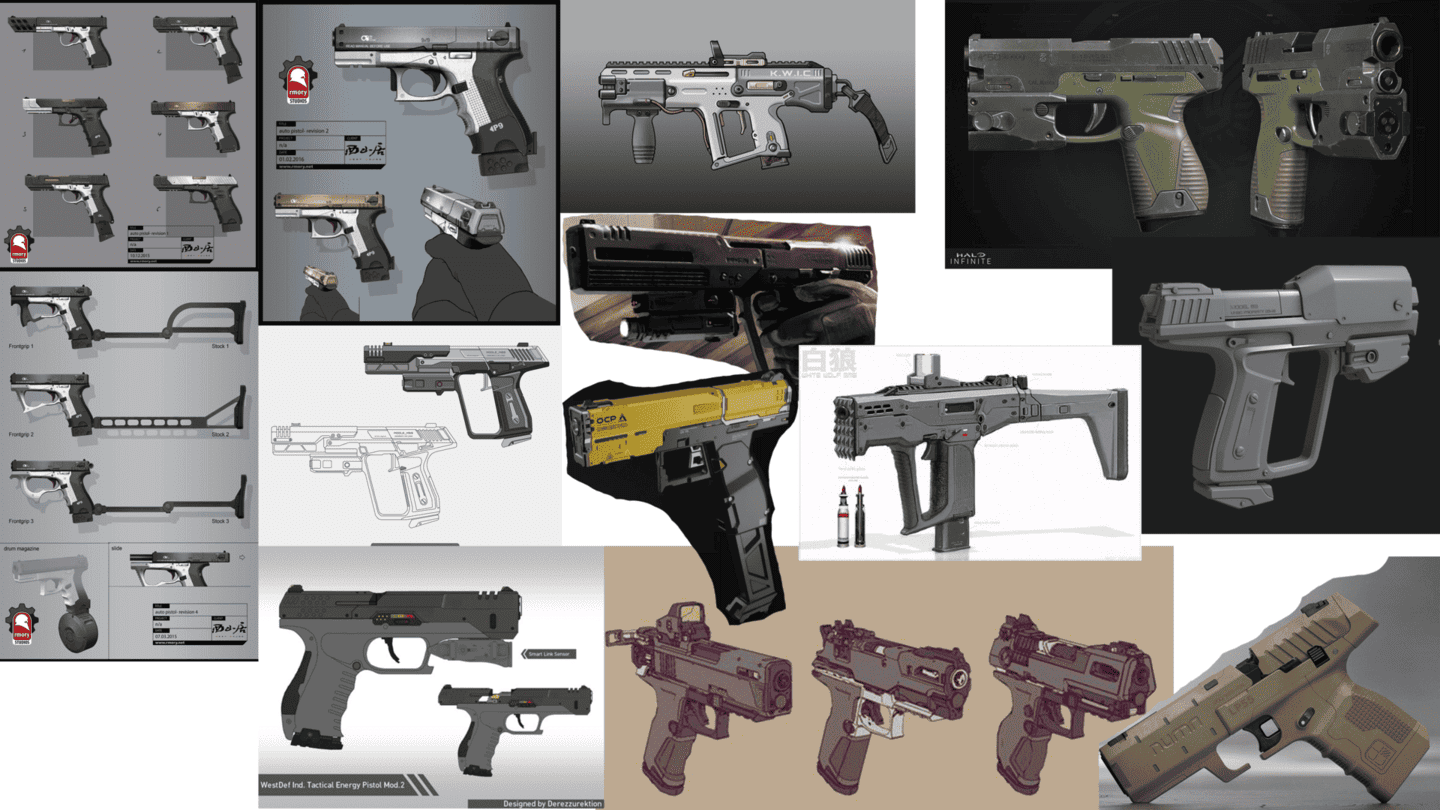
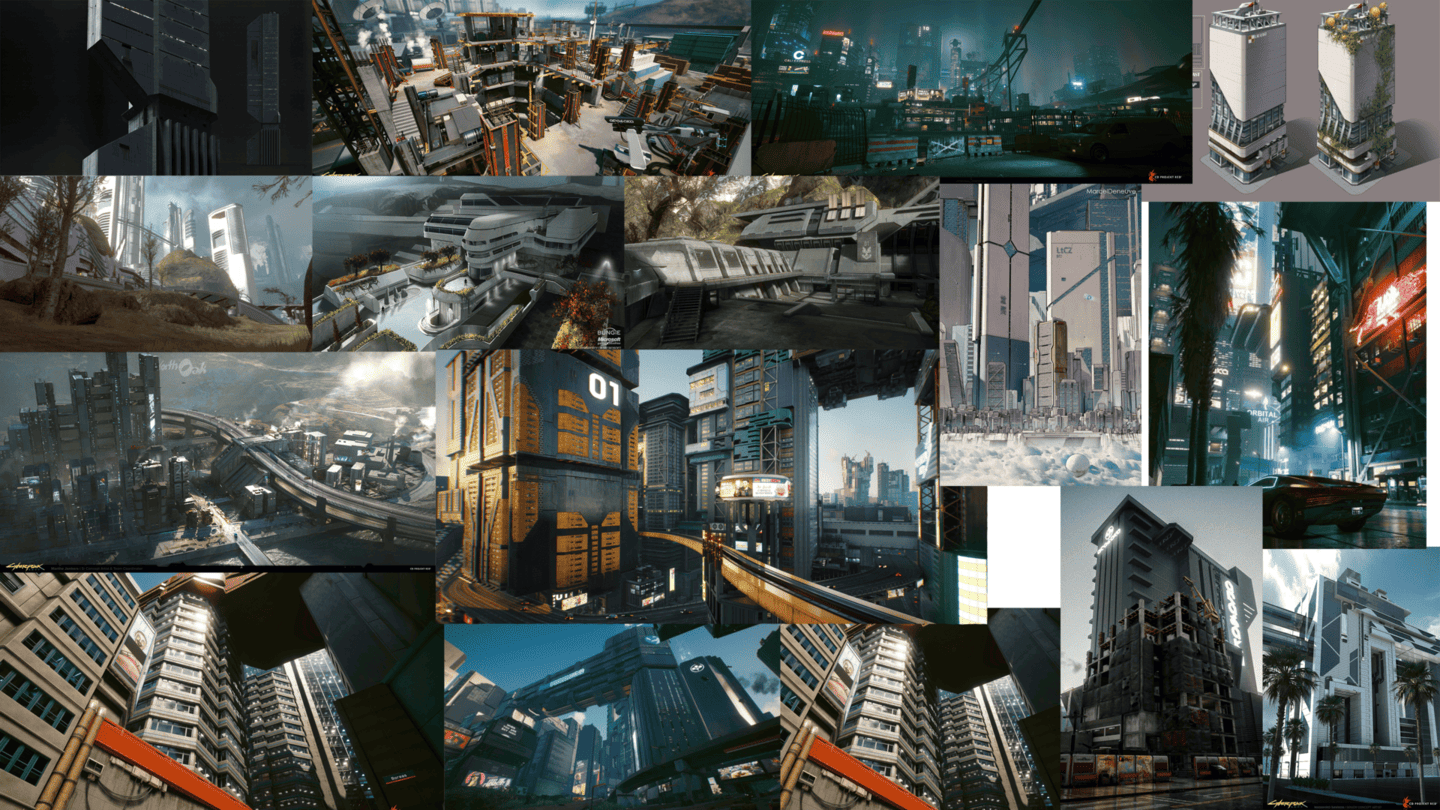
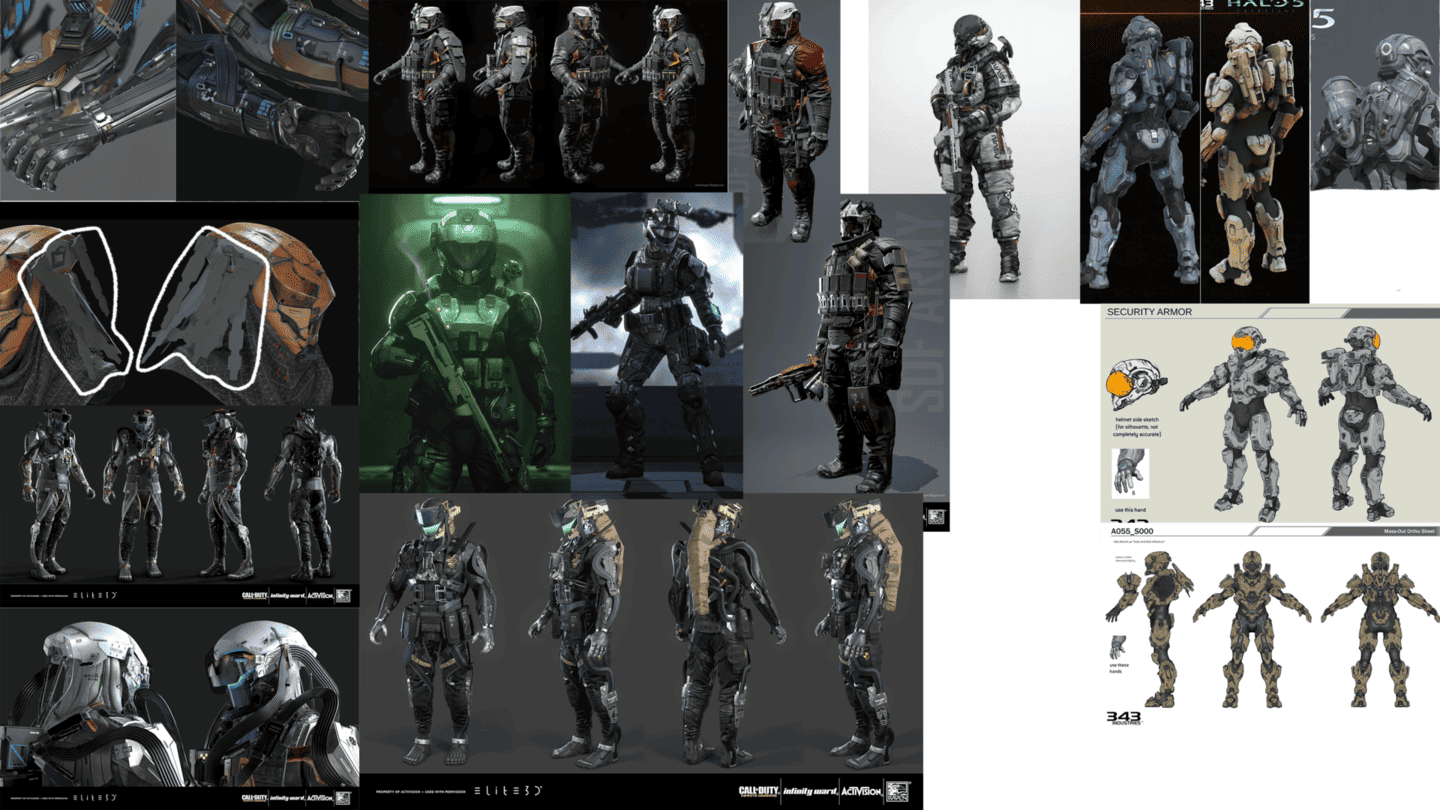
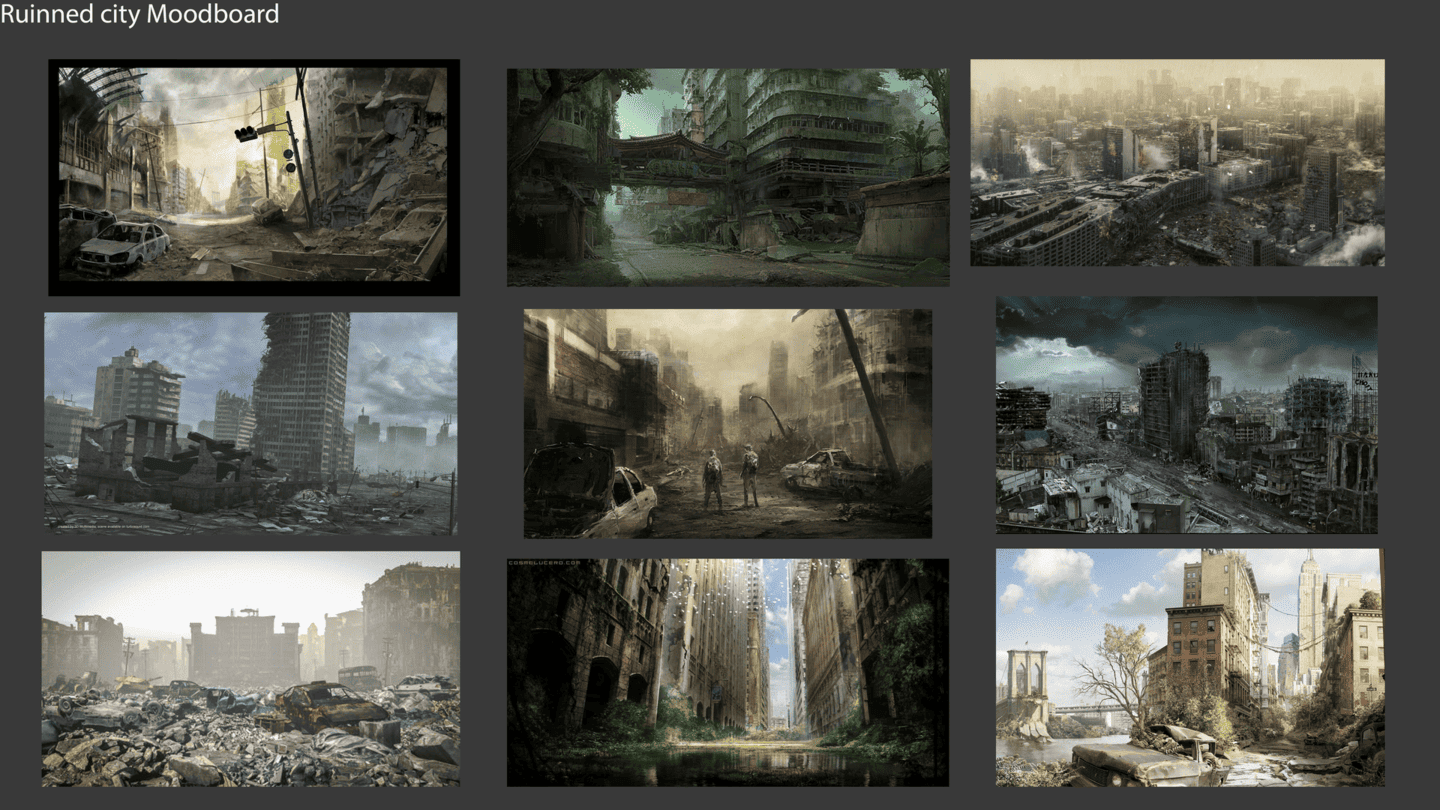
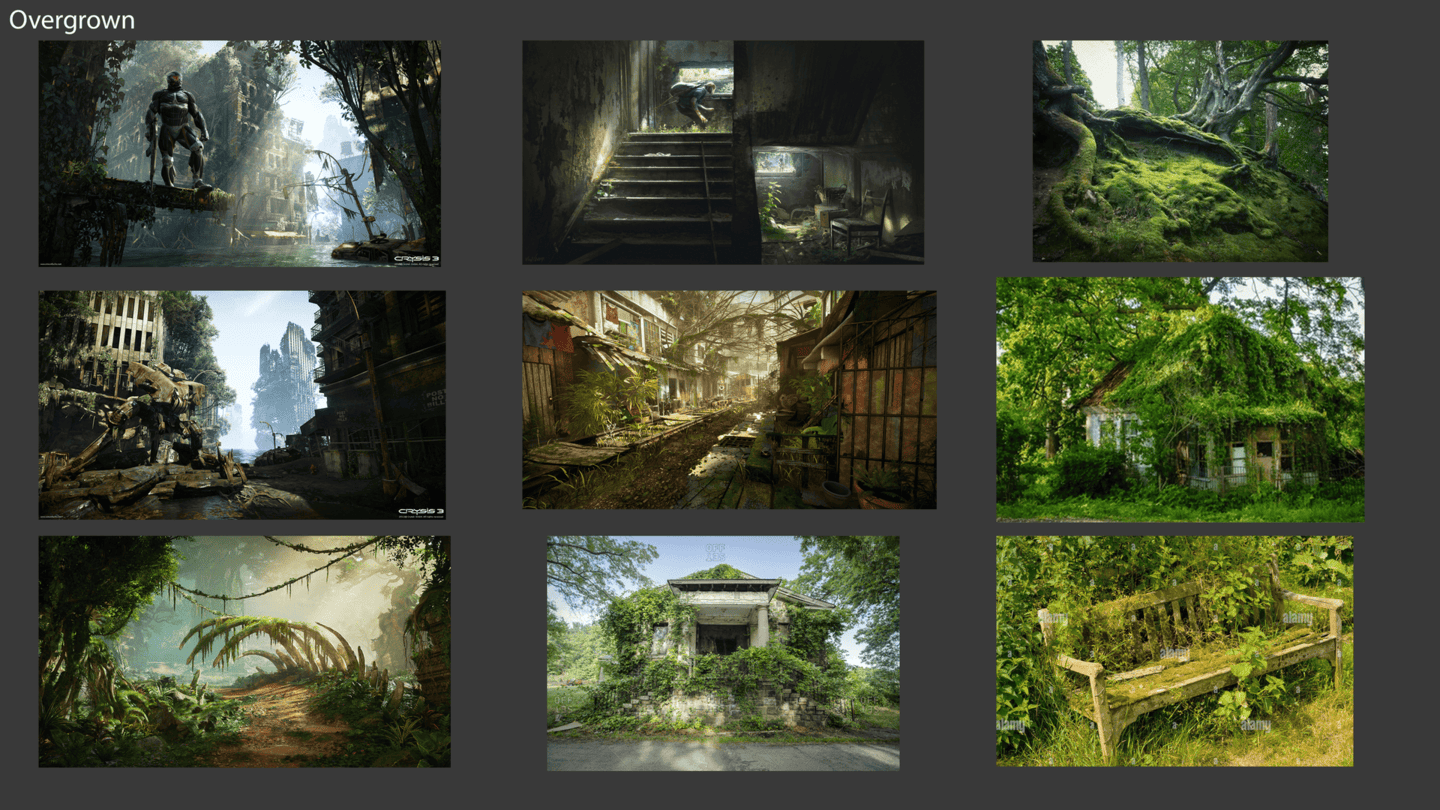
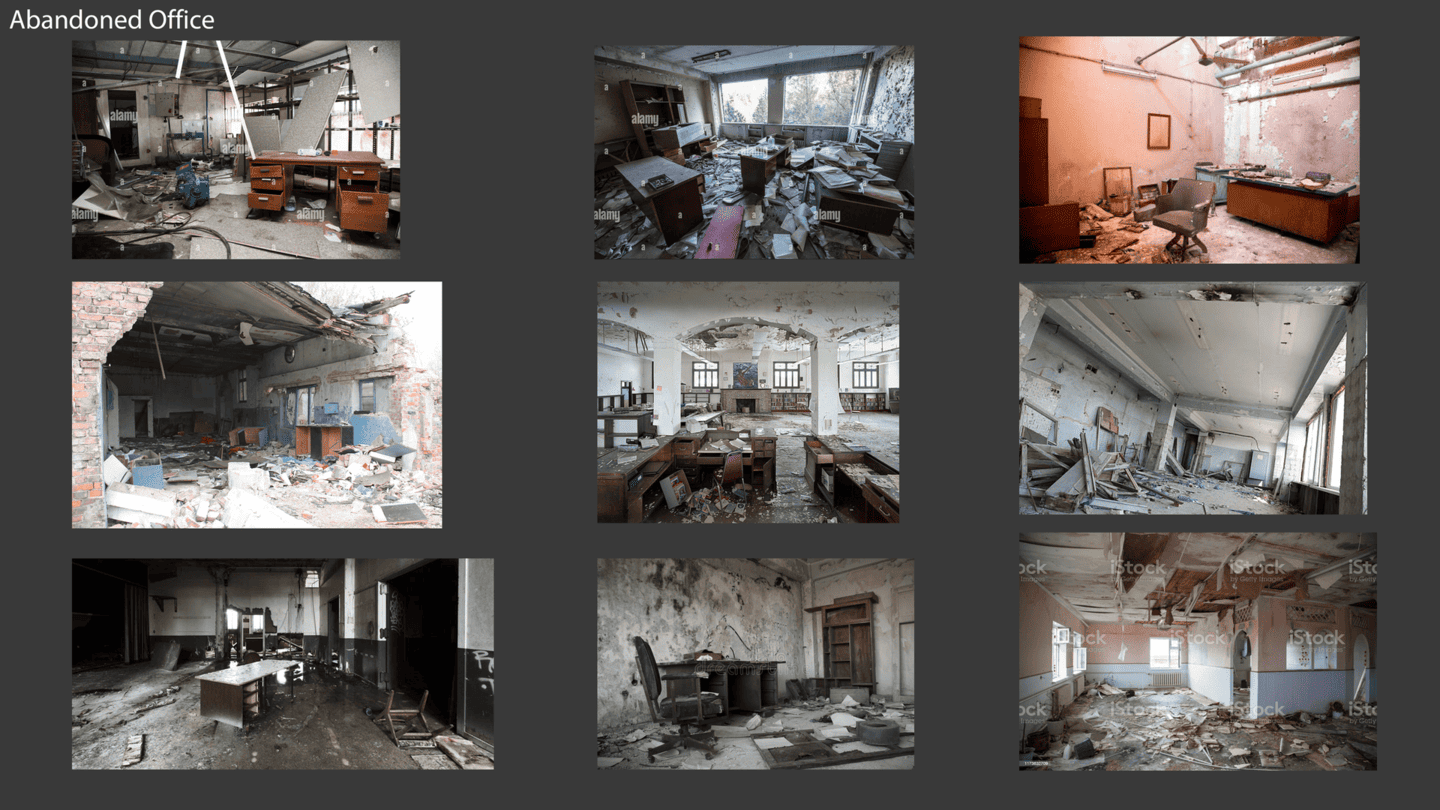
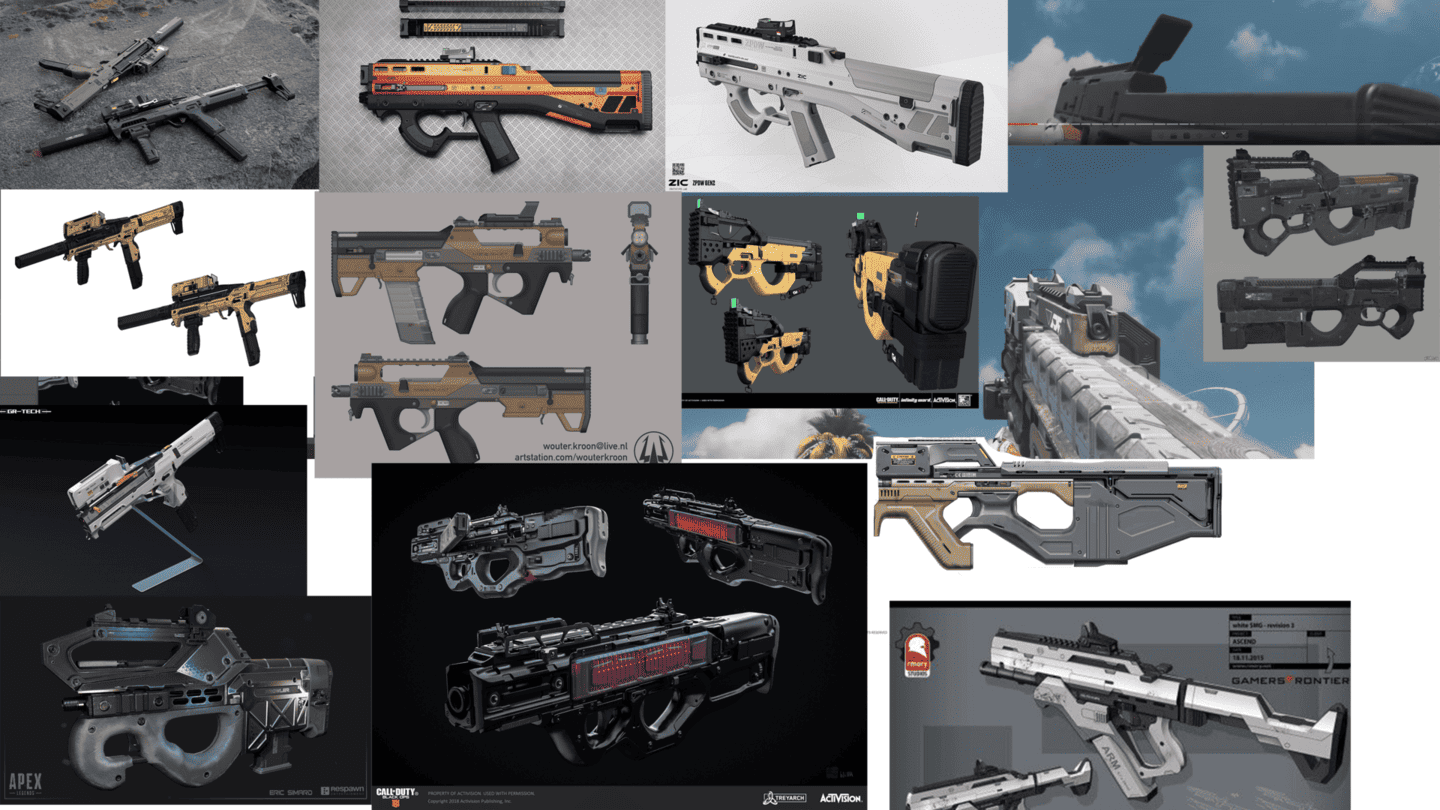
Due to the complete creative freedom afforded by this project, I initially set an ambitious development goal: to independently produce all aspects of the game, including art assets, gameplay systems, and level design. Based on the chosen theme, I gathered a wide range of reference images to build a mood board for inspiration and hand-drew concept art for characters and environments.
* Moodboards i creted for this project
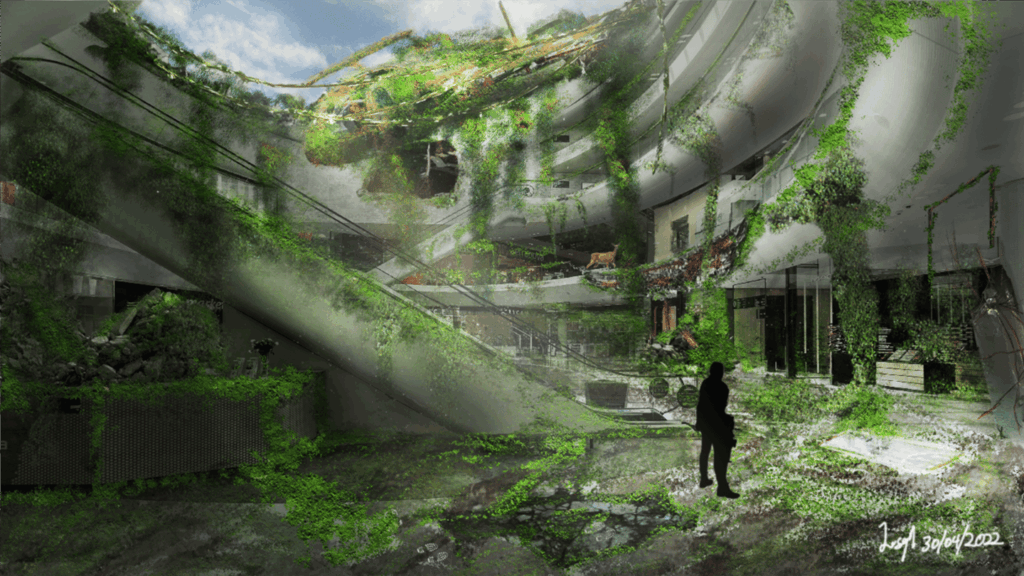
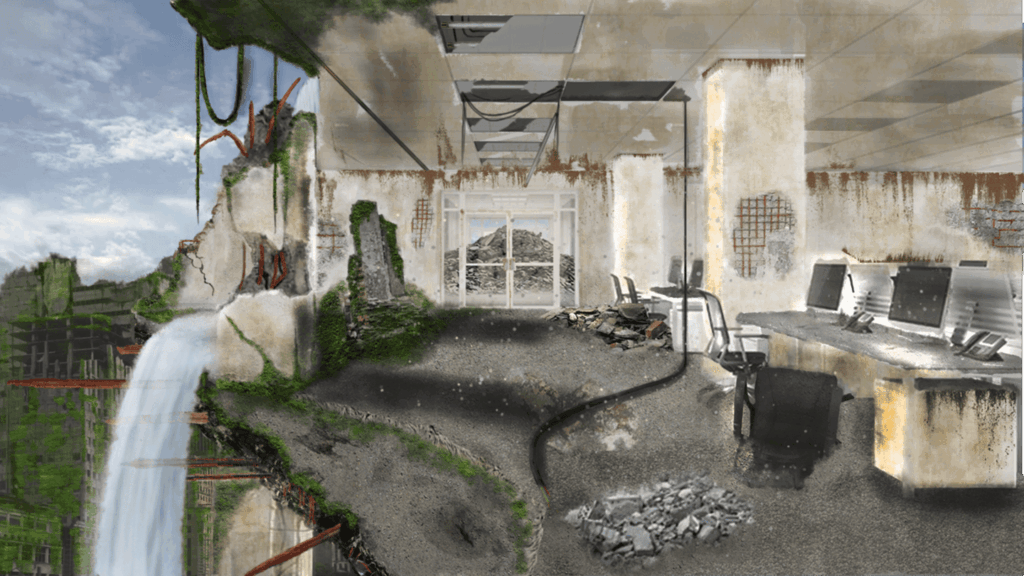
* Concept arts i creted for this project, based on the keywords overgrown and City Ruins.
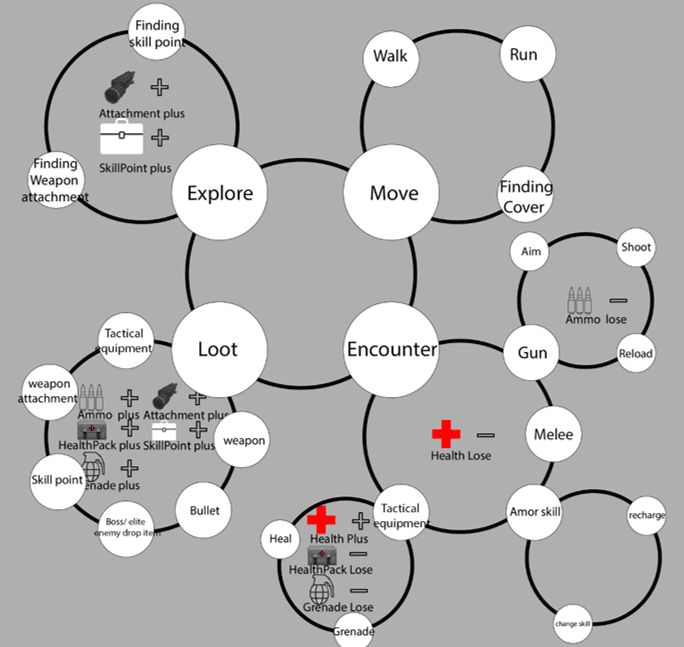
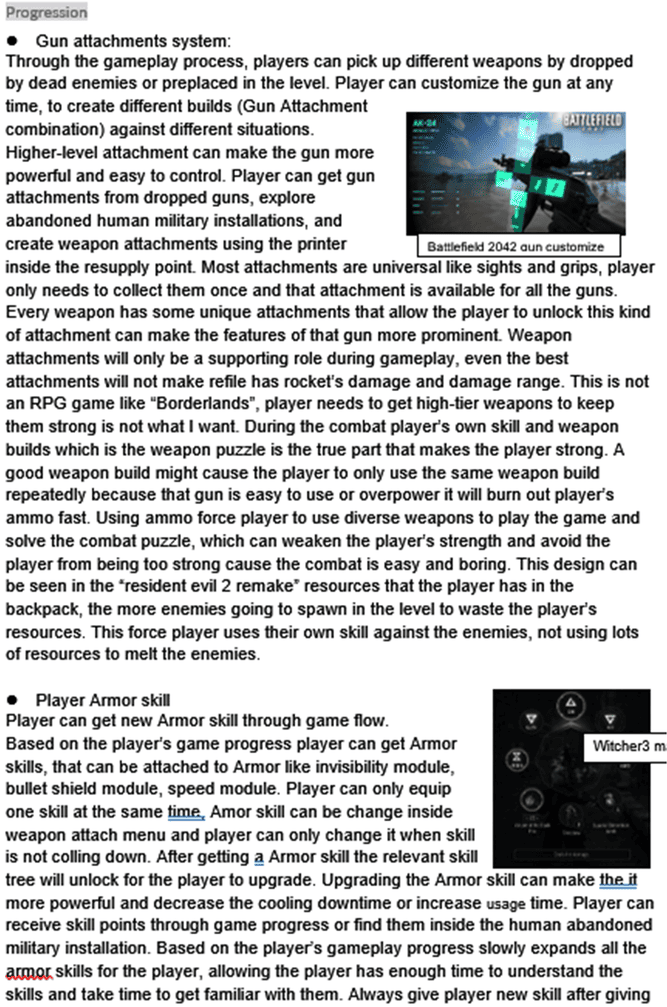
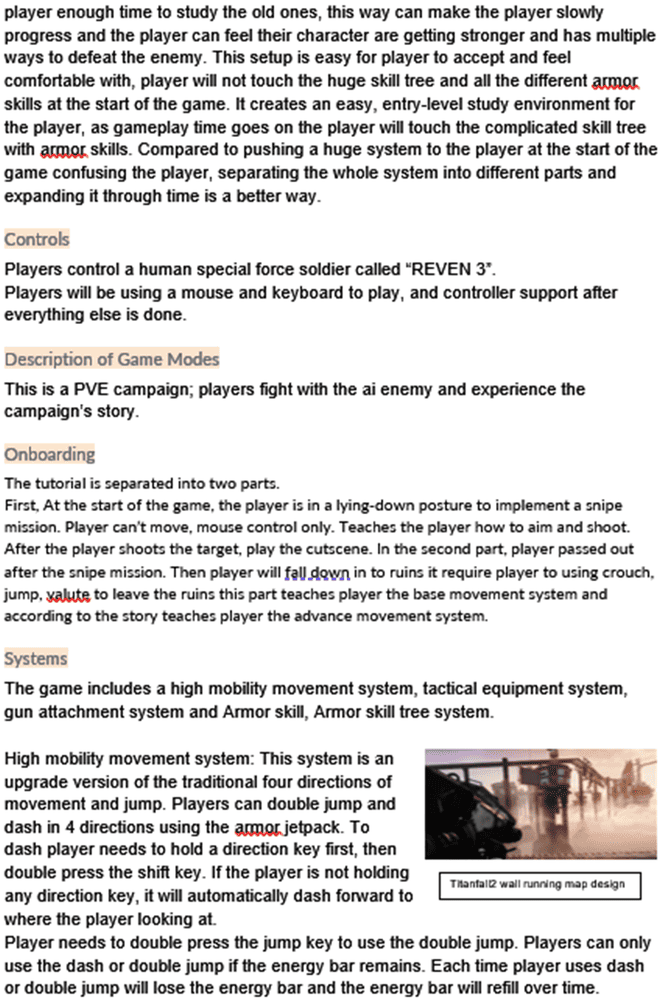
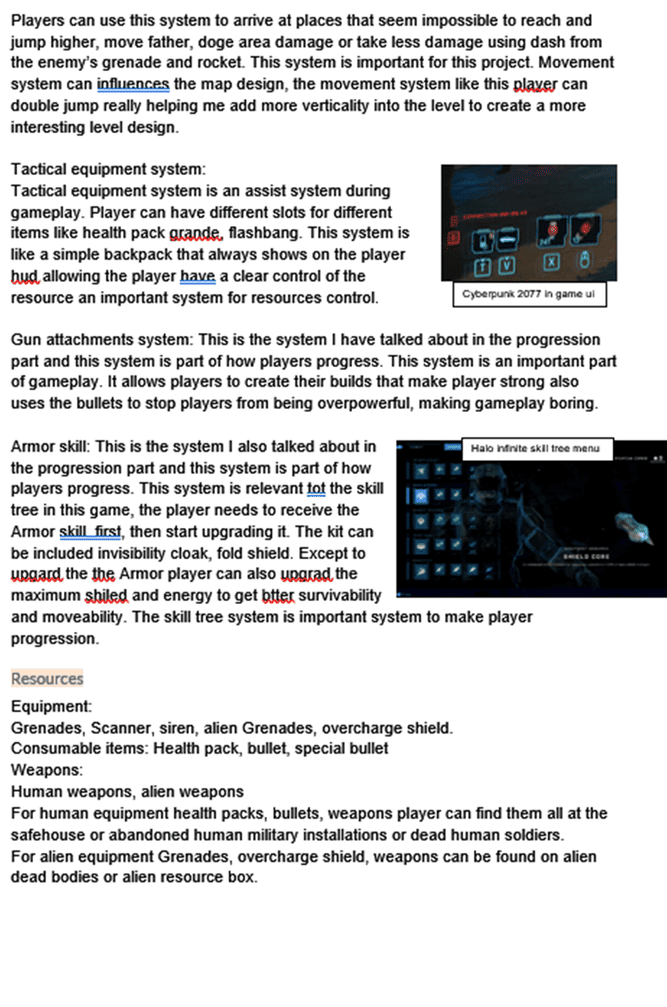
I also authored a comprehensive Game Design Document (GDD), which structured the early ideas and clarified the core mechanics, game loop, narrative setting, and level progression.
However, as development progressed, I gradually realised that handling all production tasks alone was far more demanding than anticipated. In particular, the creation of visual assets such as characters and weapons consumed a significant amount of time, severely delaying my ability to implement core systems and develop levels within Unreal Engine. Ultimately, I decided to forgo the plan to produce all assets from scratch. Instead, I adopted a Low Poly Shooter Pack from the Unreal Marketplace as a base FPS template. On this foundation, I integrated my custom character movement system and gameplay mechanics to complete the player control system, allowing me to focus more effectively on the project’s central objective—Level design.
Managing Scope and Progress Visually:
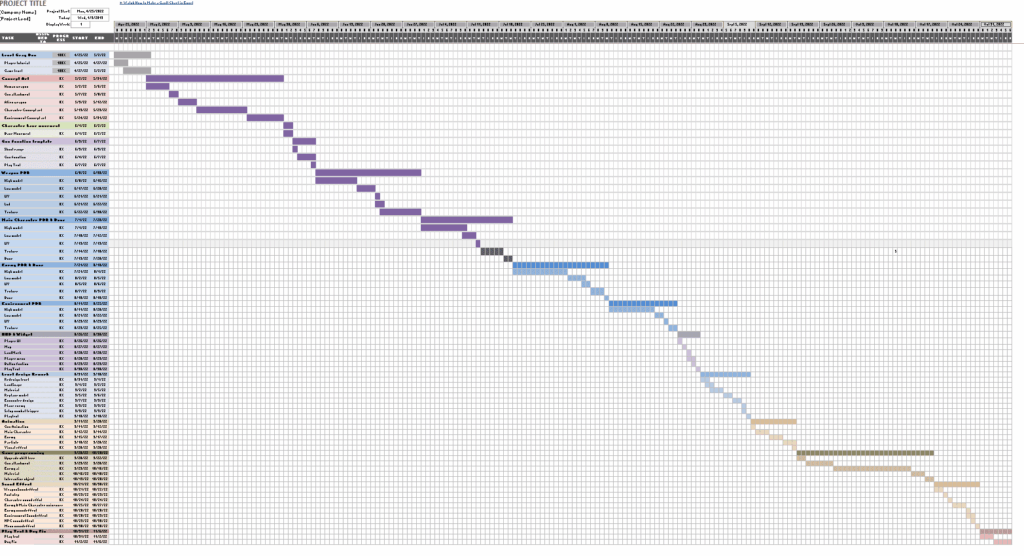
During pre-production, I created a schedule and progress tracker using Excel, breaking the entire game development process into specific tasks and milestone phases. This table allowed me to clearly visualise the project structure, assess the importance and completion status of each task in real time, and estimate the timeline for upcoming content. It also enabled me to adjust task priorities or reallocate time and resources as needed. The tracker table enabled me to identify when I was spending excessive time on asset creation, causing drifting from the project’s core focus and helped me promptly realign my efforts toward level design to ensure the delivery of a playable version.
Level Layout:
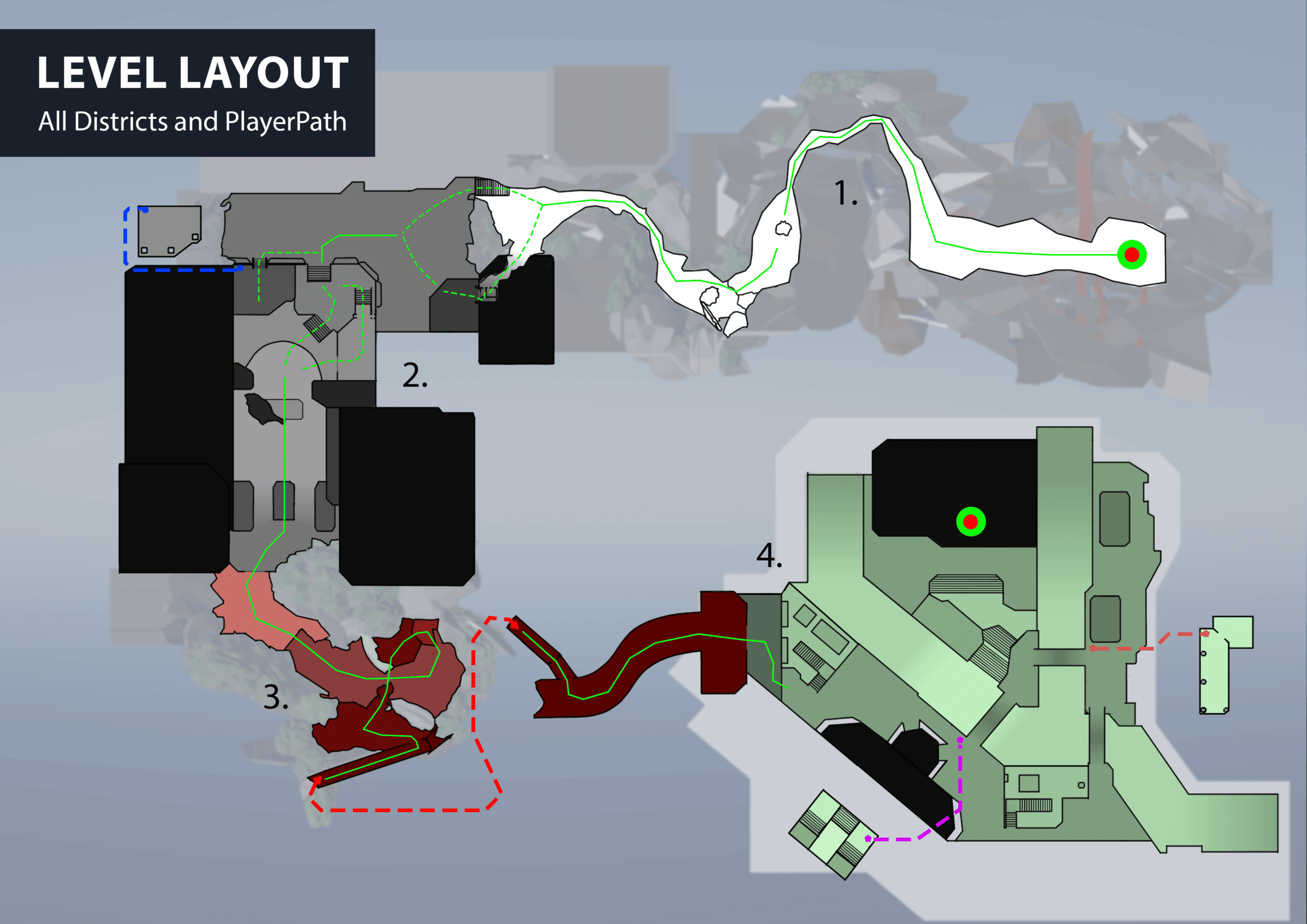
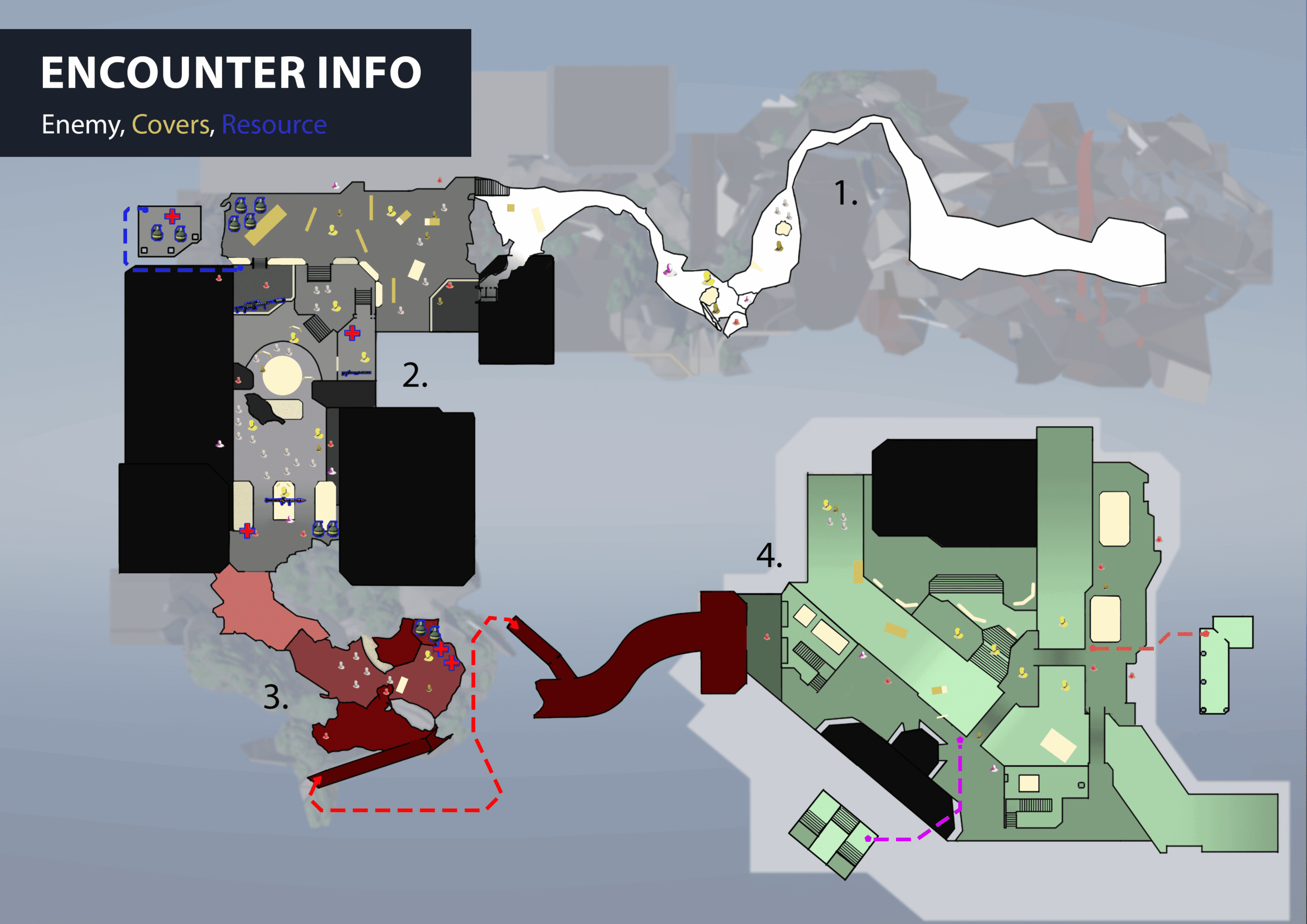
Districts of the Level:
The level is divided into four major districts (indicated in different colours on the level layout map), each featuring a combat encounter that is both lengthy and high in intensity. To reflect the “hourglass structure” concept inspired by the Gears of War series during the planning phase, each combat sequence is followed by a traversal section free of enemies.
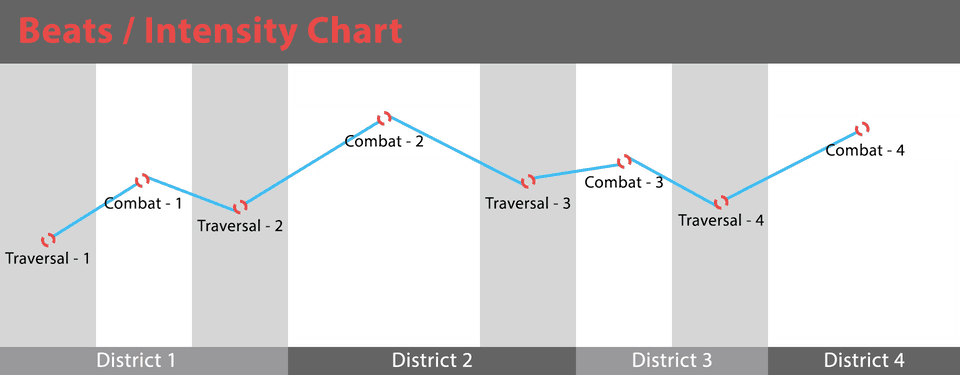
These interludes serve to ease the player out of intense combat, allowing time for recovery before facing the next challenge. This rhythm of tension and release is also reflected in the intensity graph of the game beats.
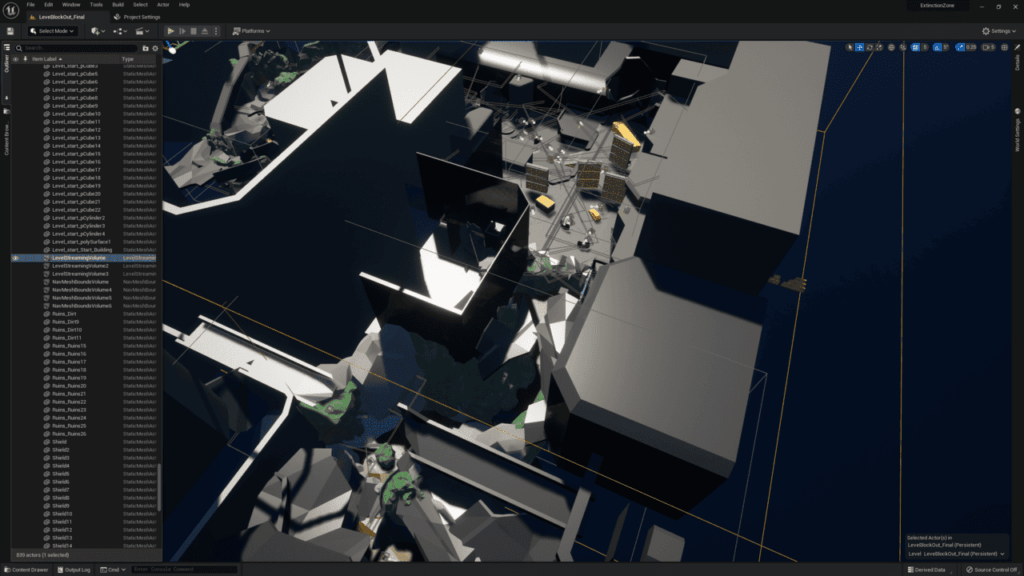
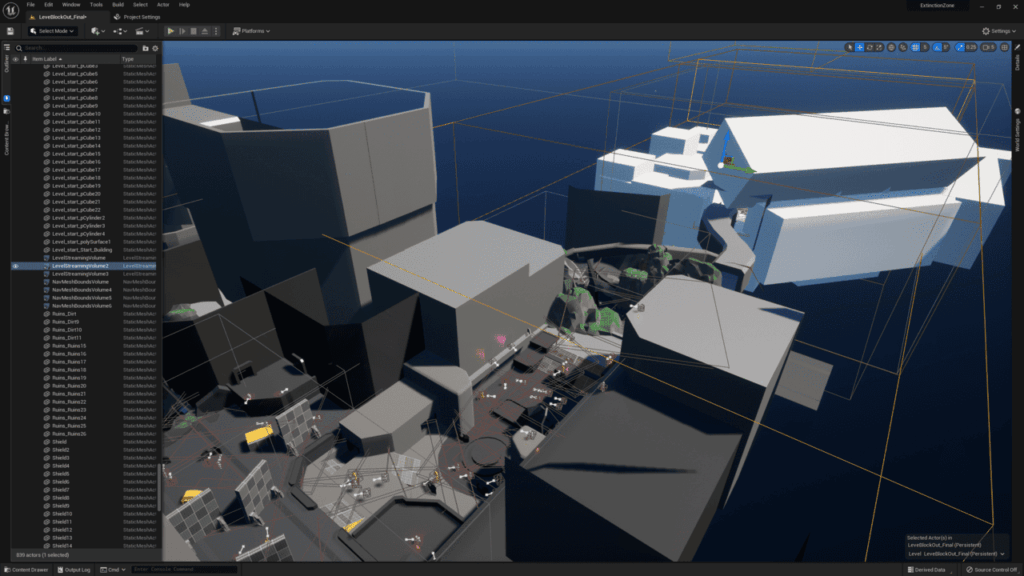
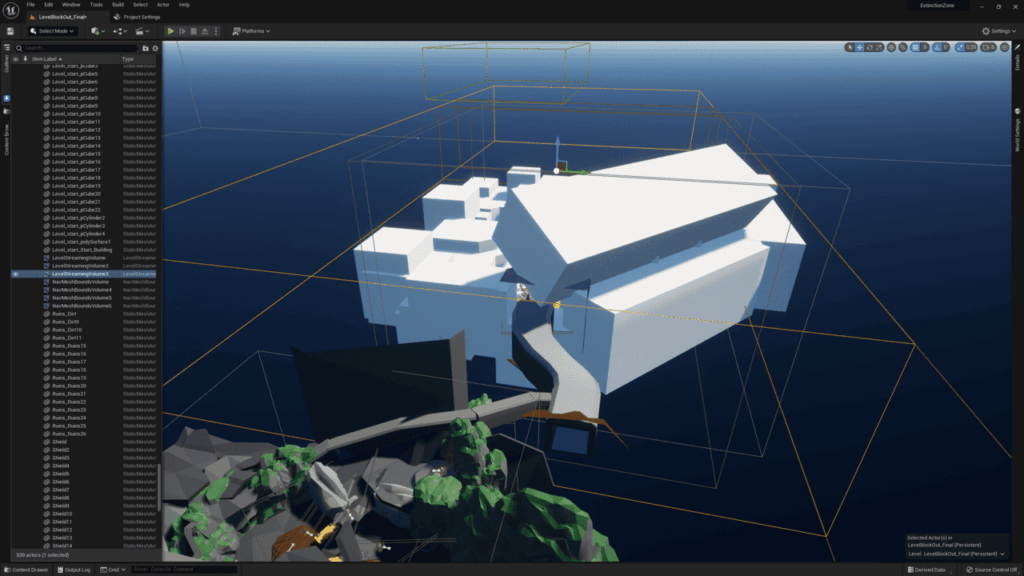
To improve performance and loading efficiency, I implemented Unreal Engine’s Level Streaming system to manage area loading—ensuring that only the upcoming area is loaded when the player approaches to the loading trigger. The transitions between areas are carefully designed with verticality and visual obstructions to limit sightlines and prevent the player from seeing areas being loaded or unloaded.
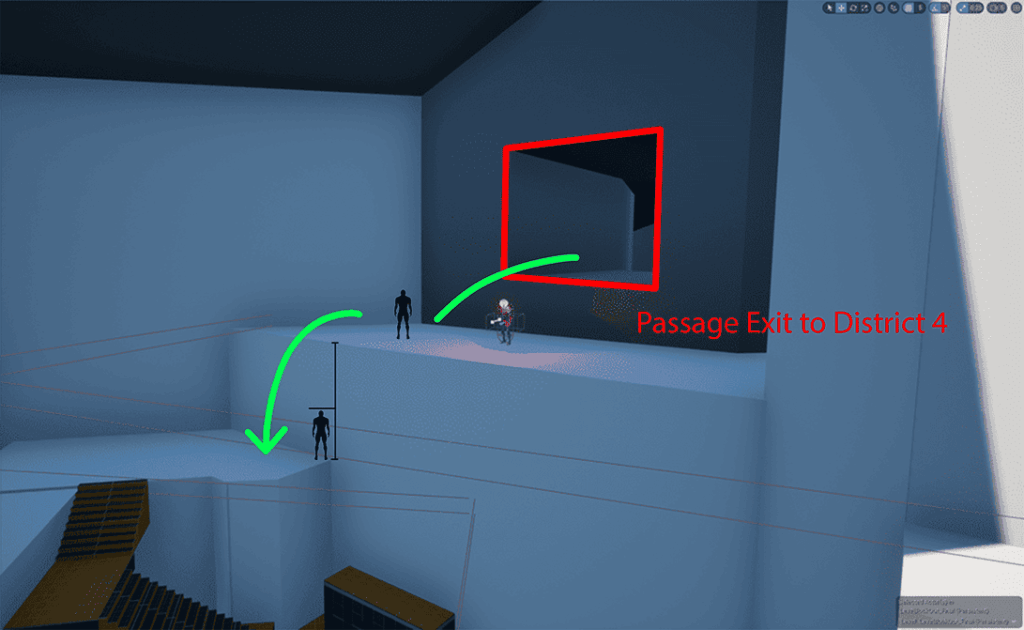
* Once the player jumps down from this roof, the wall height far exceeds the character’s climbing ability, making it impossible to return.
At the entrance of Area 4, I designed a one-way drop path, requiring the player to descend from a high point. This not only prevents backtracking to completed sections—avoiding unnecessary reloads—but also reinforces the linear flow of the level.
Block Out:
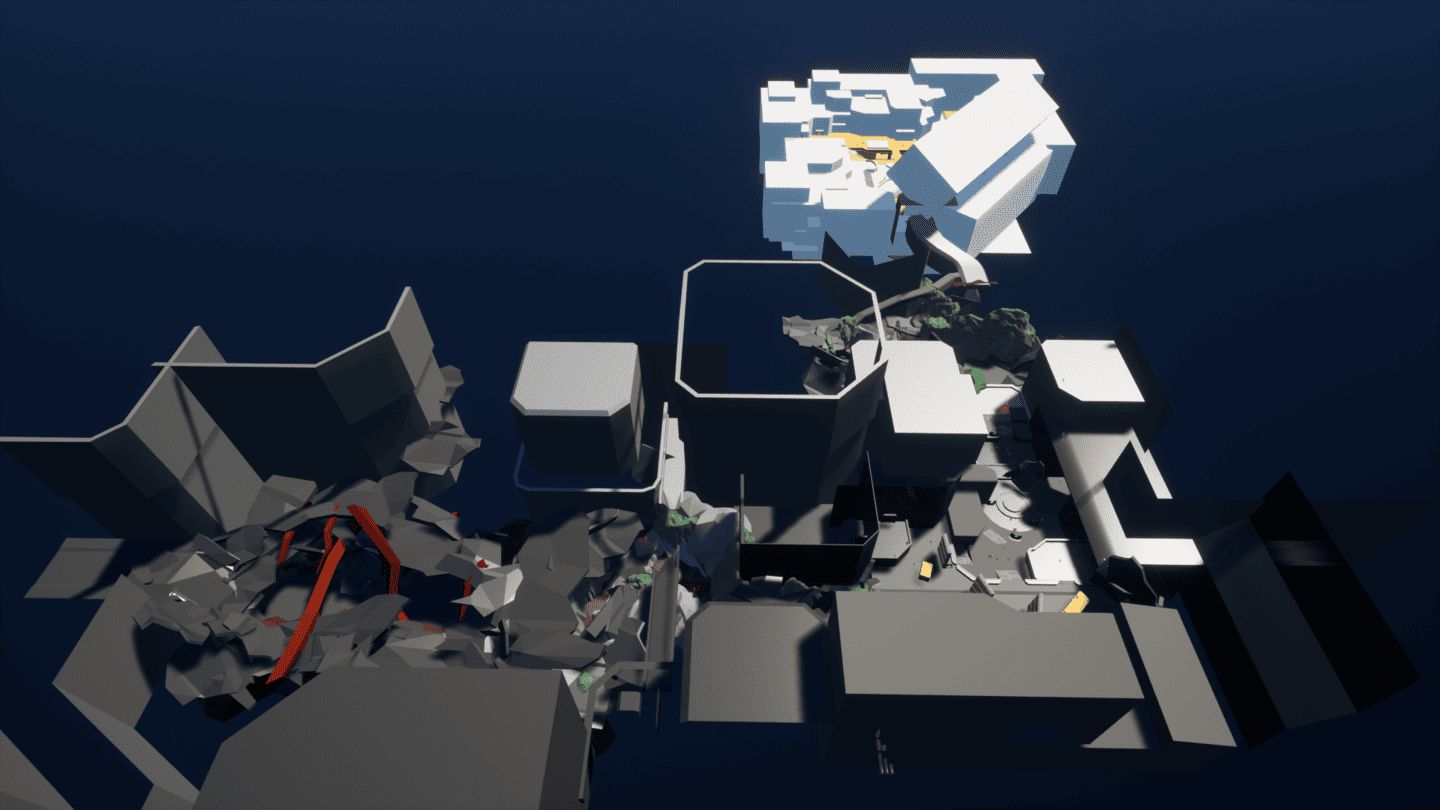
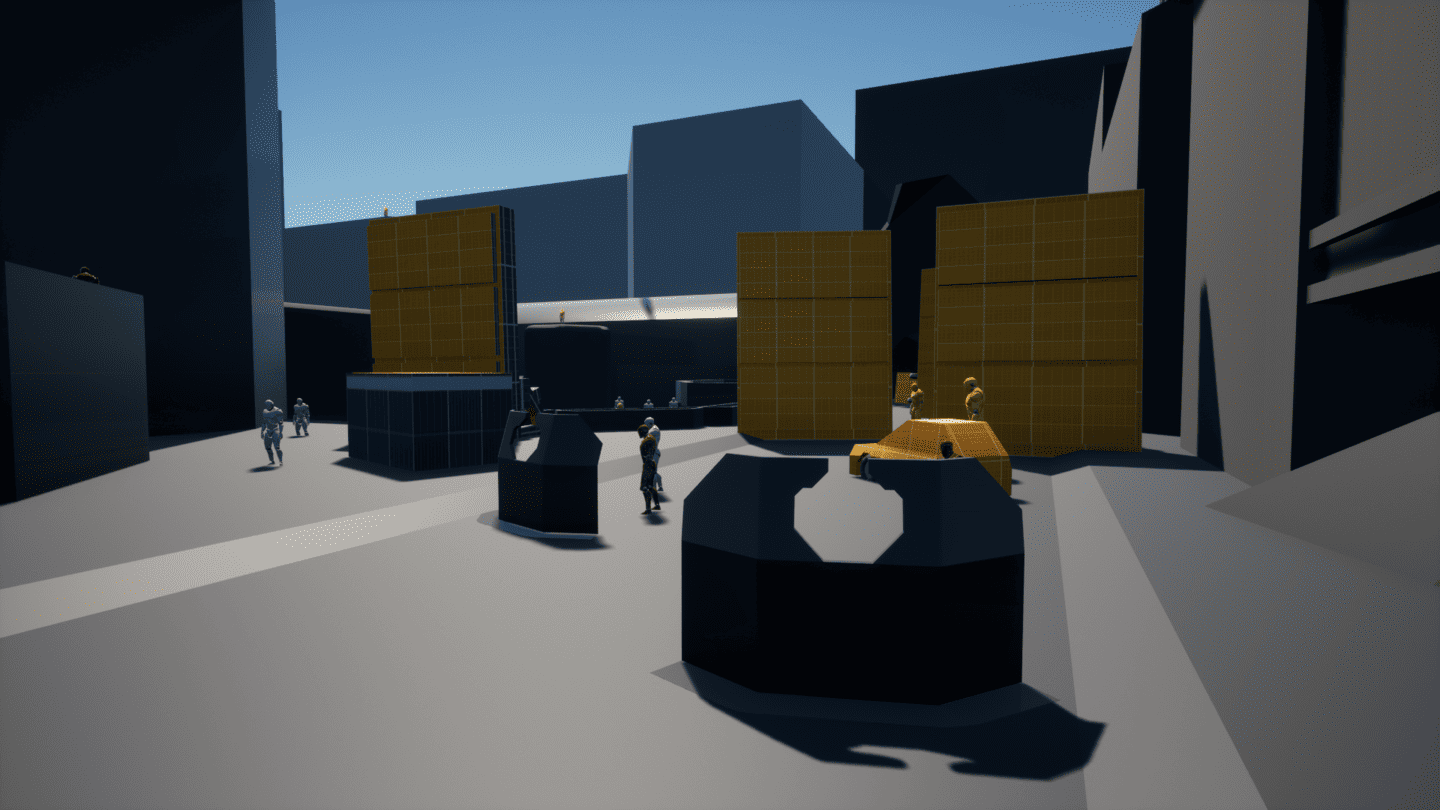
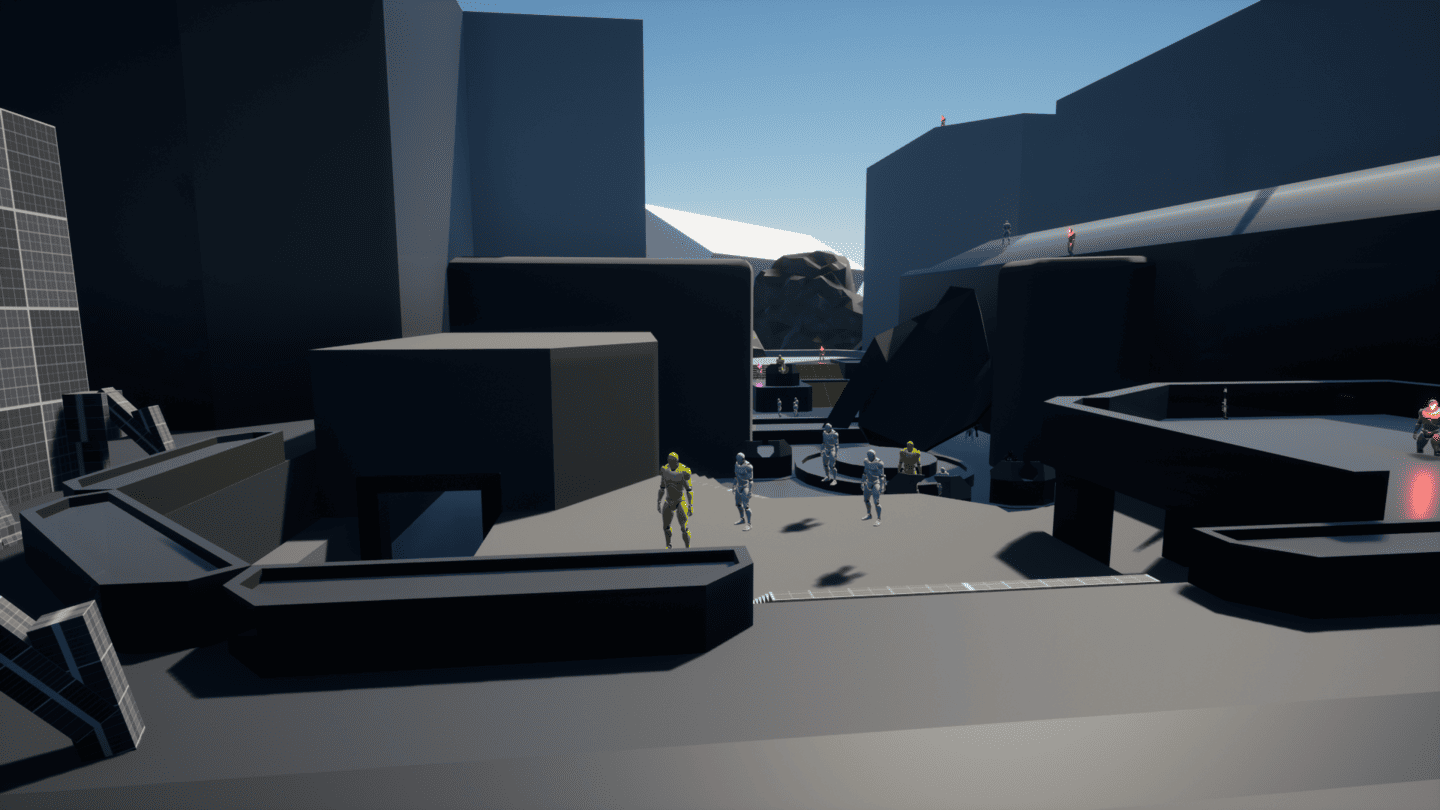
I first imported the hand-drawn level layout into Unreal Engine and used the Landscape tool to construct the basic terrain. Then, combining it with Unreal Engine’s built-in Static Mesh assets, I completed the initial blockout. Once the overall structure took shape, I created building assets in Maya to replace placeholder models and to form the background environment—enhancing the level’s visual presentation.
The entire level went three rounds of iteration before finalisation. The first two iterations were driven by deeper research insights and the milestone plan outlined in the progress tracking table, leading to structural adjustments in several areas. For instance, the original design included a scripted event where the player would fail a sniper mission and fall from a tall building onto an abandoned highway, thus beginning the main gameplay session. To accommodate this, an early version of the level featured a tall building area. However, as the project focus returned to level design, I chose to cut the narrative portion and set the opening directly on the abandoned highway, removing all elements related to the original high-rise structure.
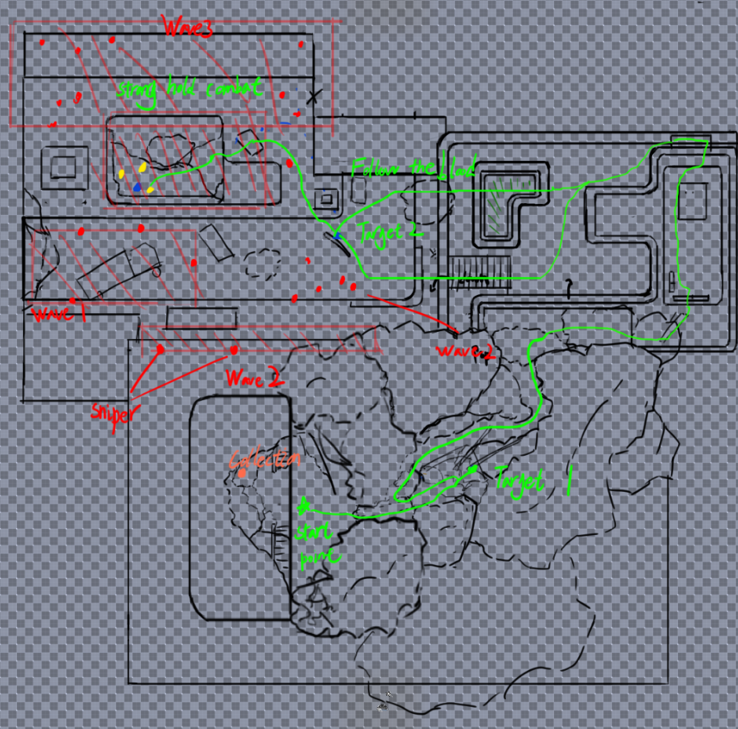
* The first prototype
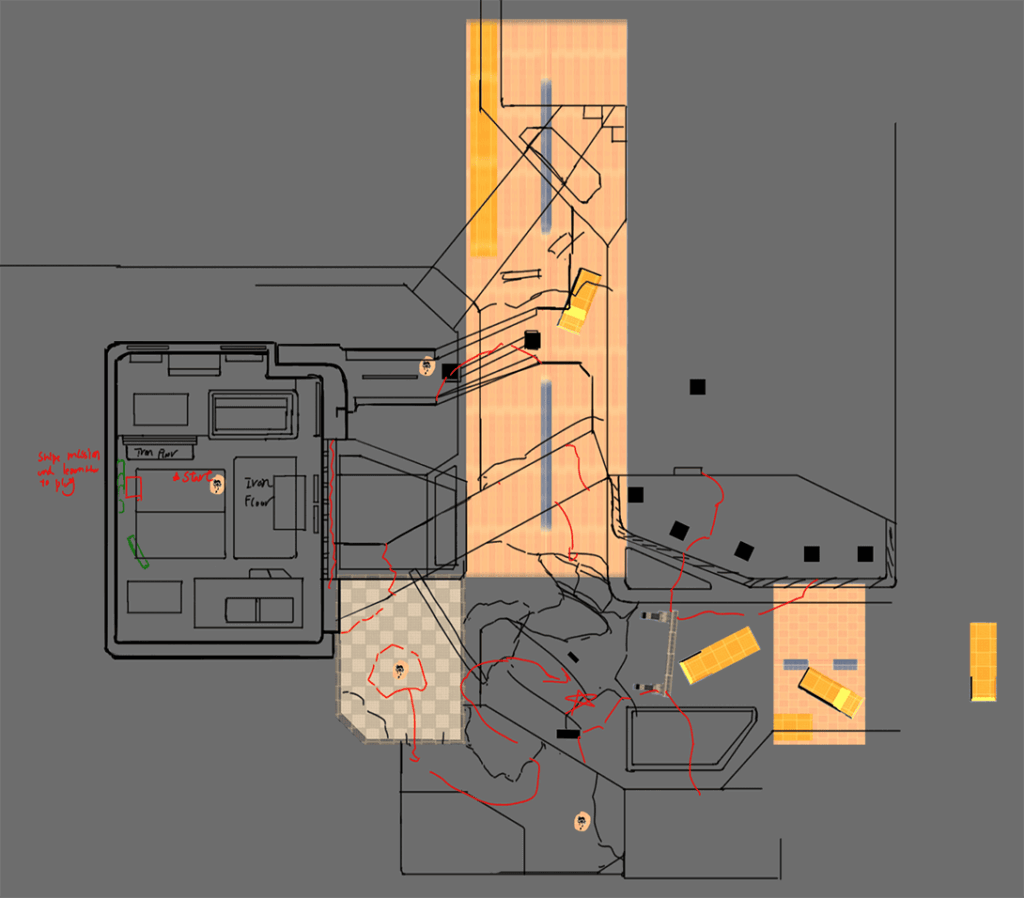
* During the first iteration, I made adjustments to the high-rise area of the level by adding several new sections, expanding the overall layout of the level.
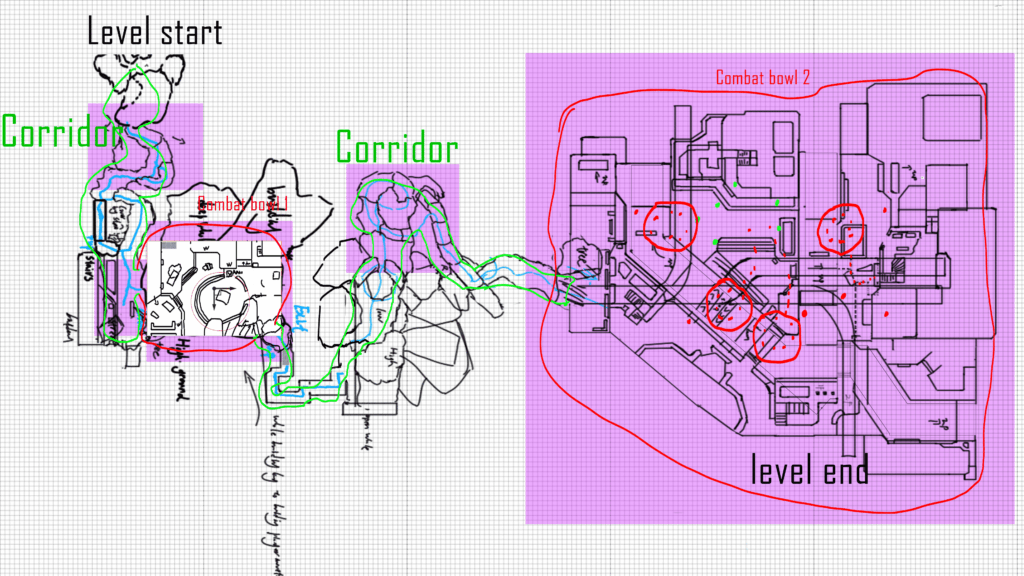
* This level layout was designed during the second iteration, and as shown here it bears few differences from the final version.
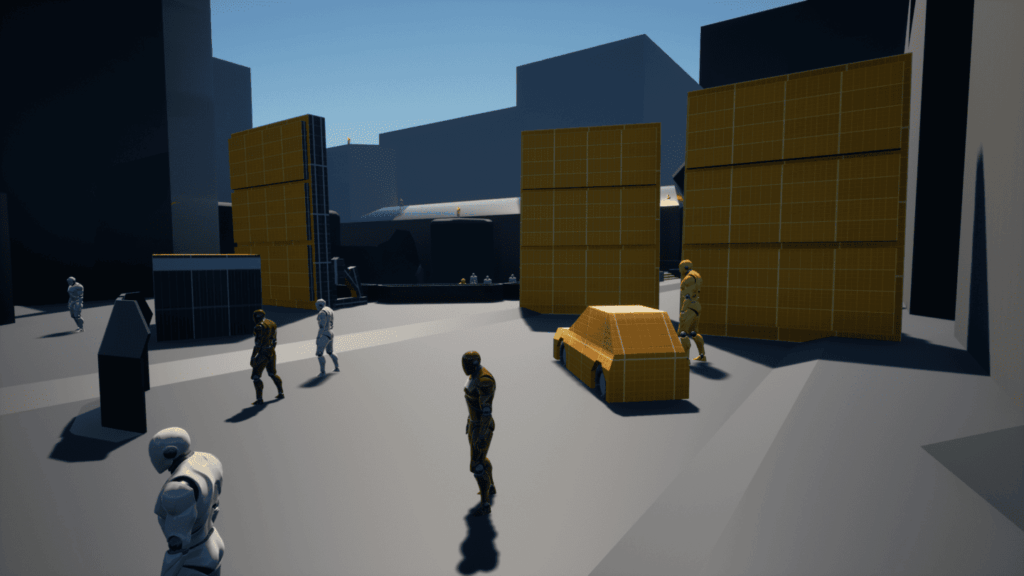
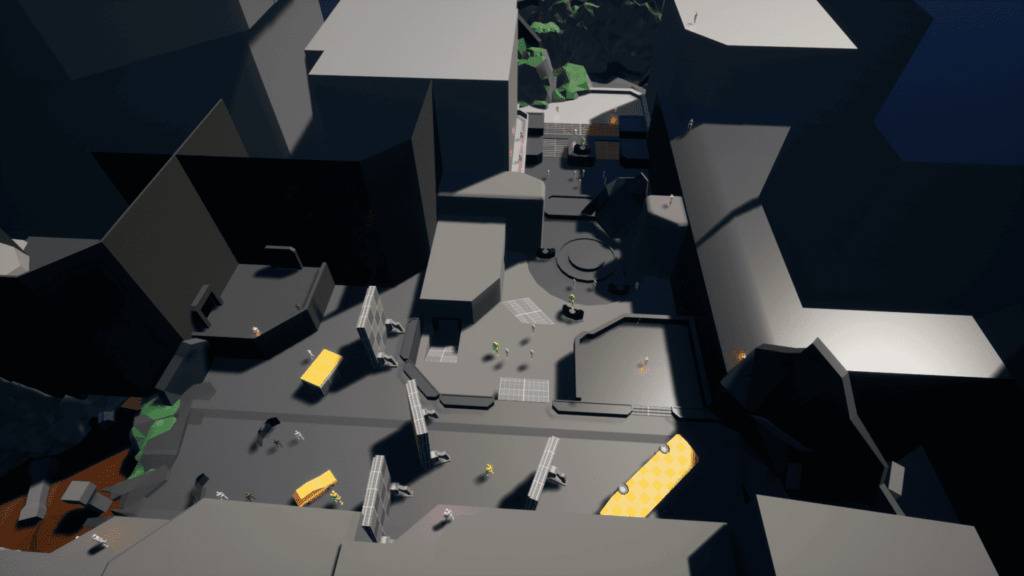
The third iteration was based on feedback from playtests involving tutors and classmates, with a particular focus on redesigning District 2 of the final version. In the earlier version, the exit of the area was placed at a high, visually inconspicuous location. During playtesting, most players struggled to locate the exit, resulting in confusion and a disrupted flow of exploration.
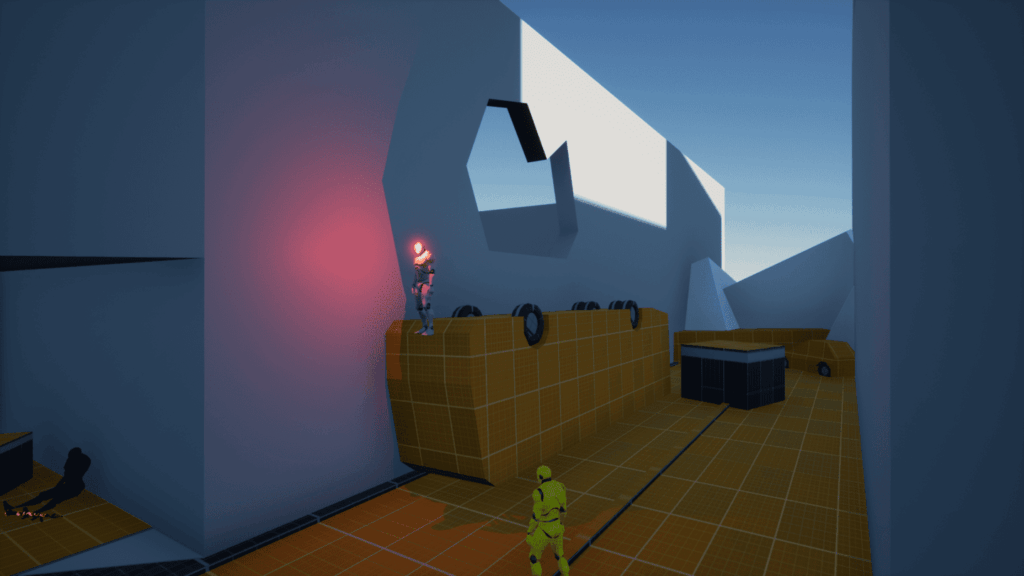
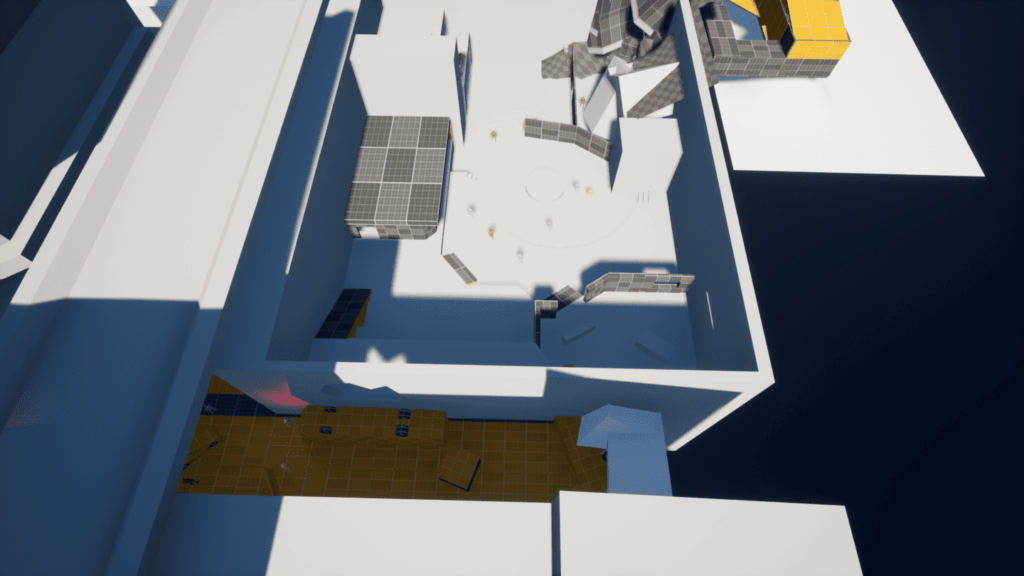
Final Version:
I removed the elevated, hard-to-spot exit and redesigned the spatial layout of the area—transforming the previously enclosed building interior into a more open and readable structure. Upon entering the area, players can now clearly see the endpoint and exit from a distance, significantly enhancing their sense of direction and allowing smooth level progression without the need for UI guidance.
Game Beats:
Traversal 1 – Combat 1- Traversal 2- Combat 2- Traversal 3 – Combat 3- Traversal 4 – Combat 4
1. District 1 – Introduction and Initial Combat
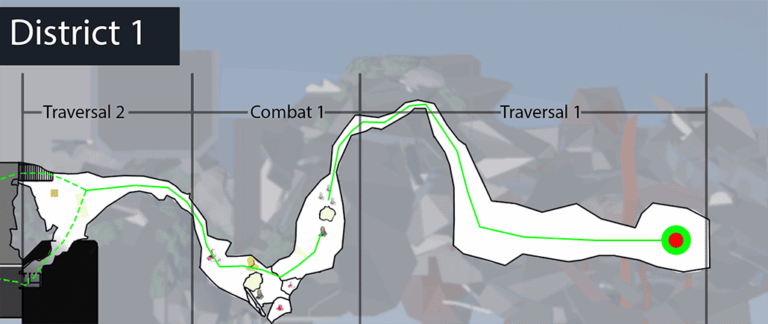
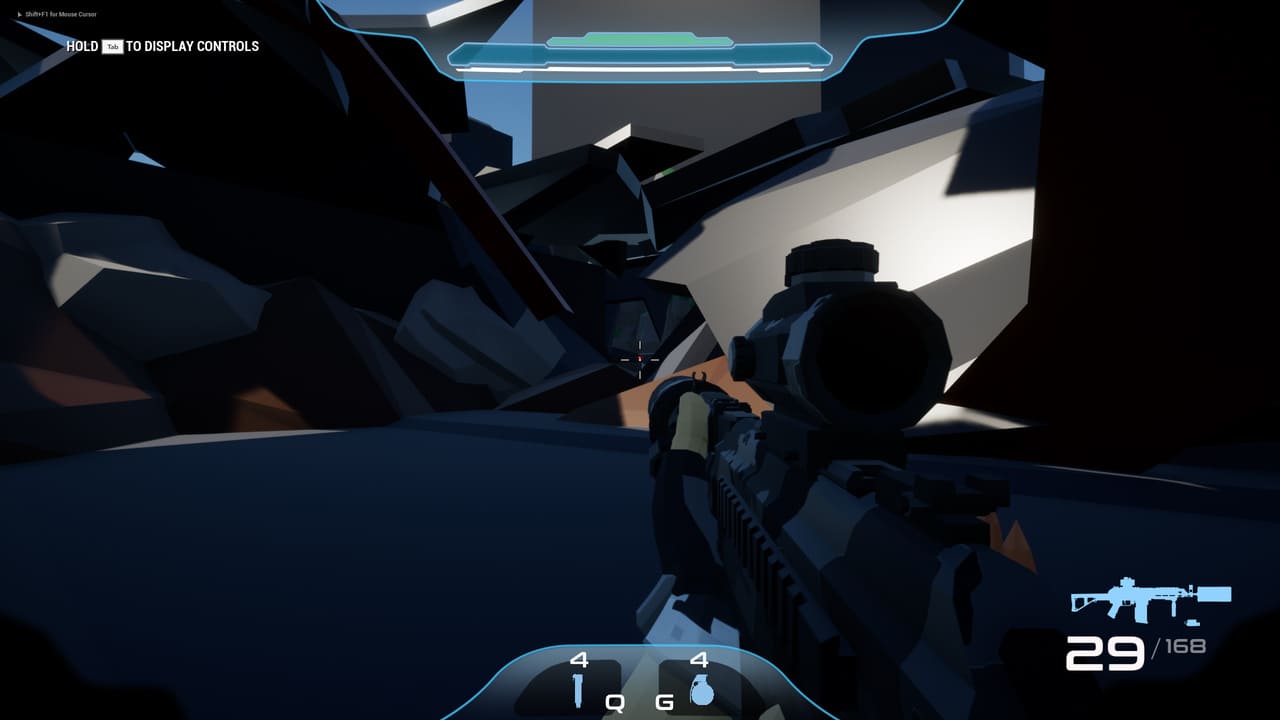
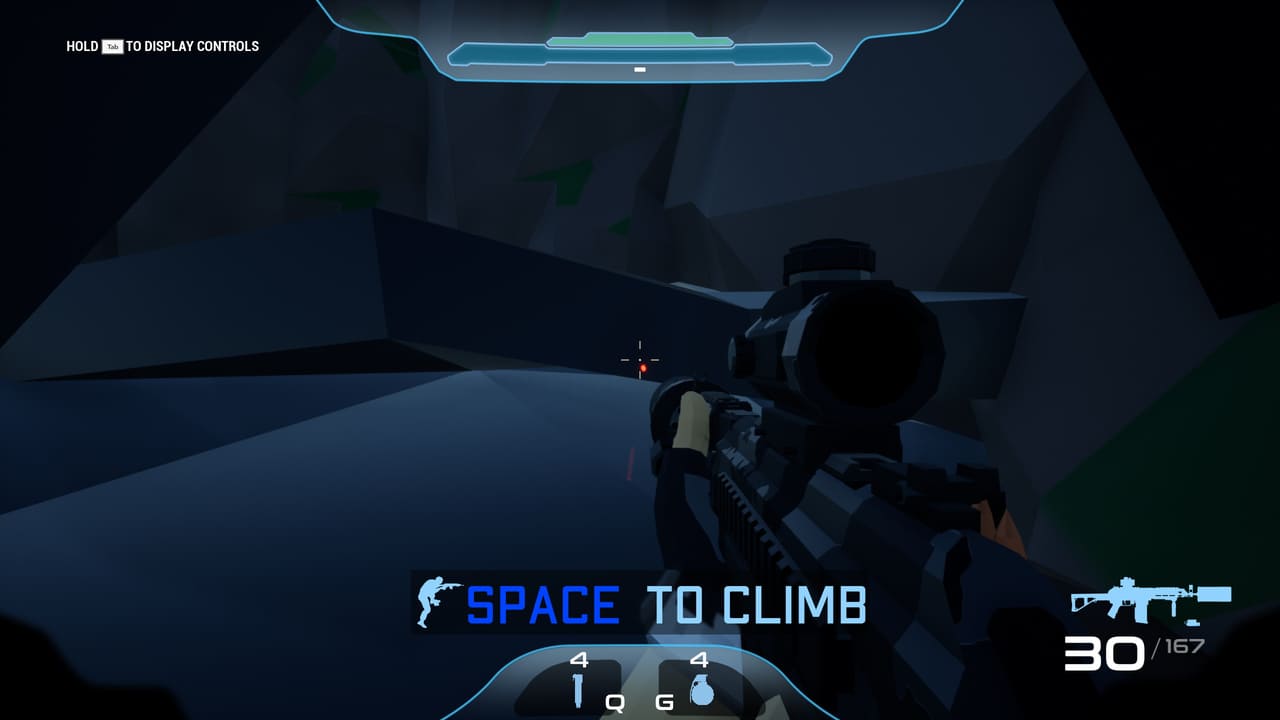
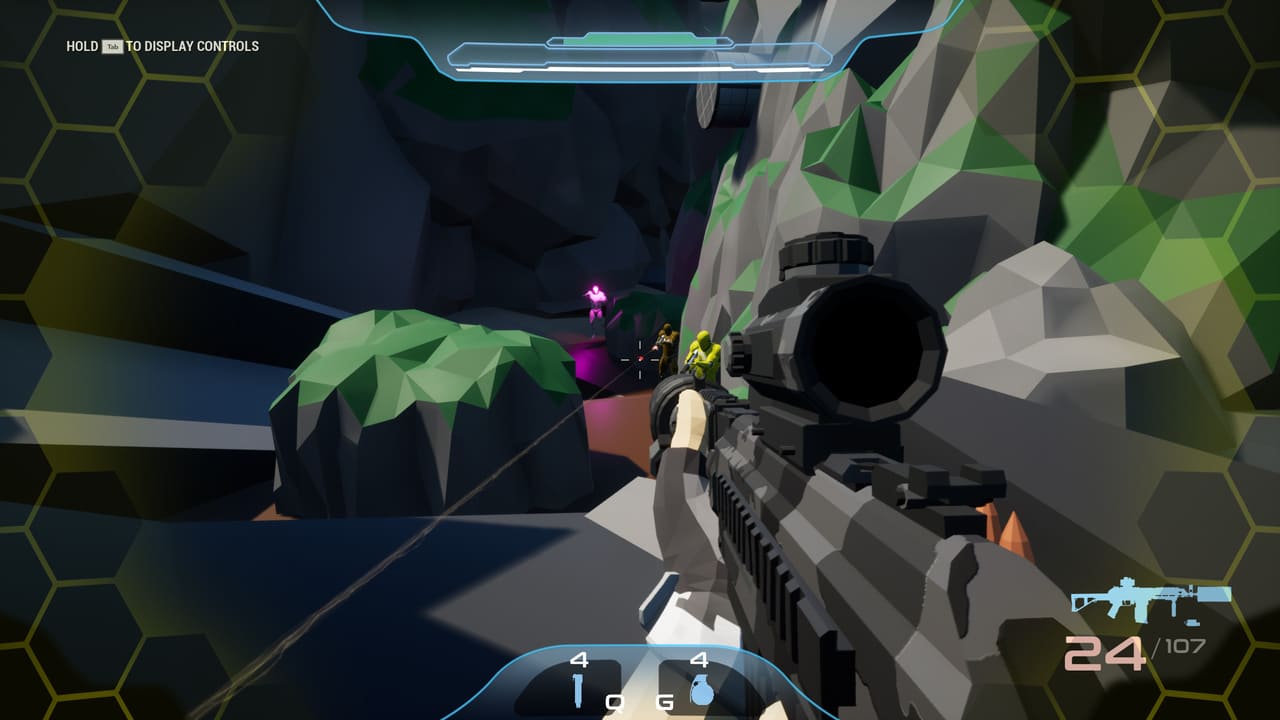
Gameplay: Traversal 1 – Combat 1- Traversal 2
At the beginning of the game, players will first experience a combat-free traversal section in District 1, designed to help them familiarise themselves with the character’s movement abilities and basic action mechanics. This segment offers a relatively safe environment for free exploration, allowing players to build an initial understanding of the controls.
Following this, players will enter a straightforward introductory combat zone: a linear path populated primarily with low-health enemies to reduce difficulty. This area is intended to provide a low-pressure, easily approachable combat experience, allowing players to naturally grasp the rhythm and mechanics of combat through practice.
It functions as a tutorial section, supporting a gentle learning curve. After the battle concludes, the player continues forward along the path toward District
Duration: XX mins
2. District 2 –Multi-Path Entry and High-Intensity Combat
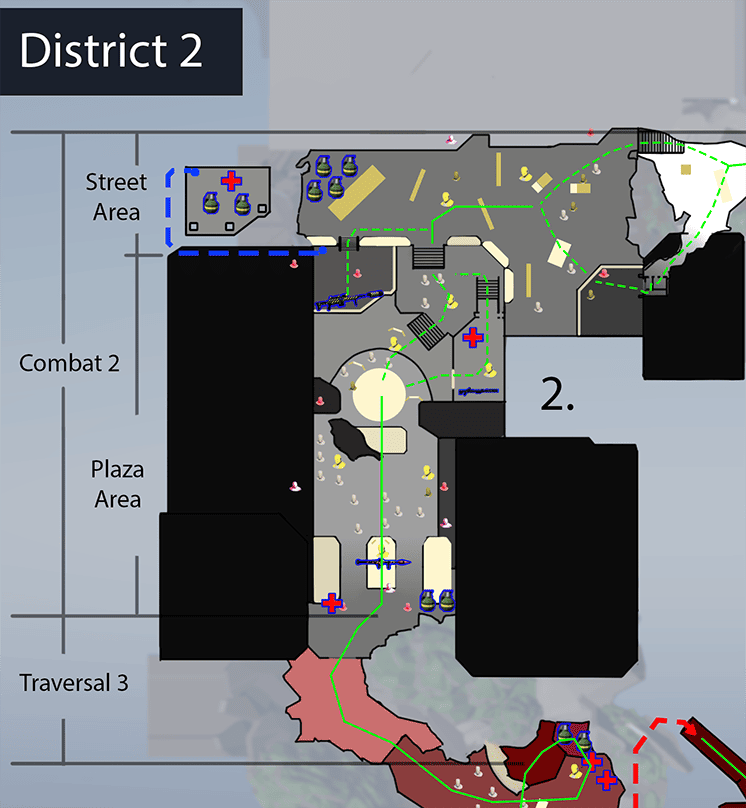
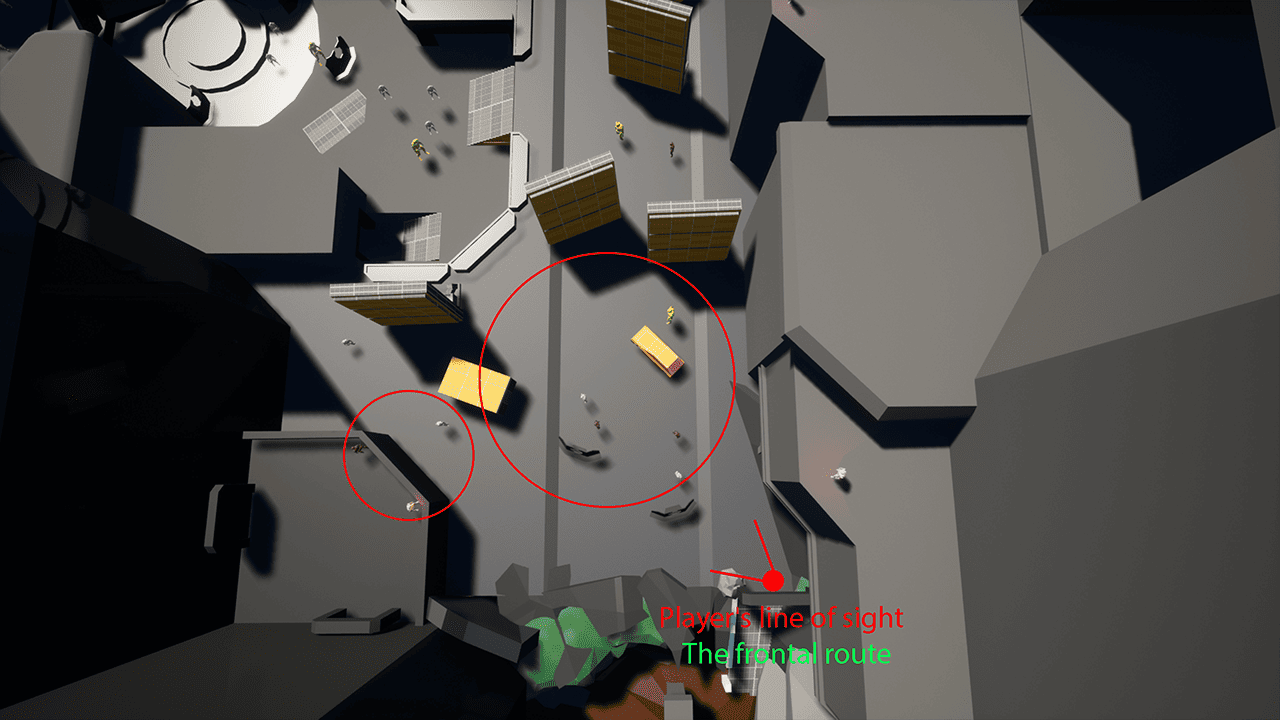
Gameplay: Combat 2- Traversal 3
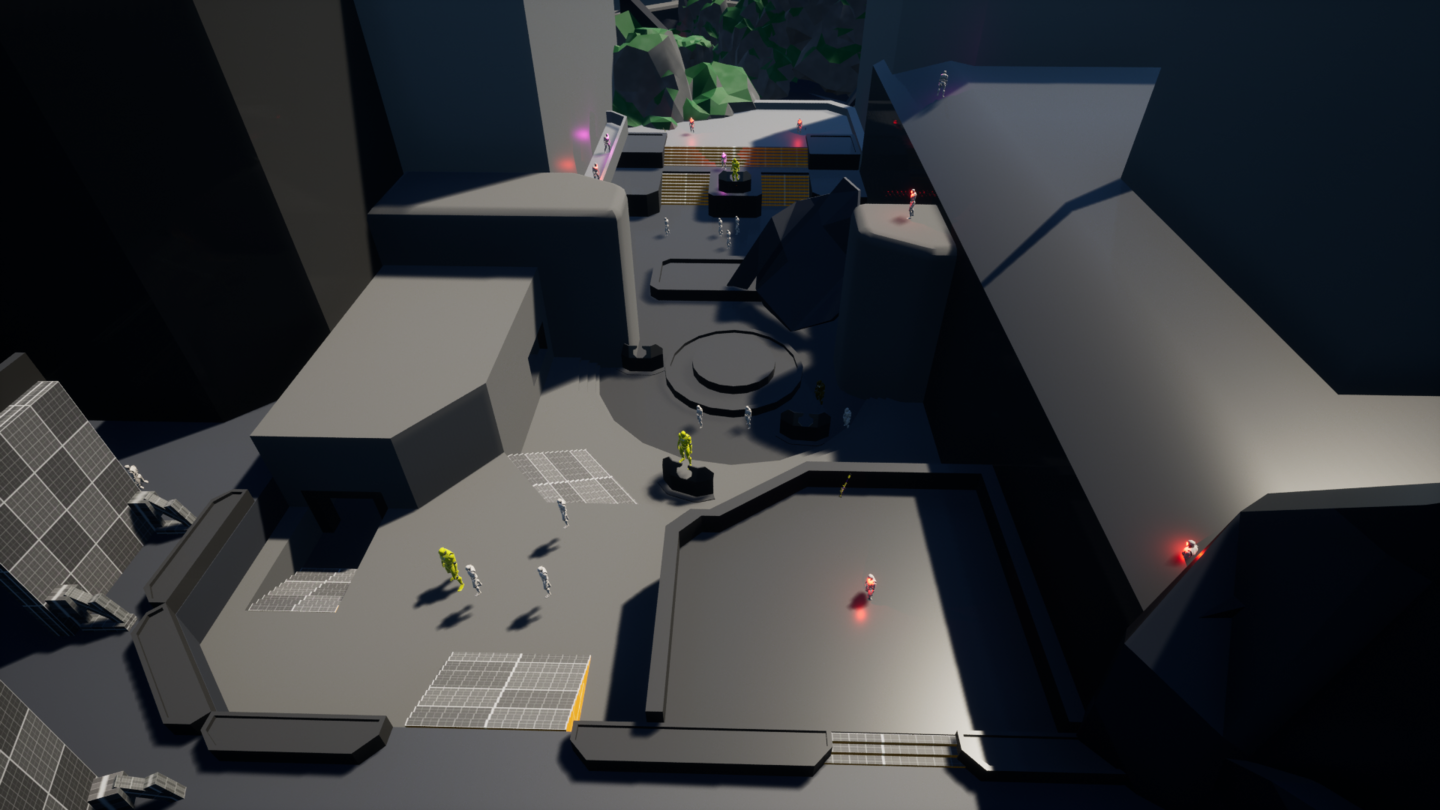
District 2 presents the most intense combat encounters in the level and can be broken into two main encounter: one close and mid-range gunfight along the street and another large-scale battle in an open plaza.
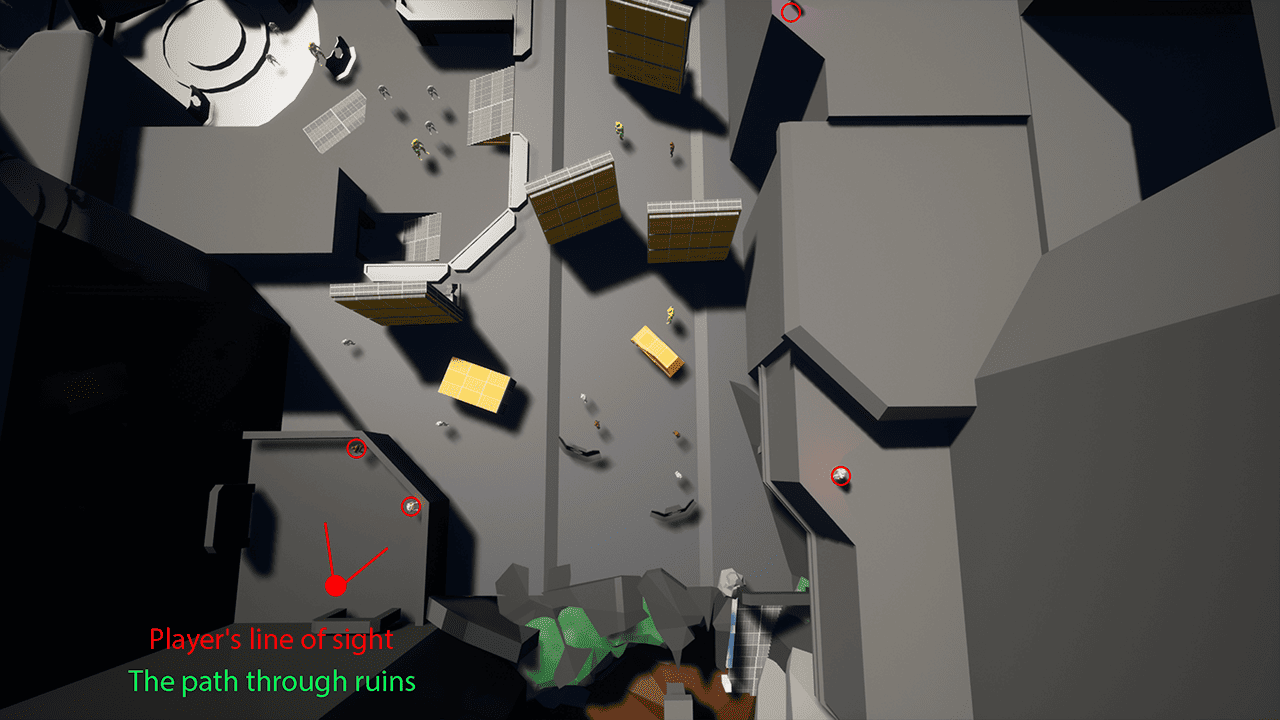
Upon arriving from District 1, the player is offered two entry paths: one leads through a frontal staircase into the street, while the other loops through a side ruin and up to a high platform.
Players choosing the frontal route will face heavy rifle enemy fire head-on and come under suppressive fire from elevated positions on the left. However, this path provides lots of covers, allowing for dynamic exchanges between offense and defence.
Alternatively, players who take the path through ruins must first confront platform enemies and a distant sniper on roof—this route is more challenging at first but grants a significant terrain advantage once the high platform is taking controller by player. Player can then gain a superior vantage point over the street, allowing for effective counterattacks.
By finishing the combat on street area, the player then enter a broader plaza area. Here, no fixed path is imposed, giving players the freedom to decide their approach angles and combat pace. They can independently strategize how to engage the enemy.
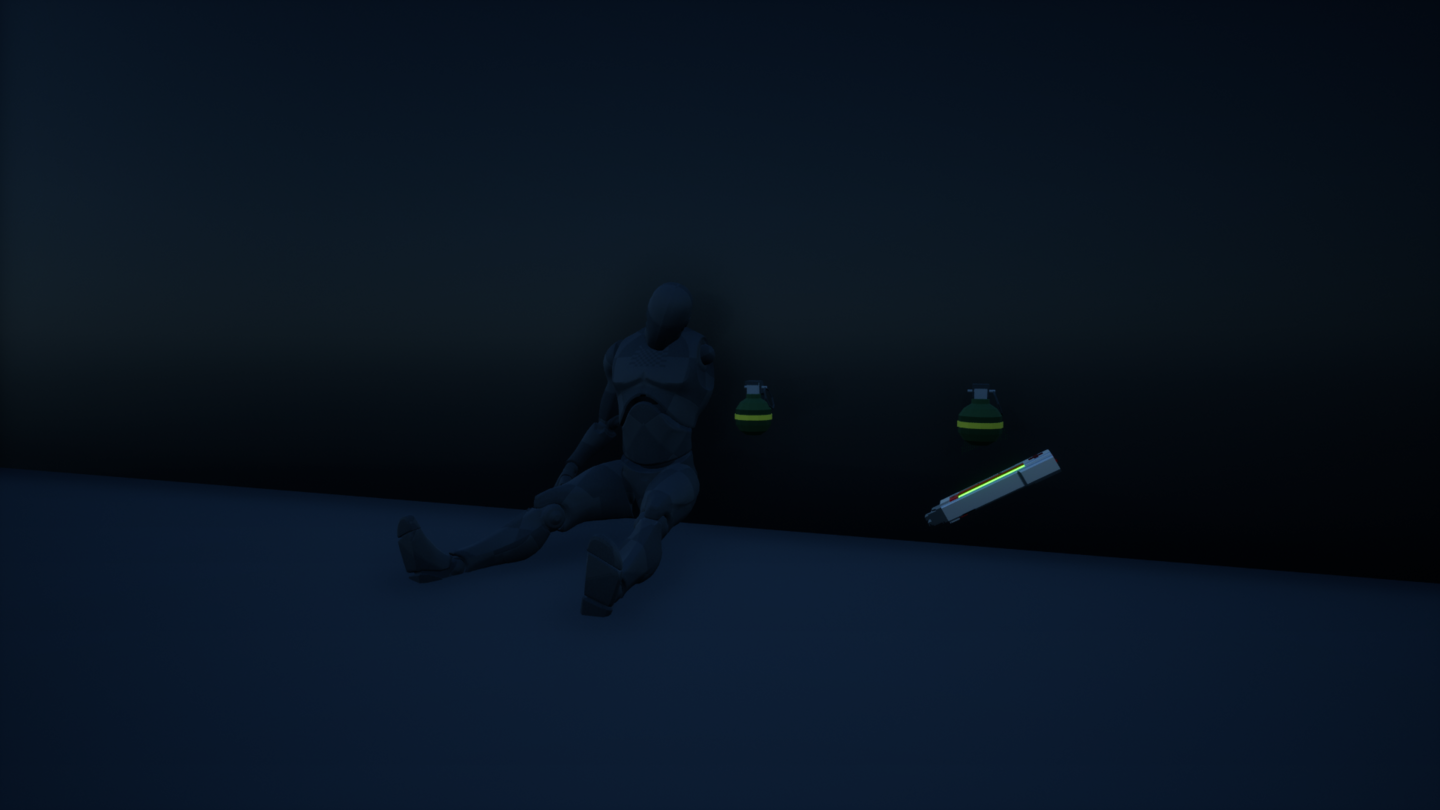
The plaza area also introduces the first instance of human soldier corpses serving as supply point, offering ammo and health. These corpses reappear in later sections, gradually reinforcing a visual language that corpses signal supply opportunities—subtly guiding player behaviour without explicit UI prompts.
Once the plaza battle concludes, the player continues progressing along the road.
Duration: 2 mins
3. District 3 – Pacing Relief and Mechanic Checkpoint
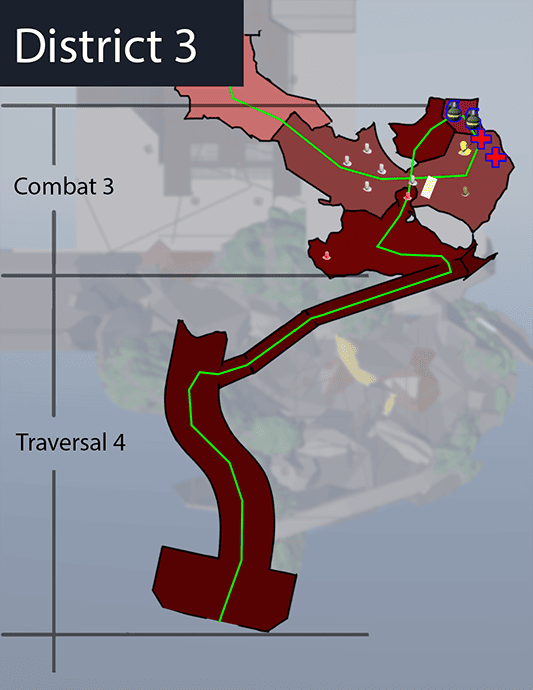
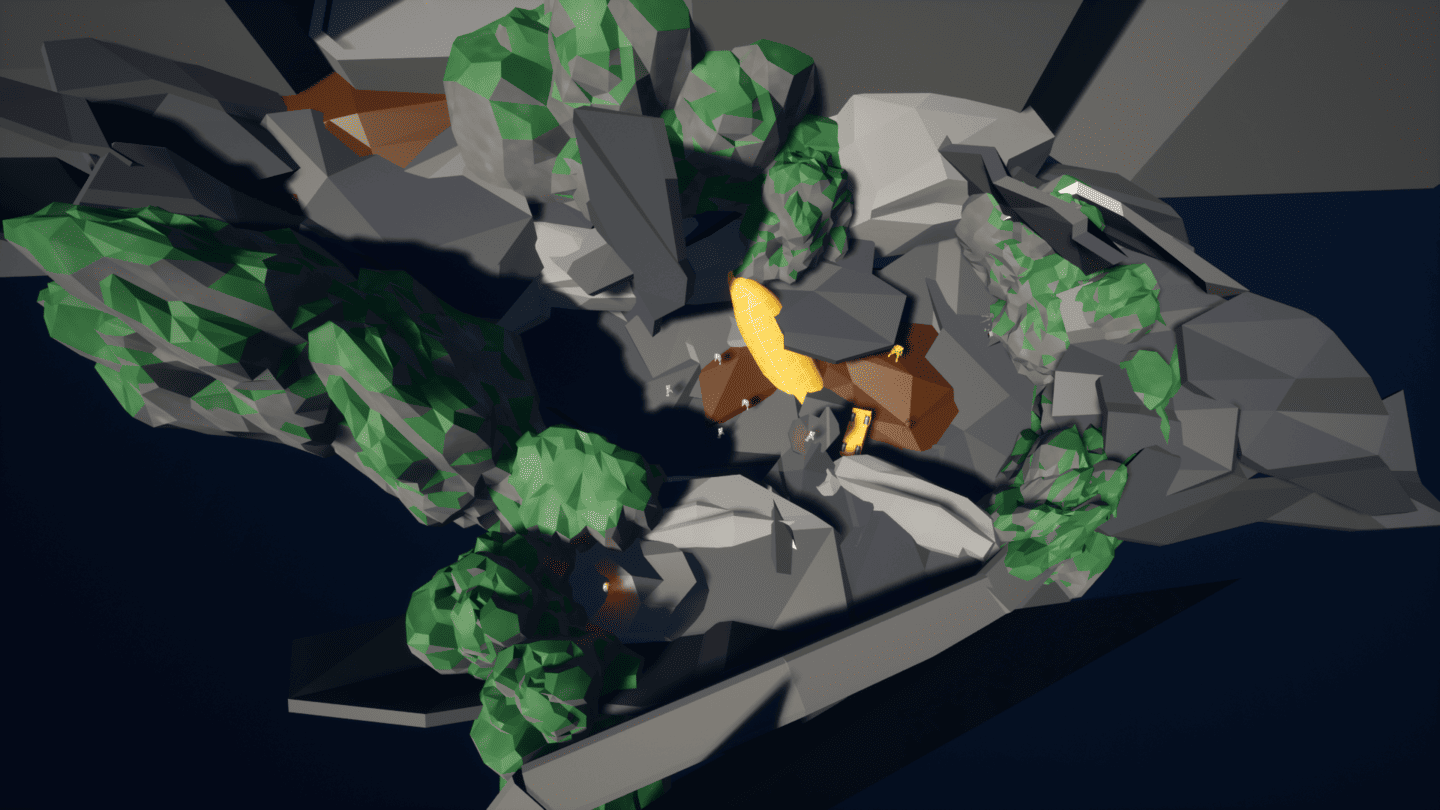
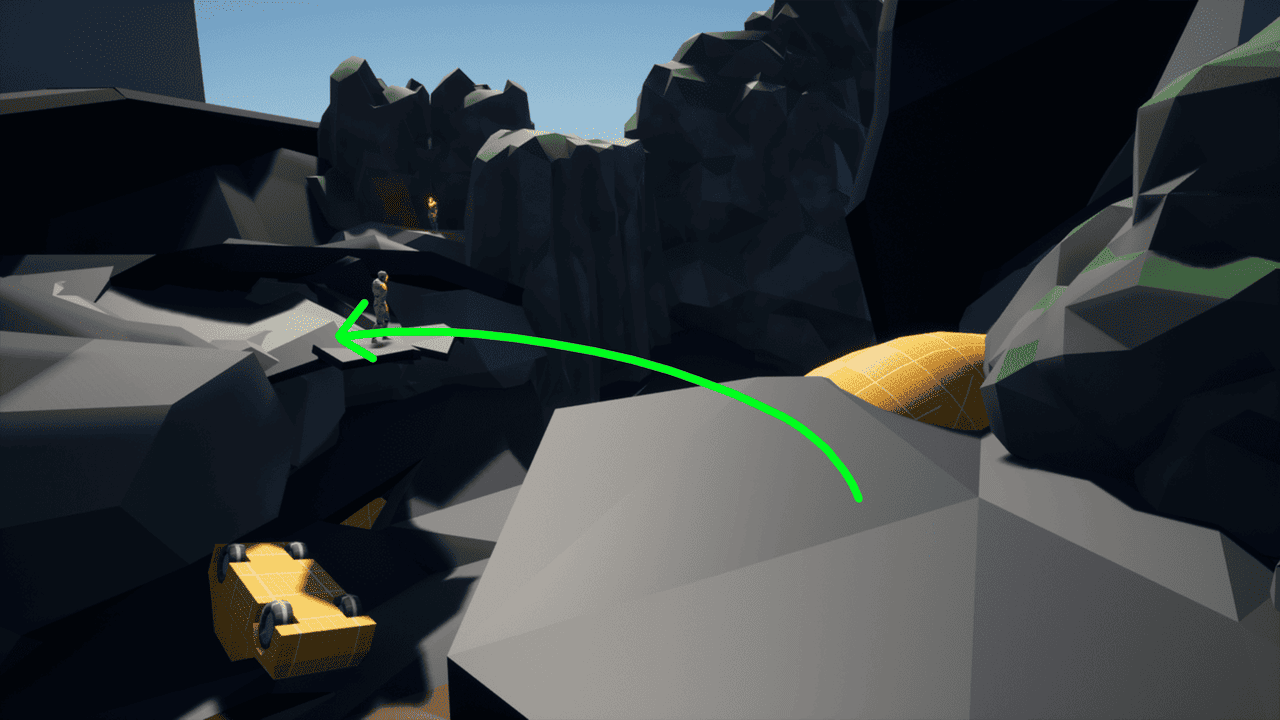
Gameplay: Combat 3- Traversal 4
District 3 features a linear layout with significantly reduced combat intensity compared to the previous area, containing only a small-scale skirmish. Player can progress smoothly by simply following the predetermined path.
Following the intense, prolonged combat of District 2, this section intentionally lowers enemy density and offensive pressure to provide a pacing buffer. It offers a moment of recovery from the prior tension, helping players avoid combat fatigue and regain composure.
Additionally, a gap is placed along the path that requires a boost jump to cross. This serves as a subtle test of the player’s understanding of core movement mechanics.
Duration:1 min
4. District 4 – Freeform Advancement and Tactical Restructuring
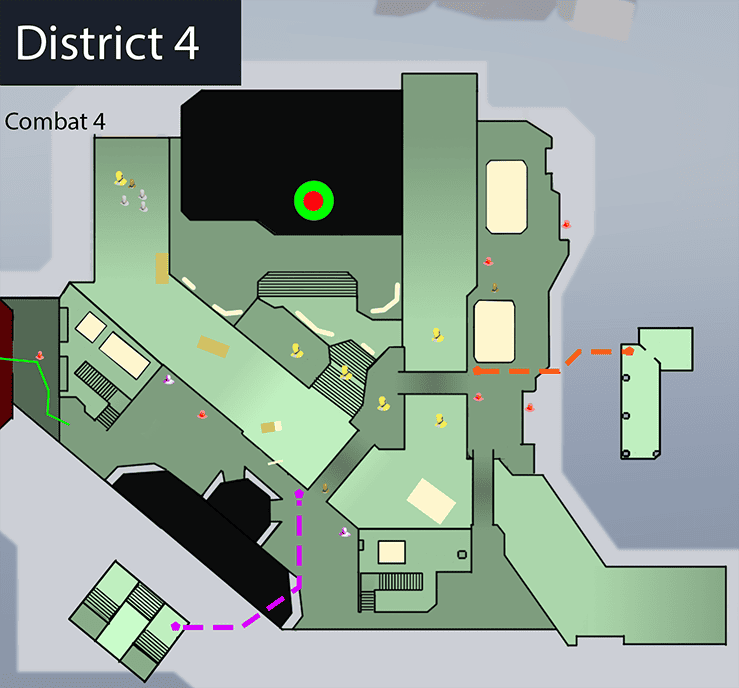
Gameplay: Combat 4
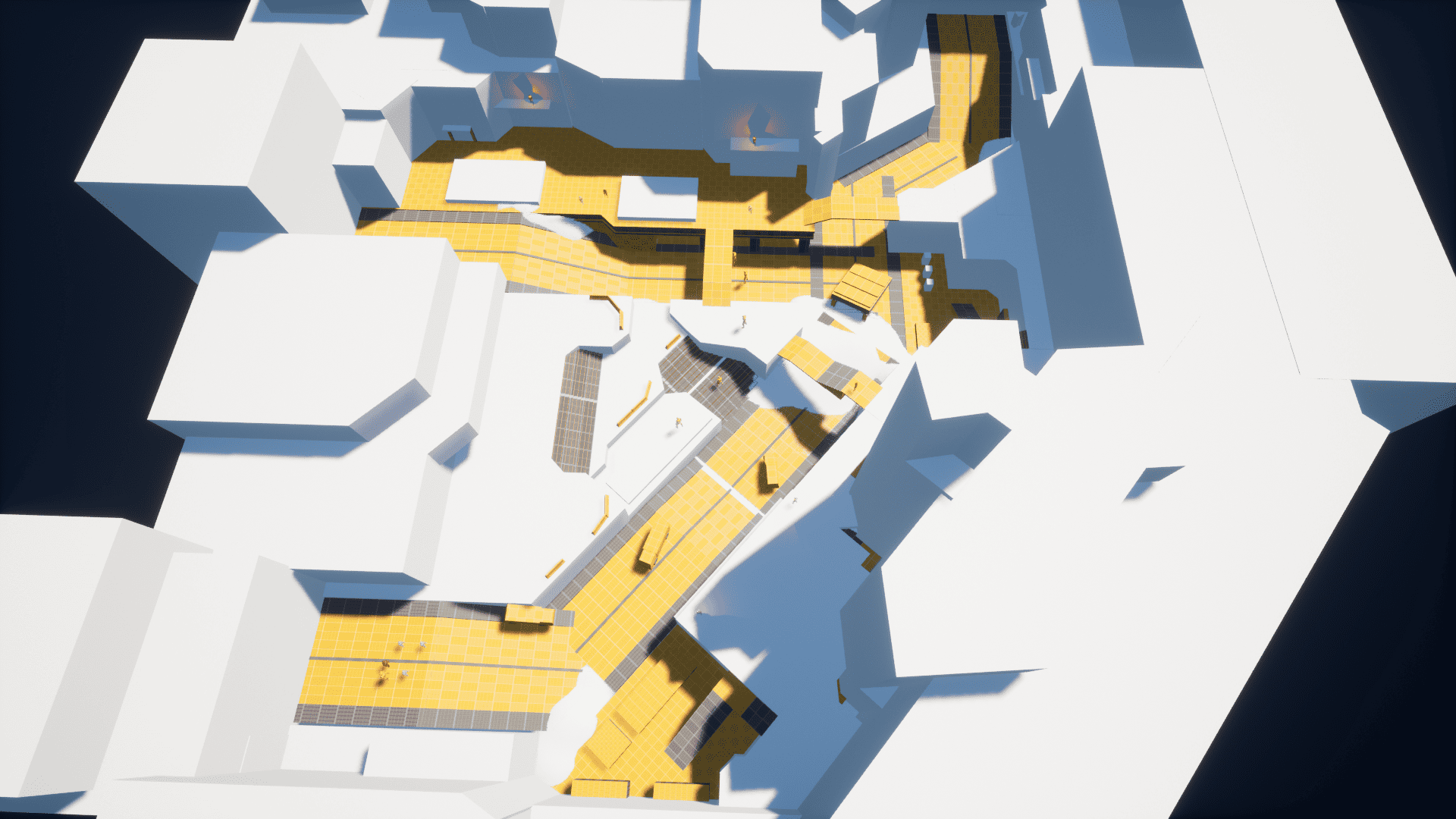
Combat intensity rises again in District 4 compared to District 3, but the space becomes significantly more open, offering players greater freedom of movement. The layout resembles the plaza encounter in District 2, yet this time there is no fixed route of attack—players are simply tasked with reaching the central building in the area.
The battlefield is filled with cover, verticality, and multiple entry points, allowing for diverse strategies to approach the objective. Depending on their condition and battlefield awareness, players can choose to flank, push head-on, or suppress enemies from above. This setup enables more player-driven tactical decisions and pathfinding, allowing players to experience combat on their own terms while maintaining manageable pressure.
Duration: 1 min 30 sec