 Skip to content
Grey Box Level Design - Solo Project (Level & Game Designer)
Production Details:
- Made in 8 Weeks (Alongside assignments with other courses.)
- Unreal Engine 4
- Based on Advanced Locomotion System V4
Solo Project
Personal Responsibilities:
- Level Design
- Unreal Engine Blueprint Coding
About the game:
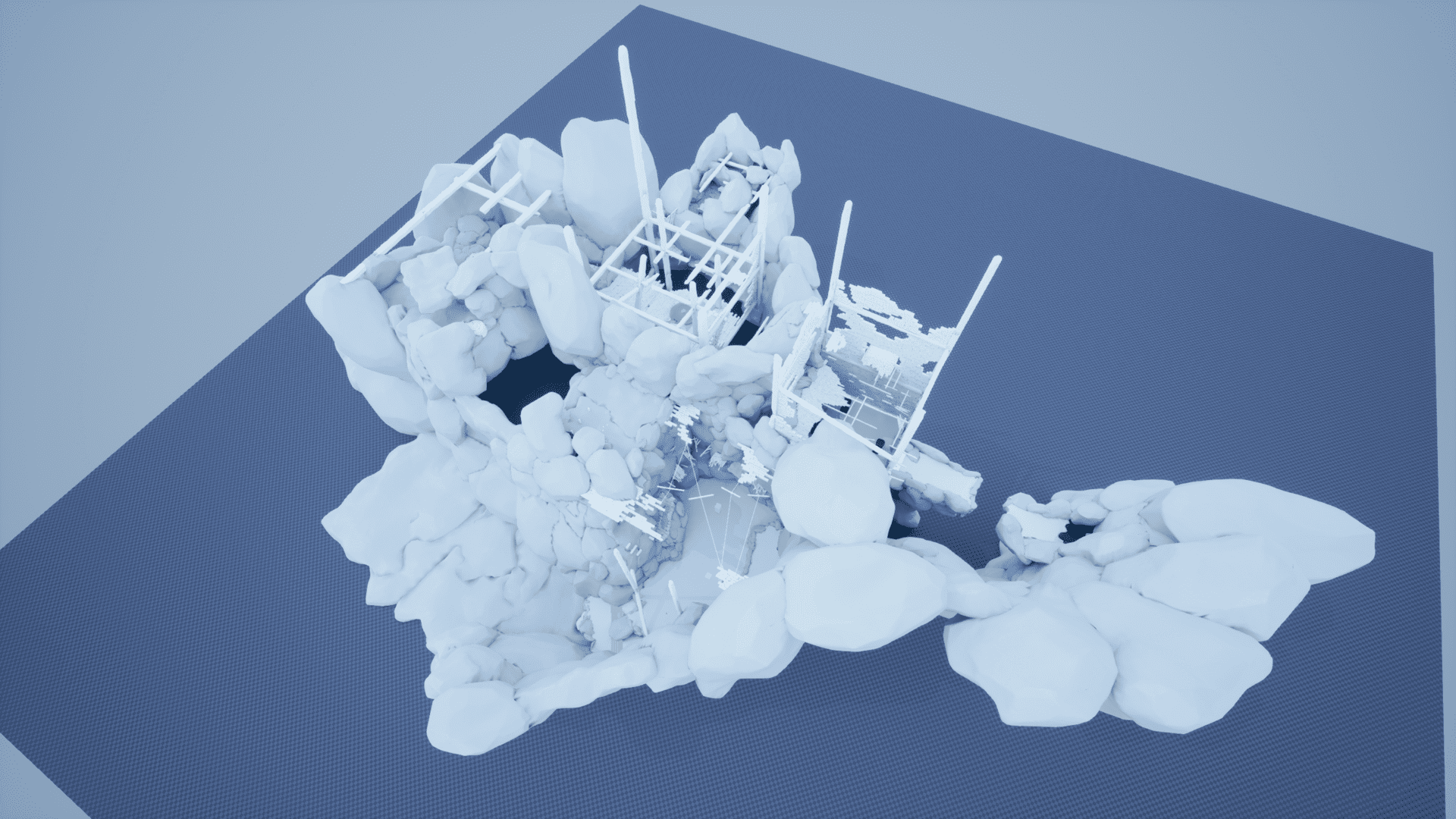
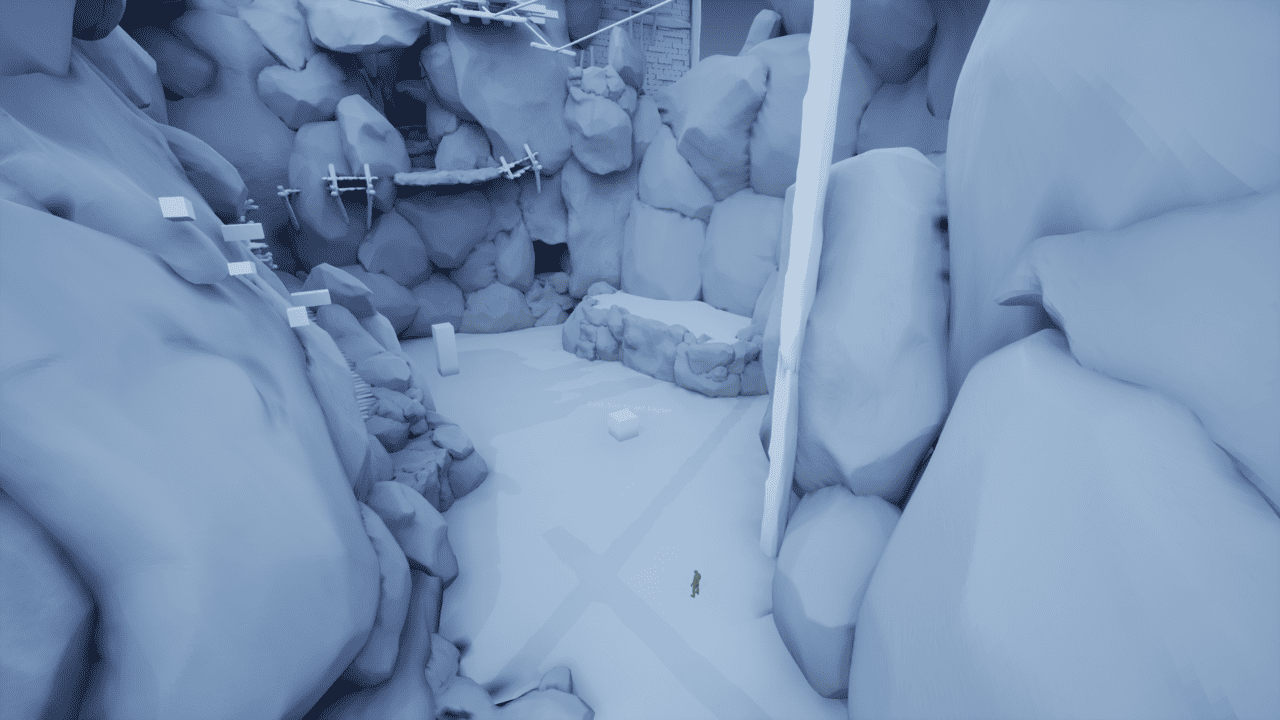
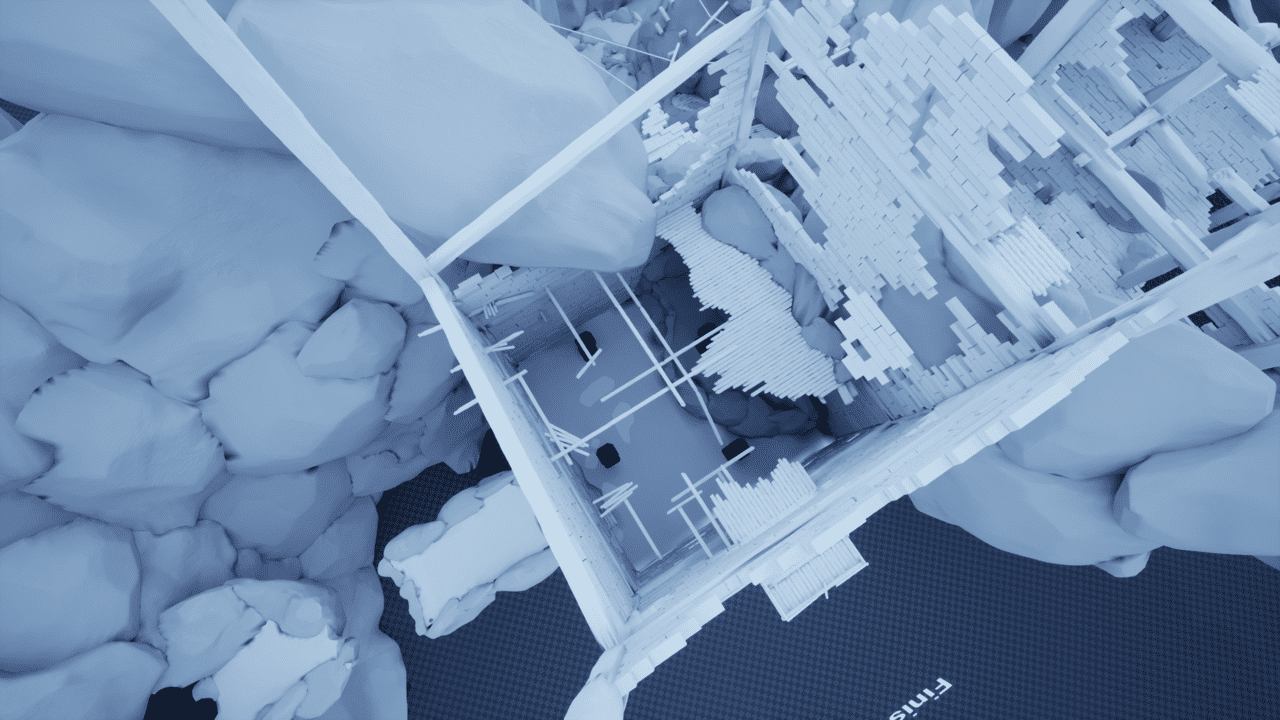
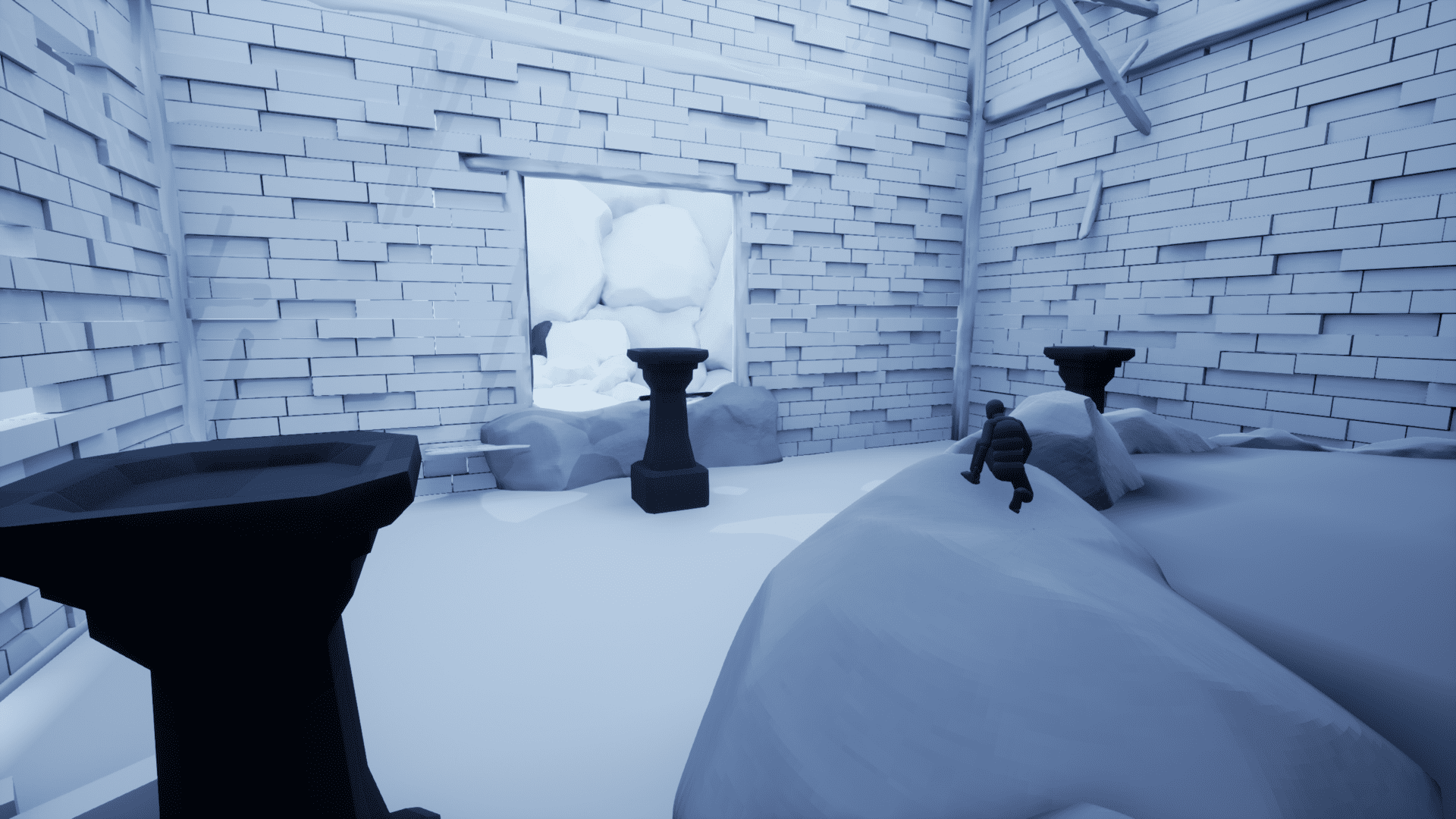
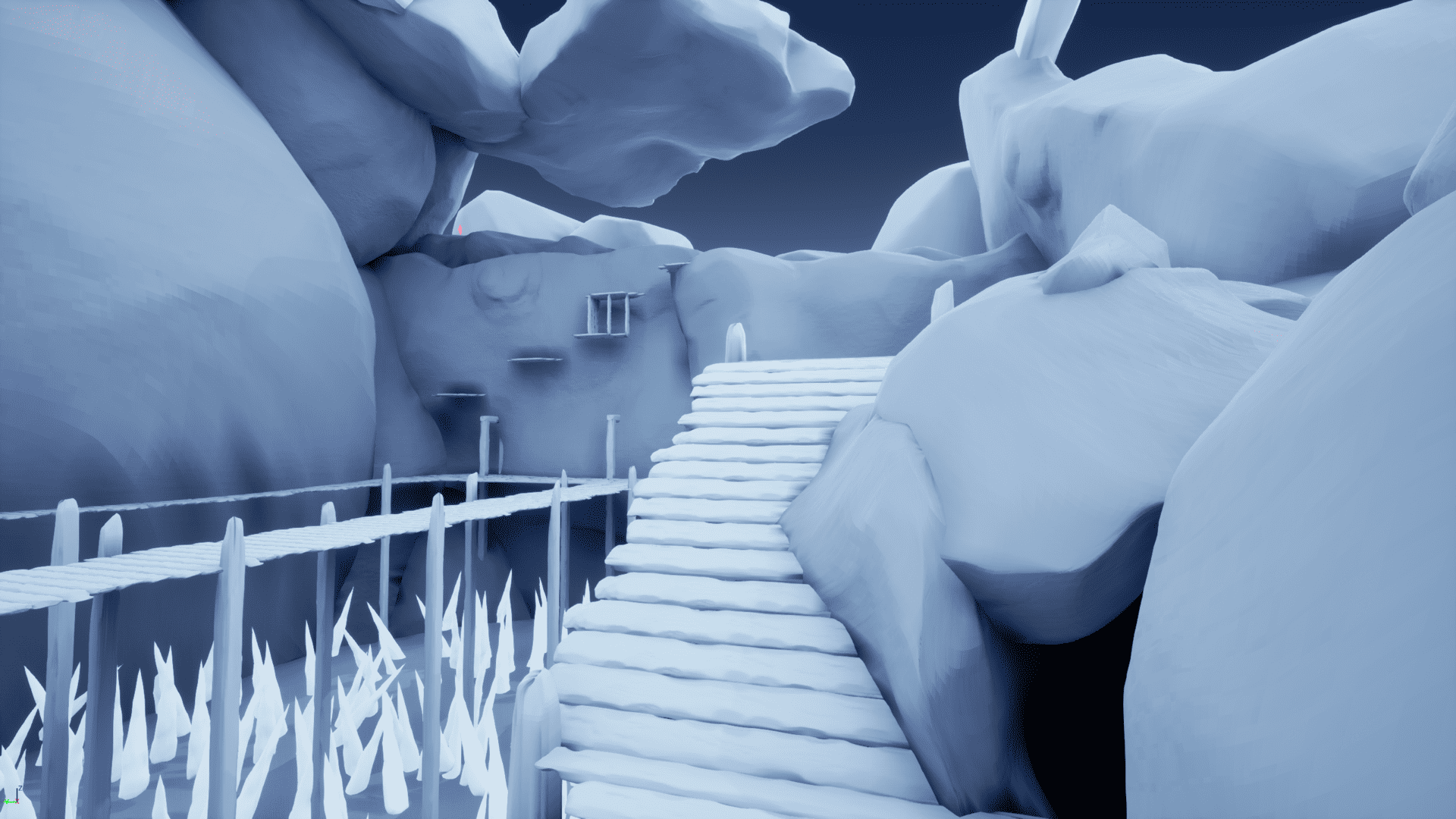
This level takes place in an abandoned ancient mountain ruin, where players embark on an adventure filled with exploration, puzzle-solving, and climbing-based traversal. The goal is to keep moving upward—finding paths and gradually progressing through the level.
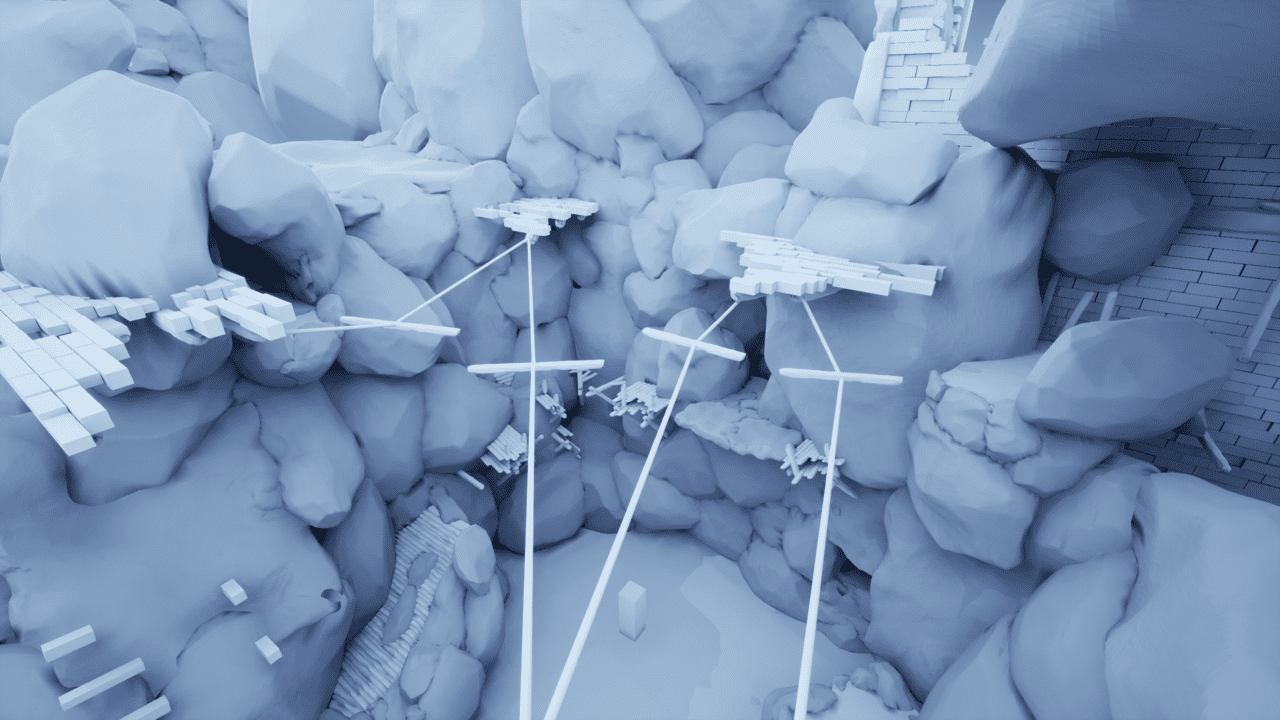
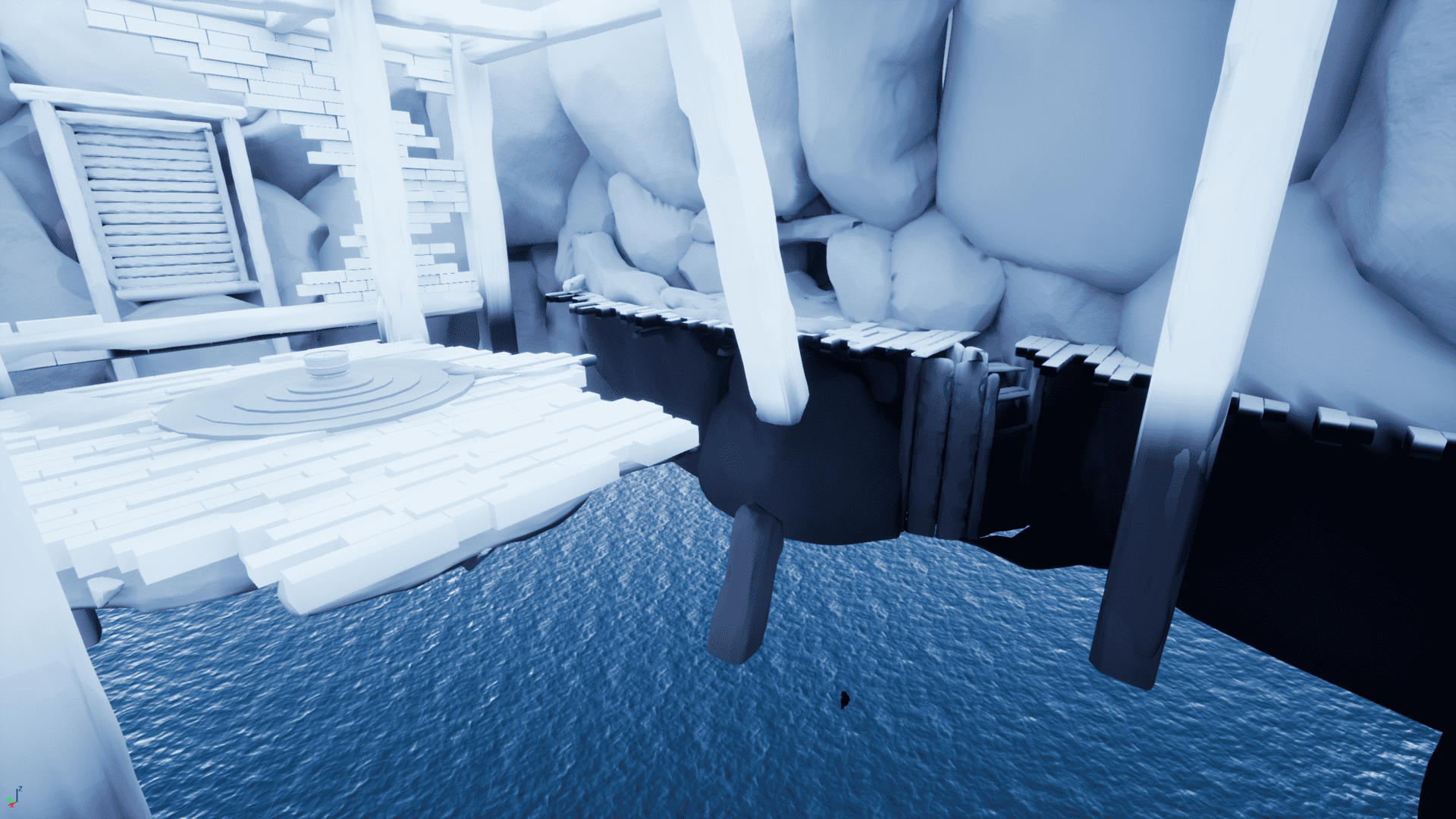
As you delve deeper into the ruins, you’ll encounter crumbling walkways, collapsed structures that block your path, and water-covered platforms that create environmental puzzles and movement challenges. Ancient artifacts are scattered throughout the level, waiting for you to discover and collect.
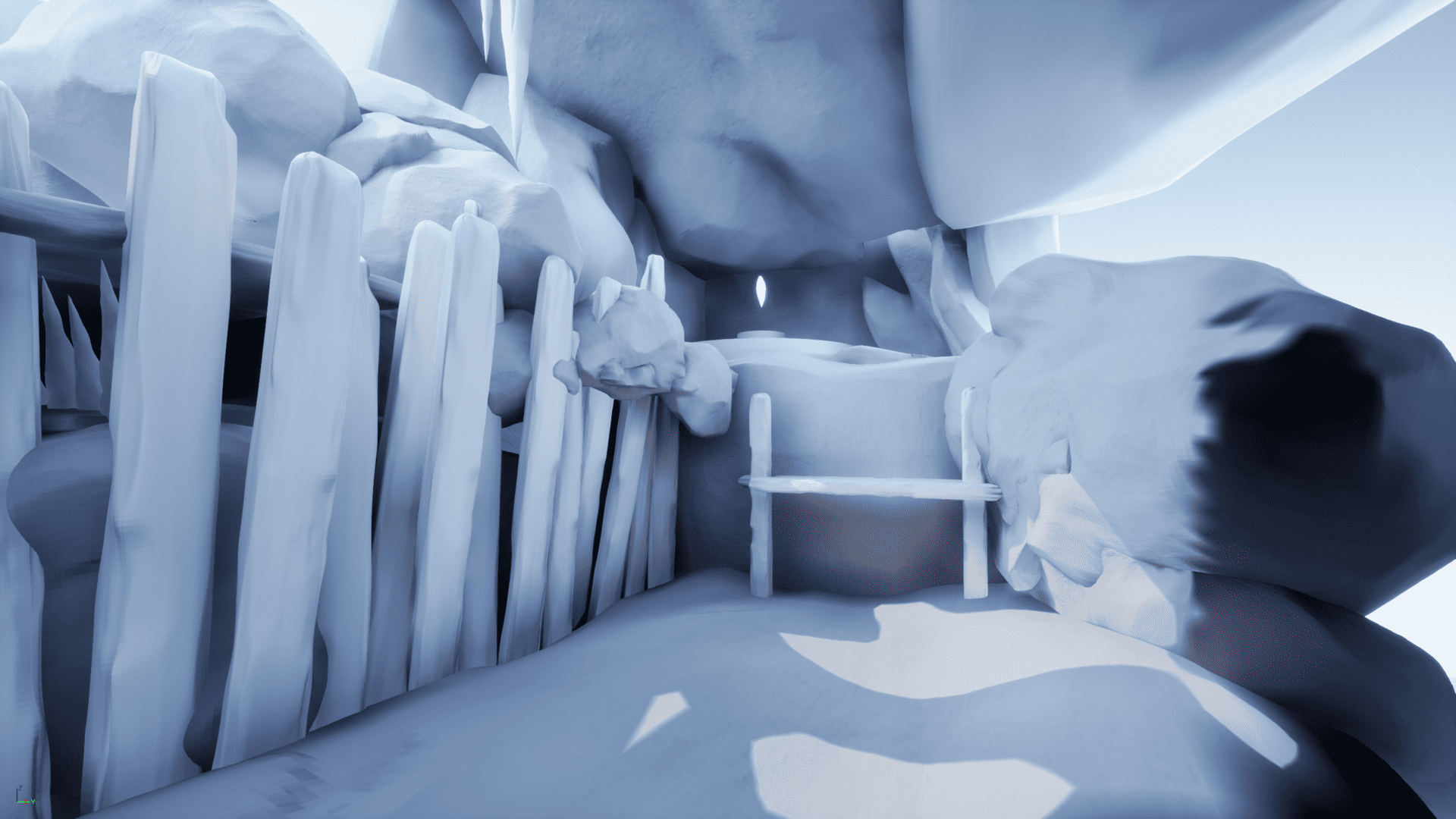
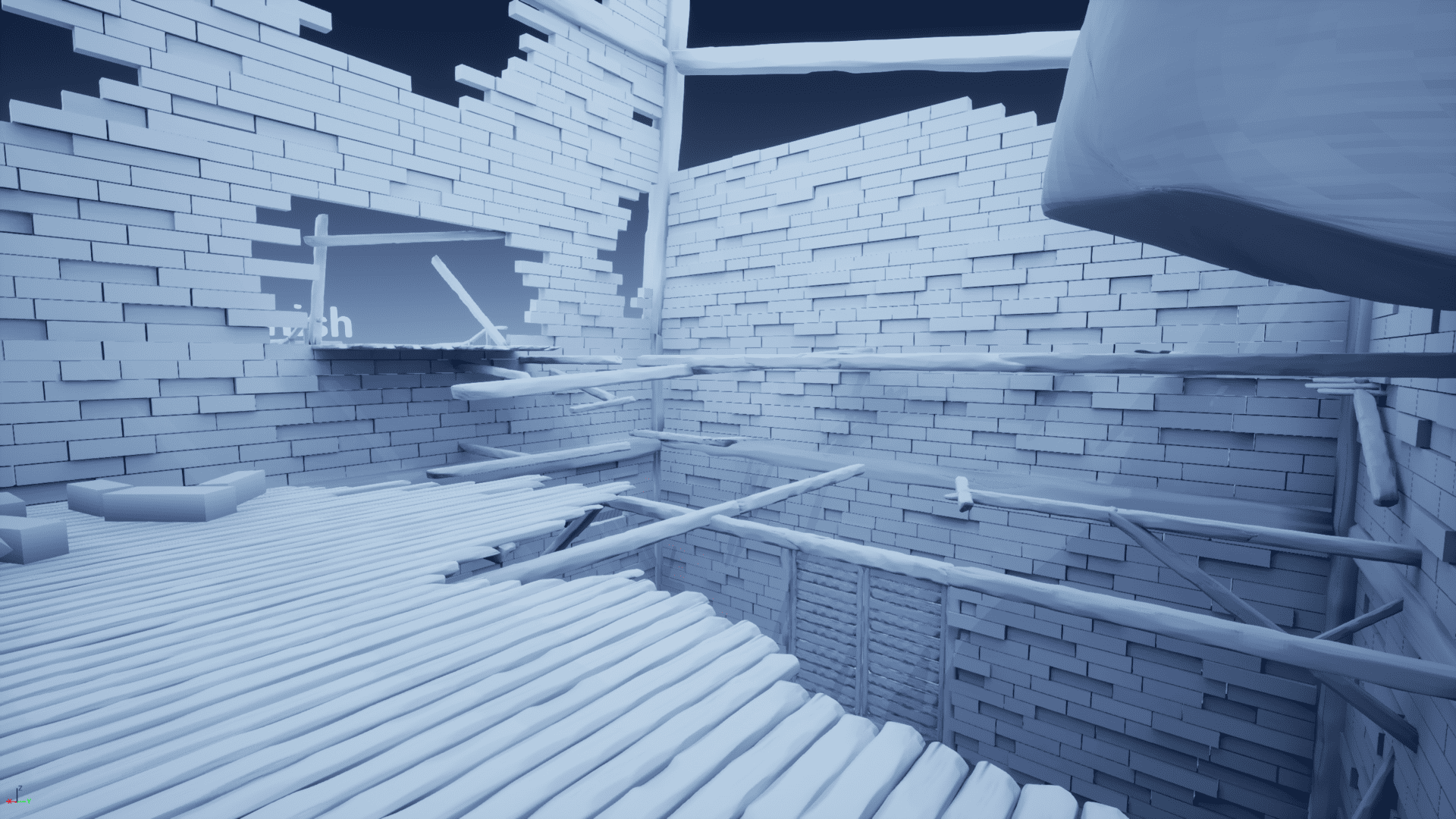
Design Goals:
- Build a greybox level featuring a unique puzzle mechanic that unlocks new areas for the player.
- Use terrain, architecture, and path layout to naturally guide the player’s movement.
- Divide the level into multiple districts, each introducing different types of challenges—such as climbing, traps, or puzzles—to create pacing and a sense of progression.
- Use the structure and layout of the abandoned ruins to let the space itself evoke a sense of mystery, thereby enhancing the player’s immersion in the level.
Design Idea:
At the initial stage of this project, we were tasked with designing a level based on Advanced Locomotion System V4 (ALS V4), a free third-person game template available on the Unreal Engine Marketplace. This template includes a fully implemented movement system for the character, featuring mechanics such as sprinting, jumping, and vaulting over obstacles.
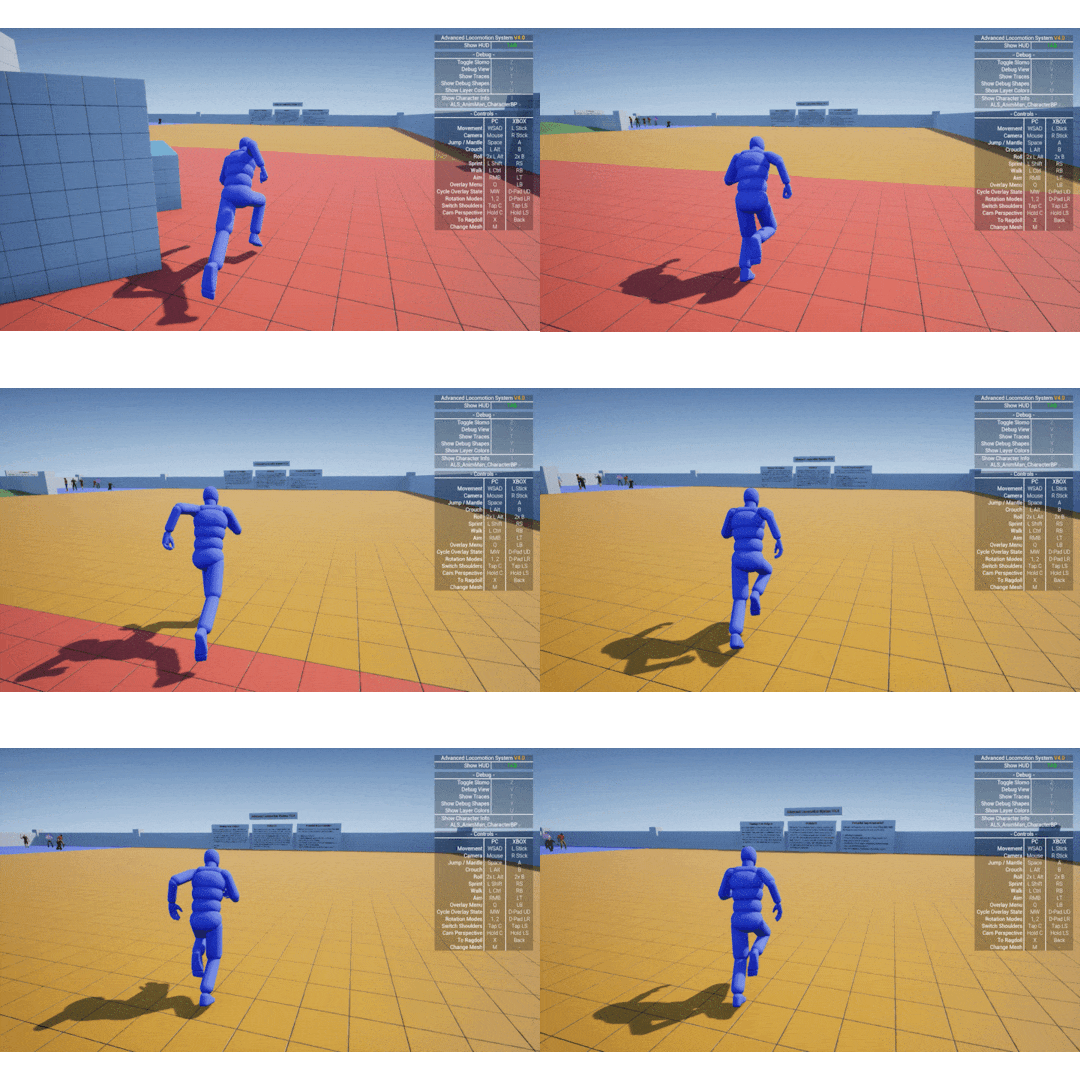
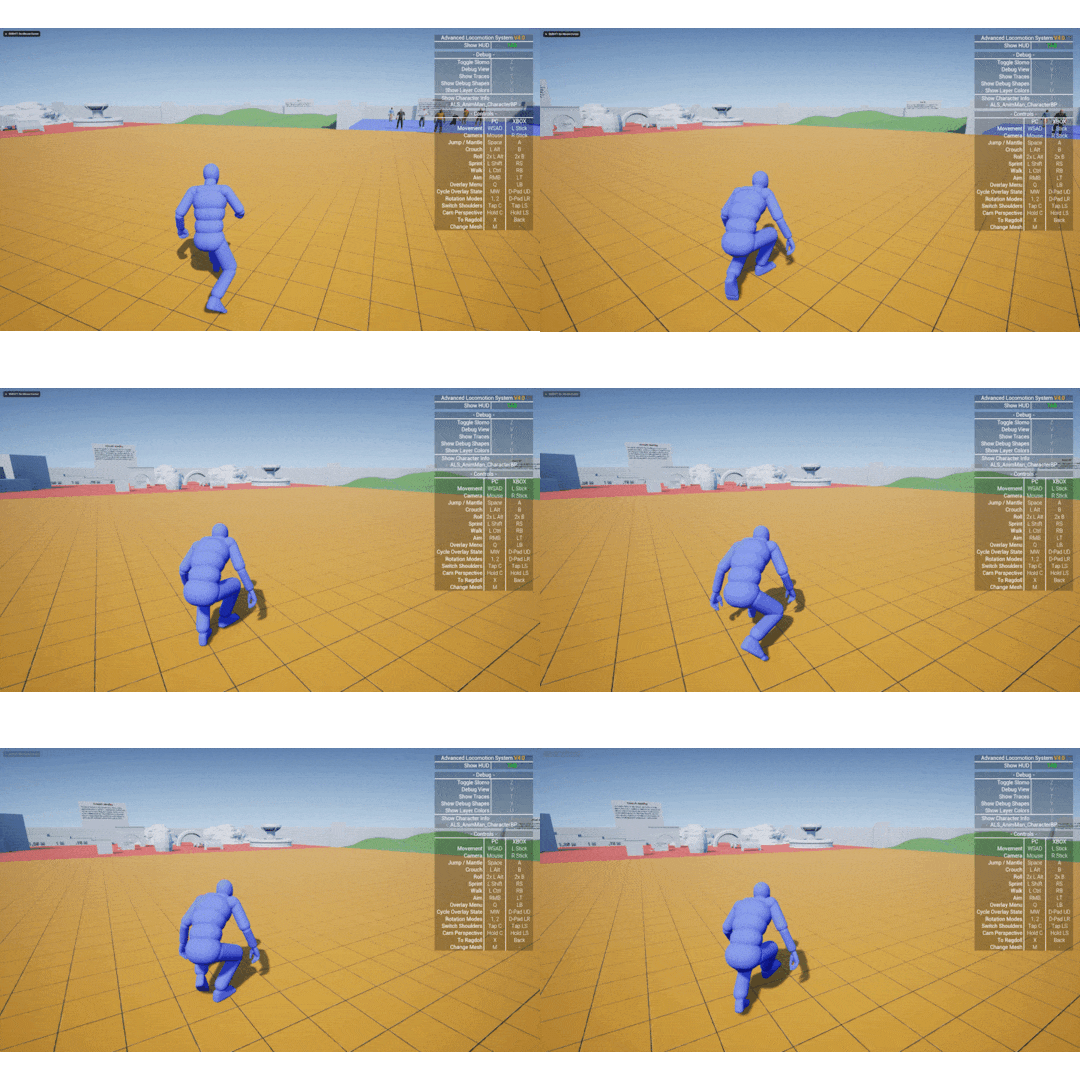
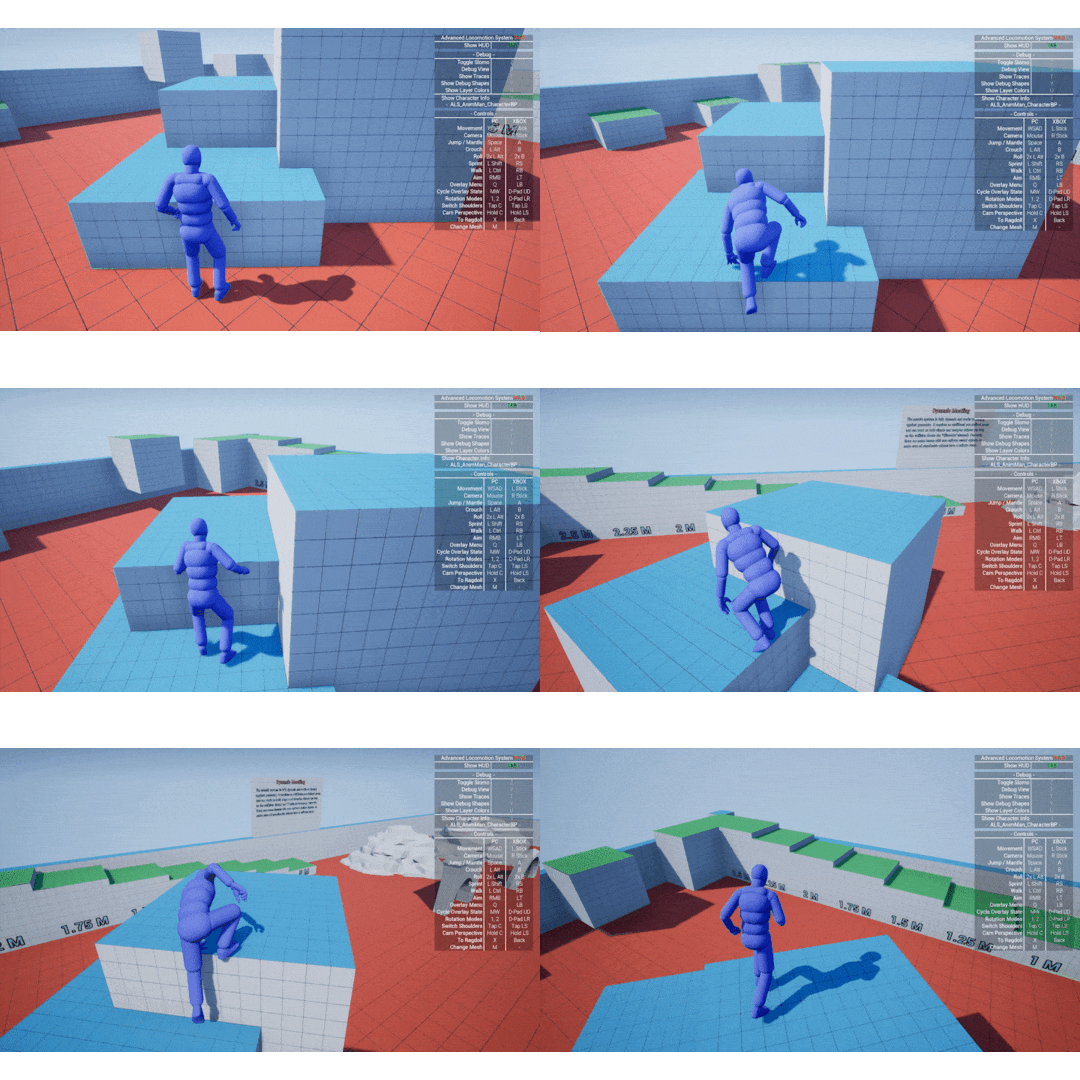
* The Sprinting, crouching, and vaulting over obstacles mechanics in ALS V4
After downloading and play-testing the template, I had a basic understanding of the character’s movement capabilities and core interaction mechanics. Given the character’s high degree of agility and flexibility, I decided to centre the level concept around the interaction between character movement and the environment. The challenges presented to the player during gameplay were designed to correspond directly with these movement abilities—such as elevation changes, broken platforms, and climbable walls.
Building upon these mechanics, I chose to explore the theme of an adventurer navigating ancient ruins through level design. Once the theme was confirmed, I began conceptualising the spatial structure and gameplay direction. To inspire this process, I gathered reference materials including environmental photos, game screenshots, video clips, and visual examples from third-person action games I personally admire. I then created a mood board to help guide the tone, atmosphere, and spatial composition of the level.
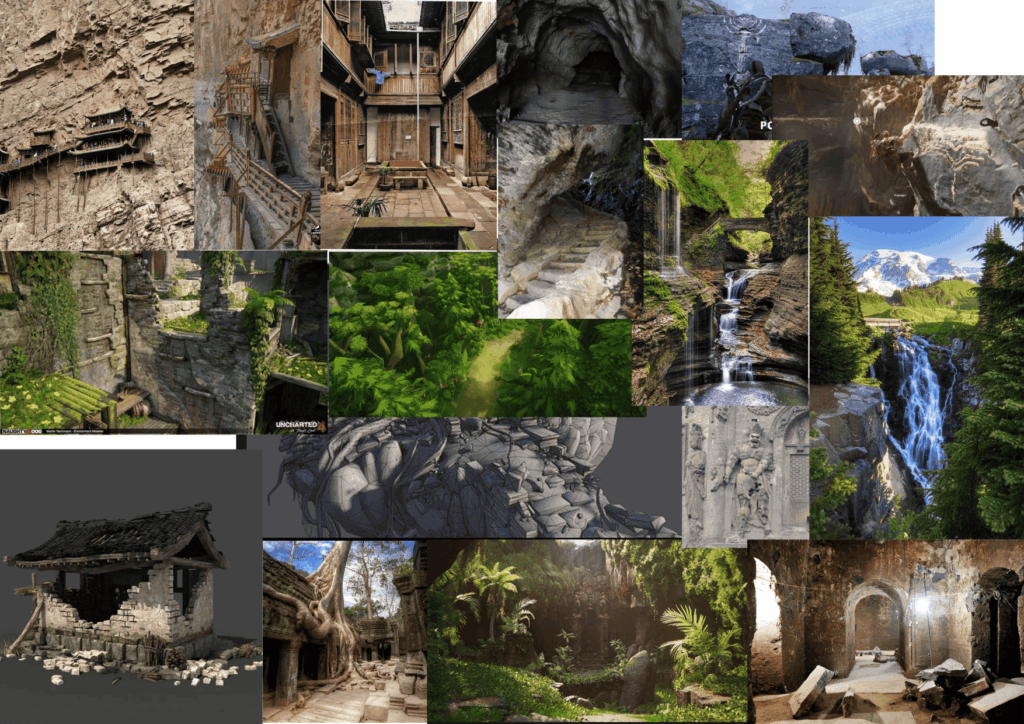
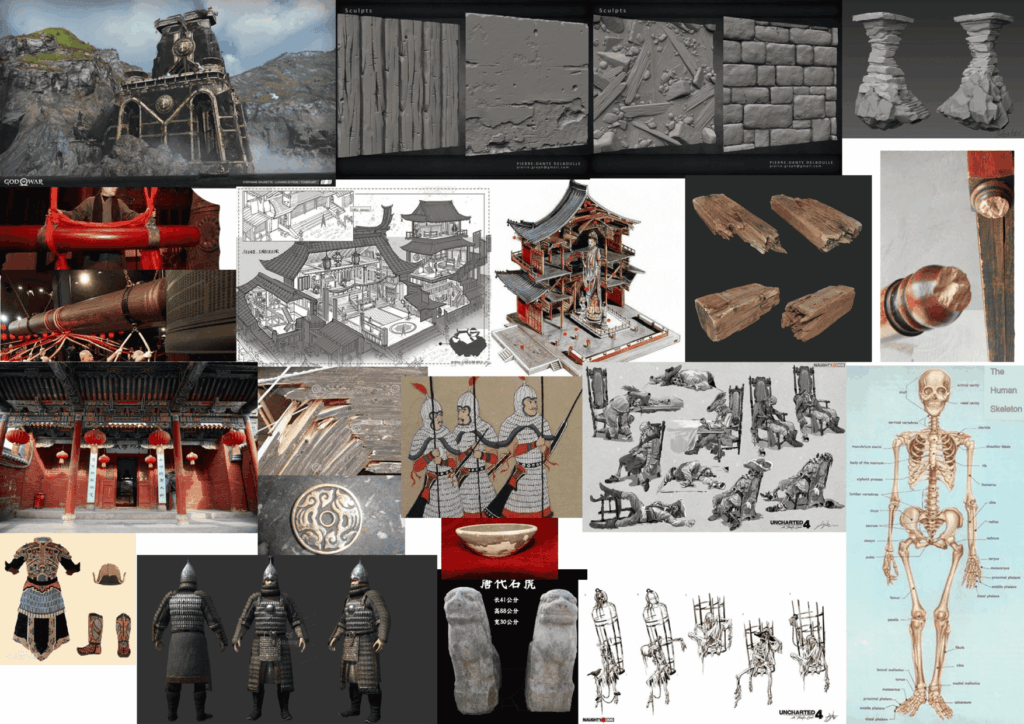
* The MoodBoards
My reference materials primarily focused on cliffside terrain, architecture built into cliffs, traditional Chinese architectural elements, and three influential third-person action-adventure games: Uncharted, Tomb Raider, and the recent God of War. These games not only share a similar third-person perspective but also feature movement systems comparable to the ALS V4 template. Their integration of puzzle-solving and platforming elements, especially the way they guide players across complex terrain through climbing and jumping, provided crucial reference points for my own design process. Ultimately, I defined the core gameplay of my level as a movement-based puzzle experience set in cliffside ruins, with a strong focus on vertical traversal and platforming challenges.
Level Layout:
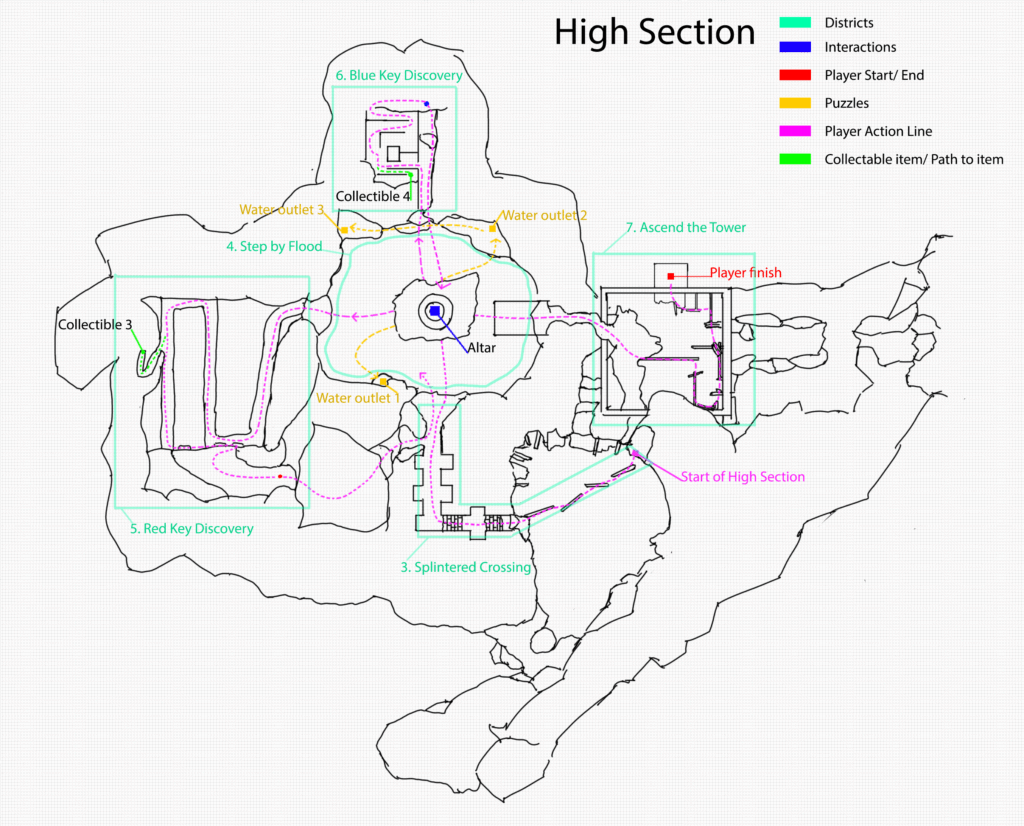
Block Out:
I started by importing the level layout into Maya and used it to model some basic terrain based on my initial sketches. Then, using a mix of custom models and built-in static meshes from Unreal Engine, I built an early blockout version of the level inside the engine.
Once the core structure was in place, I ran in-game tests to evaluate the spatial scale and gameplay pacing. I focused on checking the level’s metrics—making sure jump distances between platforms matched the character’s abilities, and verifying that tight spaces like crawl-through caves or narrow gaps were traversable.
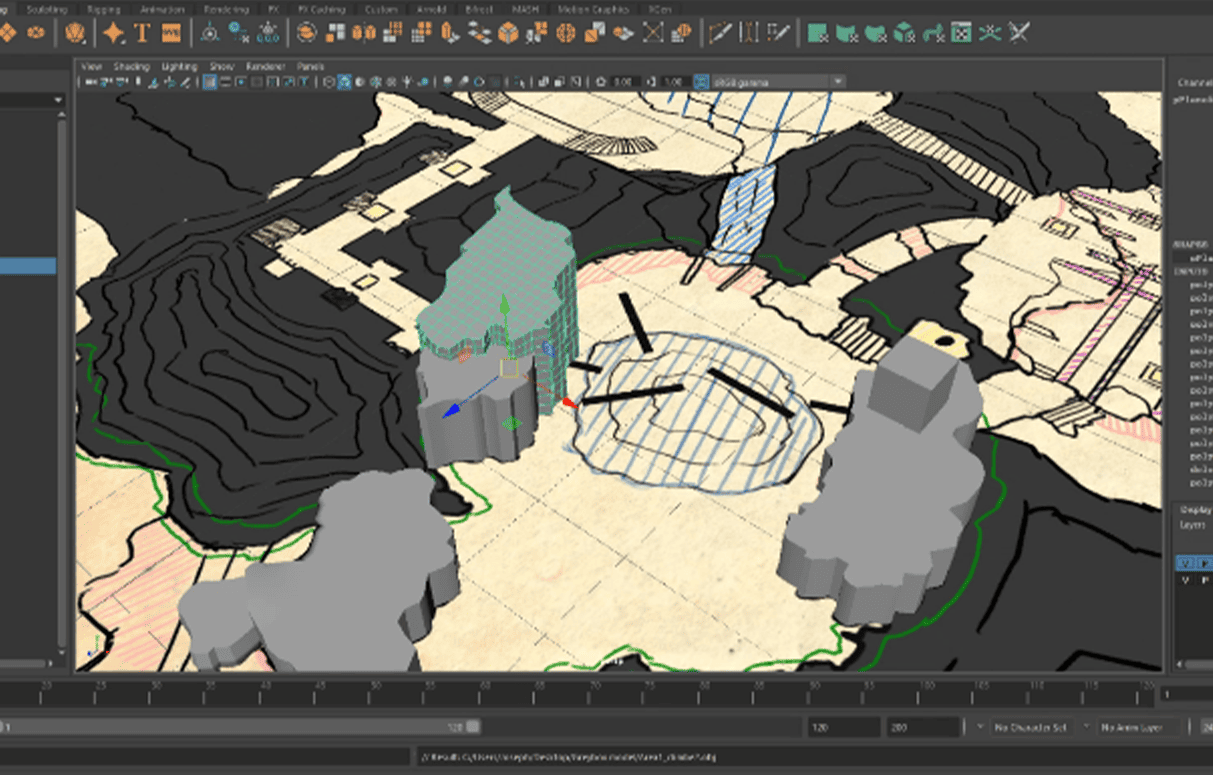
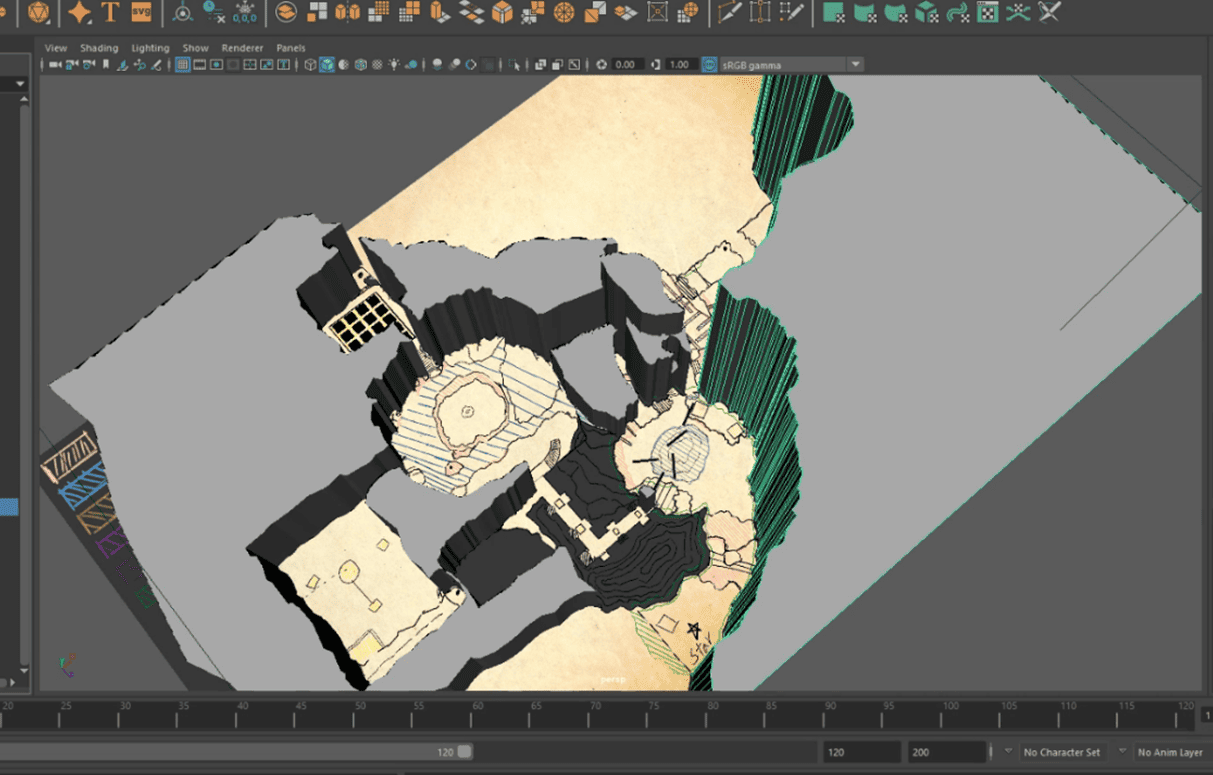
* I modelled the level’s terrain based on the layout design inside Maya.
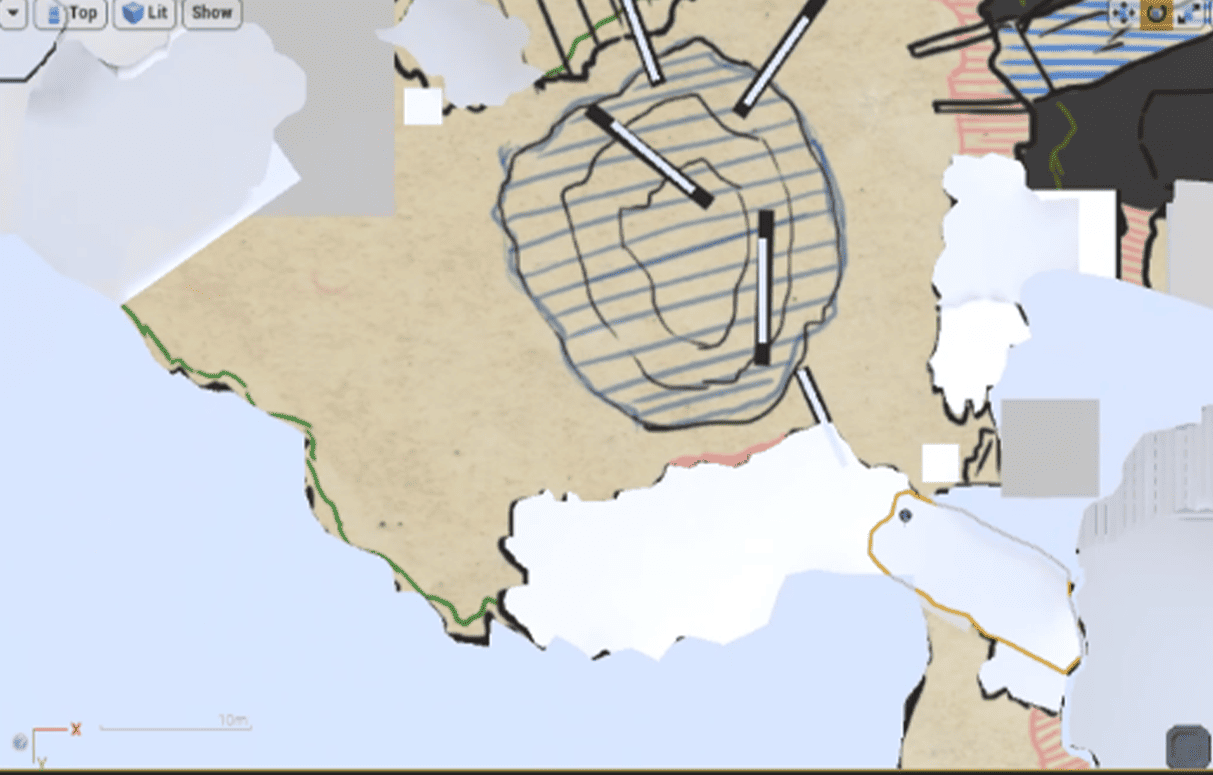
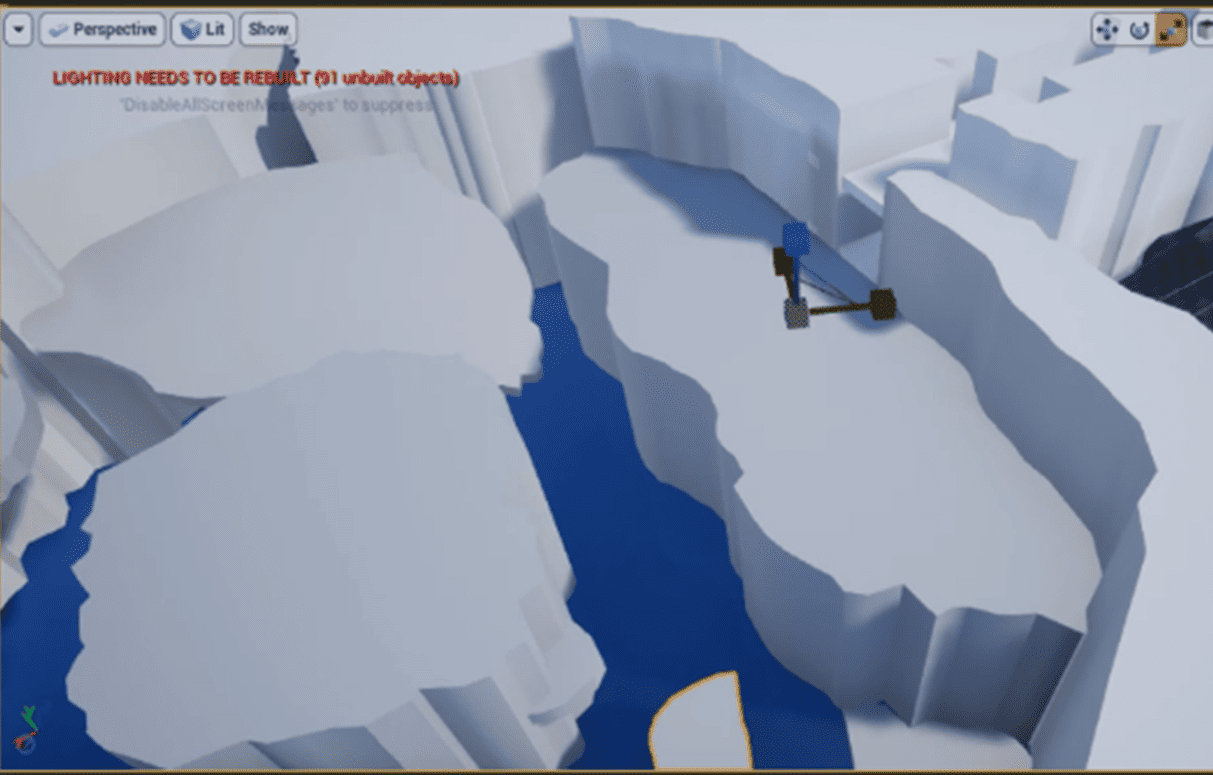
* In Unreal Engine, I used the built-in blocks to complete the level’s details.
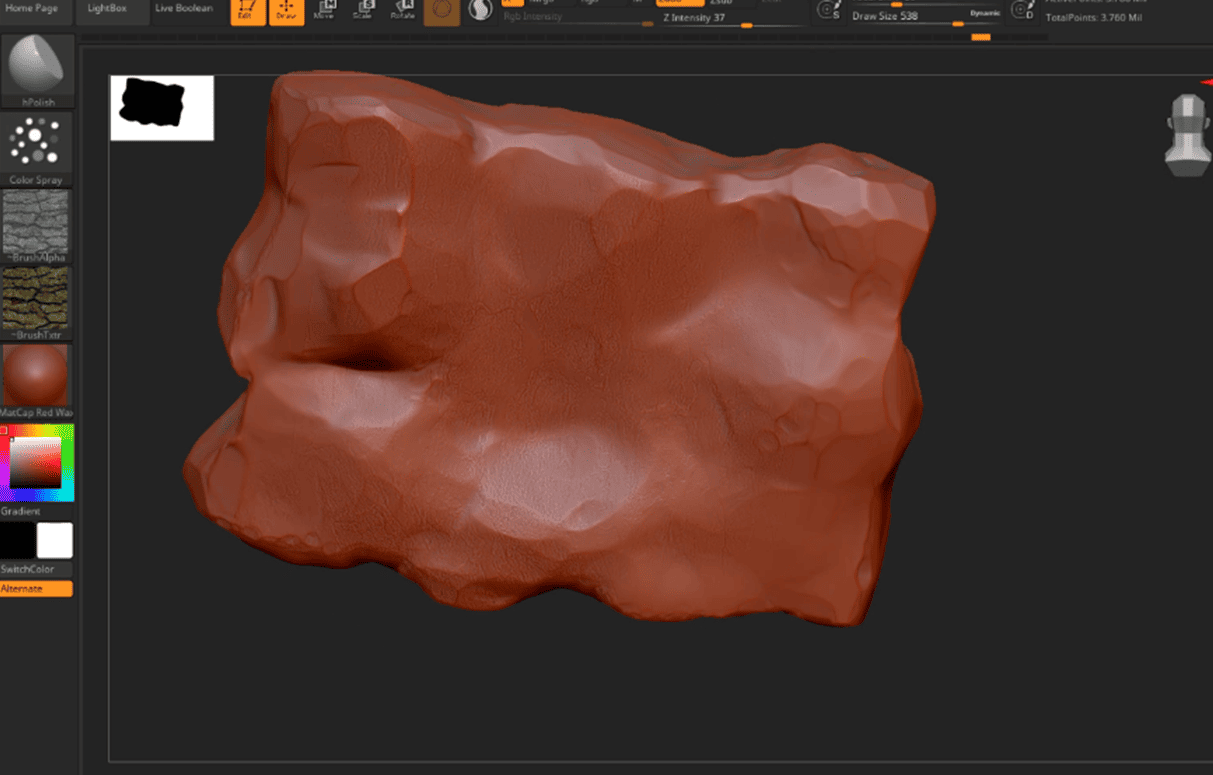
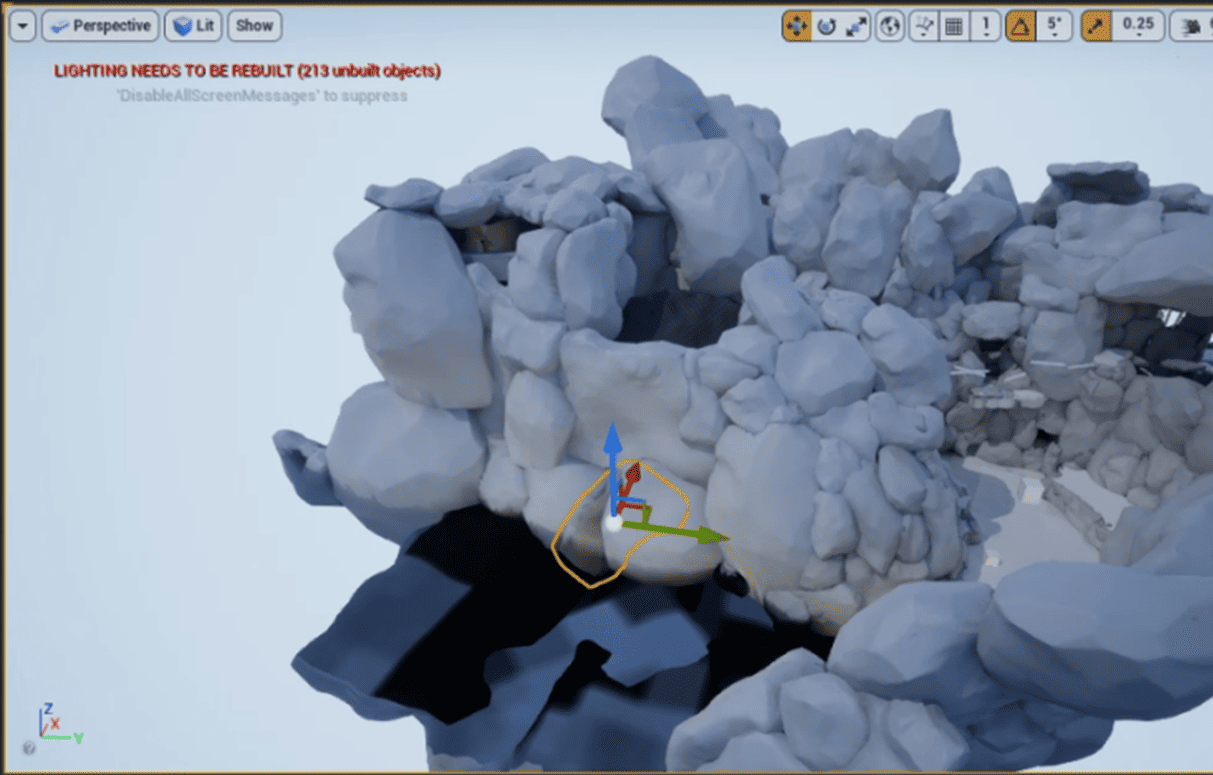
After several rounds of fine-tuning, I ensured the layout was fully compatible with the ALS V4 character controller. As the structure became more finalized, I began replacing the early greybox blocks with proper models. I sculpted rock and wooden frame assets in ZBrush to represent natural terrain and ancient architecture, and gradually brought them into the scene to enhance the visual atmosphere and strengthen immersion.
Puzzle Mechanics & Unreal Blueprint Coding:
Water Reservoir Puzzle
This puzzle is located in the third districts of the level, under the altar, and revolves around a dynamic water level mechanic. When the player steps onto the altar platform, a collapse is triggered, dropping them into a reservoir below. At first, the water level is at its lowest, allowing access only to the first water outlet.
Interacting with this outlet causes the water level to rise, granting access to the next outlet. This process repeats three times. After all three outlets have been activated, the water rises to its highest level, flooding the broken altar platform and allowing the player to climb back up.
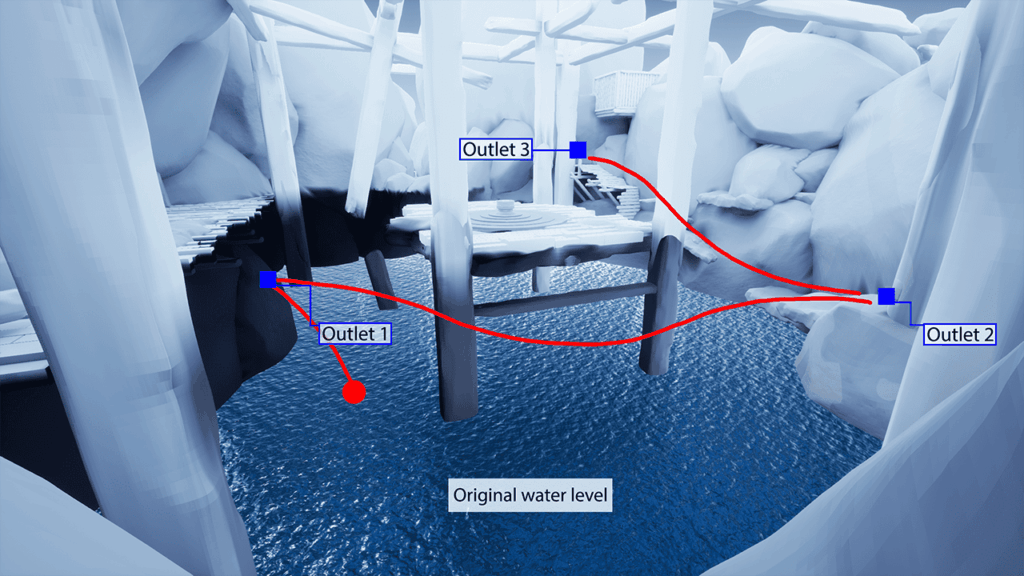
Each time the water rises, a hidden timer is triggered—representing leaks in the reservoir walls. Once the timer ends, the water slowly drains back to its original level. This creates a time-limited window where players must analyze the layout, execute their jumps, and reach the next outlet before the water level drops again, or they’ll have to start over.
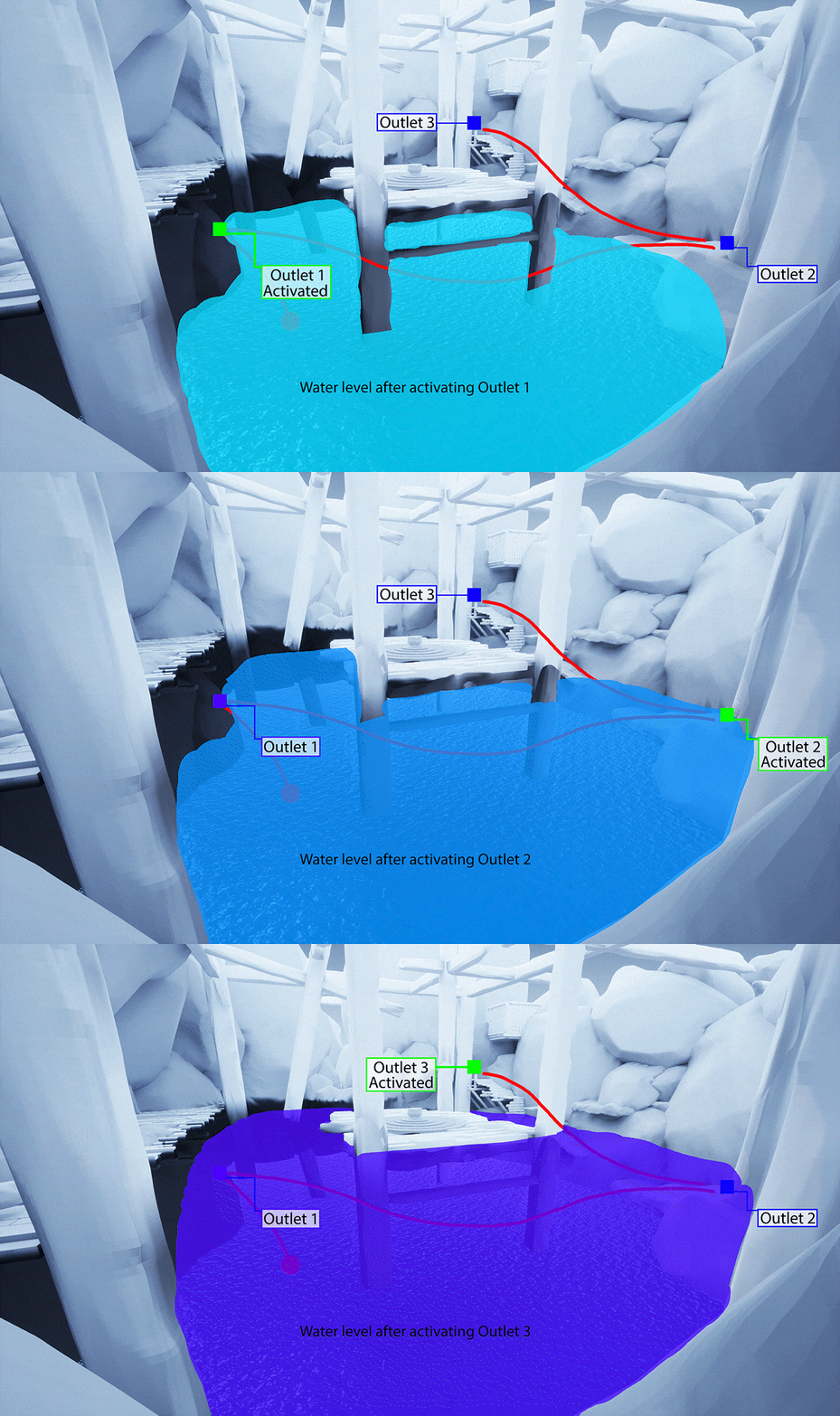
The puzzle challenges players to respond to environmental changes and manage time under pressure. Through repeated trial and error, they begin to recognise the underlying rhythm: actions must be timed with the rising water. The dynamic water level functions both as a shifting pathway and a form of feedback, making the experience feel intuitive and engaging.
Game Beats:
Traversal1 – Traversal2 – Traversal3– Puzzle1-Traversal4- Traversal5- Traversal6
1. Crumbling Ascent
Gameplay: Traversal 1 | Platformer
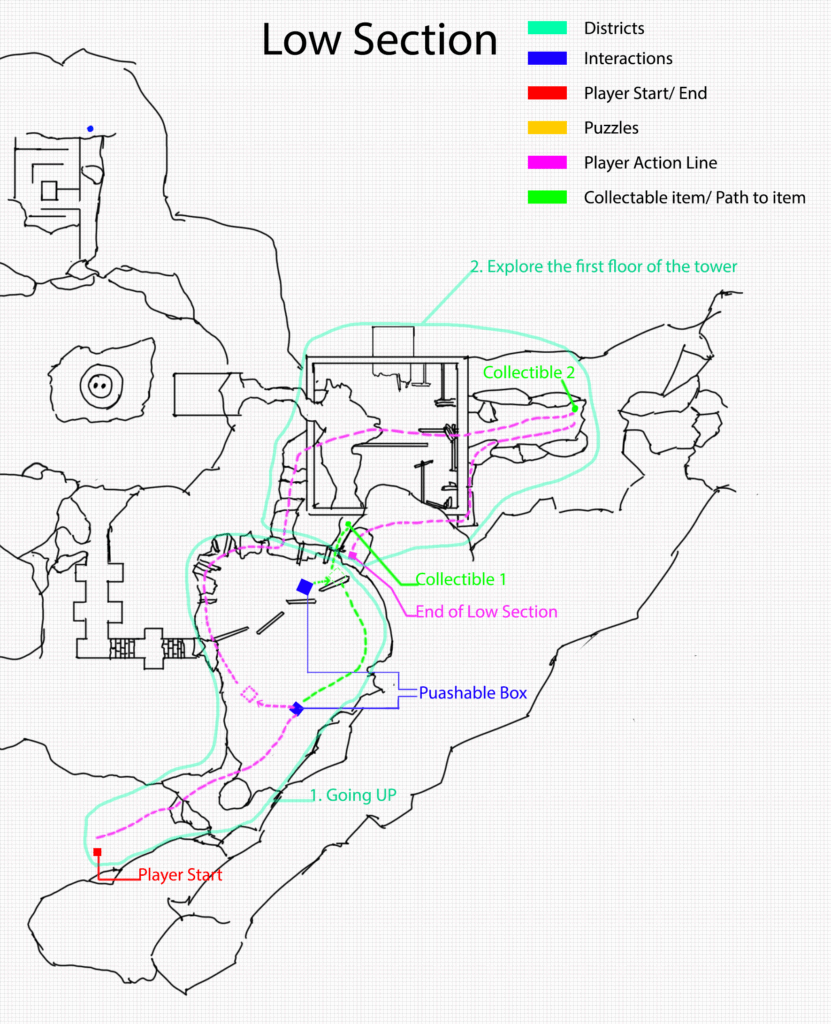
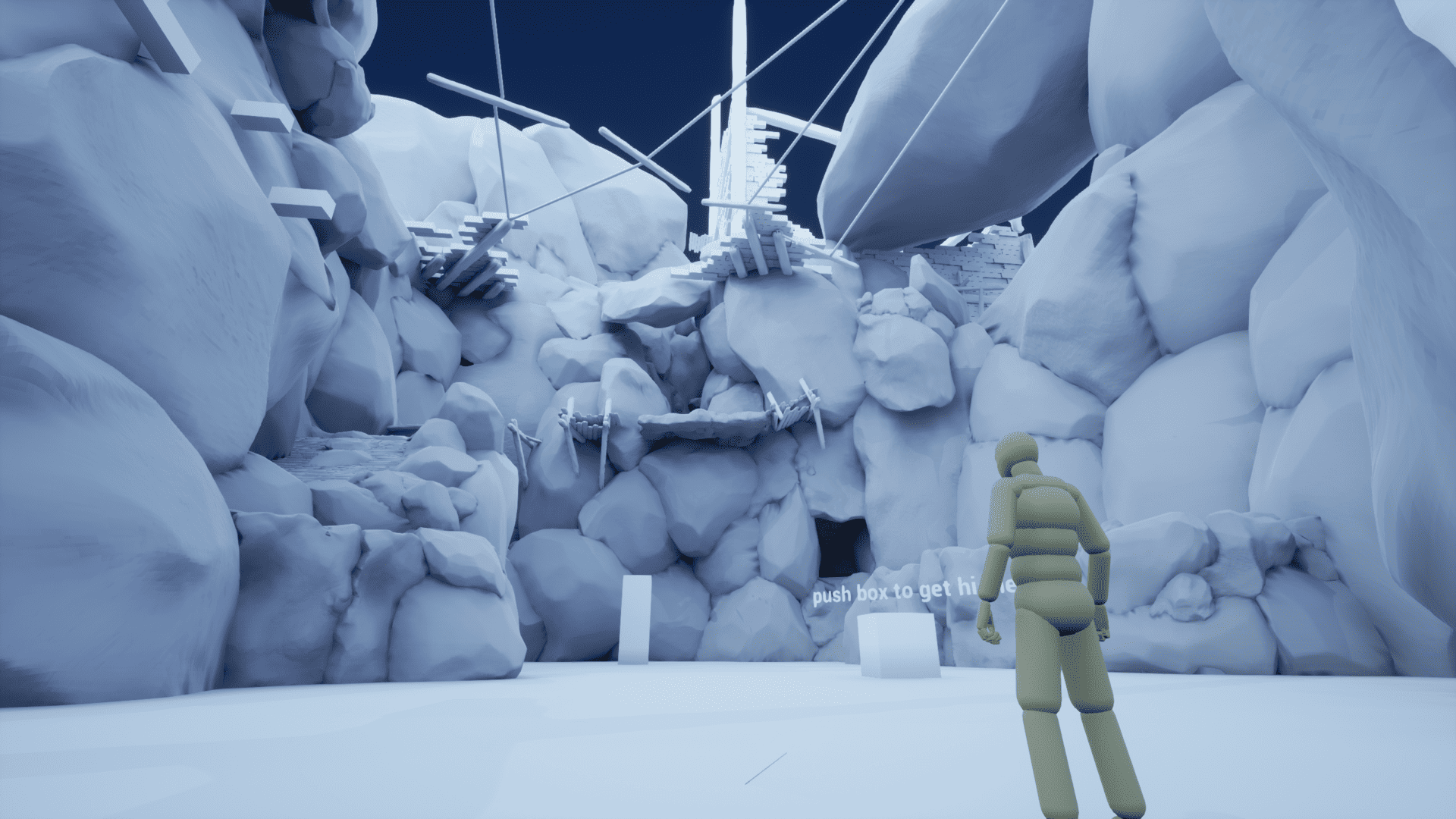
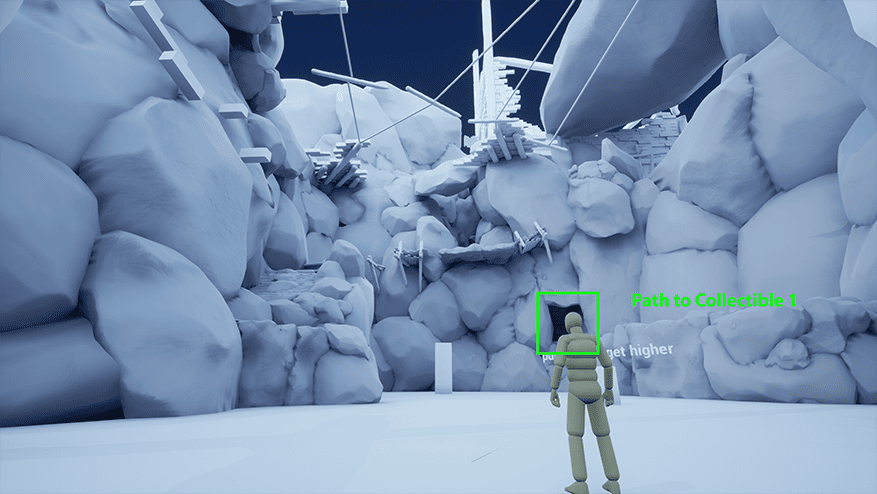
At the base of the mountain, the adventurer looking up at the ancient tower ruins, making a clear goal for this trip. Climbing along a cliffside path, they soon encounter a gap that’s too high to jump. Nearby, a wooden box can be pushed into place as a stepping stone, allowing the adventurer to reach the upper ledge and continue forward.
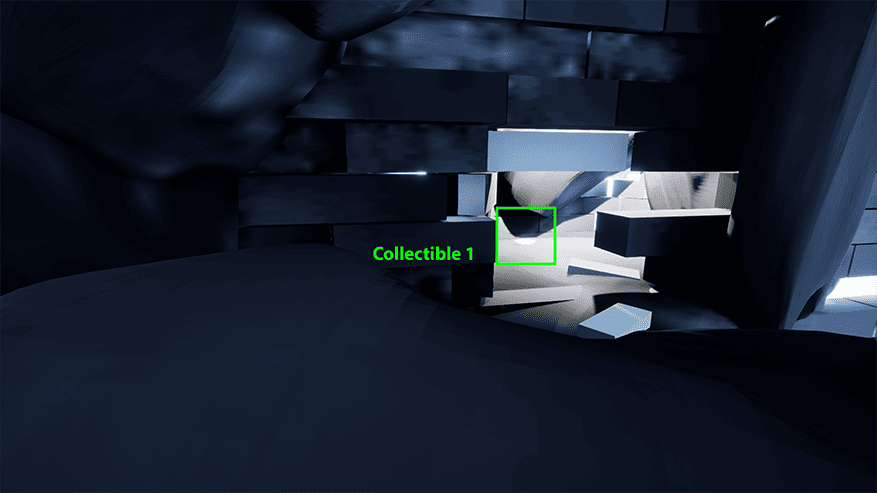
Collectible 1 is hidden inside a cave near the mountain base(The Green Mark). Players can push a wooden box in front of the cave entrance to climb in.
Location: Mountain base
Duration: 3 mins
2. Explore the First Floor of the Tower
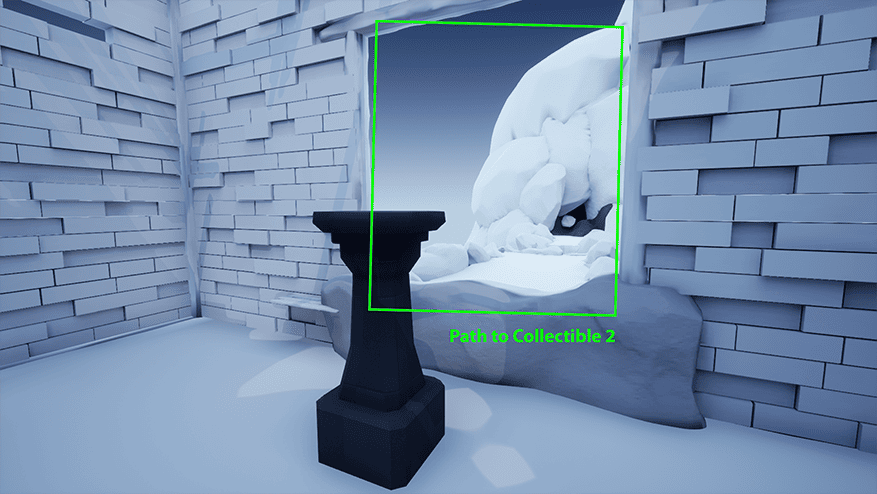
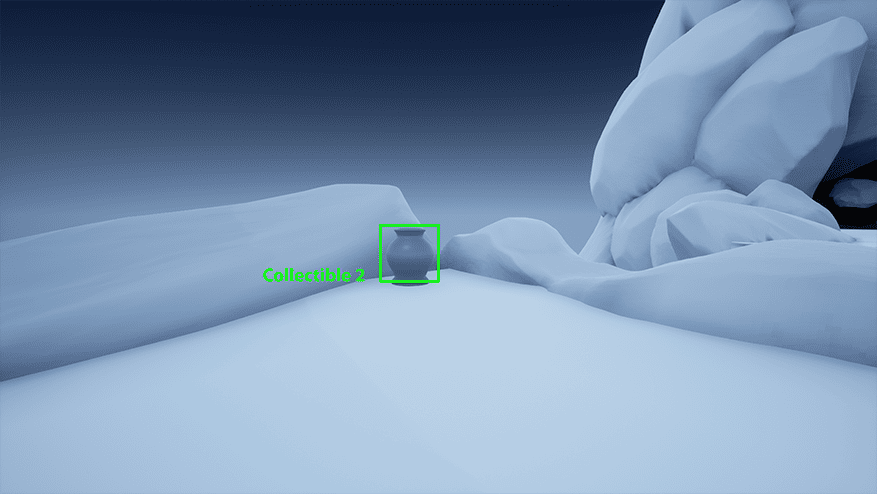
Gameplay: Traversal 2 | Platformer
Entering the tower through a collapsed section, the adventurer finds the first floor has been looted and abandoned. He exits via a broken doorway and begin climbing around the outer wall, looking for another way into the higher floor of tower.
Collectible 2 is placed on a ledge near the fallen tower gate.
Location: Tower interior – ground level, outer walls
Duration: 2 mins
3. Splintered Crossing
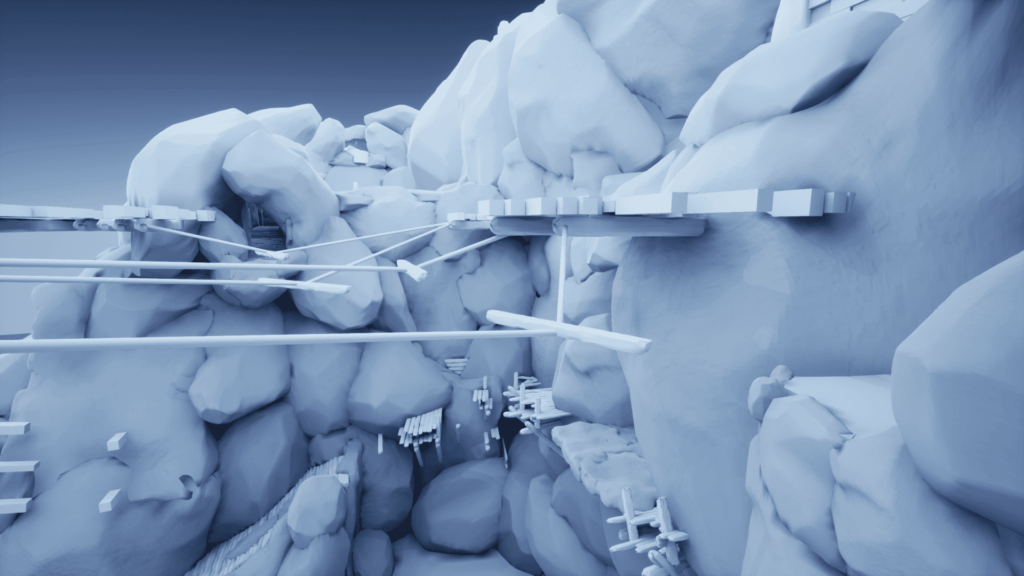
Gameplay: Traversal 3
The adventurer reaches a broken cliff edge. Suspended wooden platforms hang overhead, supported by decaying beams. To move forward, he must quickly jump across unstable boards and navigate a half-collapsed pit surrounded by rock walls, where unstable ground forces careful step-by-step movement to avoid falling into the abyss.
Location: Mountain ravine
Duration:1 min
4. Step by Flood
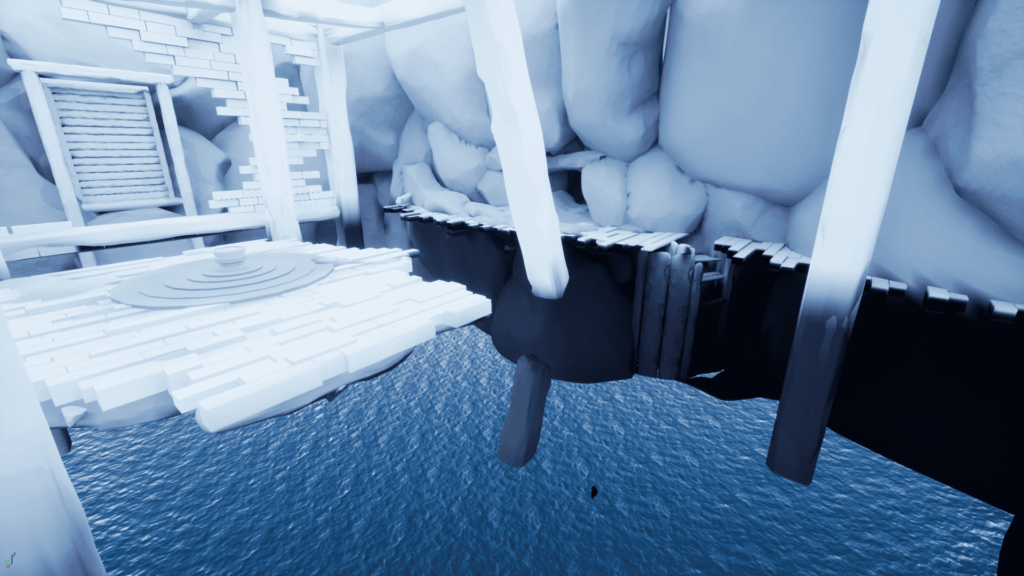
Gameplay: Puzzle 1
Upon stepping onto the altar platform, the floor gives way and the adventurer falls into a flooded reservoir. Adventurer spot water outlets at varying heights. Interacting with the first outlet raises the
water level, allowing access to the next outlet. Repeating this process raises the water high enough to escape via the collapsed structure and return to the altar.
Location: Submerged ruins
Duration: 1 min 30 sec
5.Red Key Pickup (order can be swapped with Blue key)
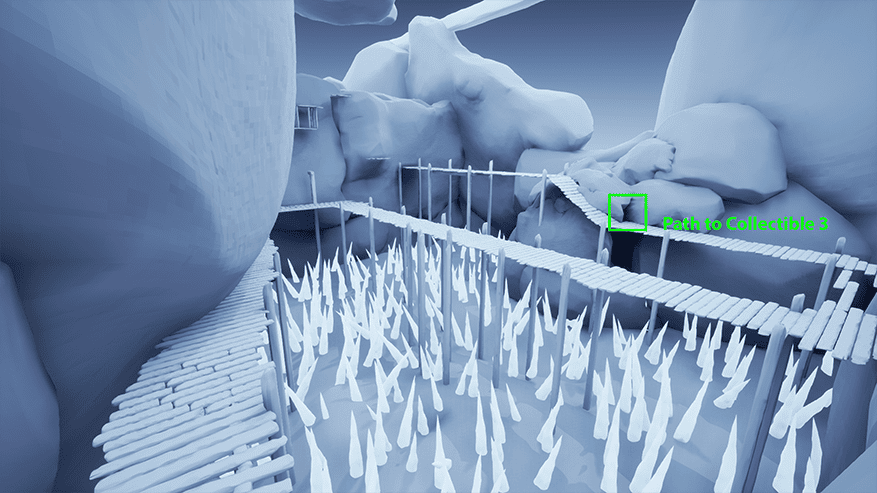
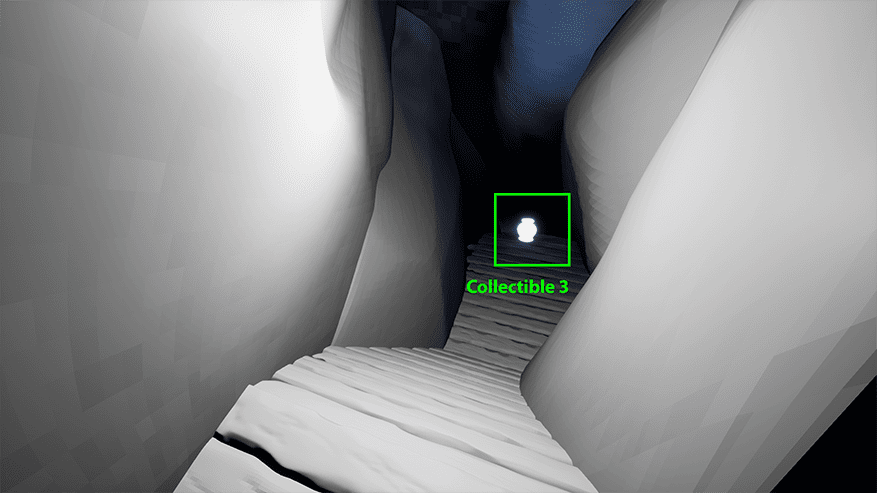
Gameplay: Traversal 4 | Platformer
With the water level still partially raised, the adventurer moves through a nearby area looking for keys to unlock the central altar. He follows a narrow wooden pathway and spot a red key on a high platform.
Collectible 3 is hidden in a cave next to the path. Players can enter the lower level of the cave to find it.
Location: Submerged ruins
Duration: 3 mins
6. Blue Key Pickup (order can be swapped with Red)
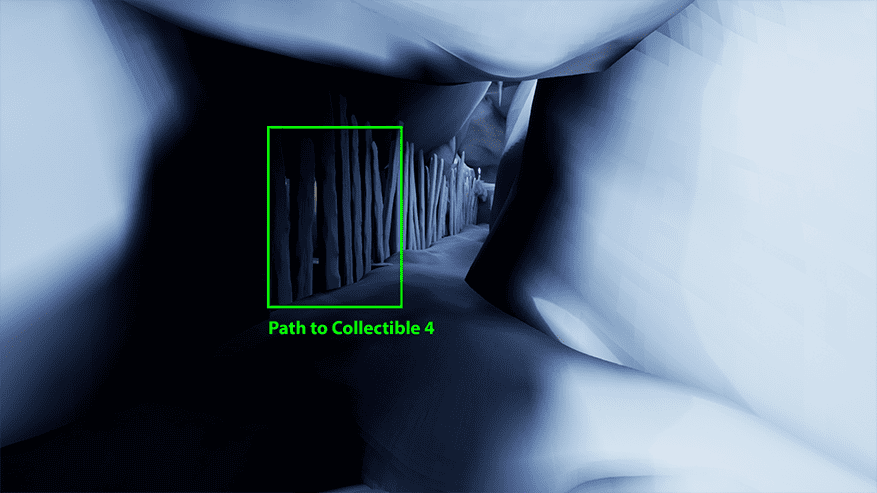
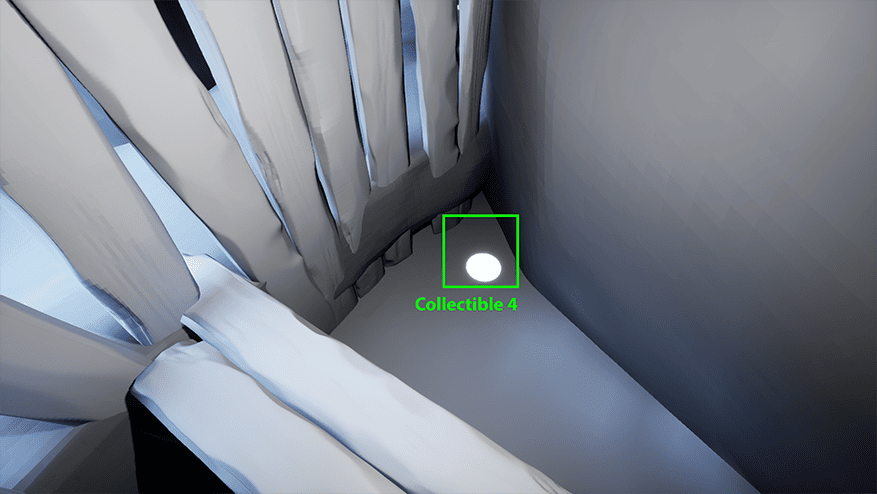
Gameplay: Traversal 5 | Maze
The adventurer enters a cave and spots the blue key in the distance. Just as they approach, a boulder crashes down, blocking the path. He detours through a broken section of the wooden fence to search for an alternate route.
Collectible 4 is hidden down a side path.
Location: Submerged ruins
Duration: 4 mins
7. Ascend the Tower
Gameplay: Traversal 6
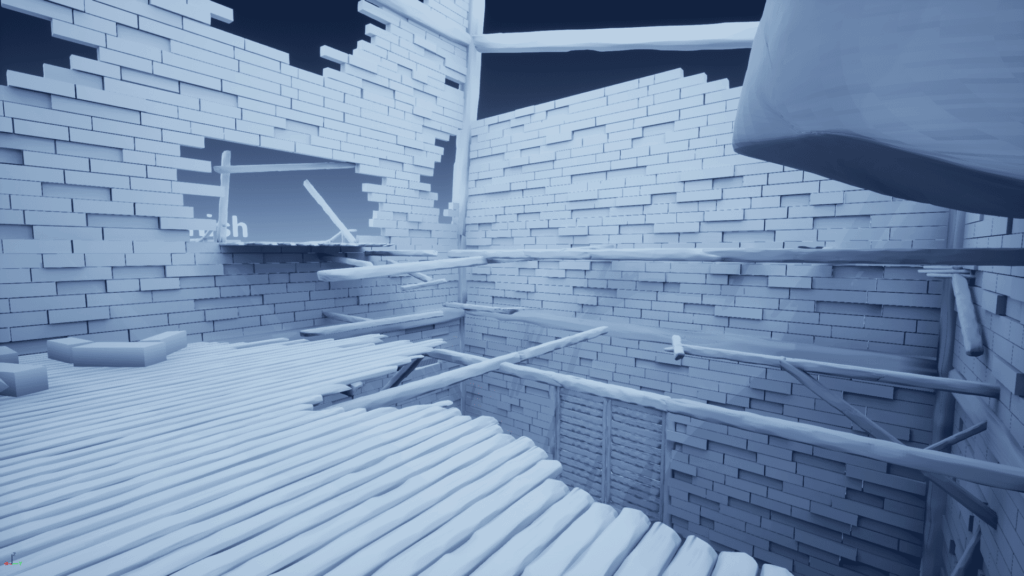
After inserting the keys, the gate slowly opens. The adventurer enters and climbs through the ruined tower’s remains, using broken beams as makeshift handholds. The adventurer finally reach the top floor.
Location: Tower interior – top level
Duration: 2 mins
