 Skip to content
VR Puzzle Game - Group Project (Level & Game Designer)
Production Details:
- Made in 8 Weeks (Alongside assignments with other courses.)
- Unreal 4 Engine
- Based on Unreal 4 VR template
Team of 2 Project
Personal Responsibilities:
- Level Design
- Game Design
- Unreal Blueprint coding
- Modeling & Texturing
* The level metrics may look too high because the VR head is not set at the correct height when recording the playthrough footage.
About the game:
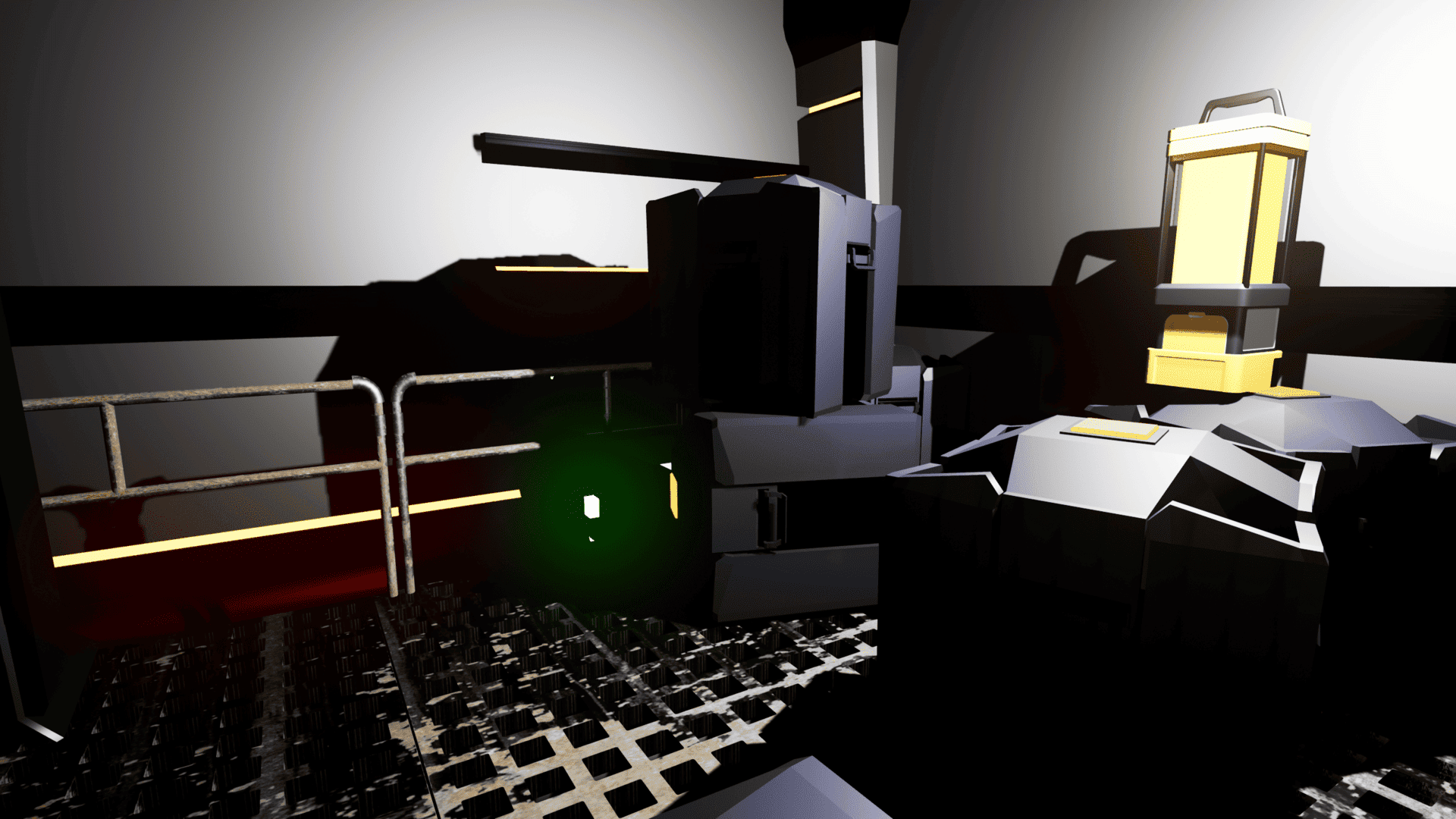
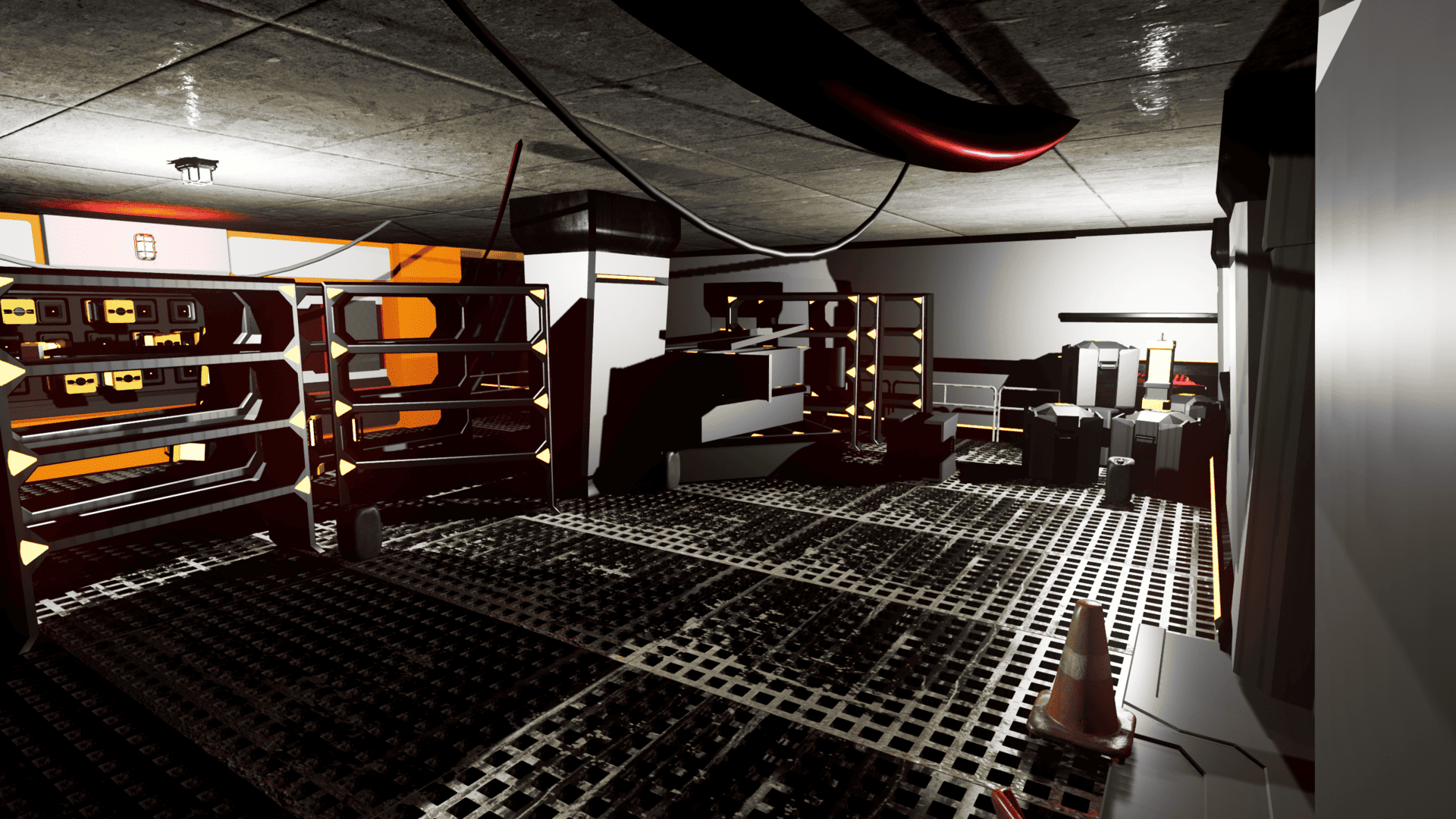
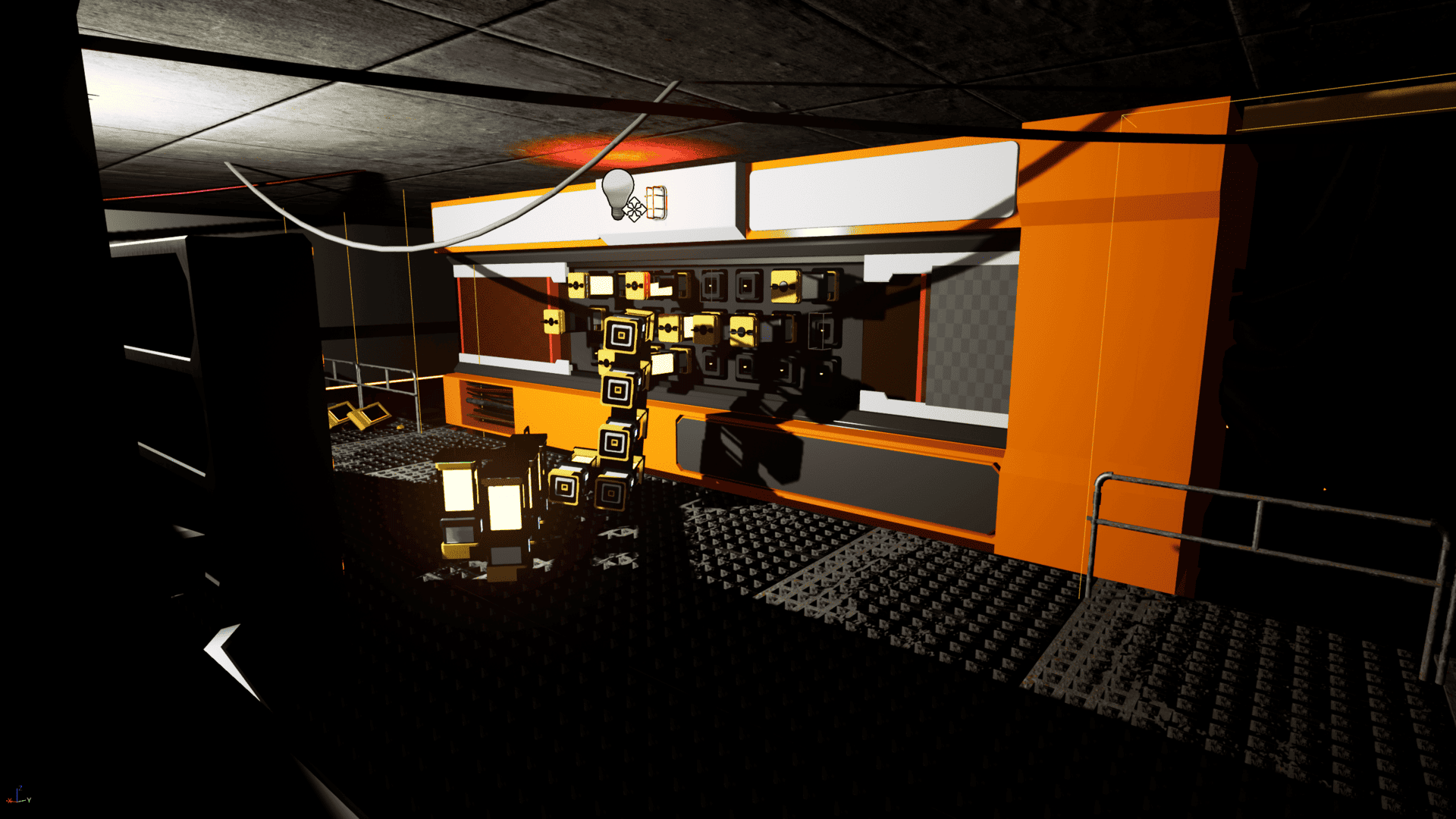
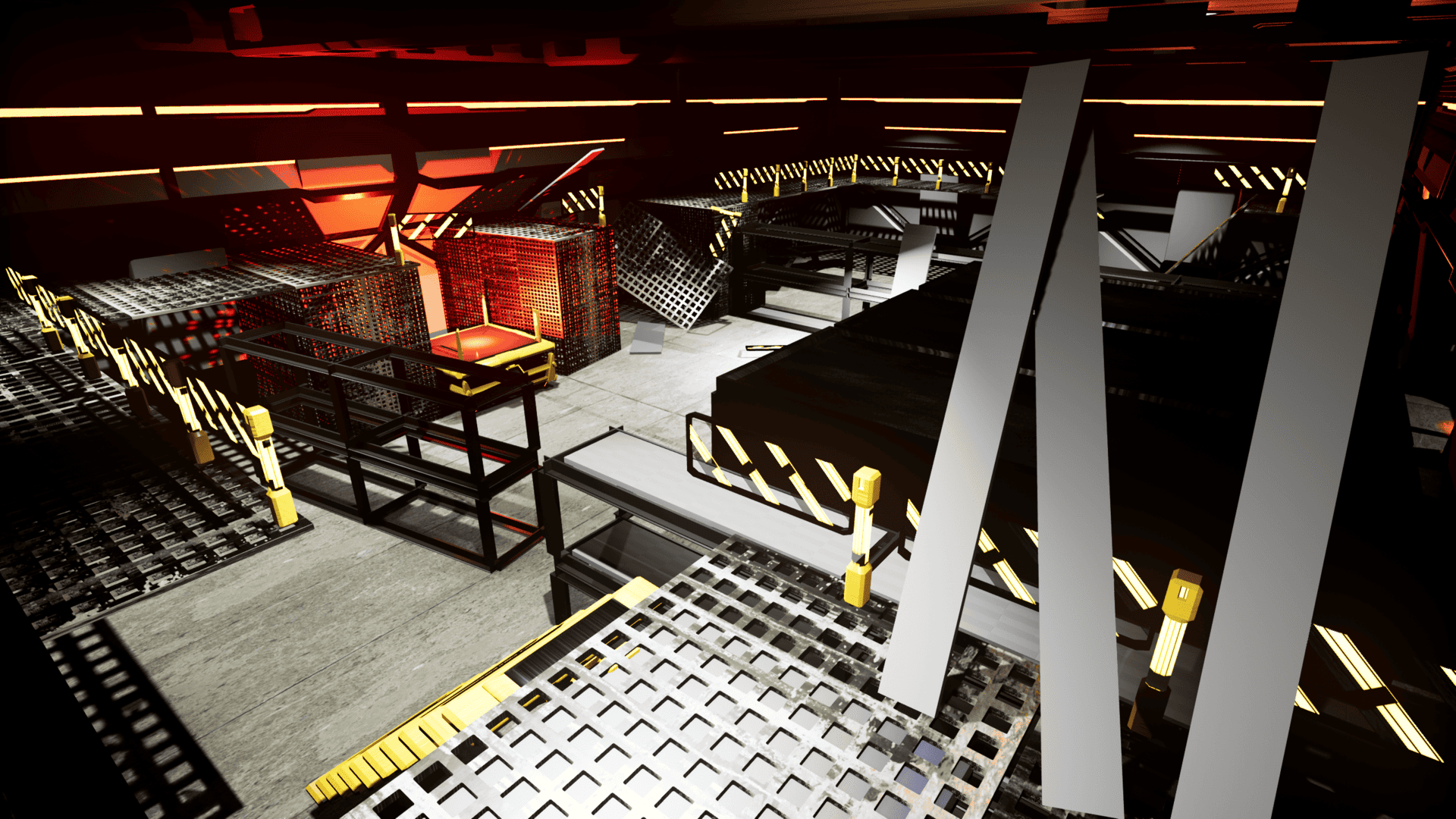
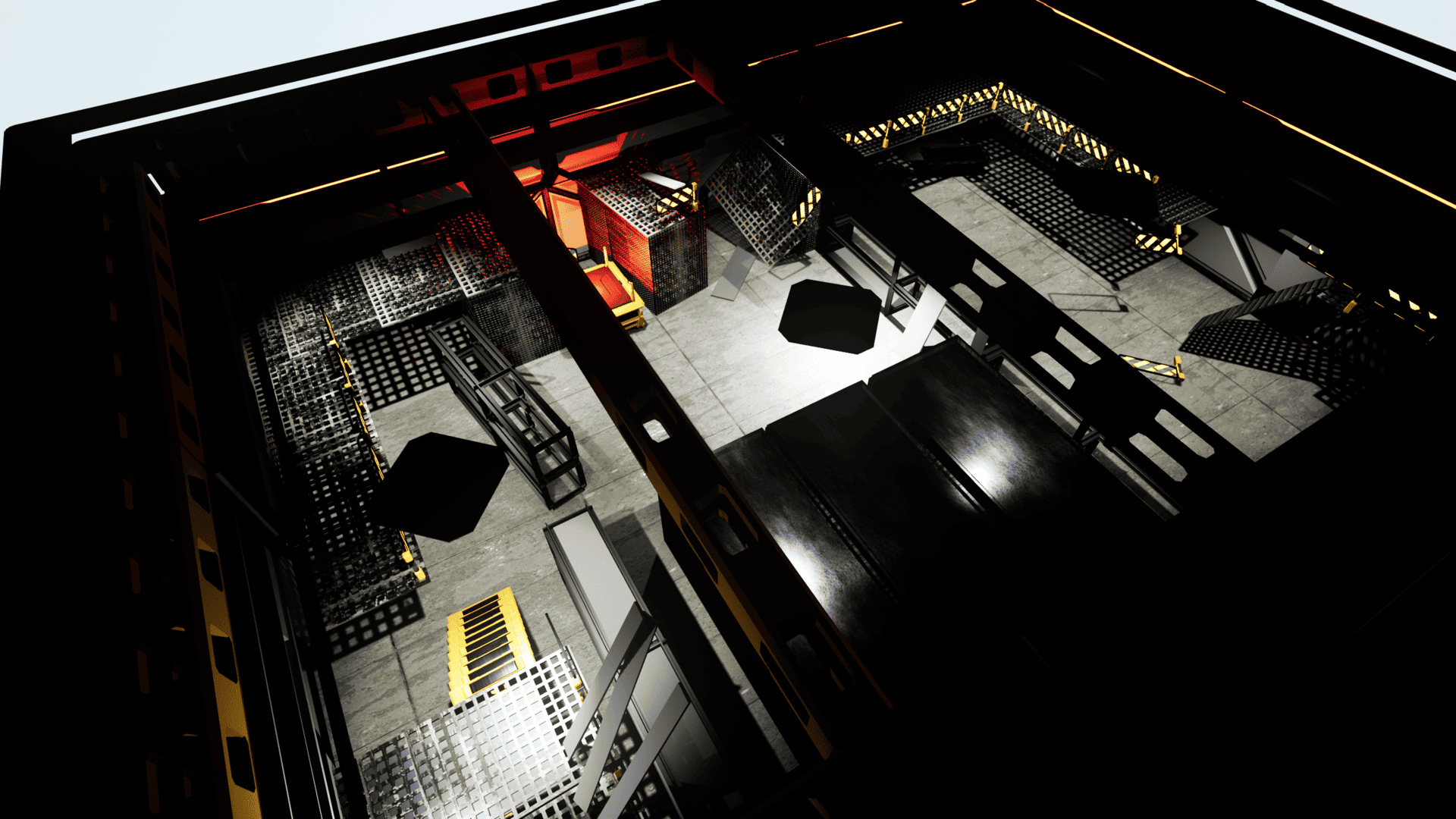
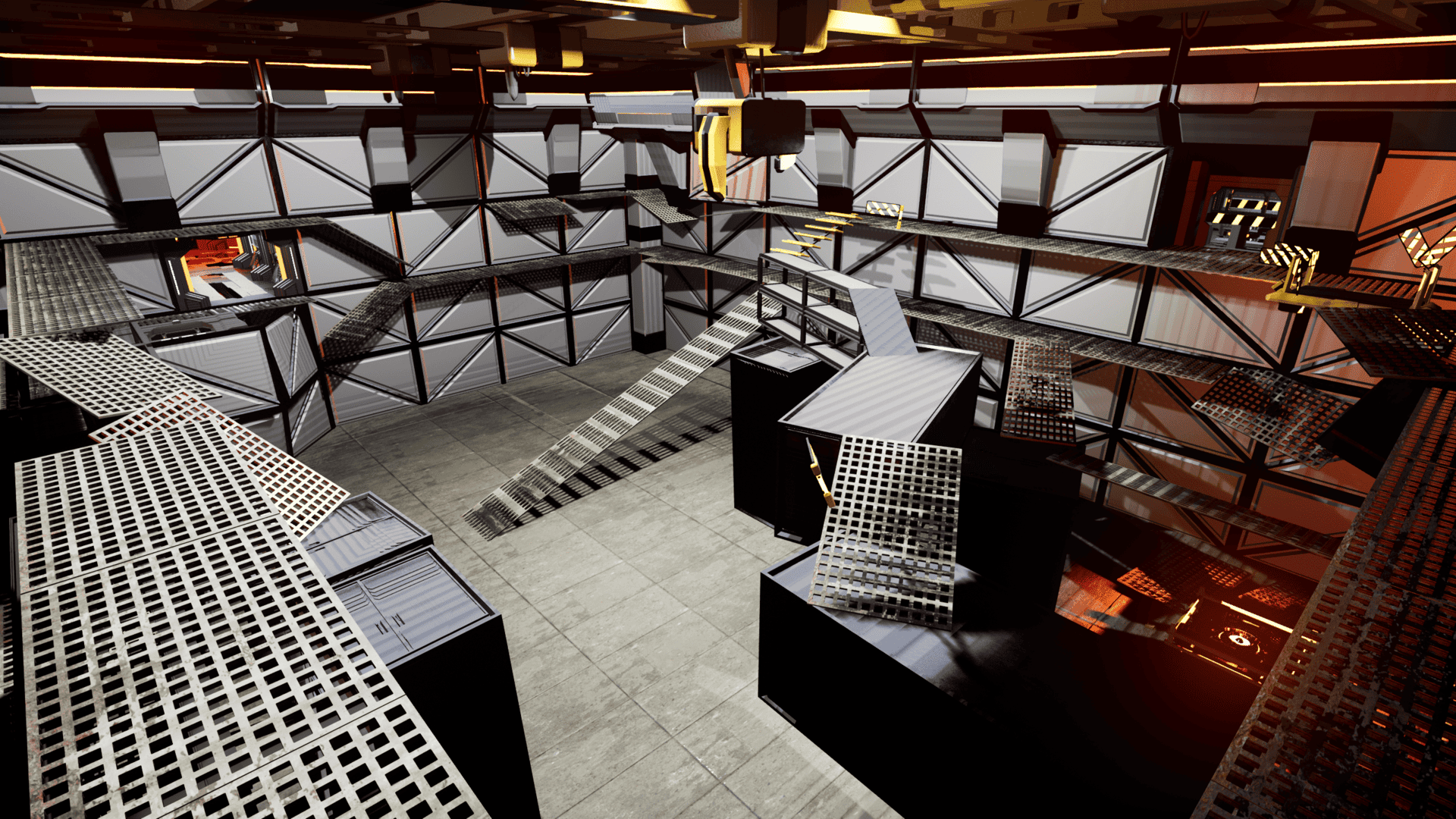
You awaken strapped to a chair in an underground laboratory, utilising the immersive VR component to explore the lab and search for a way to escape.
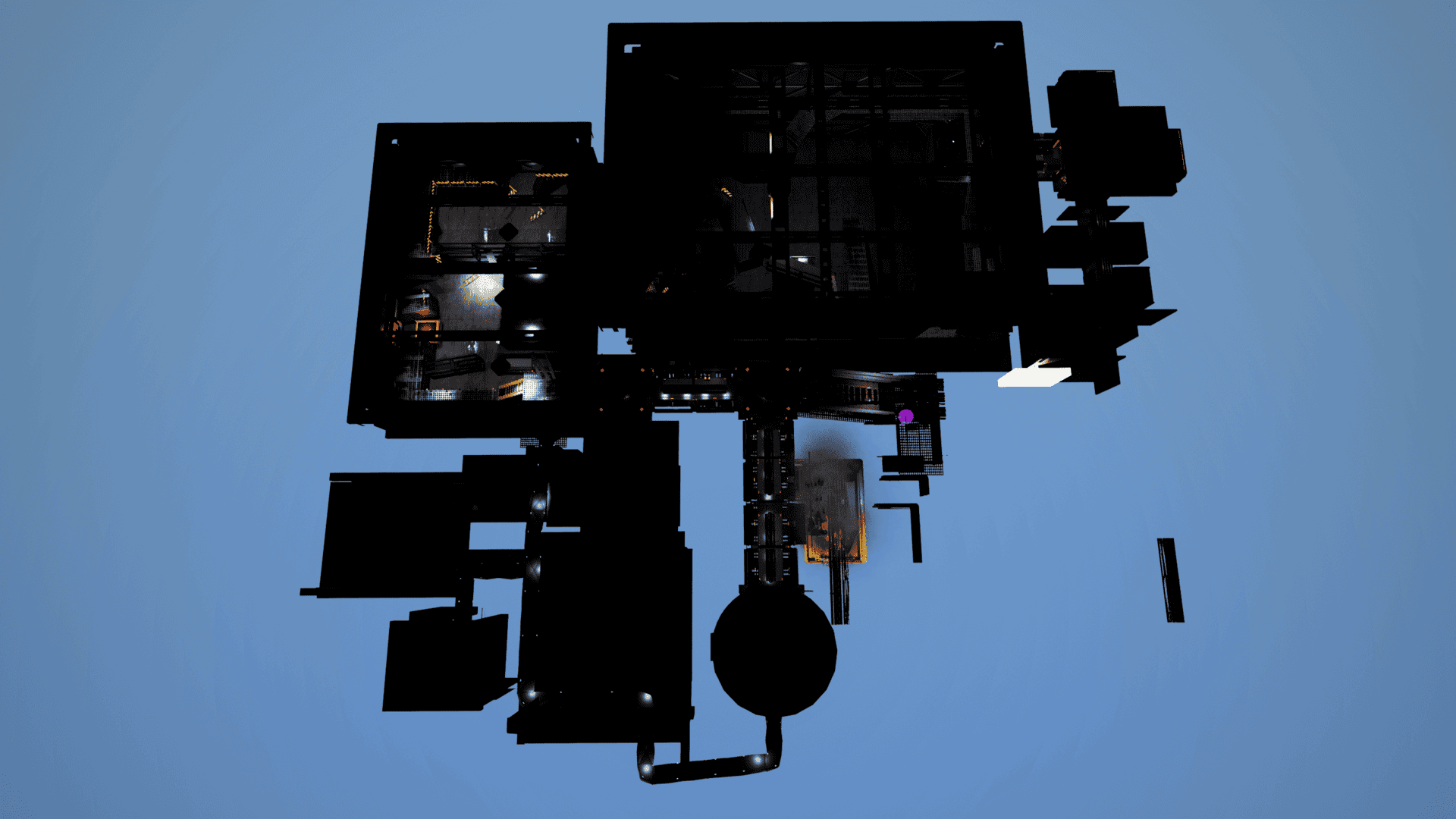
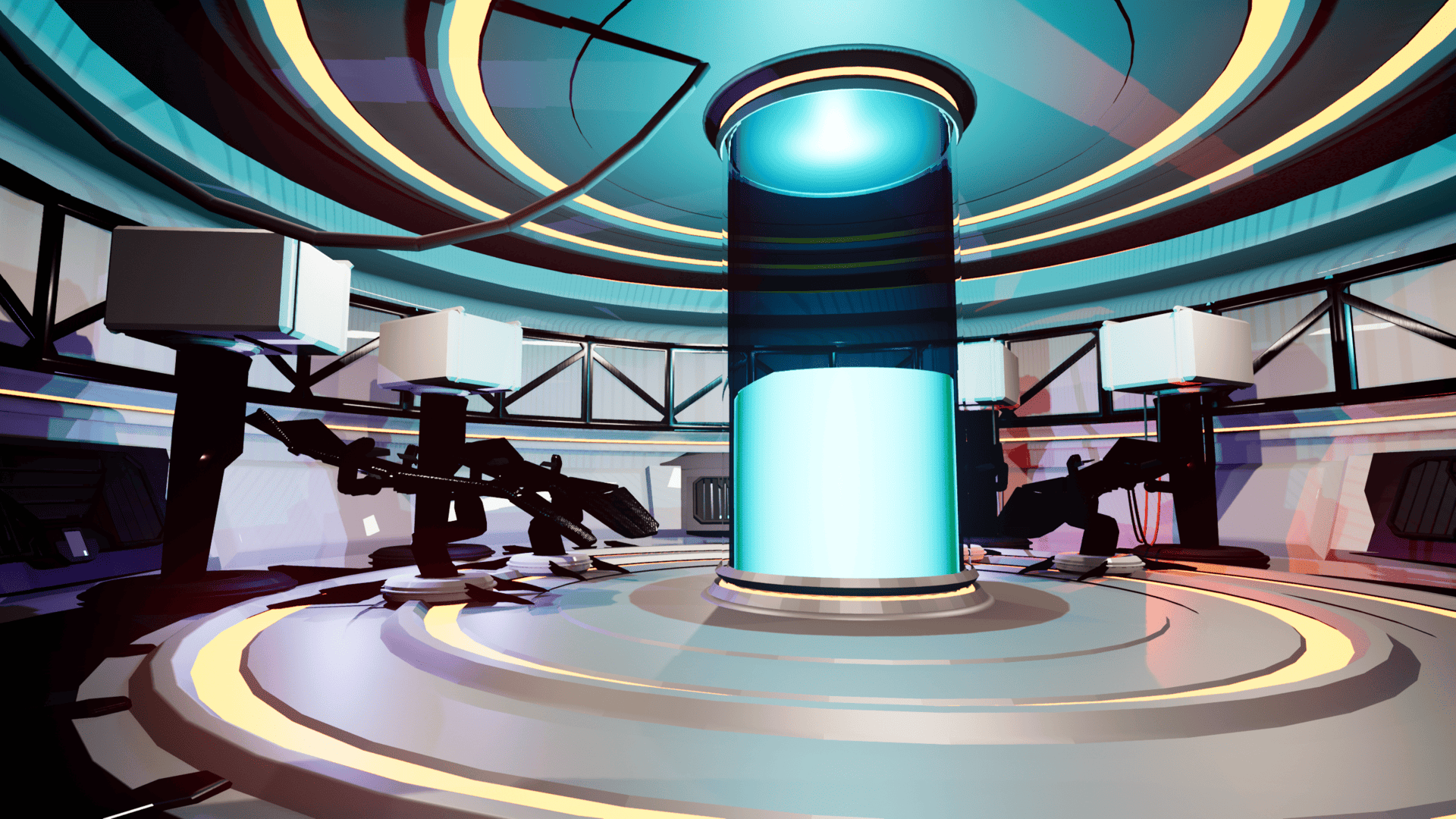
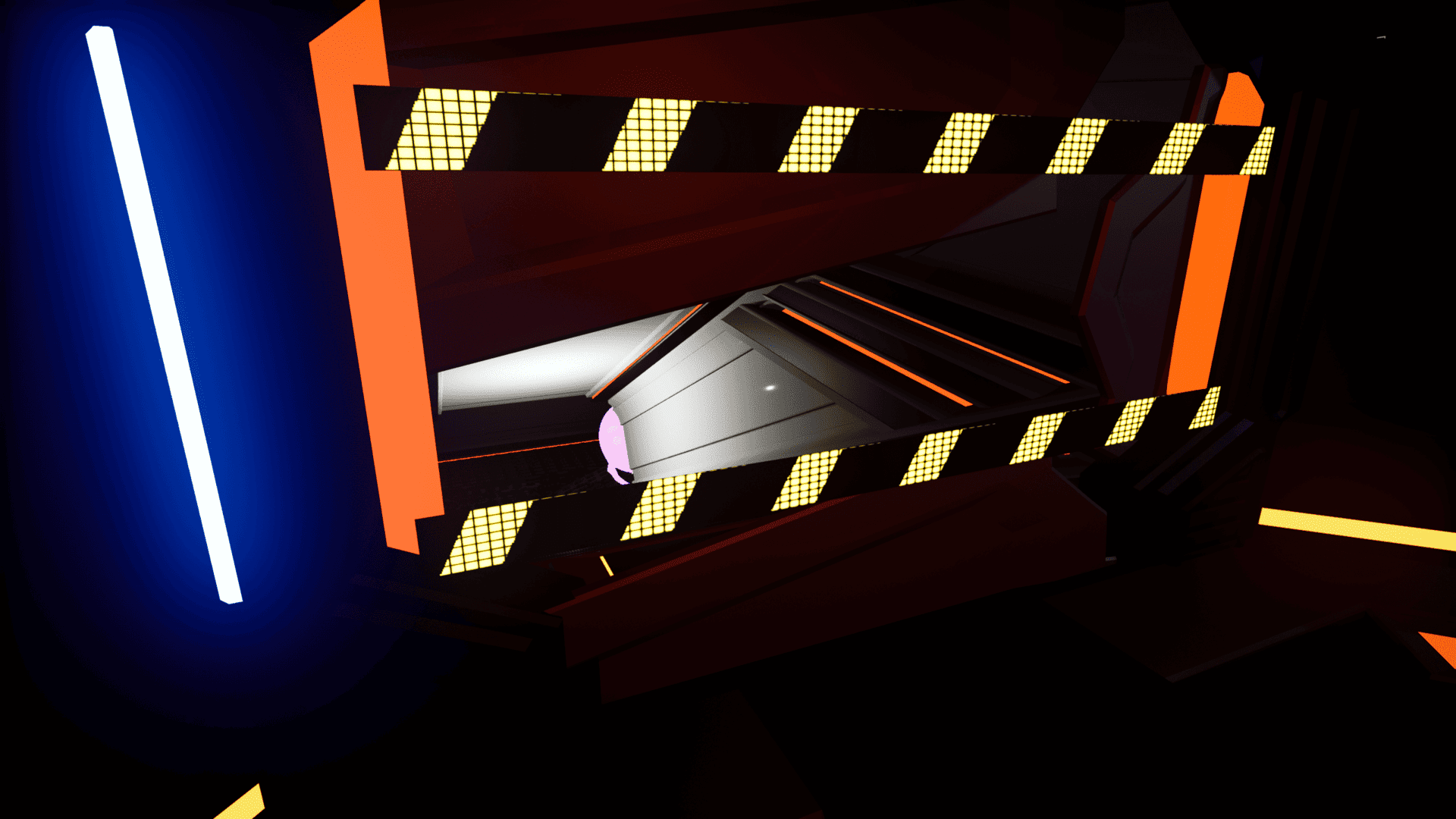
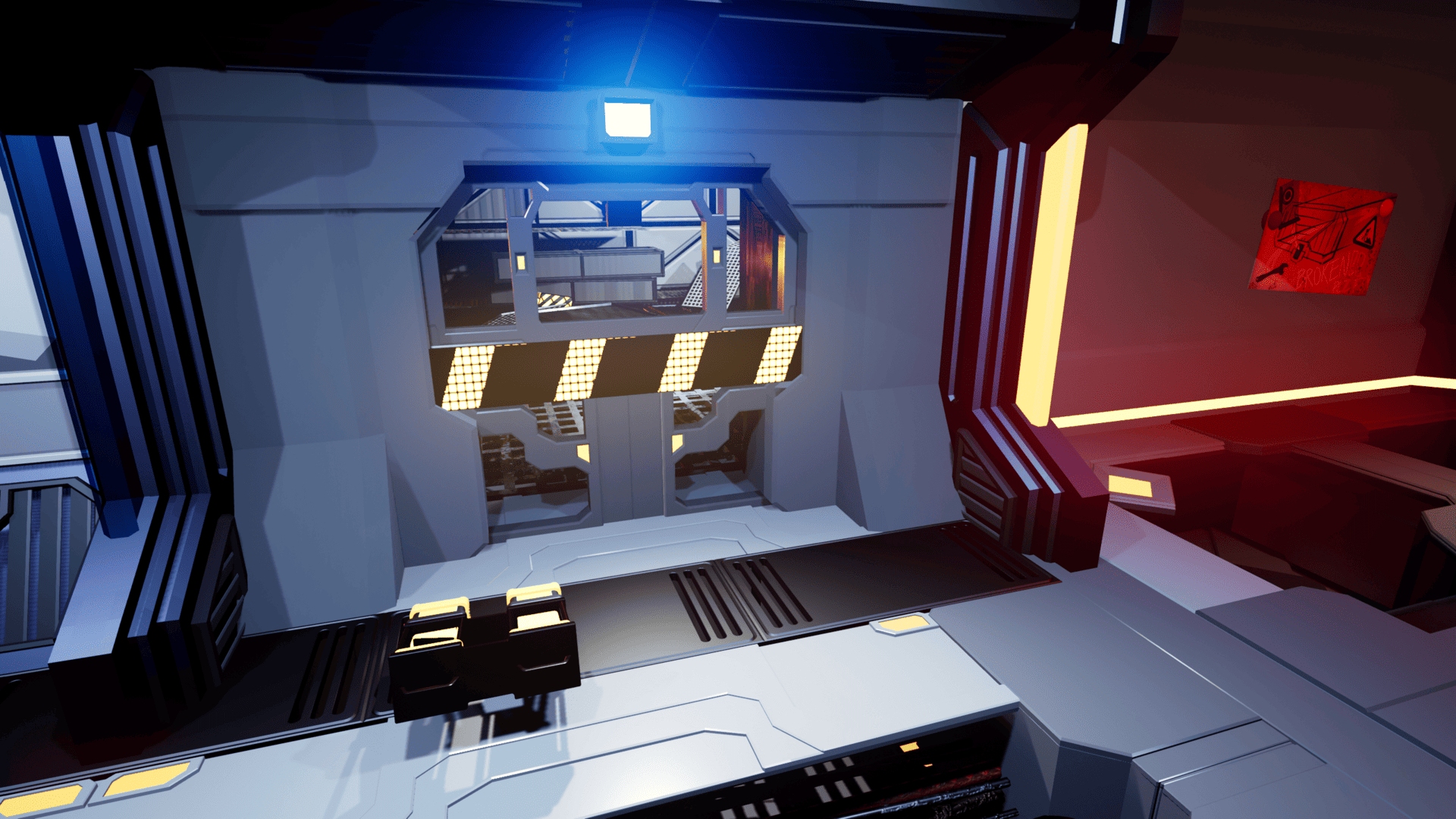
Design Goals:
- Encourage physical player interaction through Oculus VR features (crouching, real gestures, movement).
- Establish emotional pacing through environmental contrast (sterile sci-fi lab → unsettling hospital ruins).
- Deliver a non-linear, half-open world layout that allows freedom of exploration and puzzle-solving order.
- Use subtle horror elements (jump scares, environmental noises, sudden chases) to build psychological tension.
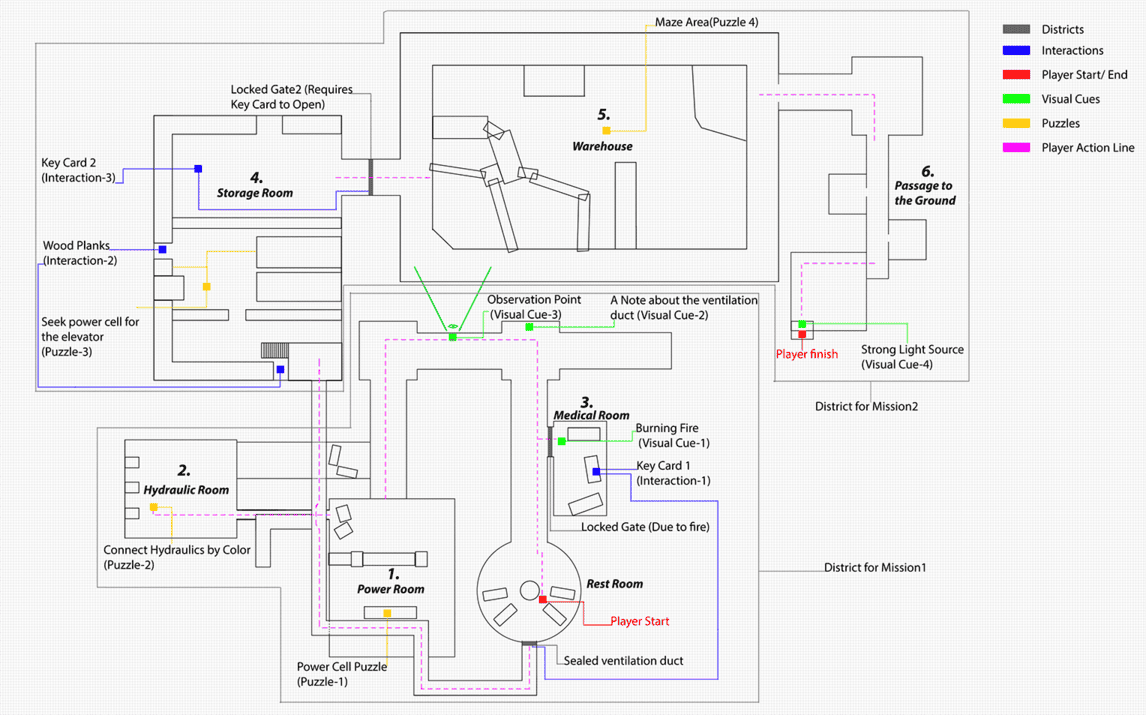
Level Layout:
Game & Level Design Idea:
This project is a first-person puzzle level that combines light exploration with suspense elements, using immersive environmental storytelling to build tension. Set in a high-tech laboratory, the level is designed to deliver a VR-exclusive experience through VR-kit controller interaction, spatial navigation, and a UI-free approach. The focus of this level is on exploration and object-based puzzles rather than combat.
In the early stages of the development, we first identified the core interaction mechanics that needed to be included in game. For example, the player must physically crouch to pass through narrow spaces or use VR controllers to interact with objects—mechanics designed to enhance the embodied engagement and immersive experience unique to the VR platform. Based on this, the project was defined as a VR puzzle game in the style of a walking simulator, using traversal and puzzle-solving to form the core gameplay loop.
As this was our first time designing a VR level, we conducted extensive research on relevant titles such as Half-Life: Alyx, P.T. VR, and The Paperman to better understand puzzle interaction logic in VR environments.
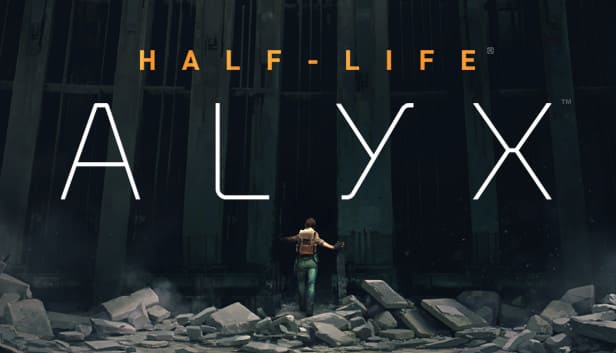
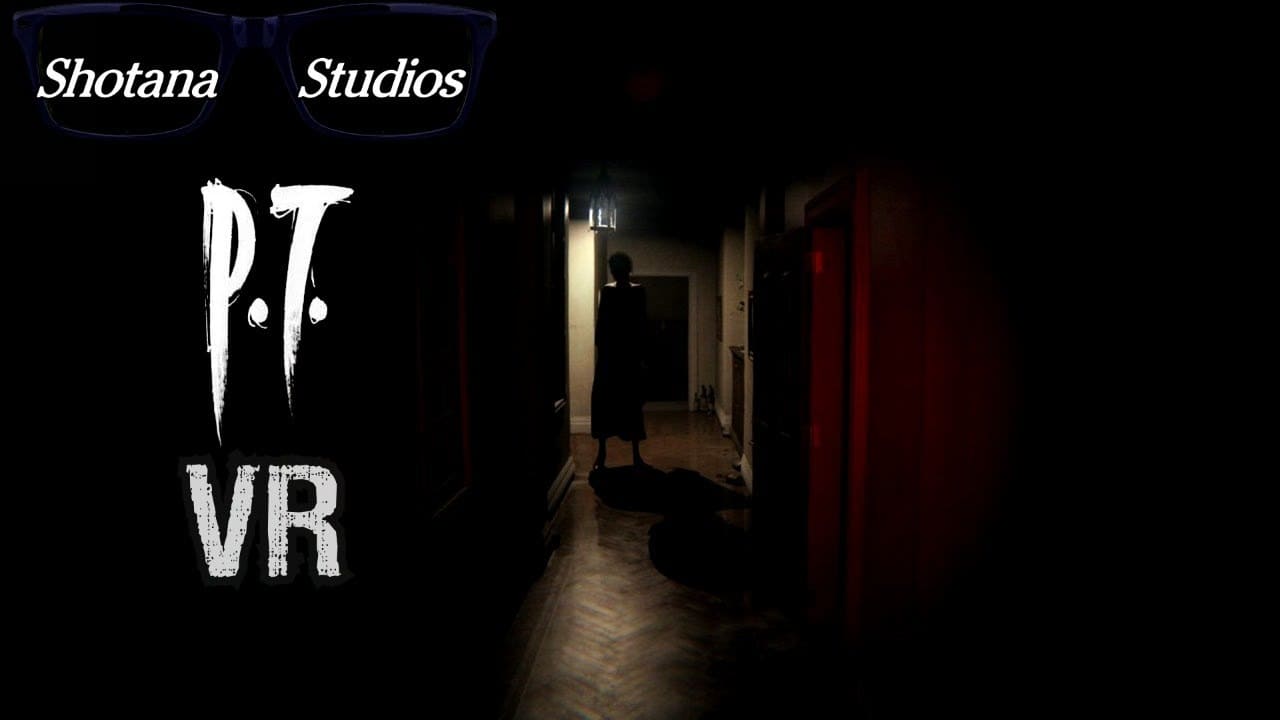

* Games Referenced in This Project
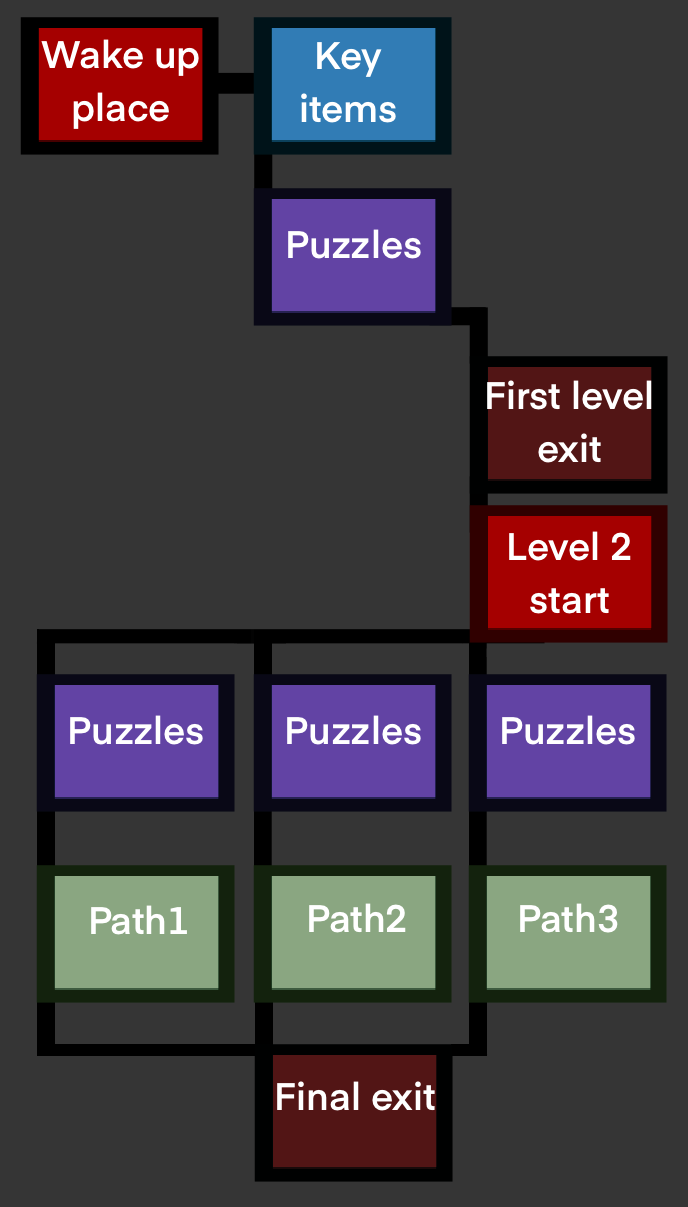
Initially, we adopted a linear flow structure to simplify pacing control. However, as the concept matured, we transitioned to a semi-open layout, where the player gradually unlocks sealed doors within the same area to expand new level content—enhancing the sense of exploration and spatial continuity.
This project was planned to include two interconnected levels: an underground laboratory and an abandoned hospital. After escaping the lab, the player would progress through a passageway into the hospital area. This structure was partially inspired by the linked design of the Raccoon City Hospital and the Umbrella underground facility in Resident Evil 3.
However, in the later development phase, we realised that the eight-week production timeline was insufficient to fully develop two distinct visual styles and polish all interaction elements. Ultimately, we decided to merge the two levels, simplifying the “abandoned hospital” into a single atmospheric space at the end of the lab level. This decision established the current structural framework of the level.
* The old two interconnected levels design concept map
Level Block Out:
Before getting start of the blockout, we first created a set of modular components in Maya for constructing the level. These included standardised corridor, wall, floor, and ceiling modules for the laboratory area, as well as corridor pieces specific to the abandoned hospital section.
By using this modular approach, we were able to efficiently build and iterate on the blockout, allowing for rapid testing and refinement of spatial structure and pacing. This process enabled us to gradually improve the overall level layout.
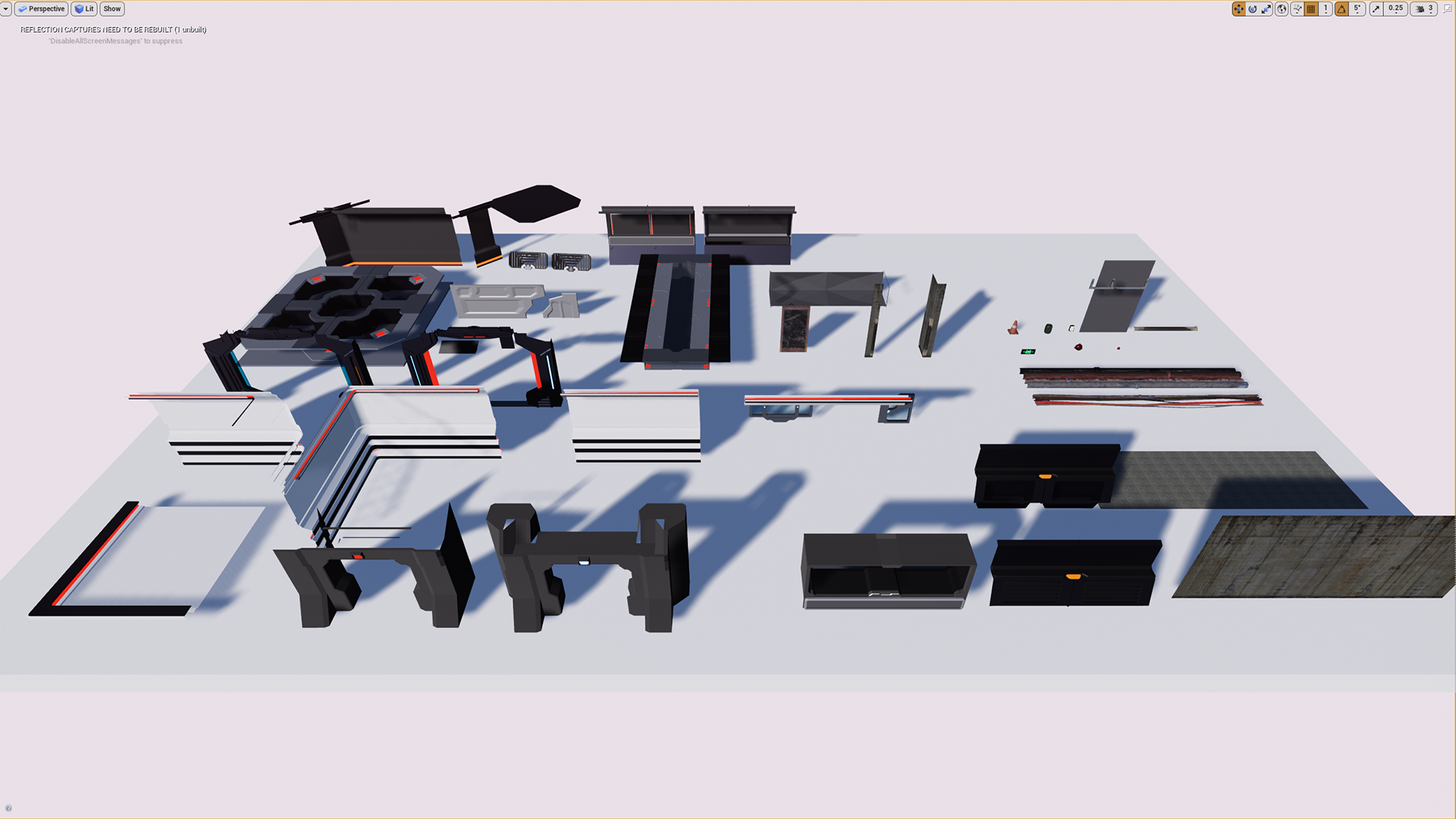
* This screenshot showcases the modeller assets I made for this project. Due to the production time limitation, some assets use the realistic visual style texture made with Substance Painter, while the rest use the material system inside Unreal Engine without extended texture.
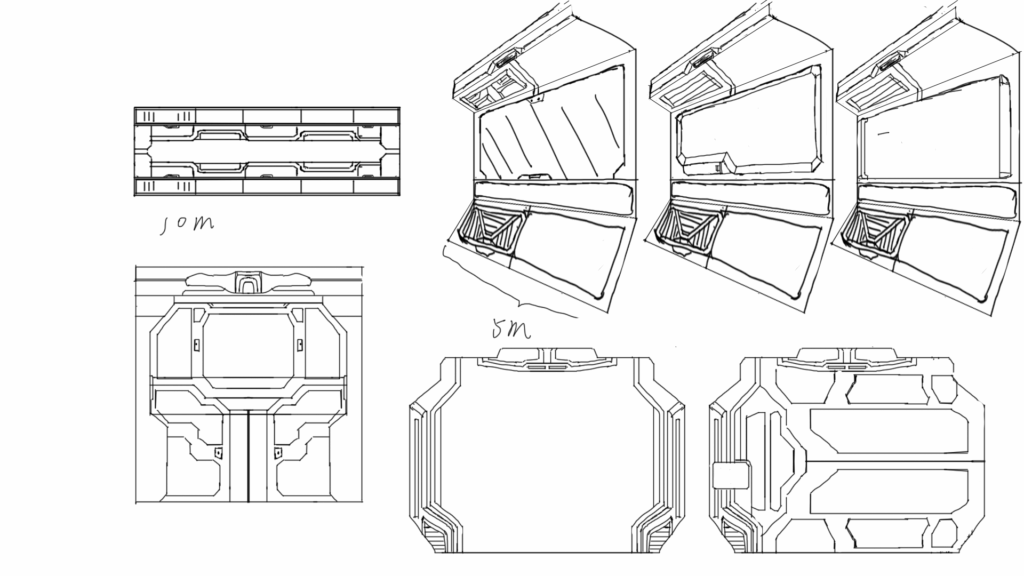
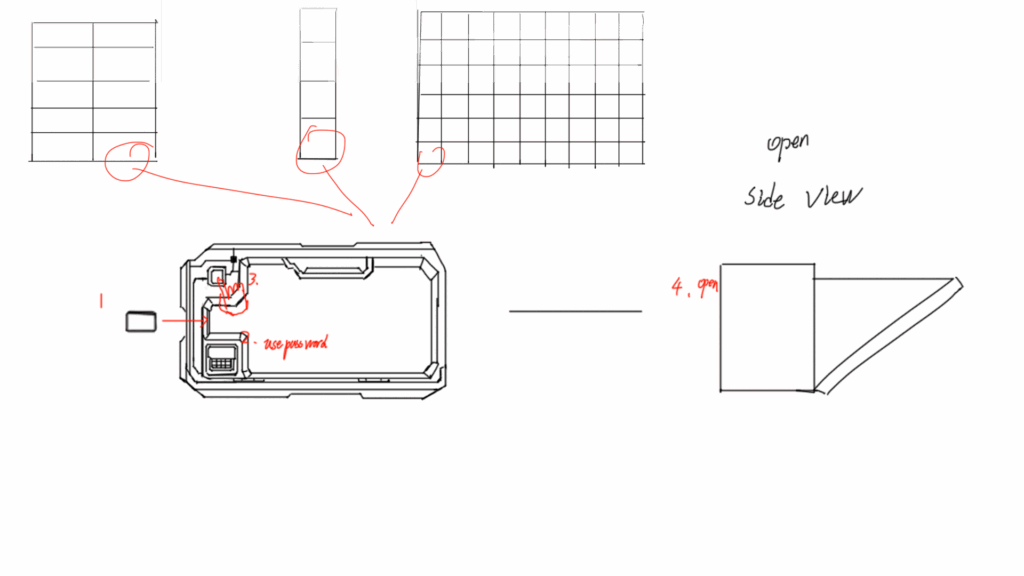
* Here are Two concept artworks I created to visualise the design of modular elements and the intended function of the sealed ventilation duct during preproduction.
Navigation Design:
This level utilises visual effects combining with sound effects, lighting, composition, and decal to construct navigation cues. By combing these navigation cues and the linear level structure, it’s effectively guide the player and help them understand their current objective even in the absence of additional mission prompts.
The screenshot below showcases how some of the navigation cues operate within the level.
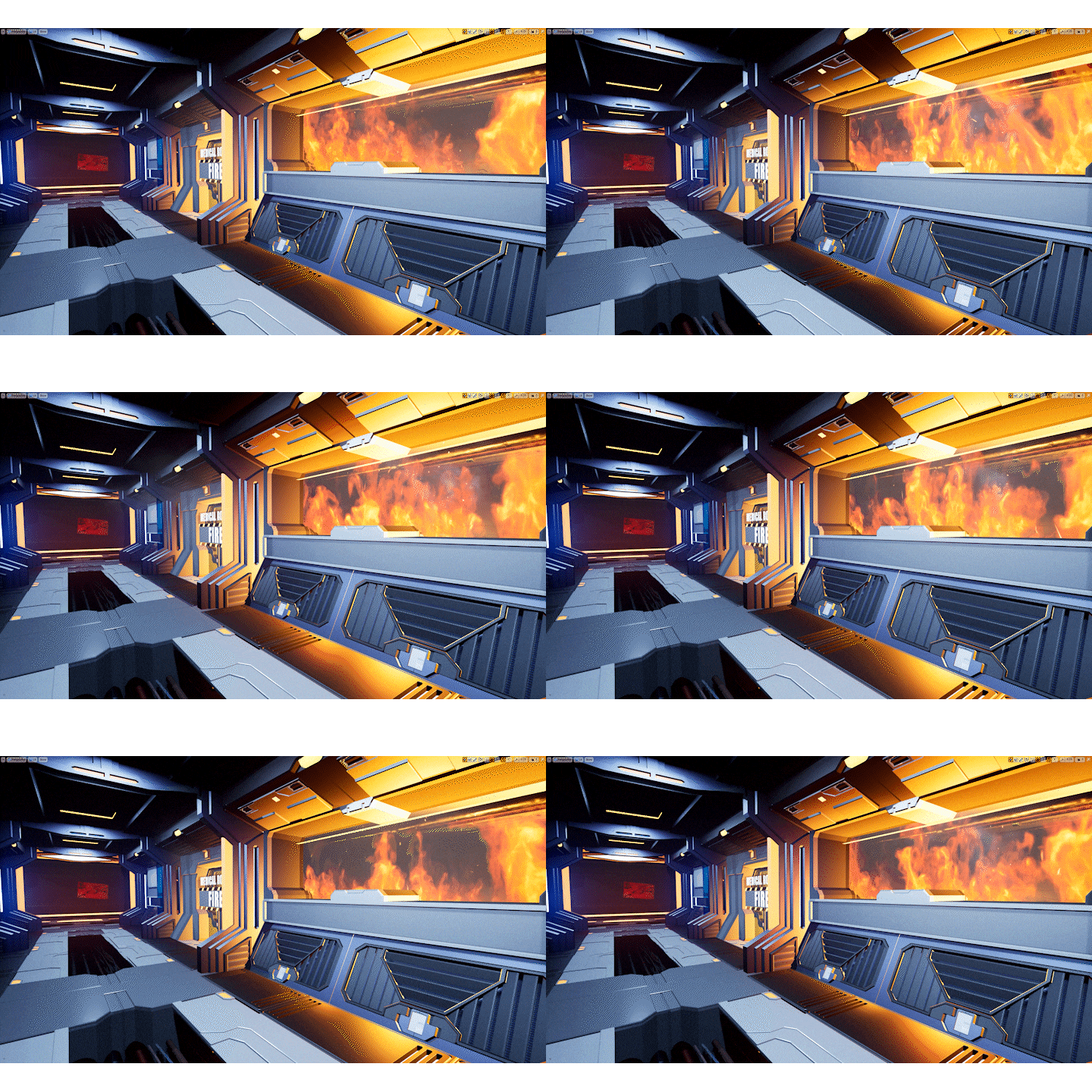
Near the medical room, I used fire, smoke, scrolling banner text, and wide-range looped fire sound effects as attractor cues to guide the player toward exploration.
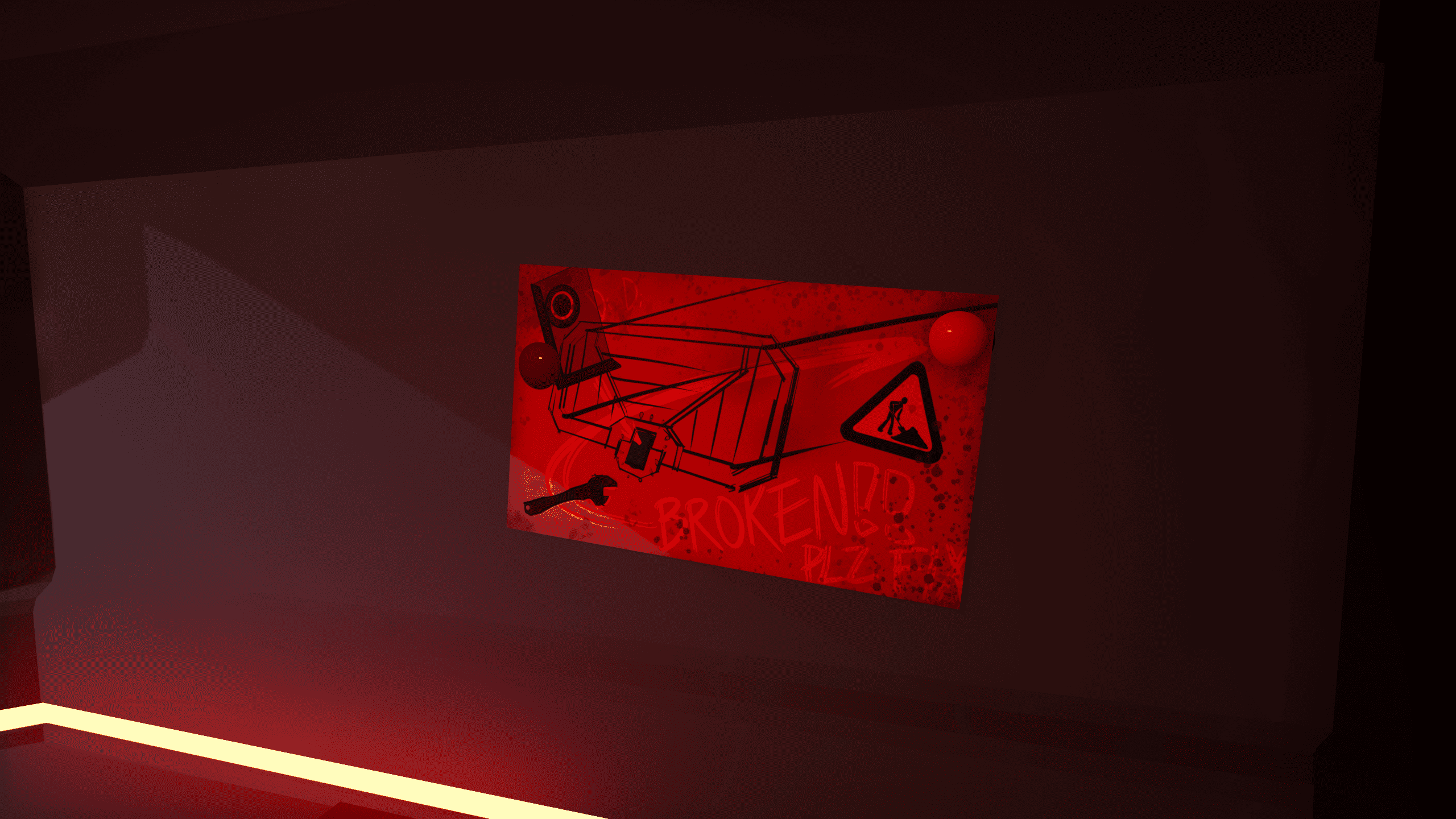
I placed a “Maintenance Required” decal on the corridor wall to signal a potential solution, subtly guiding the player toward a way out of the current area.
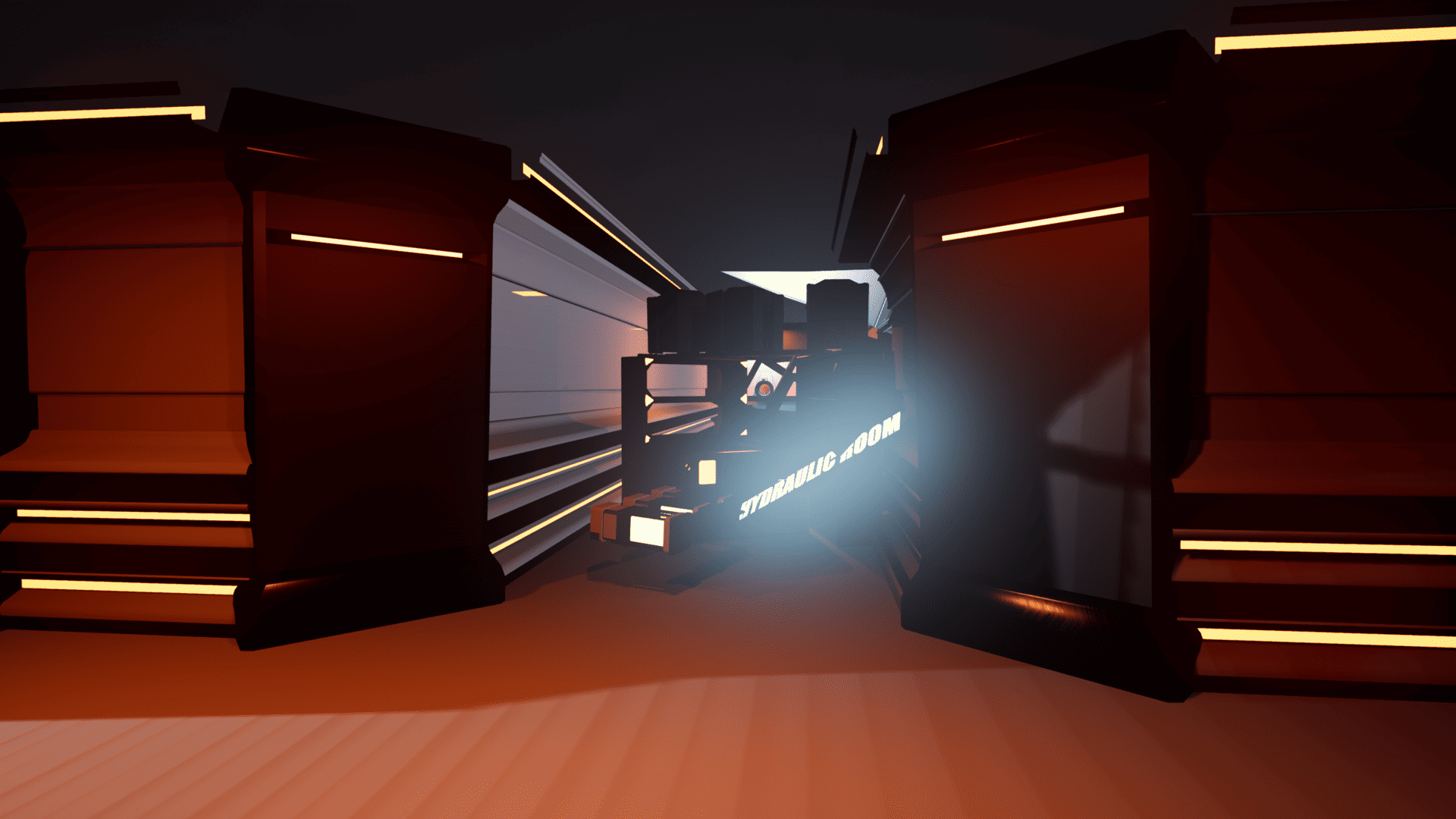
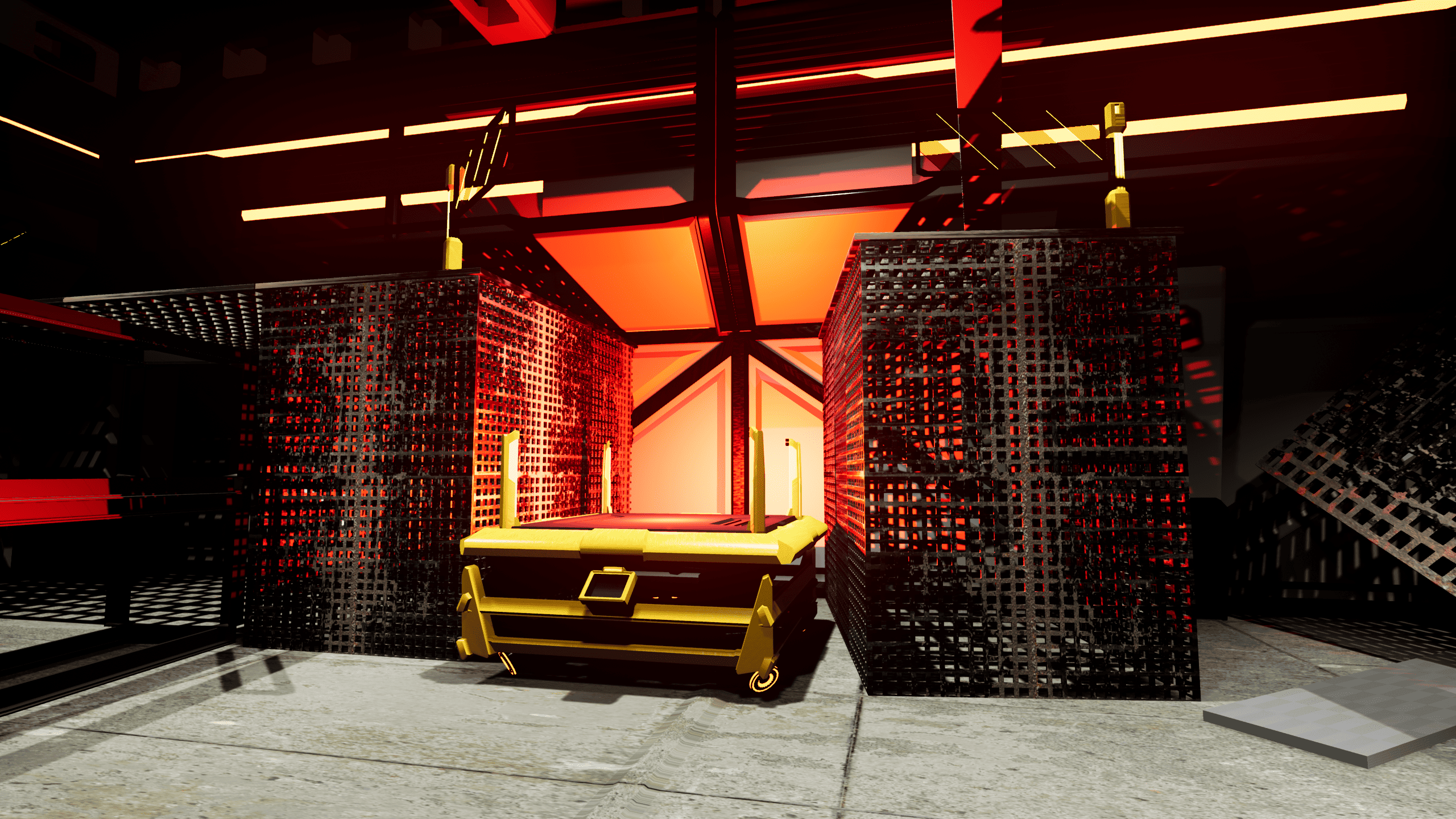
On the way to the hydraulic room, I placed a hydraulic room light sign on the ground along the player’s path and designed a perforated barrier. Letting the player see the room’s lights and layout from afar, sparking curiosity and indicating its location.
In front of the elevator that the player needs to activate, I installed a set of bright red tube lights. These acted as strong visual cues, drawing attention to the elevator and hinting at its interactivity.
Game Mechanics:
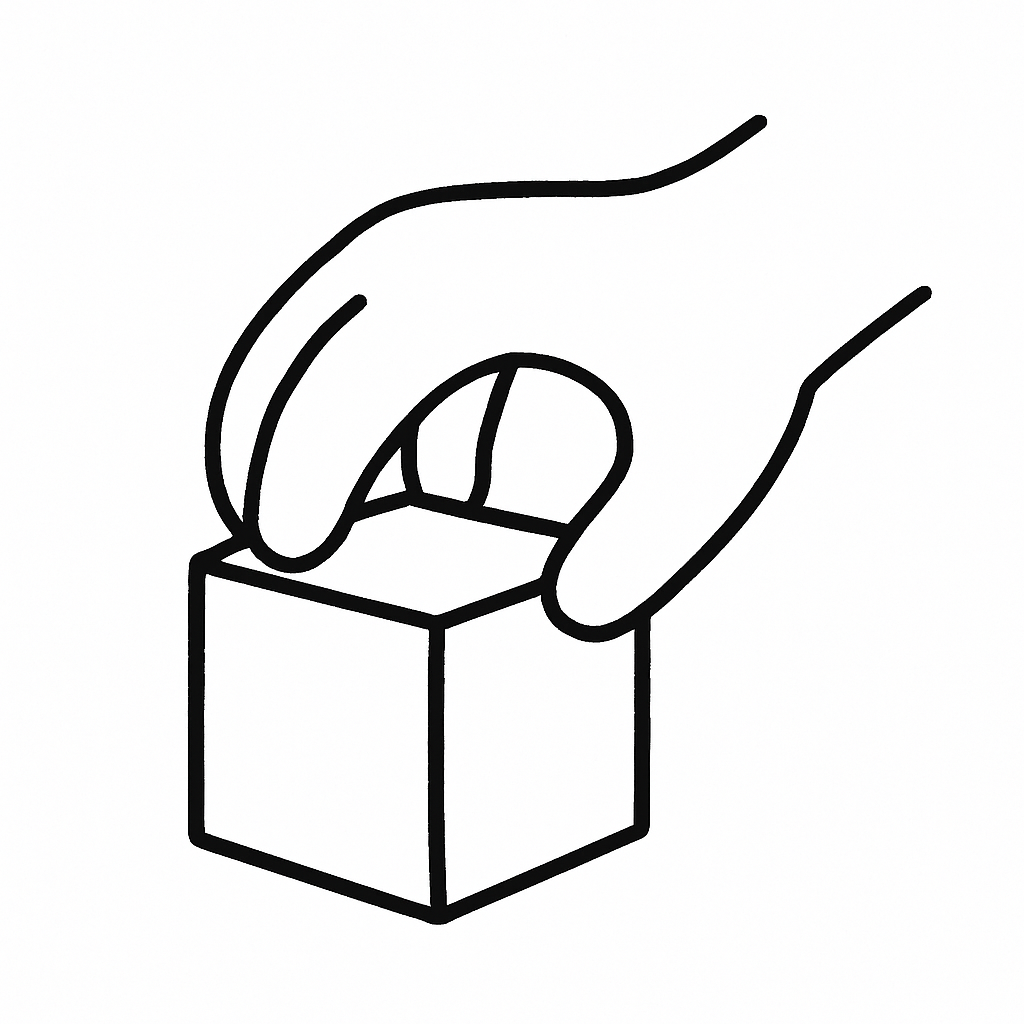
To highlight the interactive features of the VR platform, hand-grabbing was established as the core interaction mechanic of this level. All puzzles and scene interactions rely on the player using VR controllers to simulate hand-grabbing gestures for triggering and manipulation. Whether collecting key items, activating mechanisms, or progressing through puzzles, this mechanic is essential, enhancing both immersion and a sense of physical engagement.
These interaction systems were implemented entirely using Unreal Engine’s Blueprint visual scripting system. Building upon the official VR template, we extended and customised the logic for interactable objects to accommodate the diverse interaction requirements within the level.
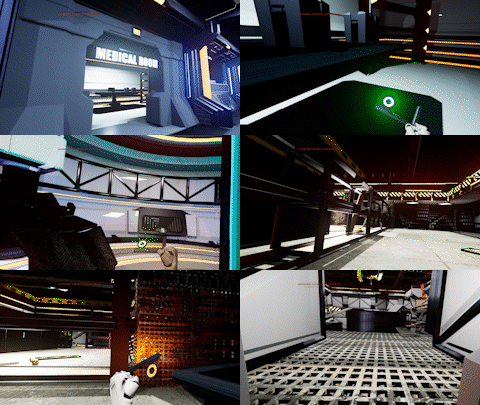
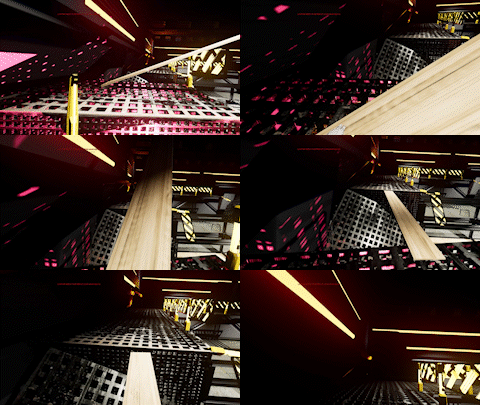
Using the Keycard (Interaction-1,3)
Through the game progress, the player will be facing sealed ventilation duct and locked gate that requires the player to obtain a keycard to unlock them.
Location: Medical Room, Storage Room
Placing Wooden Planks(Interaction2)
The player needs to search the environment for usable wooden planks and place them across broken terrain as temporary bridges, enabling them to cross otherwise impassable gaps.
Location: Storage Room
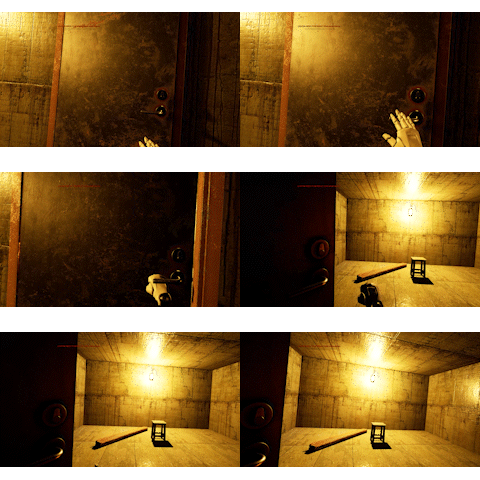
Pushing the Door (Interaction-3)
Interact with the door handle to push open the door that blocks the player’s path.
Location: Passage to the Ground
Puzzle Mechanics:
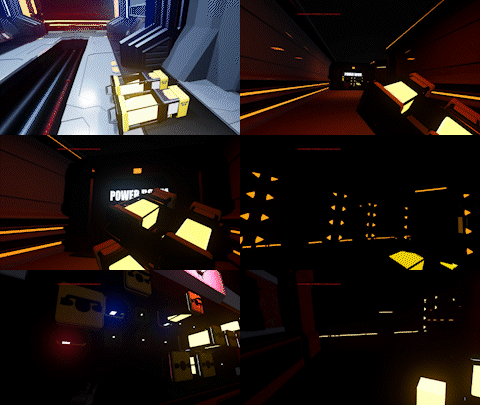
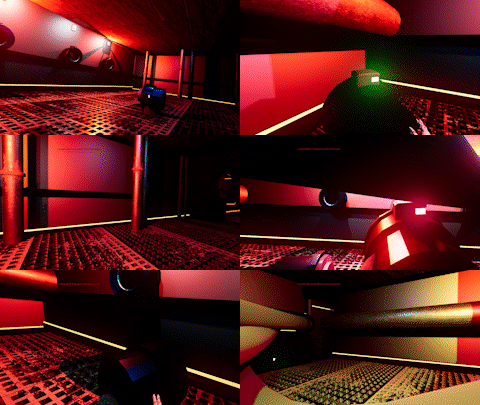
Recover Power Supply(Puzzle-1)
The player must pick up multiple energy cells scattered on the ground and insert them into the corresponding slots based on their shapes to restore power supply. The repeating processes of finding and trying energy cells forms the first puzzle of the level.
Location: Rest room to Power Room
Connect the Fire Hydrant (Puzzle-2)
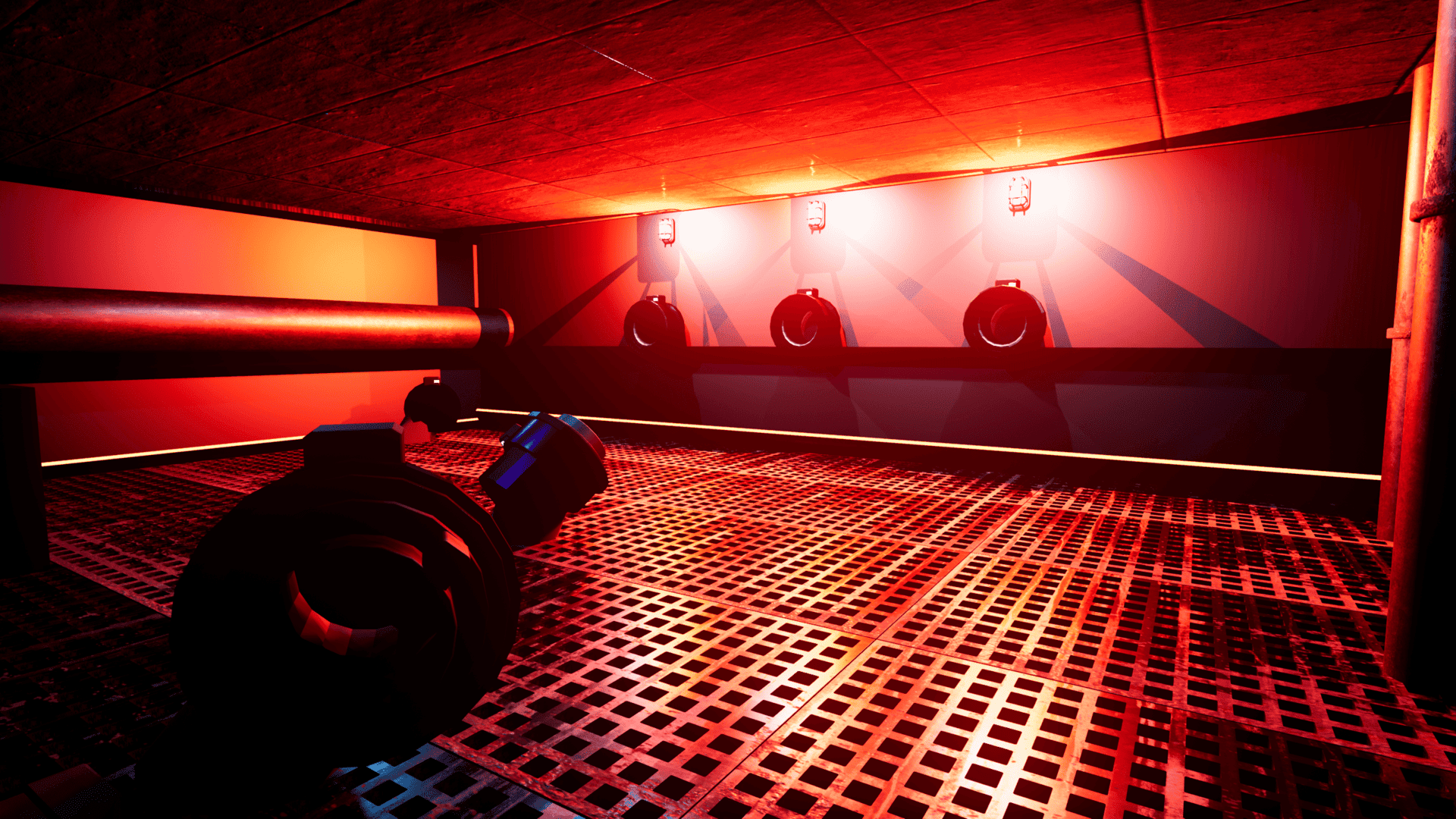
The player must locate pipes on the ground that match the colours of the wall-mounted pipes and connect them accordingly to activate the fire suppression system. The repeating processes of finding and trying the correct colors of the hydrant on the wall forms the second puzzle of the level.
Location: Hydraulic Room
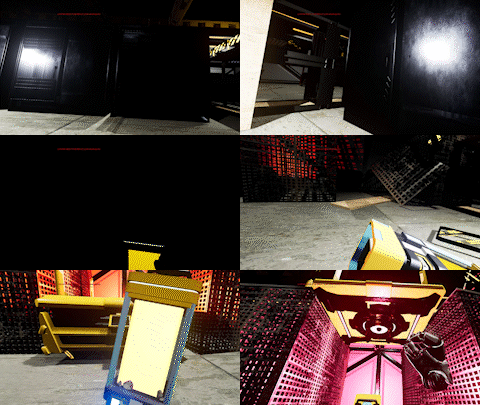
Activate the Elevator (Puzzle-3)
The player must locate a missing energy cell within the current scene and carry it to the elevator in order to activate it.
Location: Storage Room
Game Beats:
Traversal1 – Puzzle1 – Traversal2 – Puzzle2 – Traversal3 – Traversal4 – Puzzle3 – Puzzle4 – Traversal5
1. Where am I?
Gameplay: Traversal | Observation
Player Emotion: Confused, panicked, anxious.
The player wakes up on a recliner in the rest room, feeling confused and curious about what has happened to them. Driven by a need to understand where am I? The player begins walking toward the corridor outside. Following the sound of crackling flames and the flicker of distant alarm lights along the hallway, the player discovers that the medical room is on fire and has been sealed off. With no alternate paths available, the player continues forward along the corridor and arrives at the entrance to the power room.
Along the way to power room, the player will learn that a green keycard can be used to unlock the ventilation ducts, which also helps them pre-visualise the upcoming section of the level. Additionally, the player is informed that there is a Hydraulic Room located adjacent to the Power Room.
Location: Rest room and Lab passage
Duration: 1 mins 30 secs
2. Restore the laboratory’s power system.
Gameplay: Puzzle 1
Player Emotion: Anxious → Relieved
player Emotion: Anxious
The power generator in the Power Room is unable to maintain electricity supply to the laboratory due to the unexplained missing of several energy cells. In an effort to restore power, the player, now filled with a sense of urgency, begins searching for spare energy cells along the corridor and within the Power Room. By locating and placing the missing cells in their designated slots, the player successfully reactivates the facility’s power
Location: Power Room
Duration: 1min 30 secs
3. Activate the fire suppression system.
Gameplay: Traversal 2 | Puzzle 2
Player Emotion: Anxious → Relieved
After restoring the power, the player discovers a ventilation duct hidden behind a pile of clutter in the Power Room. Crawling through the duct, the player arrives at the Hydraulic Room. The player connects the coloured pipes in the correct order, successfully activating the sprinkler system and extinguishing the fire in the Medical Room.
Location: Hydraulic Room
Duration: 1min 30 secs
4. Escape from laboratory area
Gameplay: Traversal3 | Interaction1 | Traversal4
Player Emotion: Anticipation
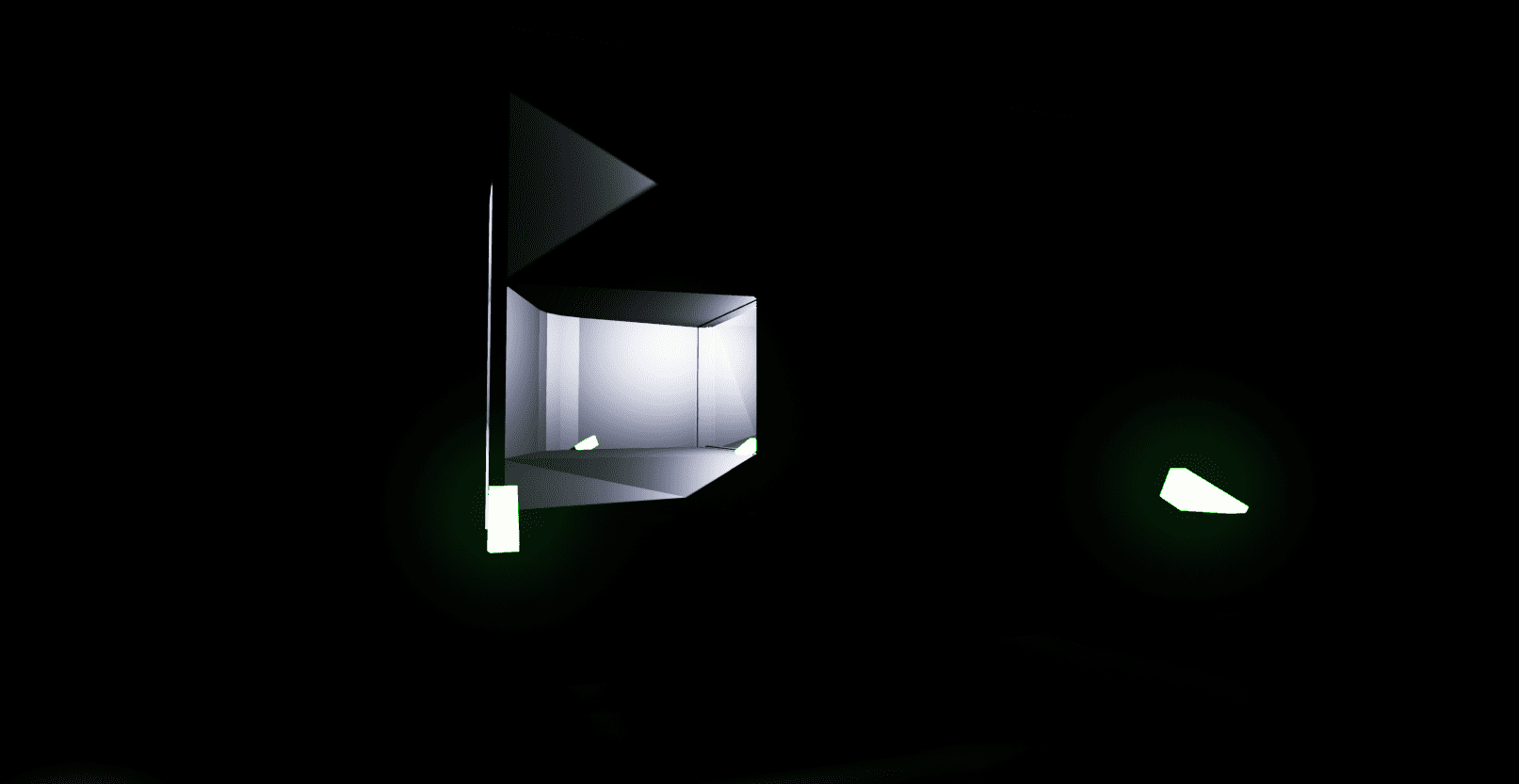
After retrieving the green keycard from the Medical Room, the player returns to the Rest Room and uses the keycard to unlock the previously sealed ventilation duct. Crawling through it, the player reaches the Storage Room.
Location: Medical Room, Rest room
Duration: 3mins
5. Find a way out of the abandoned Storage Room.
Gameplay: Puzzle3 | Interaction2,3
Player Emotion: Frustration→ Irritation
After retrieving the energy cell to active the elevator then crossing a collapsed walkway using wooden planks, the player uses the orange keycard near the gate to unlock it and reveal the path to the warehouse.
Location: Storage Room
Duration: 3 mins
6. Finding a Way Out of the Maze-like Warehouse
Gameplay: Puzzle4(Maze)
Player Emotion: Irritation
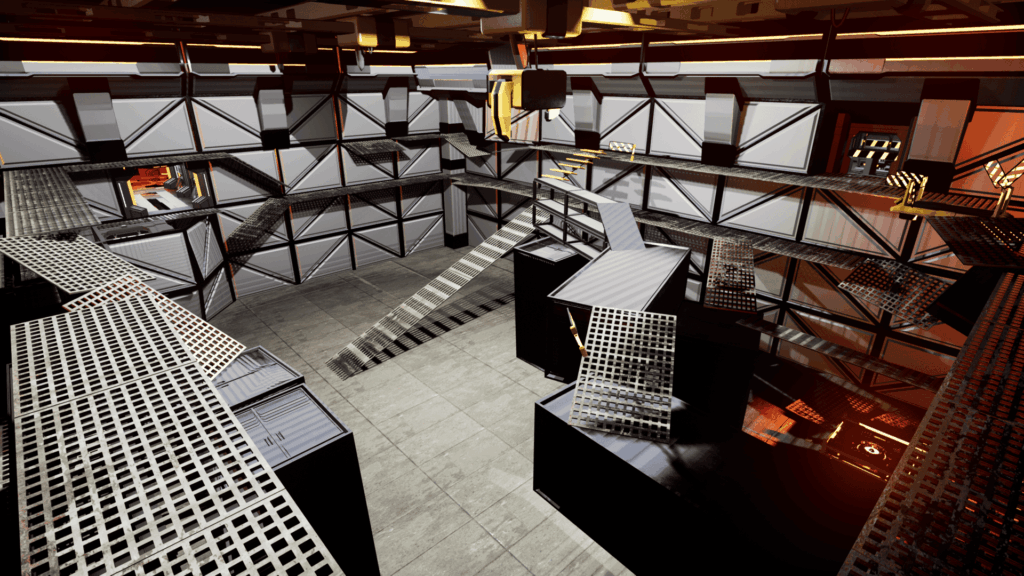
By carefully observing the existing pathways within the Warehouse, the player discovers how to navigate through the space and find an exit.
Location: Warehouse
Duration: 3 mins
7. Escape
Gameplay: Traversal 5
Player Emotion: Joyful, Anticipation
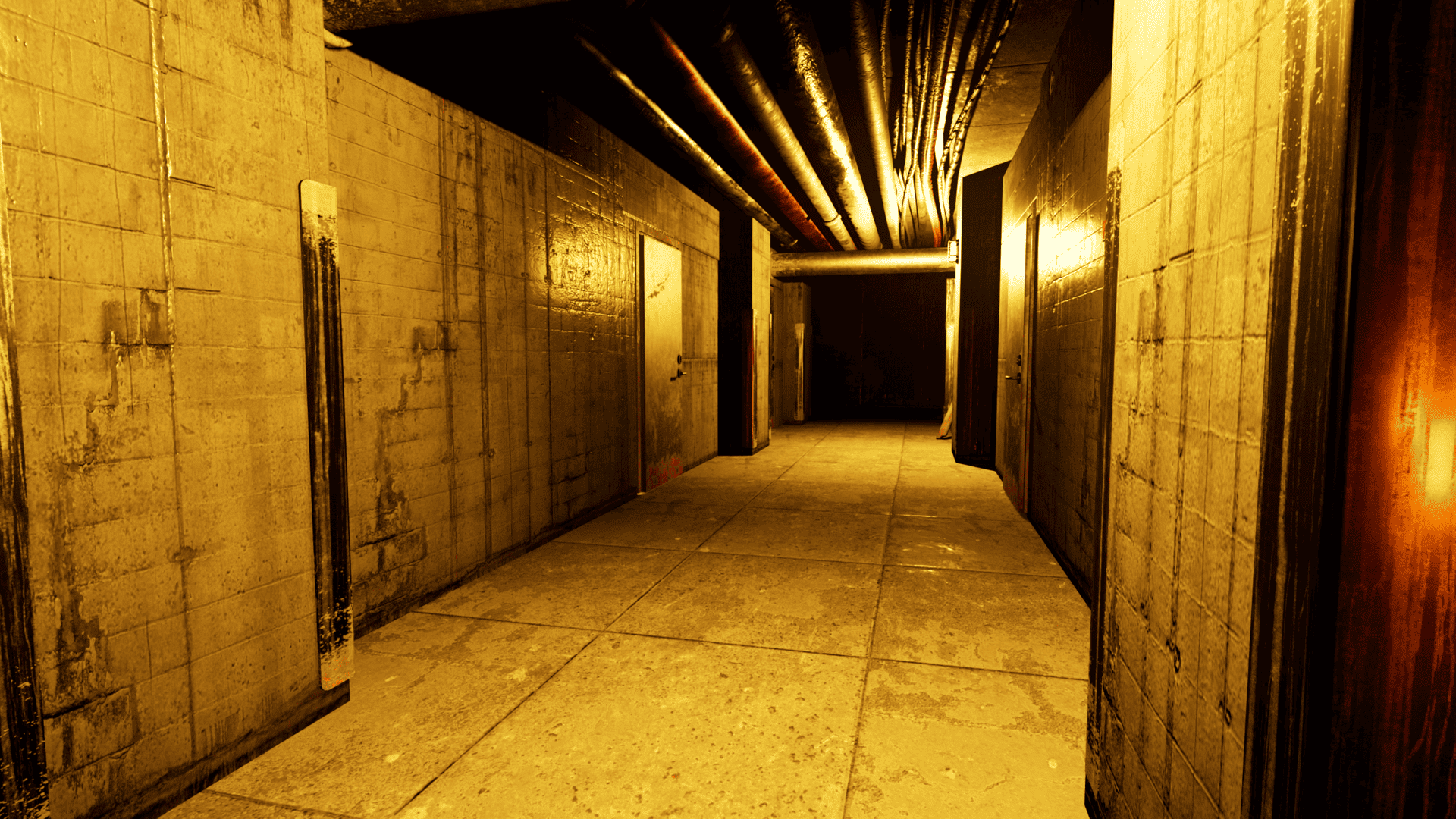
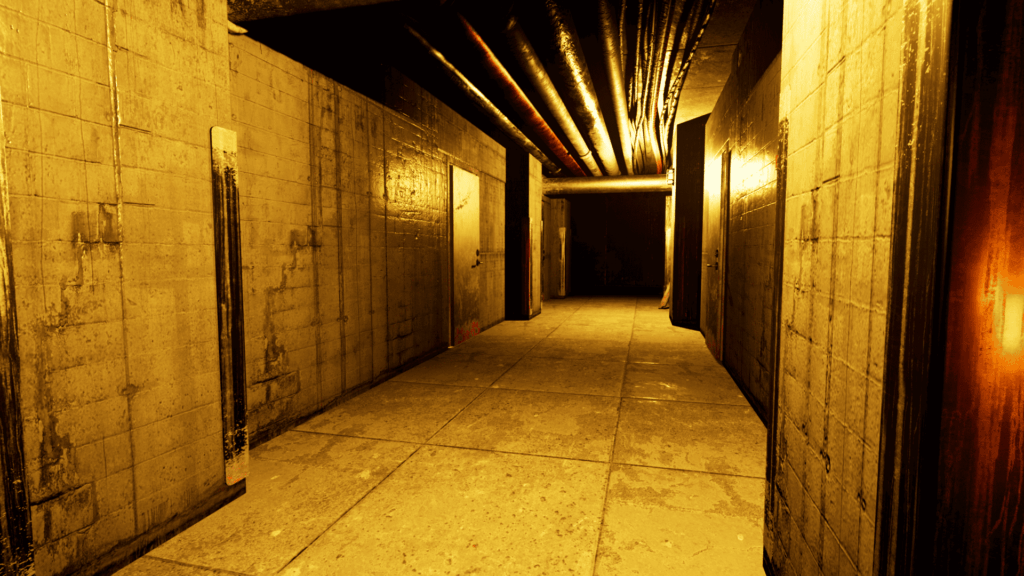
After leaving the maze-like Warehouse, the player follows a corridor lined with concrete walls. At the end of the passage, they find a glowing doorway—leading them out of the underground laboratory.
(End of Level)
Location: Passage to Ground
Duration: 1mins 30 secs
