跳到内容
跳到内容 
湮域 - 聚焦遭遇战空间的FPS关卡设计 -本科毕业设计项目
关卡背景设定:
该关卡设定在一座遭受外星人入侵后被摧毁的人类城市。玩家扮演 Fire Team Abyss 小队成员 Abyss 3,在一次失败的狙击行动后坠入敌占区,与指挥部失去联系。为了生存并成功撤离,玩家必须独自穿越废墟、对抗敌军并寻找出路。
设计目标:
- 深挖关卡设计细分方向:遭遇战设计
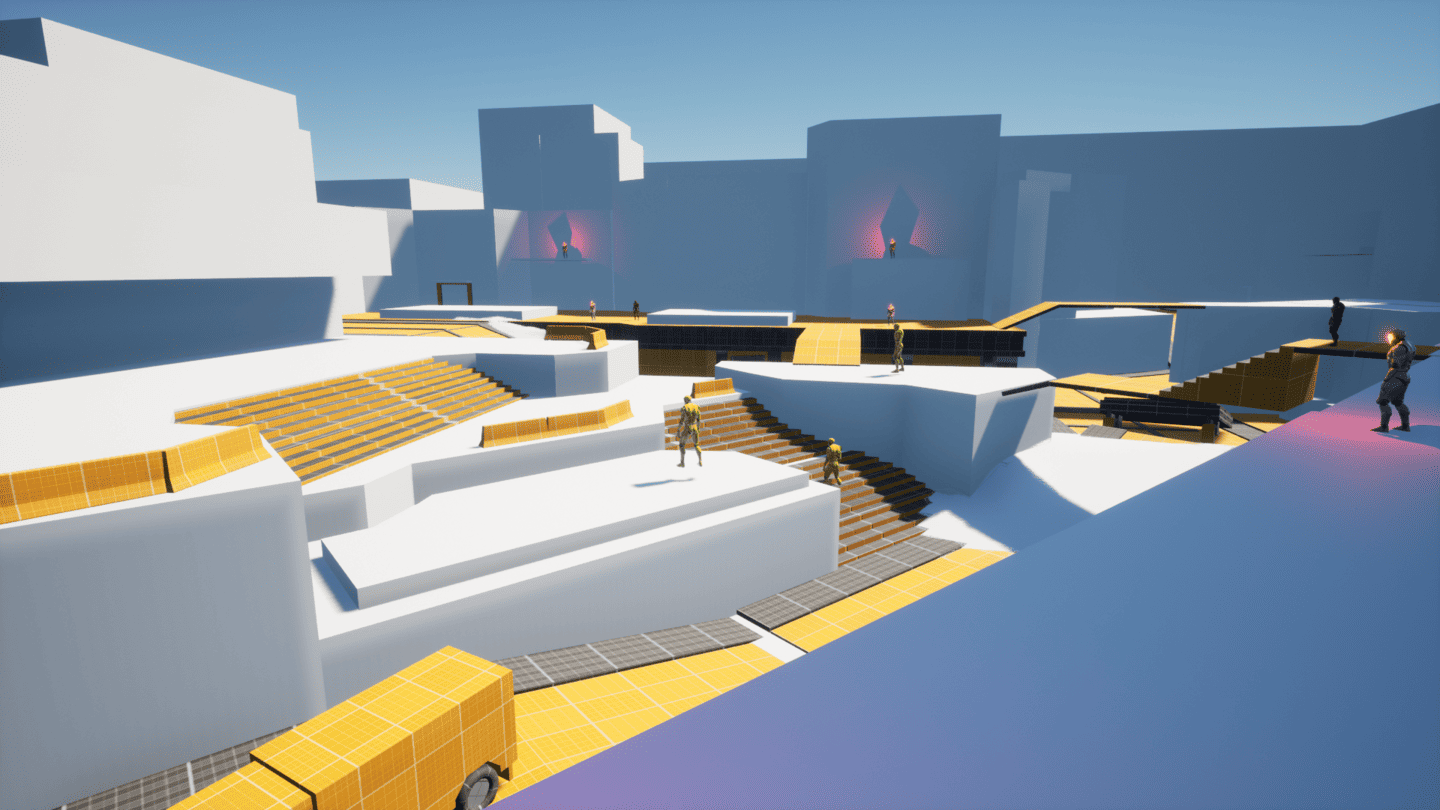
- 制作一款采用沙漏式关卡结构的线性第一人称射击关卡。
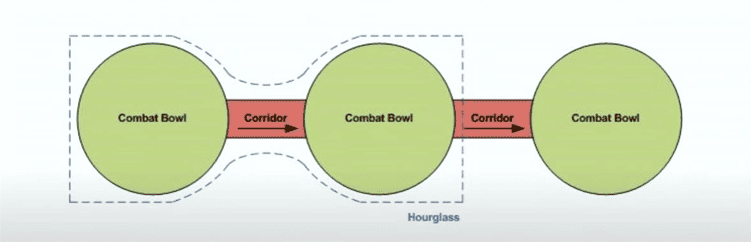
沙漏式关卡结构示意图
- 通过对敌方单位、掩体及各类场景组件进行策略化排布,打造具备战术纵深的遭遇作战区域;引导玩家主动观察战场环境、规划行进路线并制定作战方案,以此提升玩家在战斗过程中的自主操控感与沉浸体验。
设计构思:

+
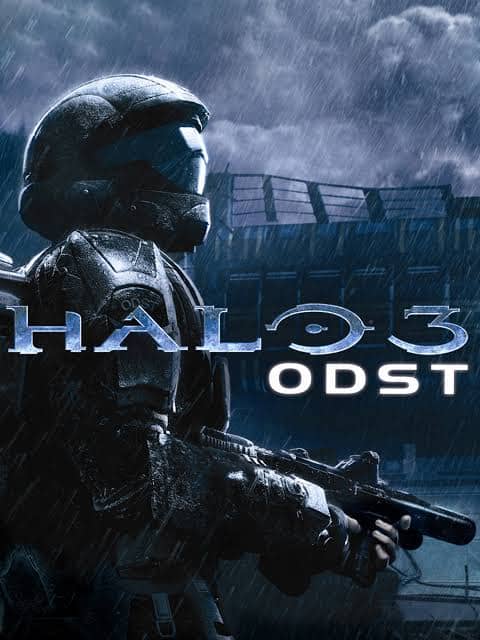
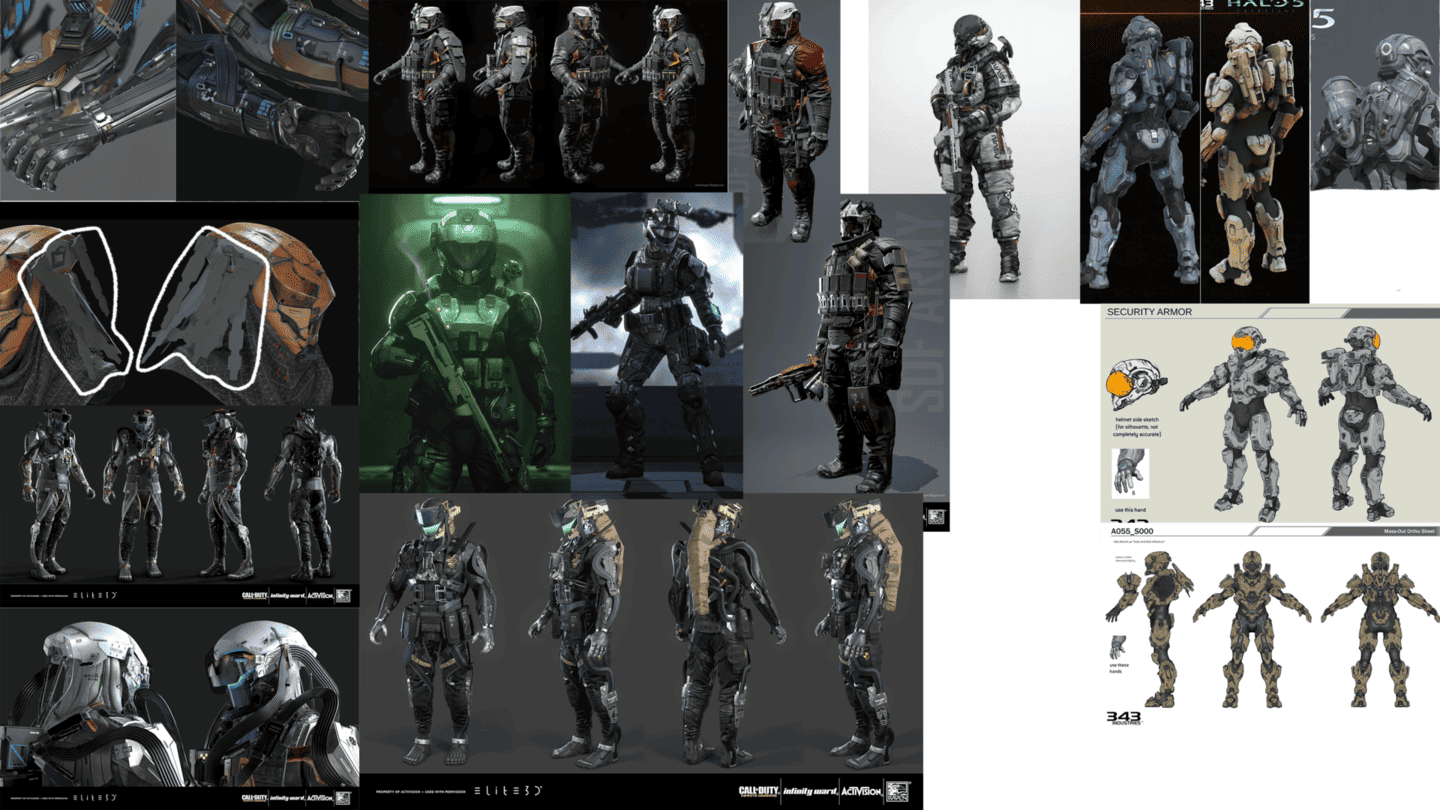
得知毕业设计课题不限创作主题、支持自由立项后,我顺着自身爱好选定第一人称射击的游戏,参考《光环》《使命召唤》等经典作品,着手研发一款科幻题材射击游戏。玩家在本作中扮演一名特种兵,于草木丛生、沦为废墟的人类都市中迎战外星敌军。鉴于第一人称射击游戏的核心游玩体验依托枪械射击的战斗过程,所以本研究将设计重心落脚于玩家与敌人发生遭遇战处的空间设计上,探究如何依托对战区域的空间排布优化游玩体验。项目前期通过文献调研敲定研发方向,并对标《光环 3:地狱伞兵》展开案例分析,该作同样以未来都市新蒙巴萨作为核心场景。
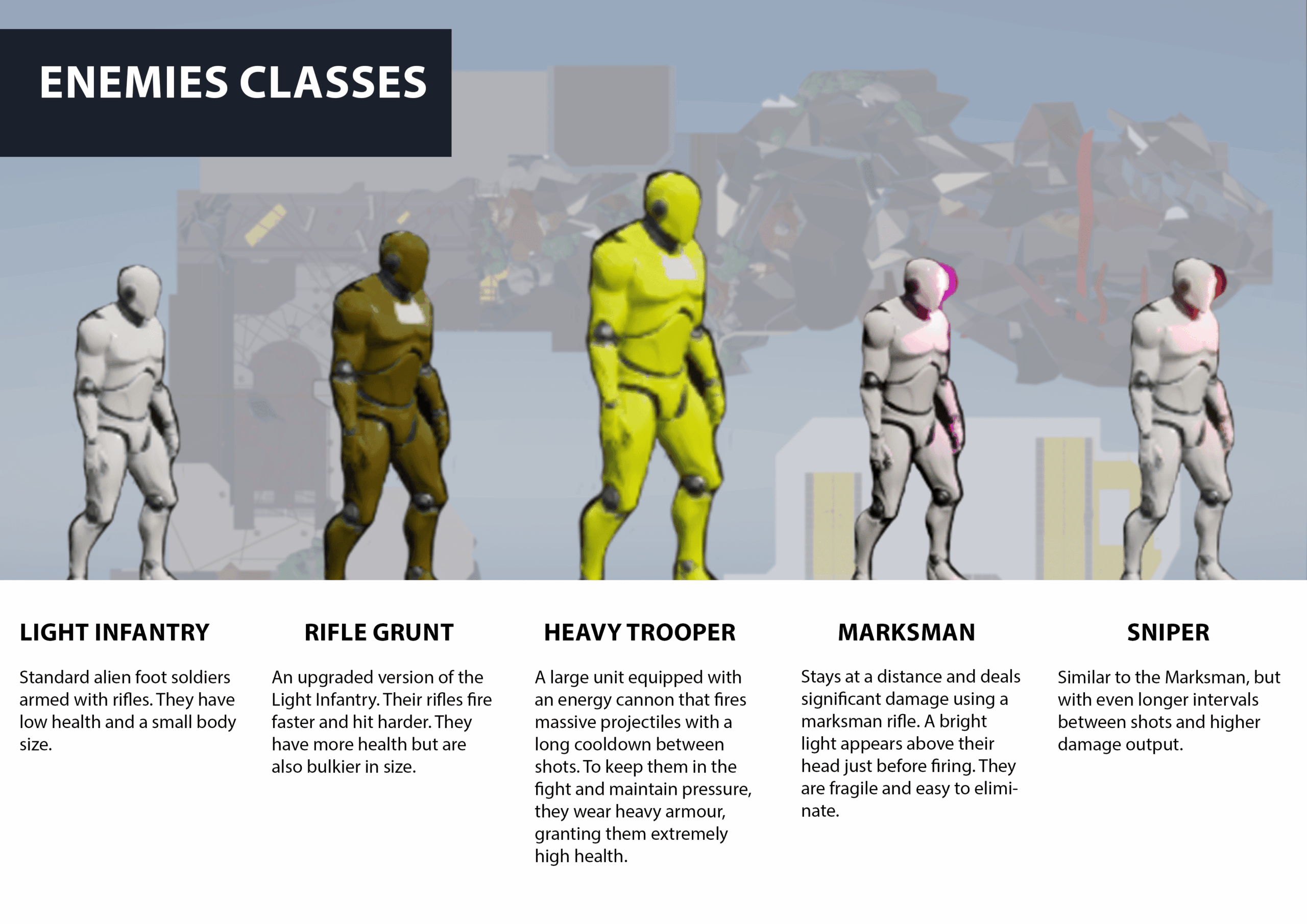
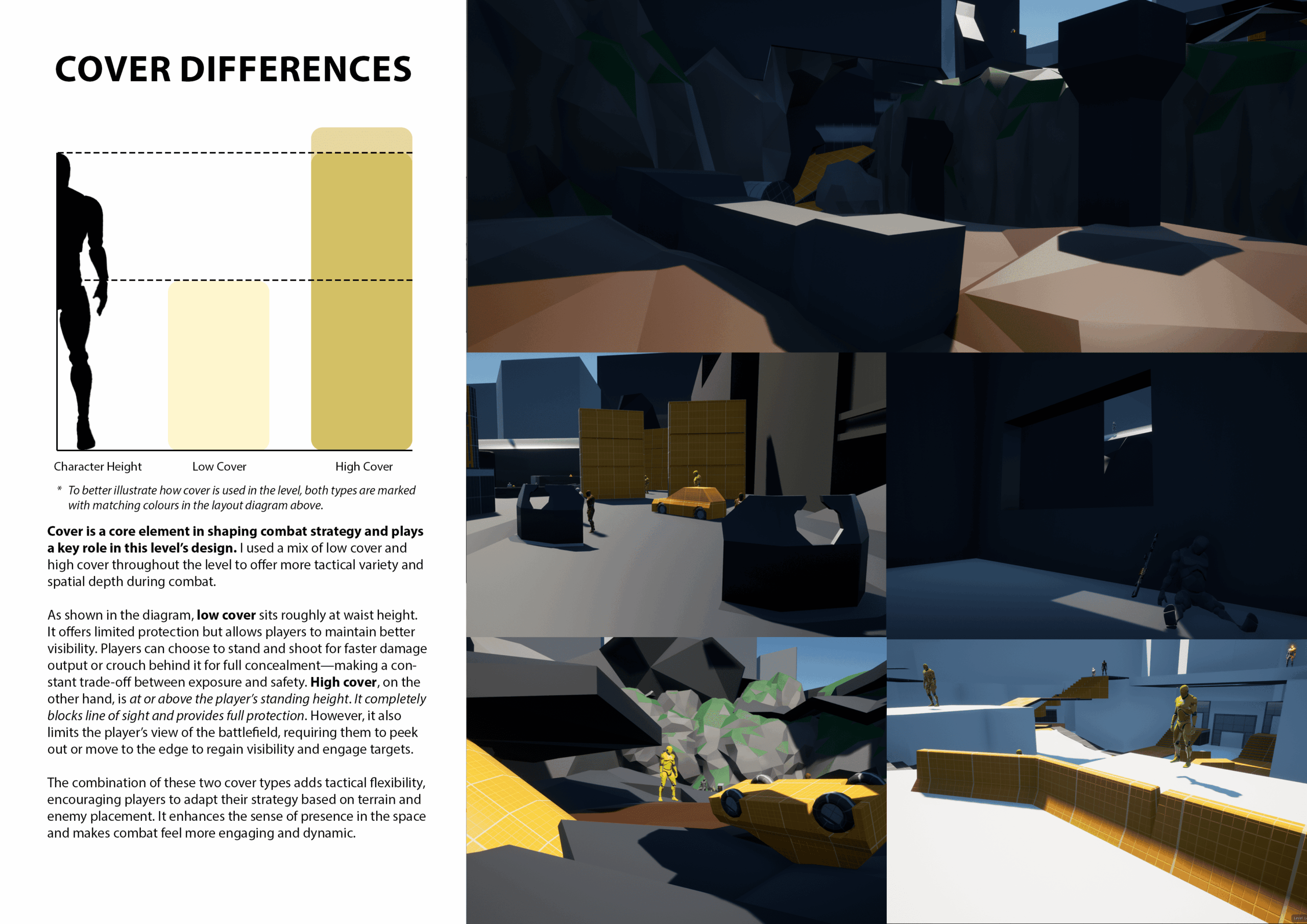
经由对光环 3:地狱伞兵的案例分析后,我提炼出遭遇战设计的三大核心要素:敌人排布、掩体分布与地形构造。上述研究结论落地指导实际关卡制作,设计目标为搭建能够驱动玩家策略抉择、提升操作自主度、强化全程对战沉浸感的交战空间。
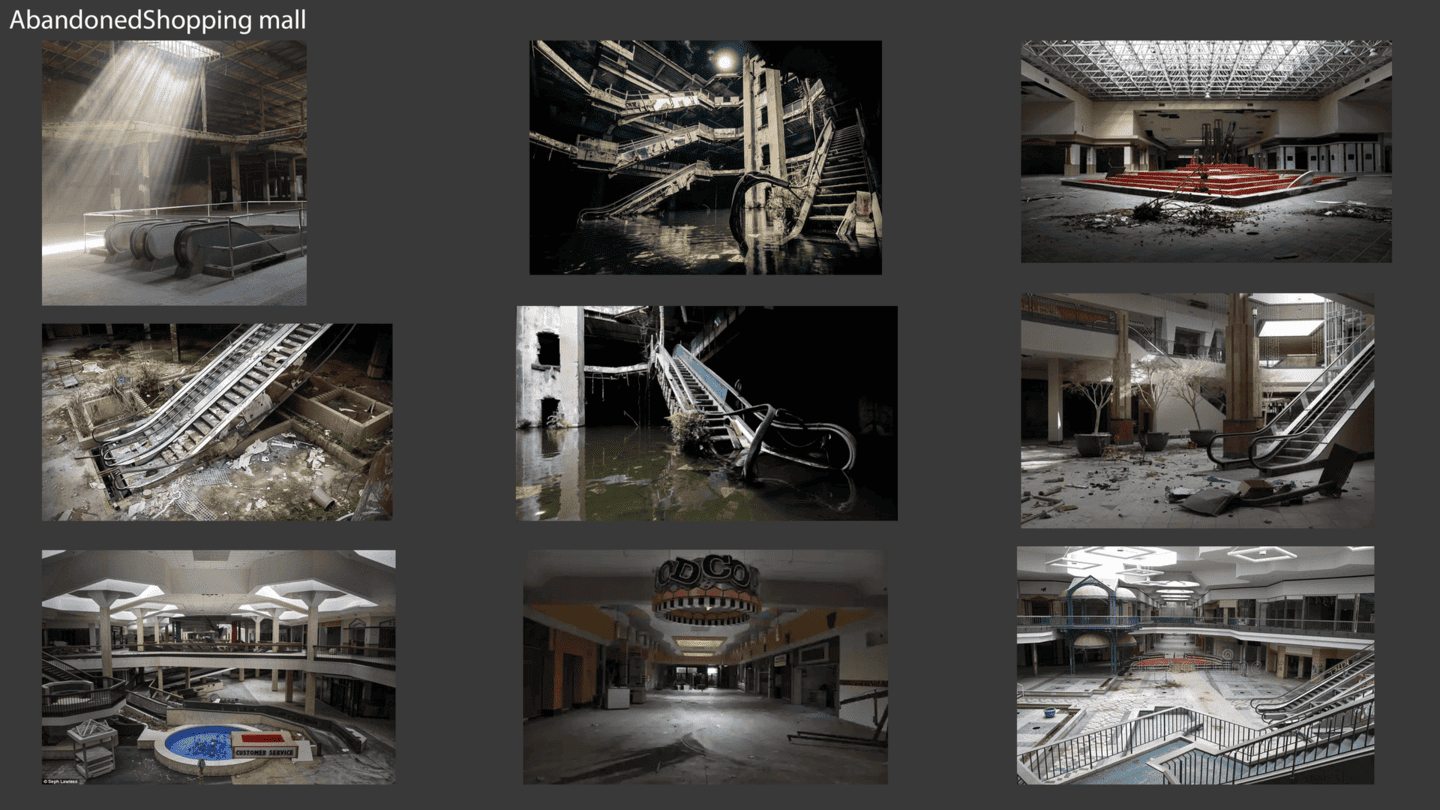
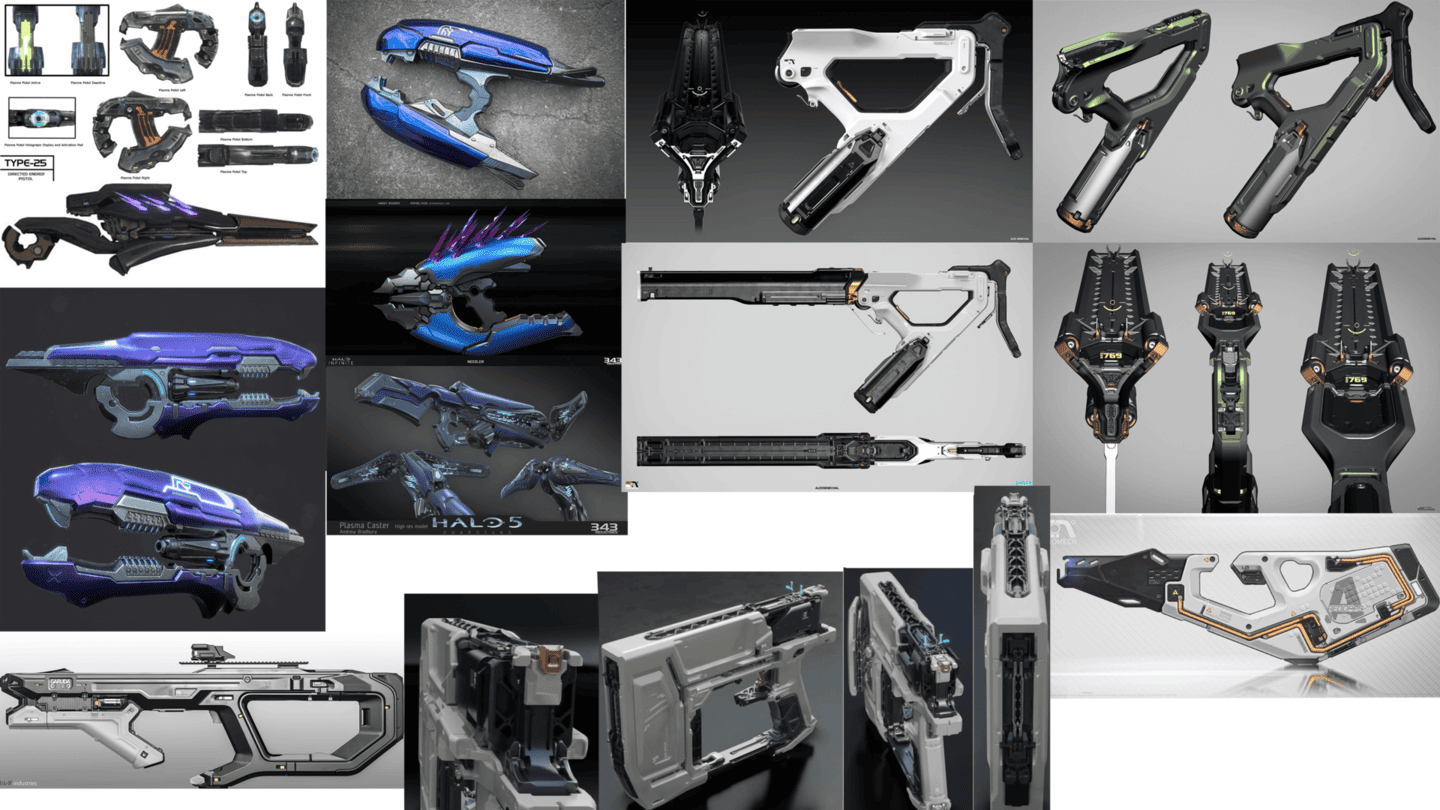
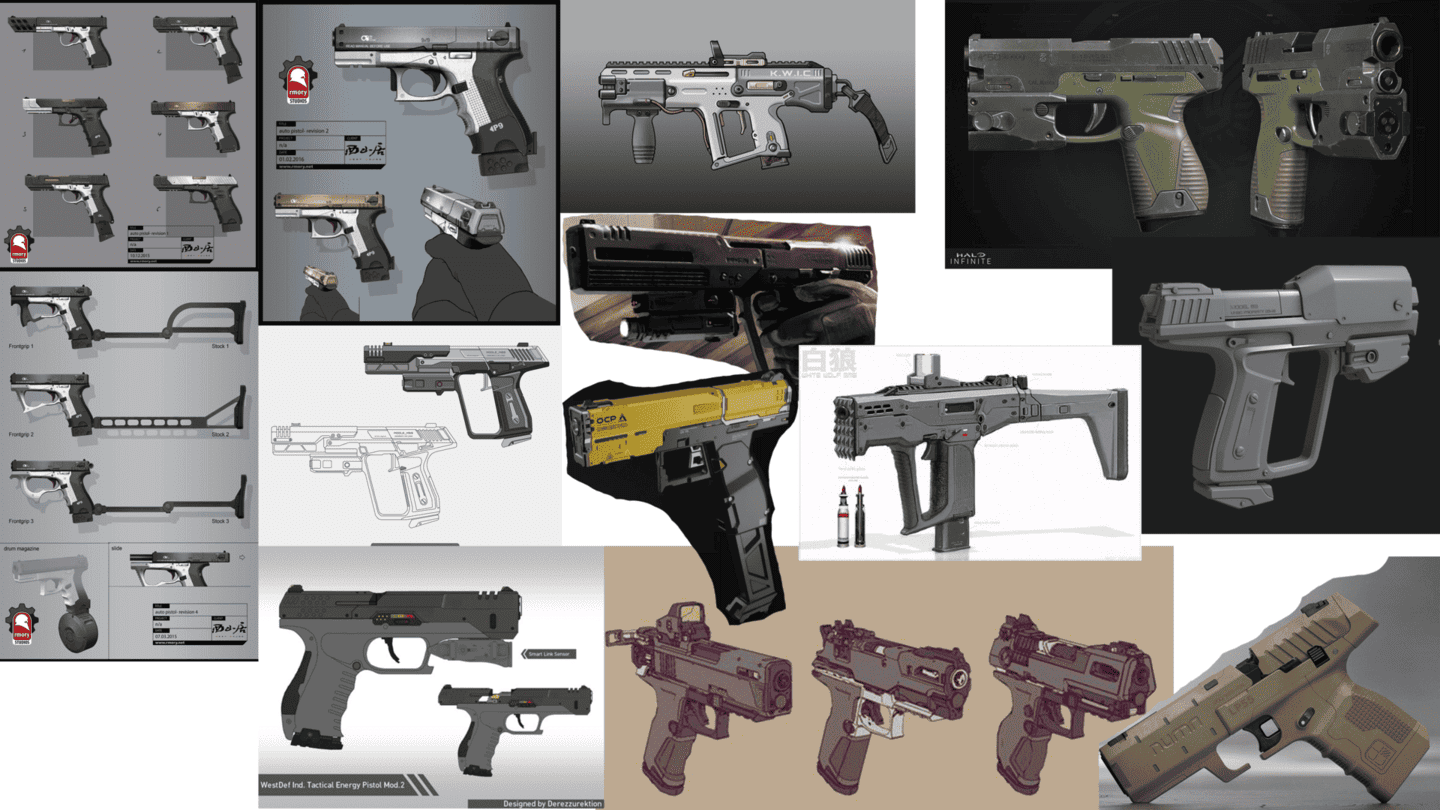
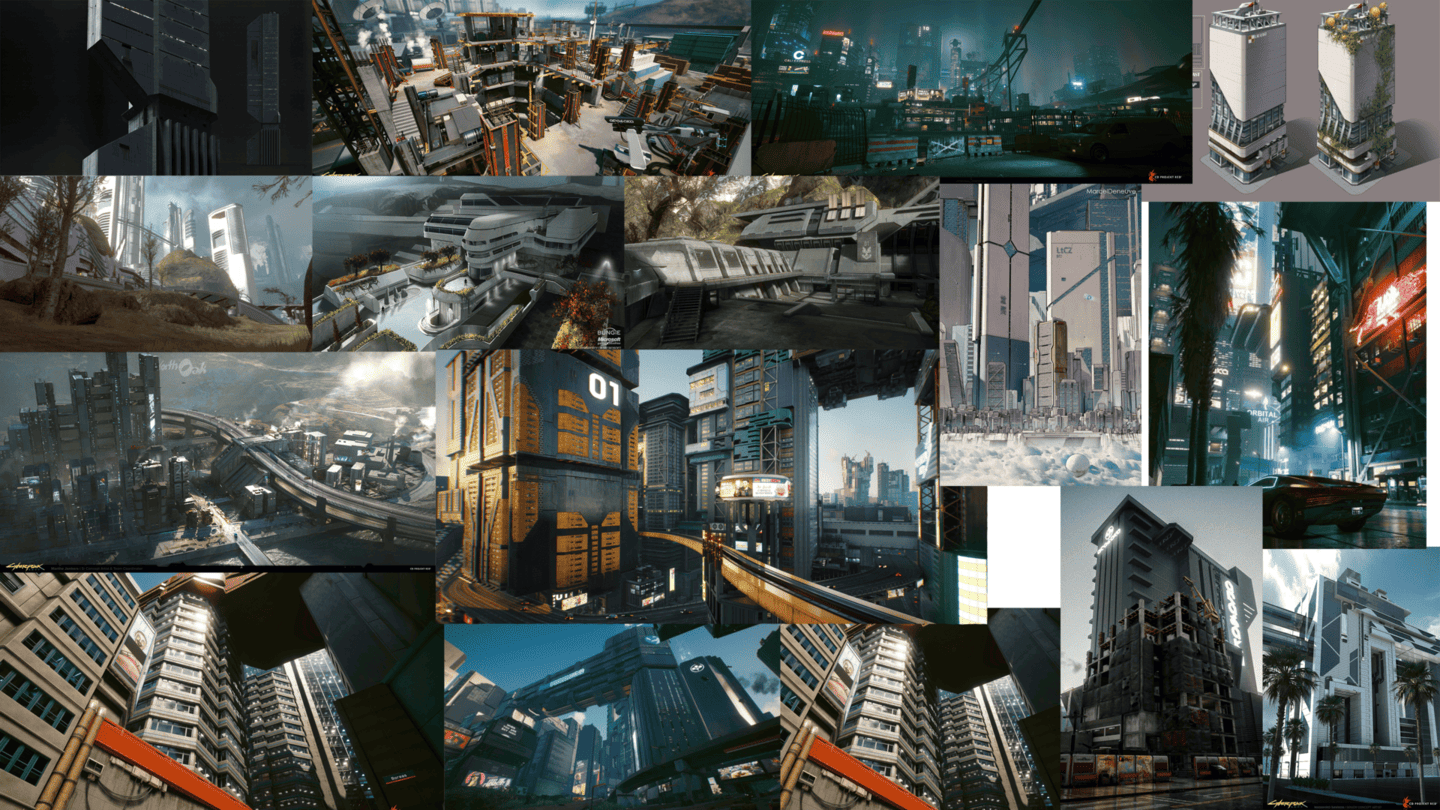
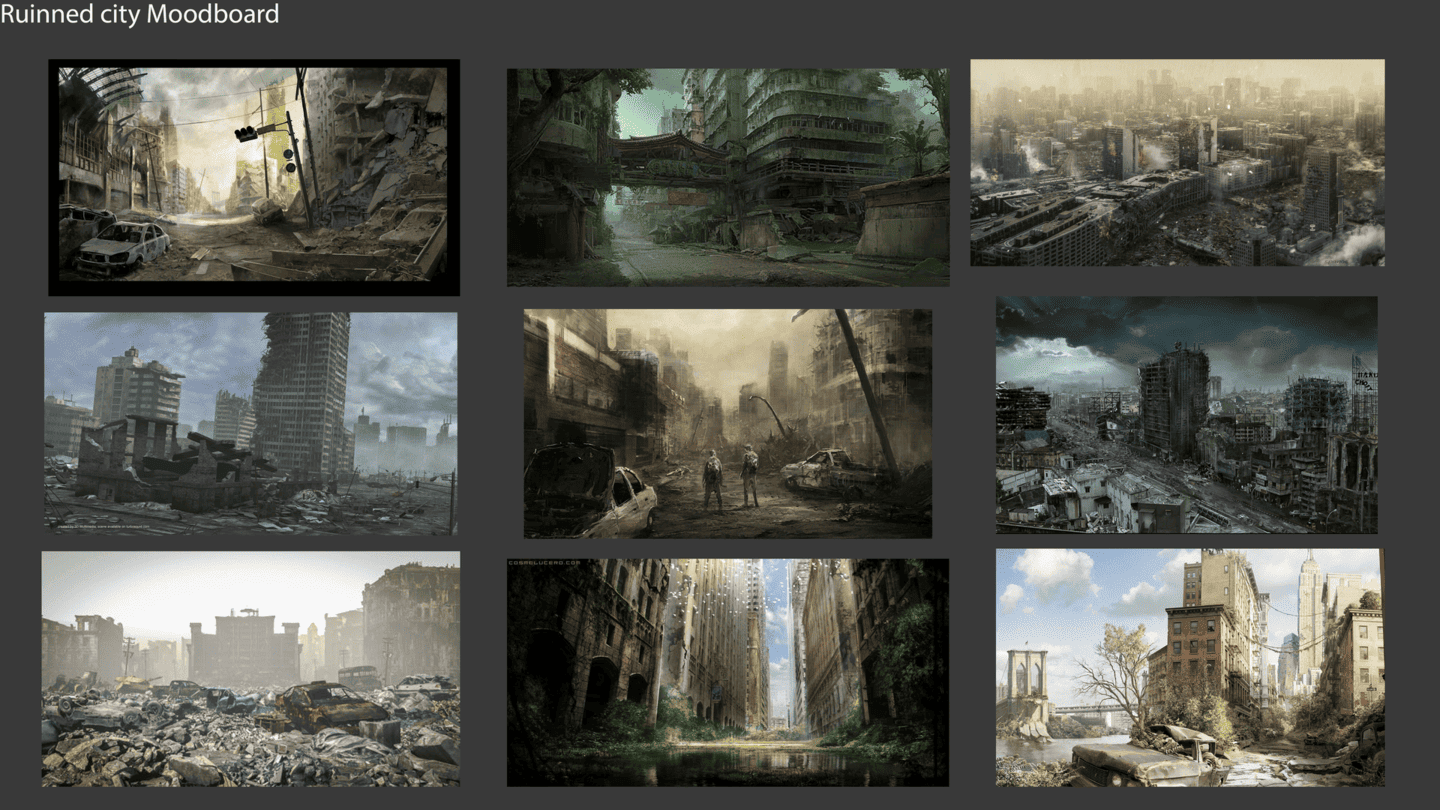
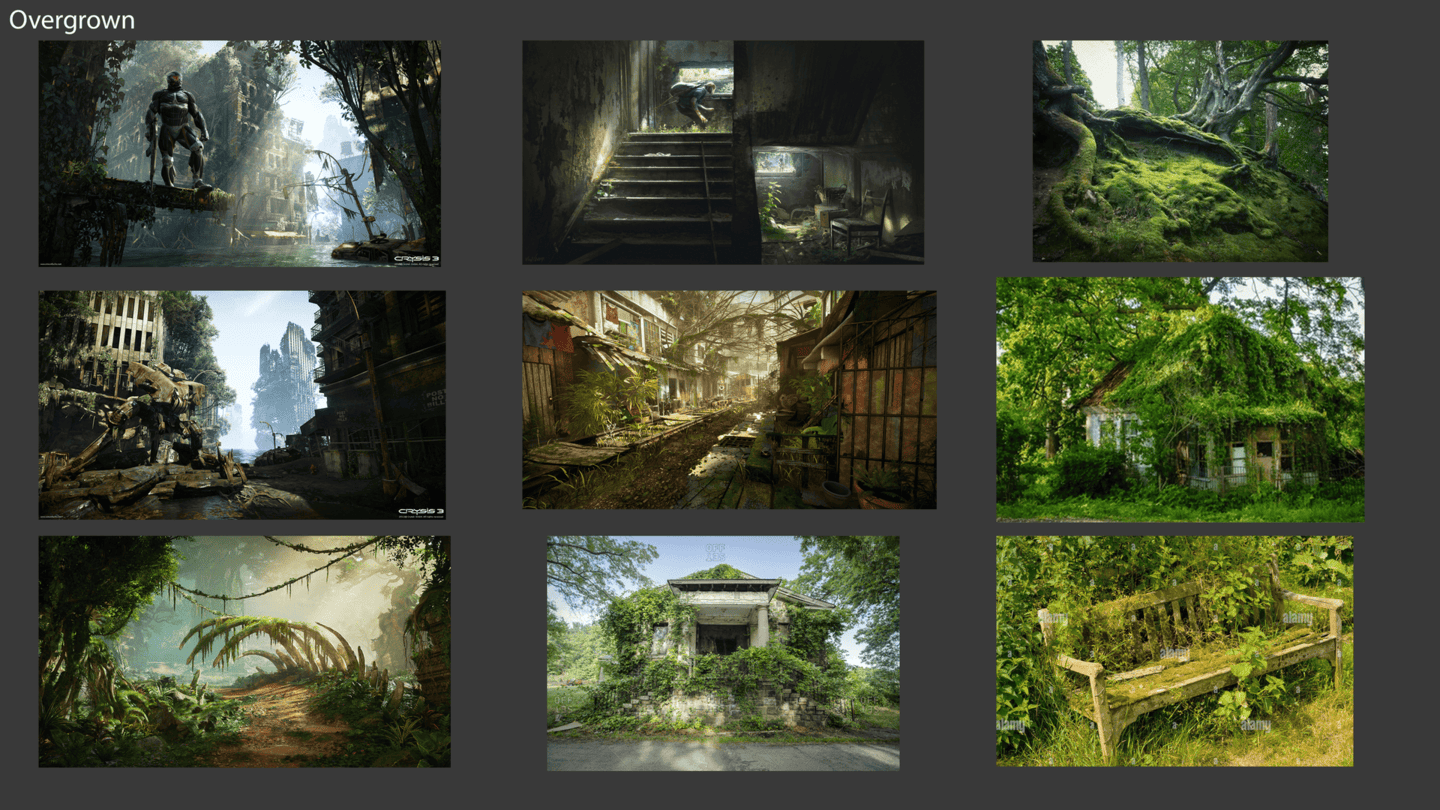
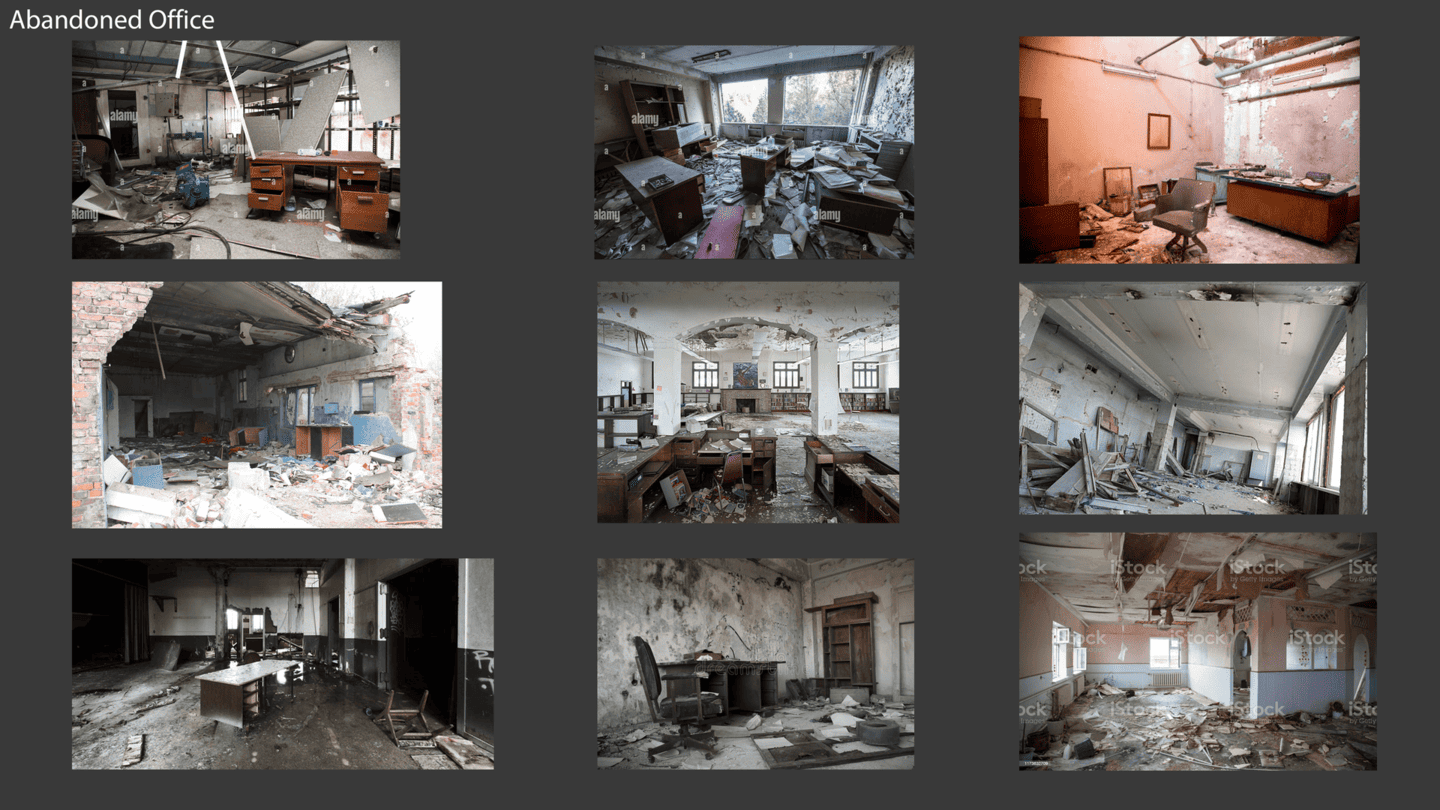
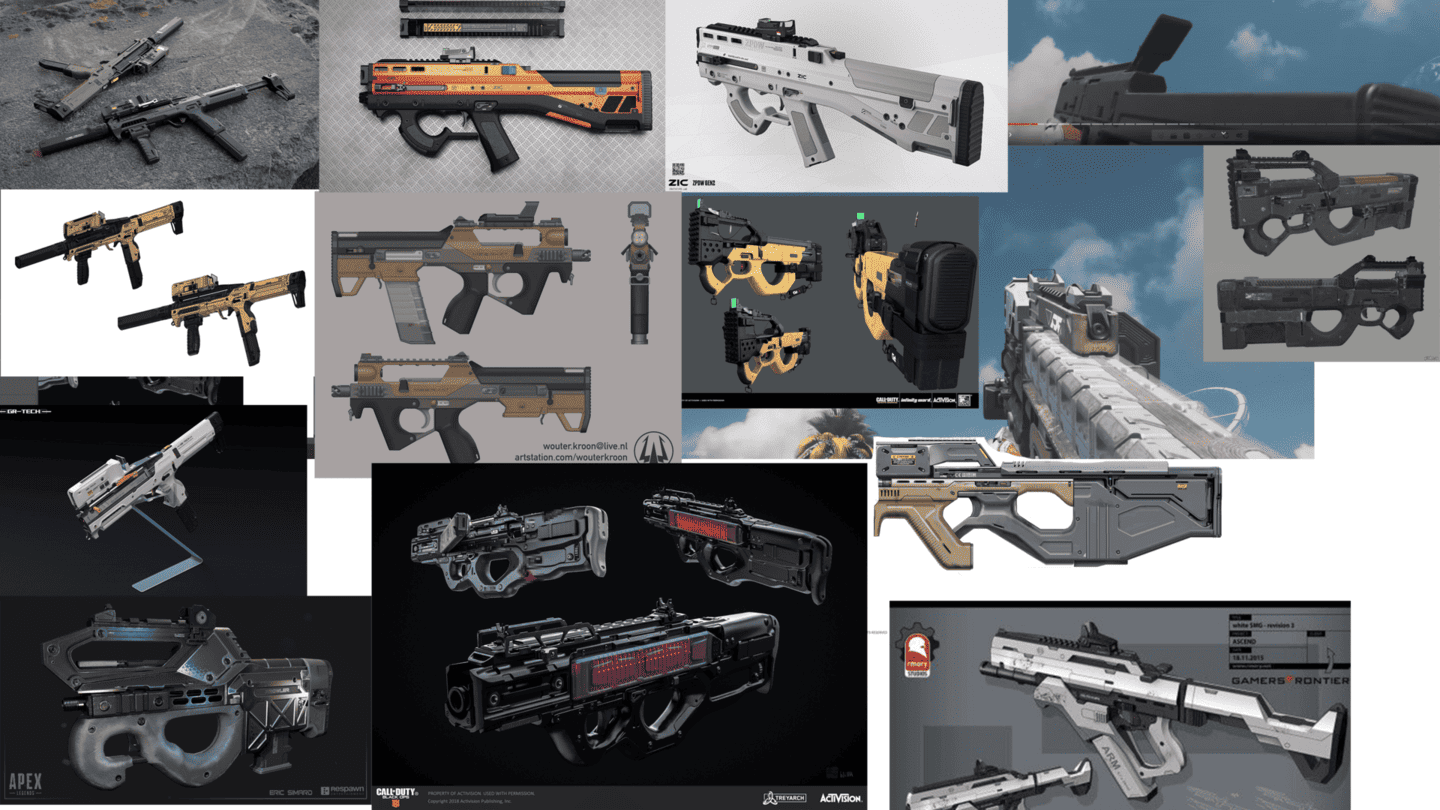
得益于本毕业项目赋予的完全创作自主权,我最初定下了一个颇具野心的开发目标:独立包揽游戏的全部开发工作,涵盖美术资源、玩法系统与关卡设计。围绕选定的科幻题材,我筛选收集了大量参考视觉素材,搭建灵感情绪板锚定创作方向,还手绘了角色与场景的概念设计稿。
* 为此项目收集的参考
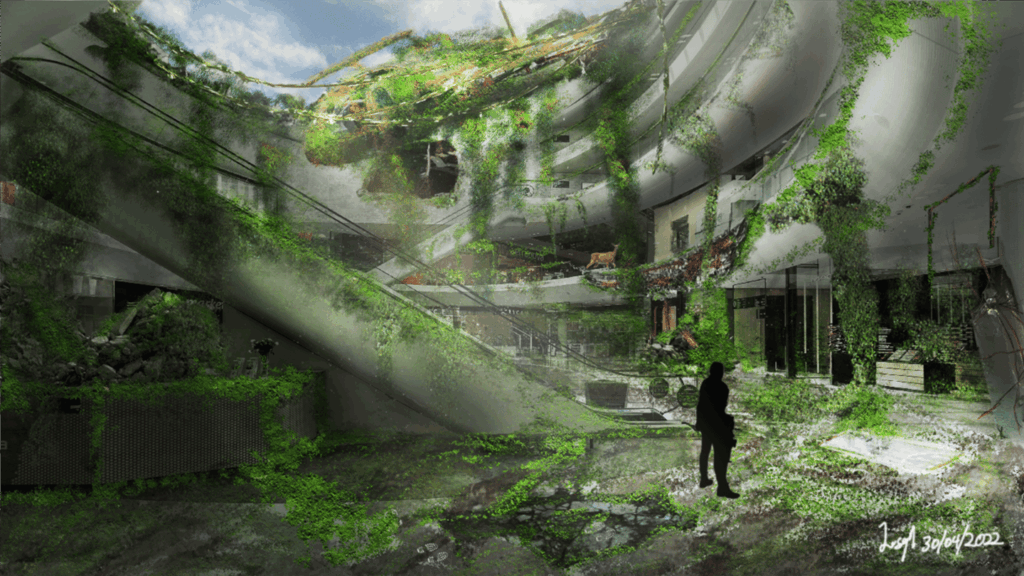
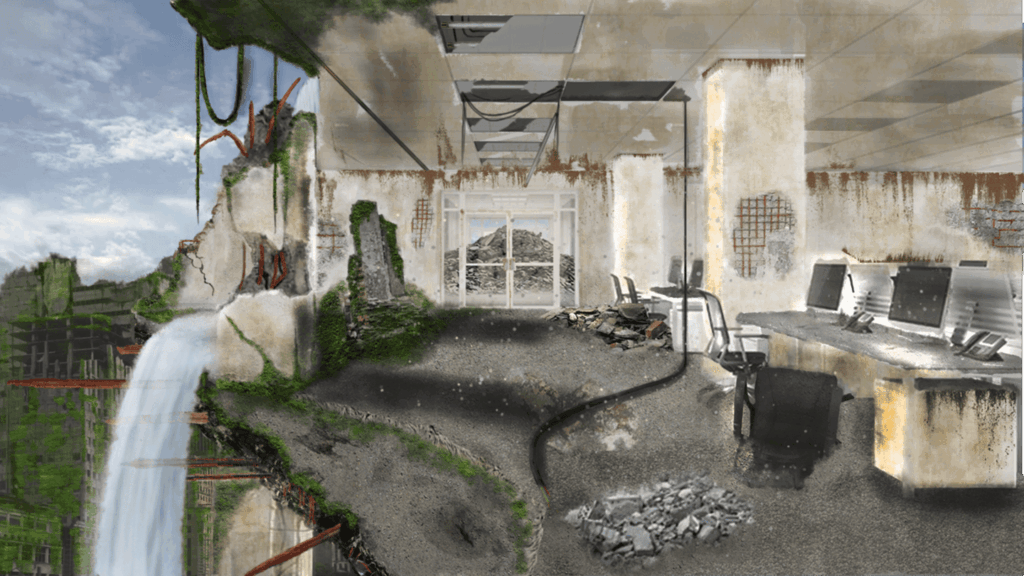
* 基于城市废墟和草木蔓生两个关键词而创作的概念图
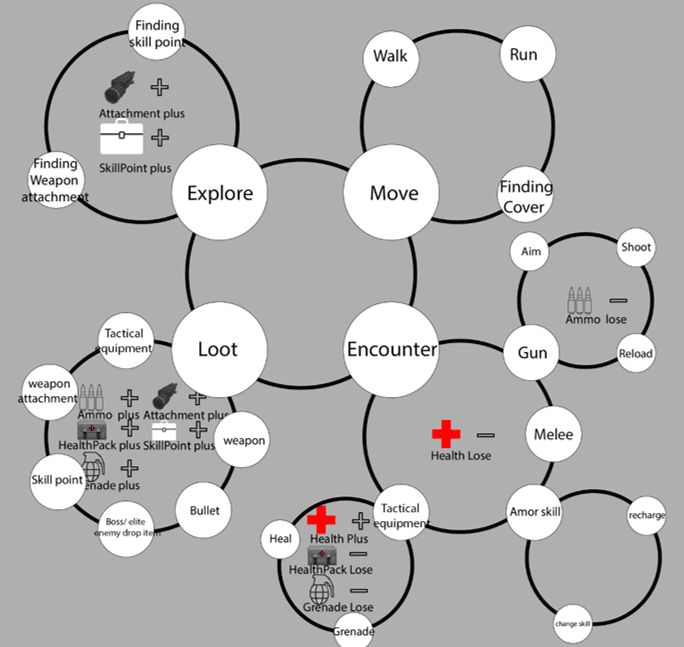
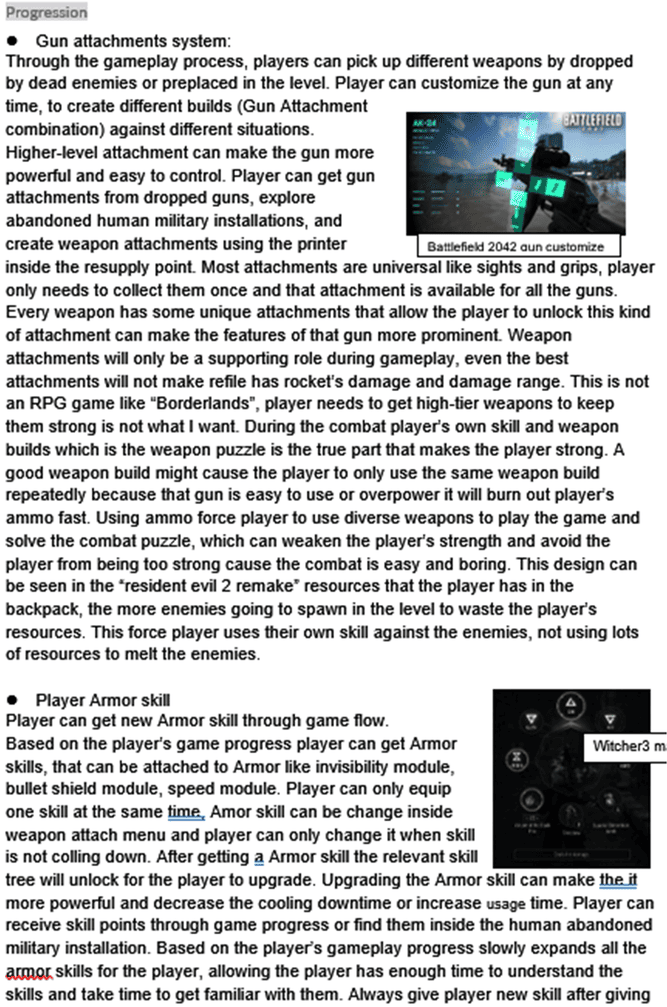
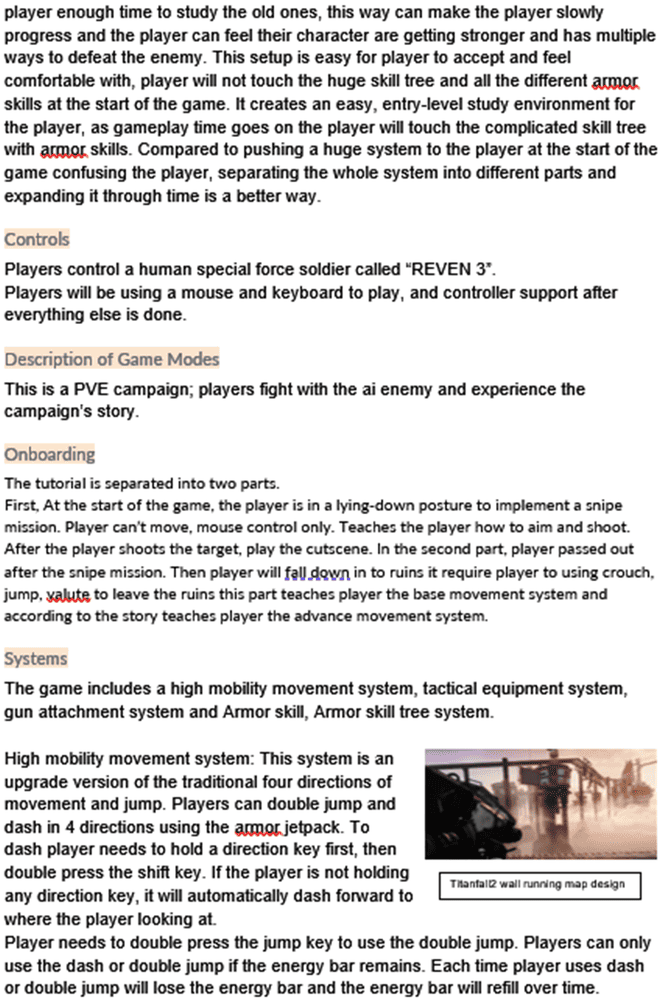
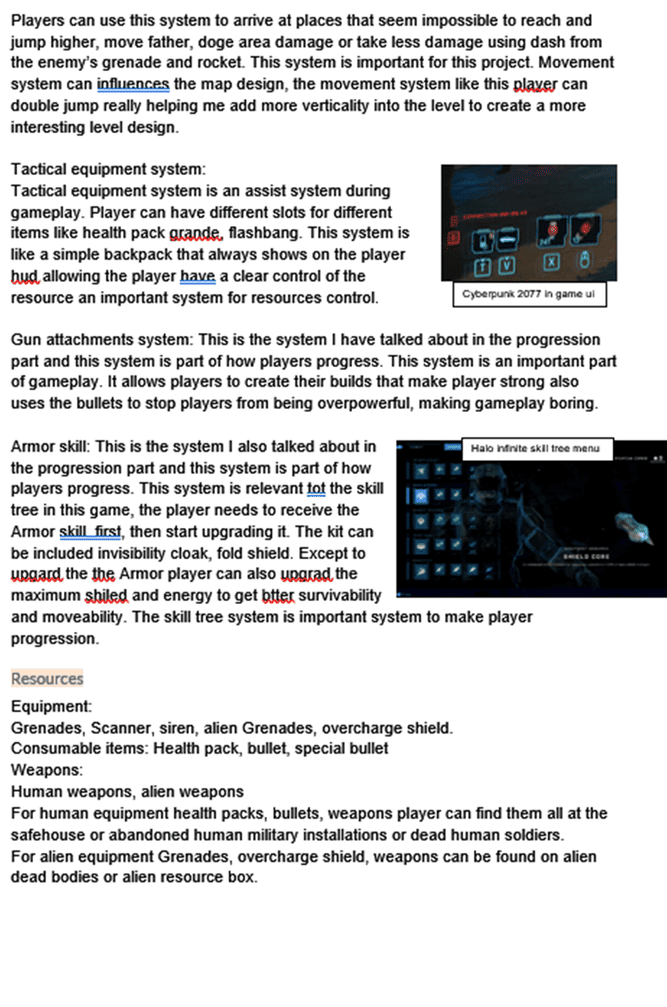
本人同步撰写了完整的游戏设计文档(GDD),依托文档梳理整合初期设计构想,明确核心玩法机制、游戏循环、世界观背景以及关卡推进节奏。
但随着开发工作逐步推进,我渐渐意识到,独自包揽全部制作工作量的难度远超预期。其中角色、武器等美术资源的制作耗费了大量工时,导致虚幻引擎内的核心功能开发与关卡搭建进度严重滞后。最终我放弃了从零制作全部素材的原定方案,转而选用虚幻商城的低多边形射击资源包作为 FPS 项目基础模板。在这套资源基底之上,接入自研的角色移动系统与各项玩法机制,完成玩家操控模块的开发,由此得以将主要精力聚焦本项目的核心目标:关卡设计。
开发进度的可视化:
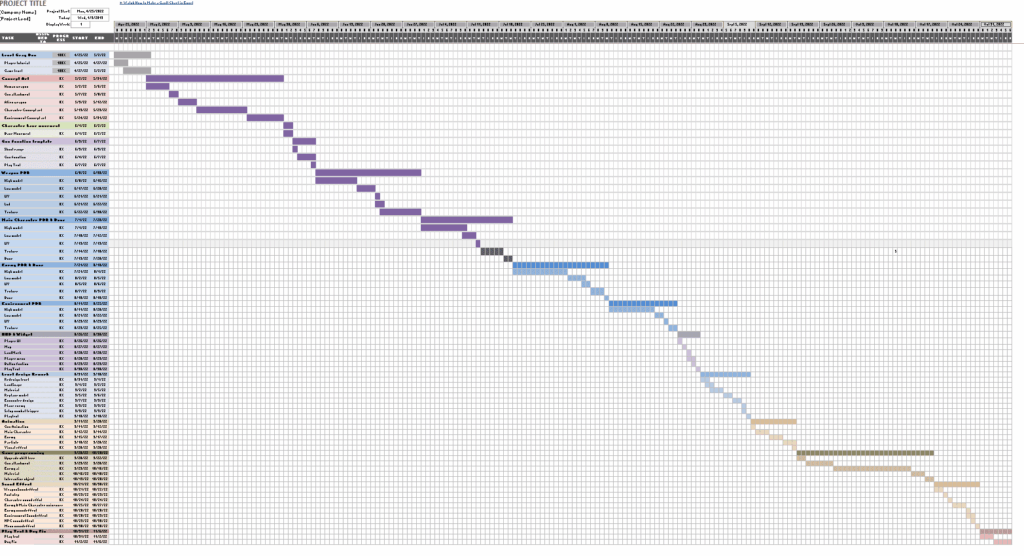
在项目前期制作阶段,我通过 Excel 搭建了完整的进度计划与开发追踪表,将游戏开发全流程拆解为可落地的具体任务与分阶段里程碑节点。借助这张表格,我能够清晰可视化项目整体架构,实时评估每项任务的优先级与完成进度,同时预估后续开发内容的时间周期;也可根据项目实际推进情况,灵活调整任务优先级、重新分配时间与开发资源。这张进度追踪表的核心价值在于,它让我及时发现自己在美术素材制作上投入了过多工时,导致工作重心偏离了项目的核心研发目标,进而快速调整工作方向,将精力聚焦于关卡设计,最终保障了项目可玩试玩版本的顺利交付。
Level Layout:
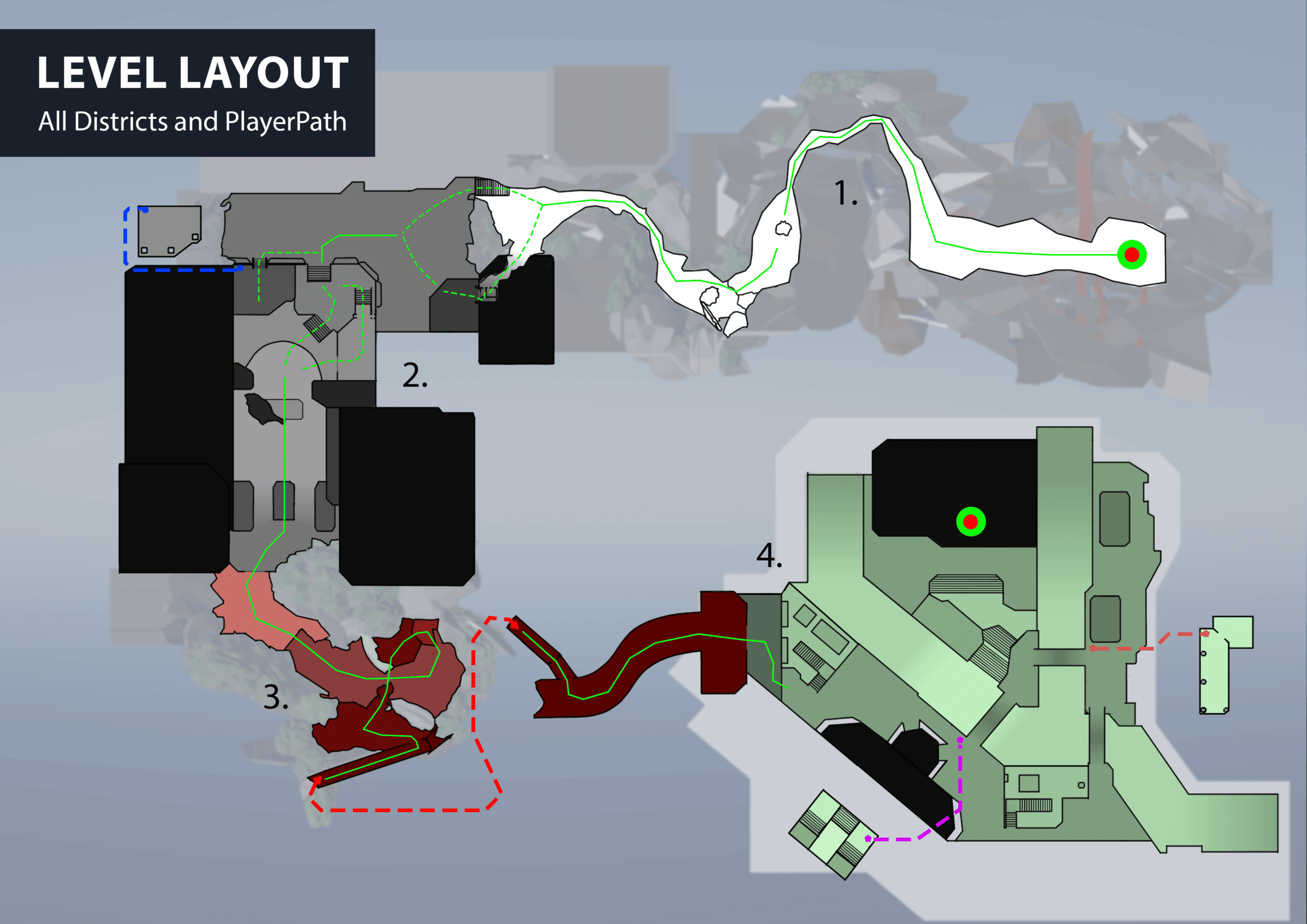
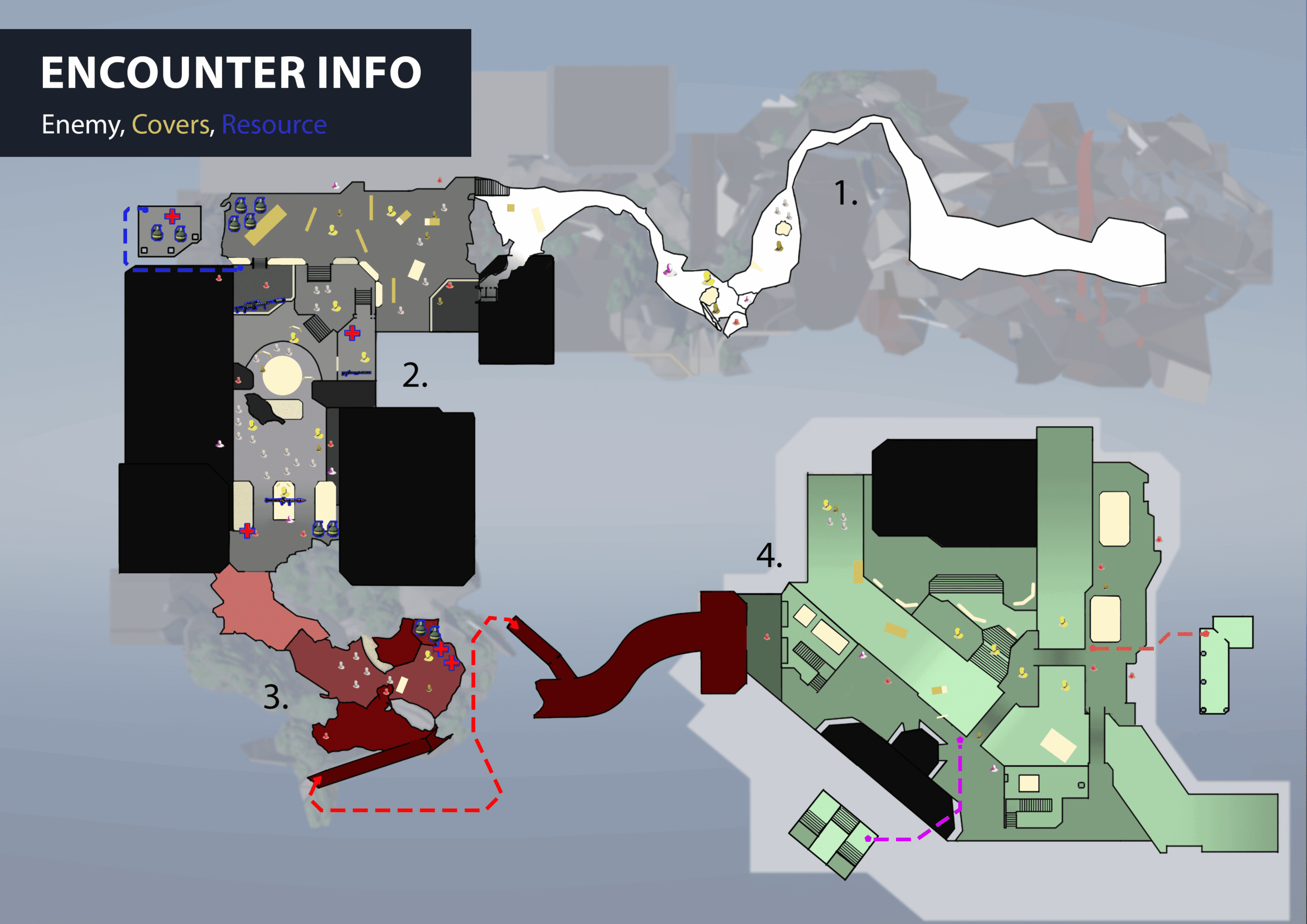
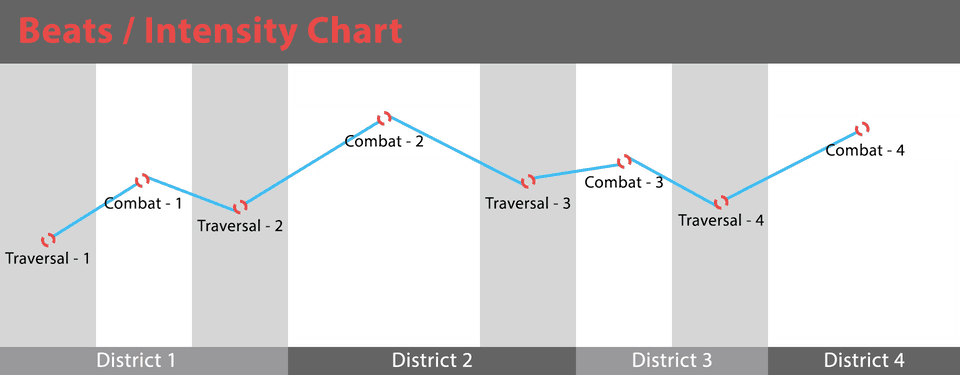
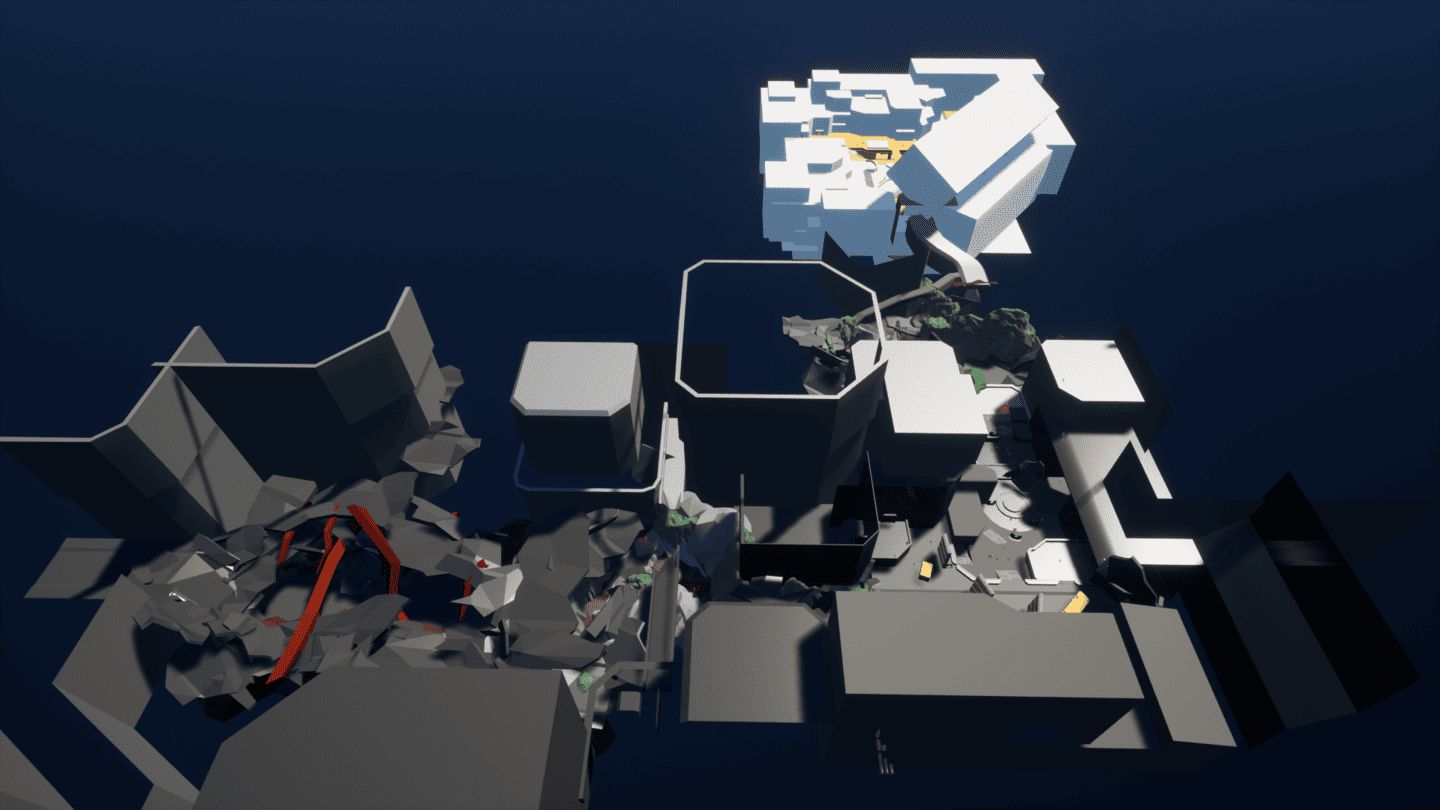
关卡中区域的划分:
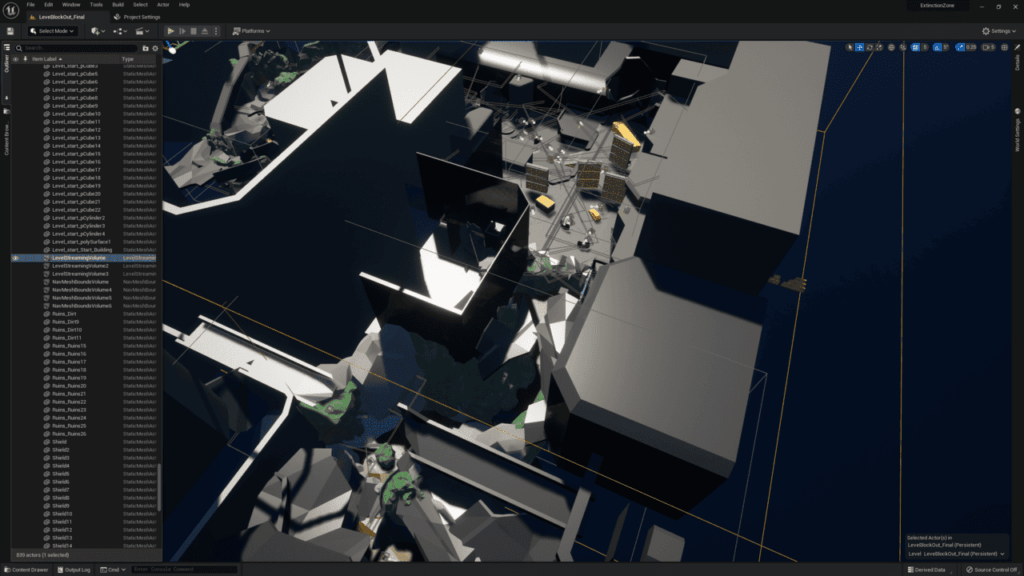
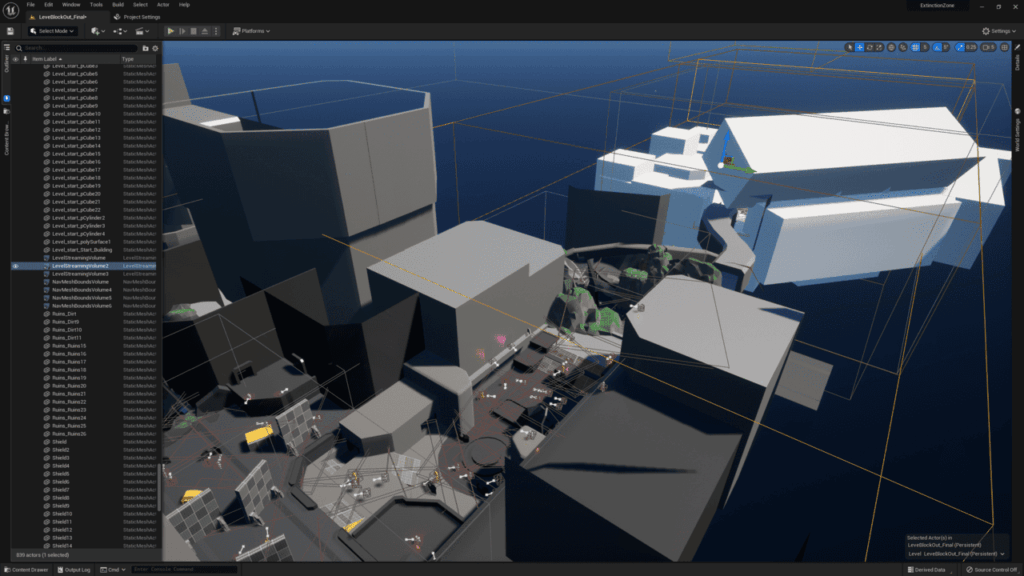
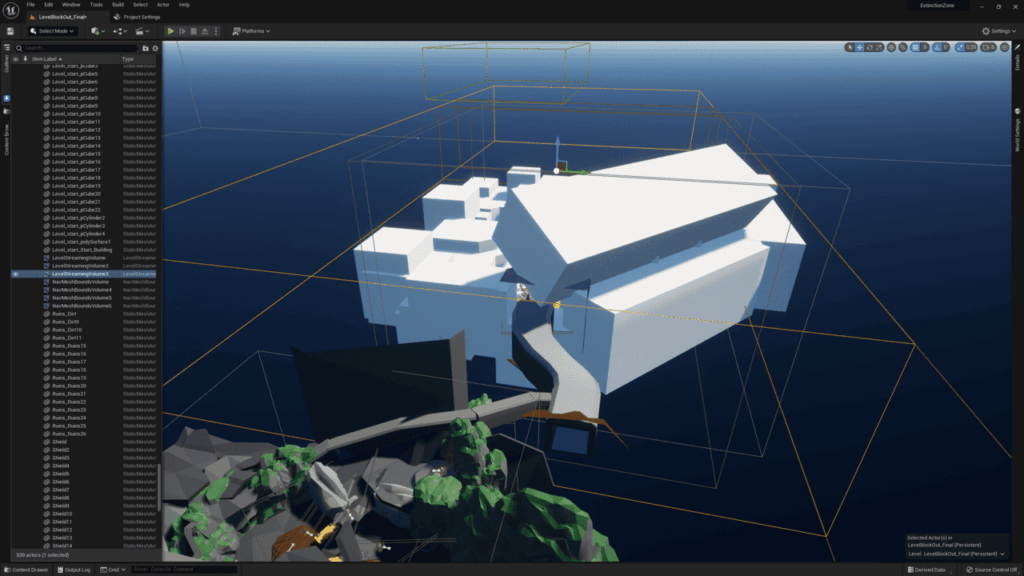
为优化游戏运行性能与场景加载效率,我启用虚幻引擎的关卡流式加载系统管控分区资源加载:玩家行进至加载触发区域时,引擎仅预加载下一即将抵达的区域。区域衔接处依托竖向高差与视觉遮挡物做精细化过渡设计,收拢玩家视线,杜绝玩家看到场景资源加载、卸载的穿帮画面。
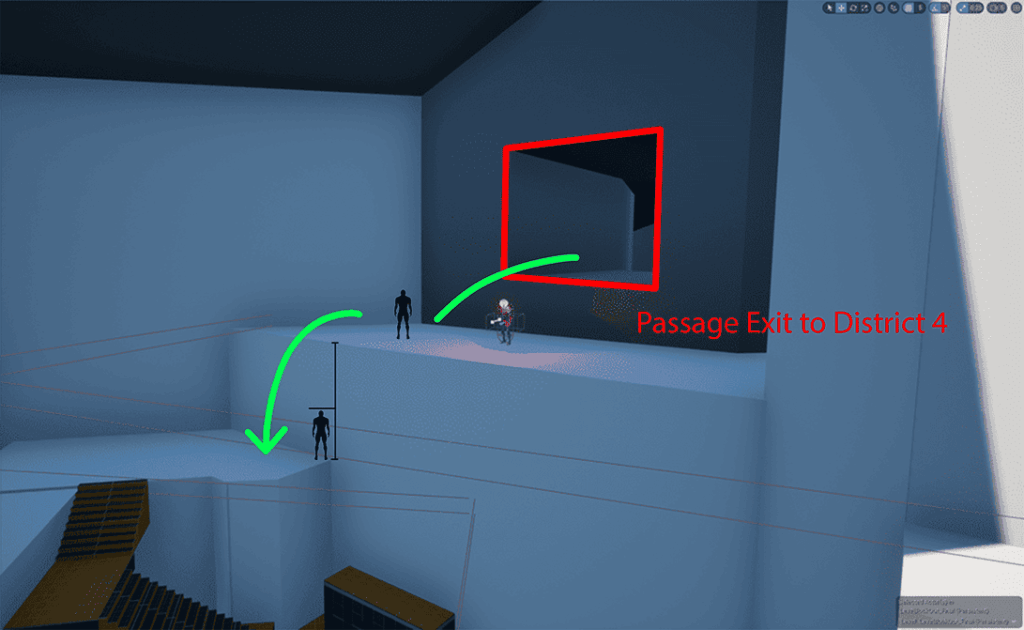
*进入区域四的示意图
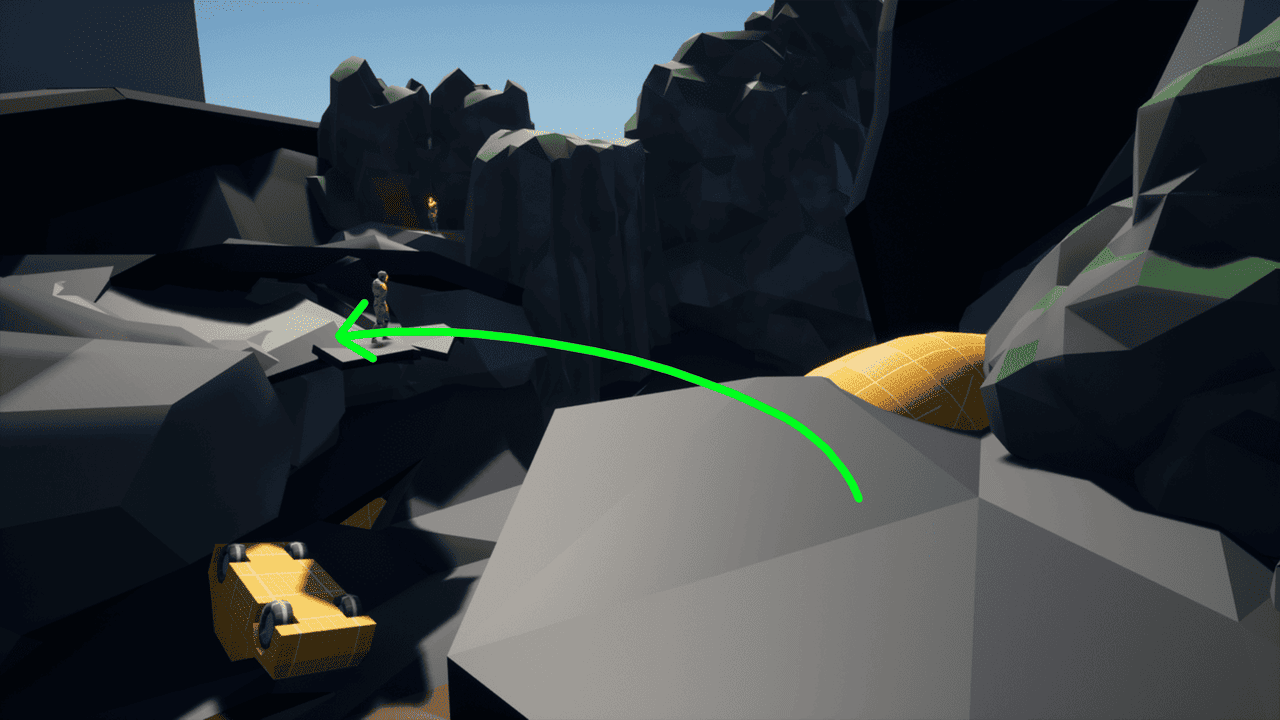
在第四区域入口处,我设计了一条单向跌落通路,玩家必须必须离开当前的位于高处出口才能进入区域4。当玩家从出口跃下后,就会因为周边墙体高度超出角色攀爬上限,无法原路折返。该设计既可限制玩家折返已通关区域、避免无谓的场景重载,也进一步巩固了关卡的线性行进逻辑。
关卡设计的迭代流程:
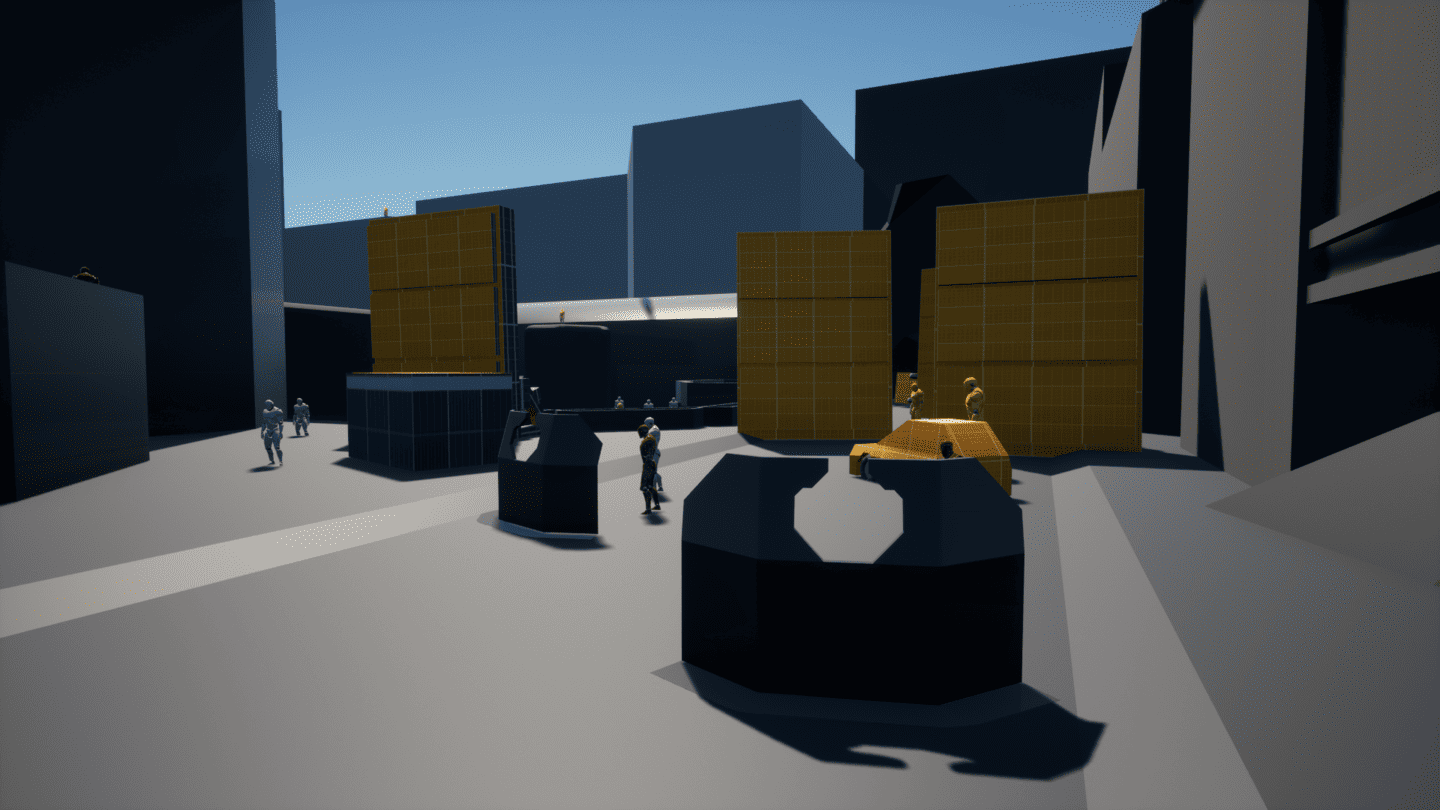
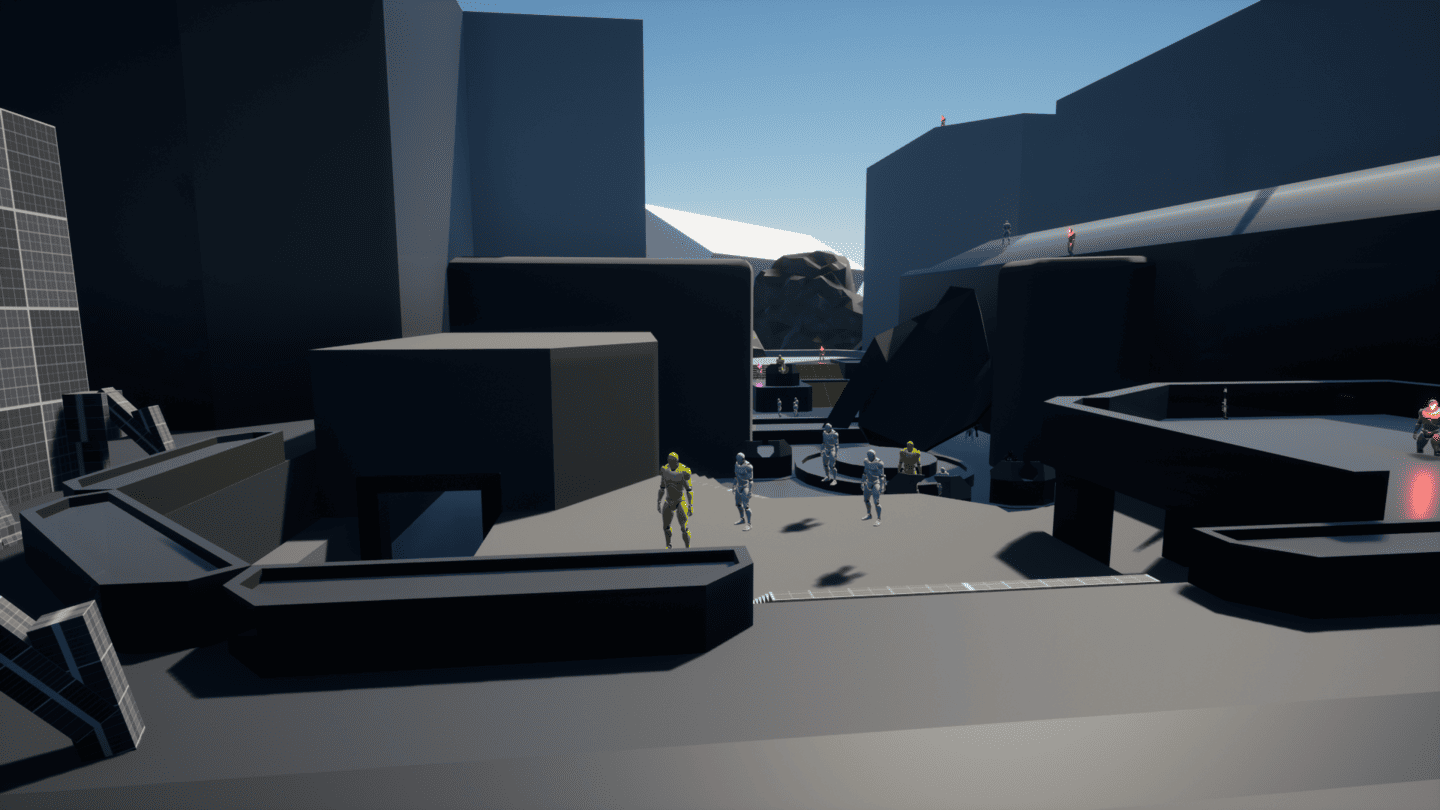
我先将手绘的关卡布局图导入虚幻引擎,使用地形工具搭建基础地表形态,再结合引擎自带的静态网格体资源,完成关卡初步白盒搭建。整体空间框架成型后,我在 Maya 中制作建筑模型,替换场景内的临时占位模型并完善背景环境,进一步提升关卡的视觉效果。
整座关卡经过三轮迭代后最终定稿。前两轮迭代以深化后的调研结论、以及进度追踪表中制定的里程碑计划为依据,对多处区域的空间结构进行了调整。举例来说,最初设计包含一段脚本剧情事件:玩家狙击任务失败,从高楼坠落至废弃公路,由此正式进入主线游玩流程。为此,关卡早期版本专门规划了一片高层建筑区域。后续由于项目重心回归纯关卡设计,我删减了这部分叙事内容,将关卡起点直接设置在废弃公路上,并移除了所有与原高层建筑相关的场景元素。
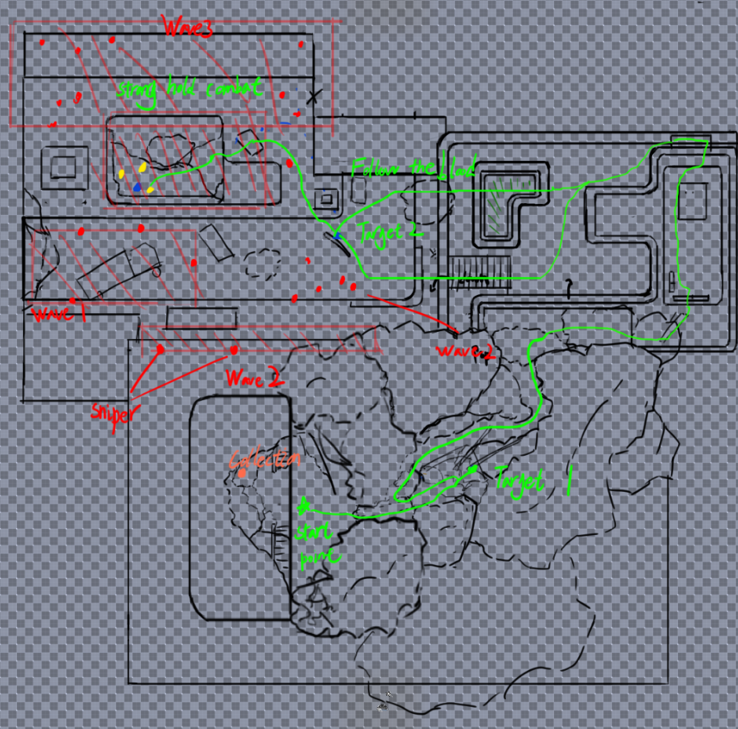
* The first prototype
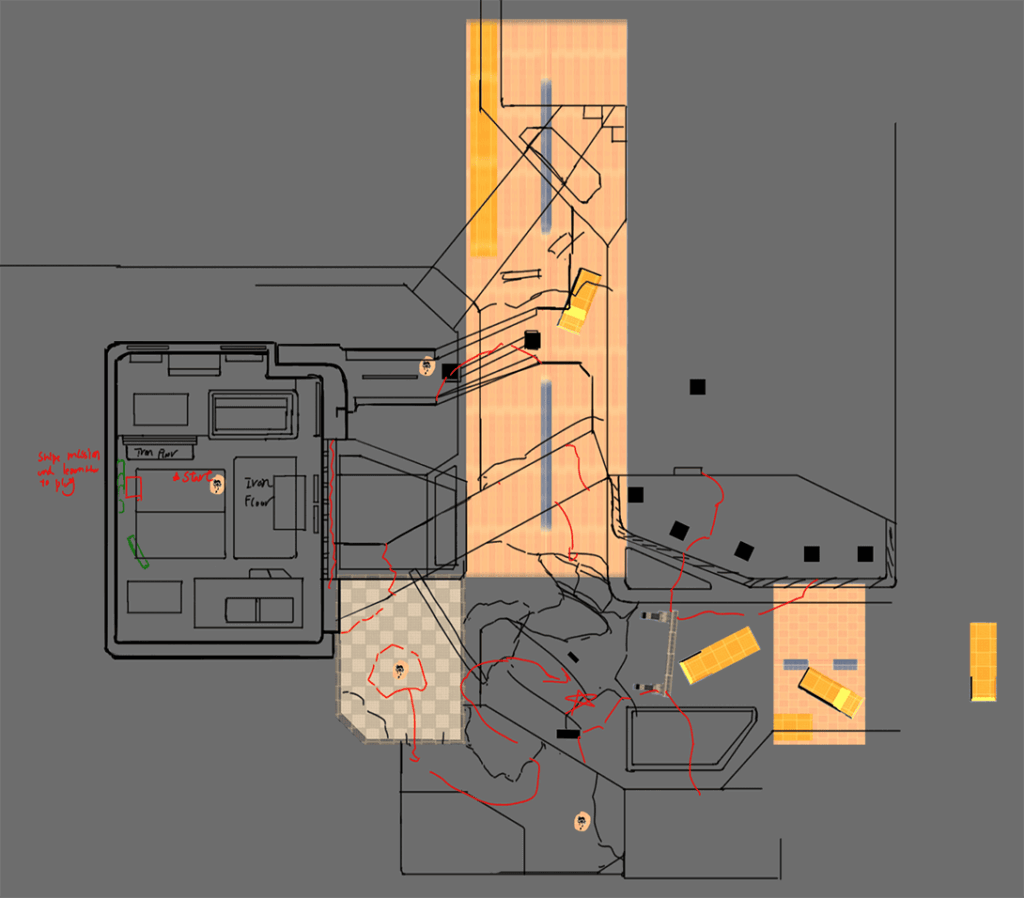
* During the first iteration, I made adjustments to the high-rise area of the level by adding several new sections, expanding the overall layout of the level.
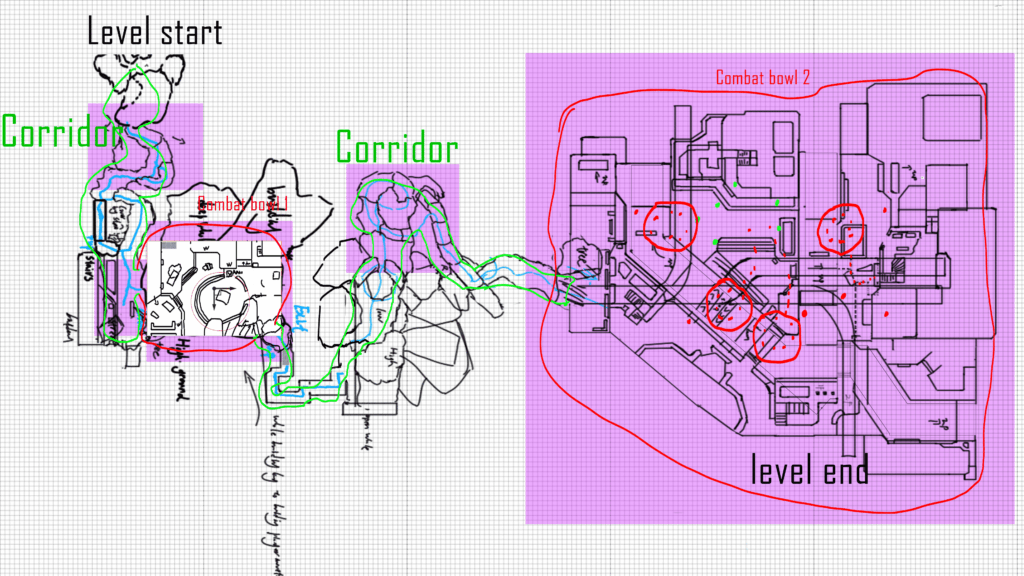
* This level layout was designed during the second iteration, and as shown here it bears few differences from the final version.
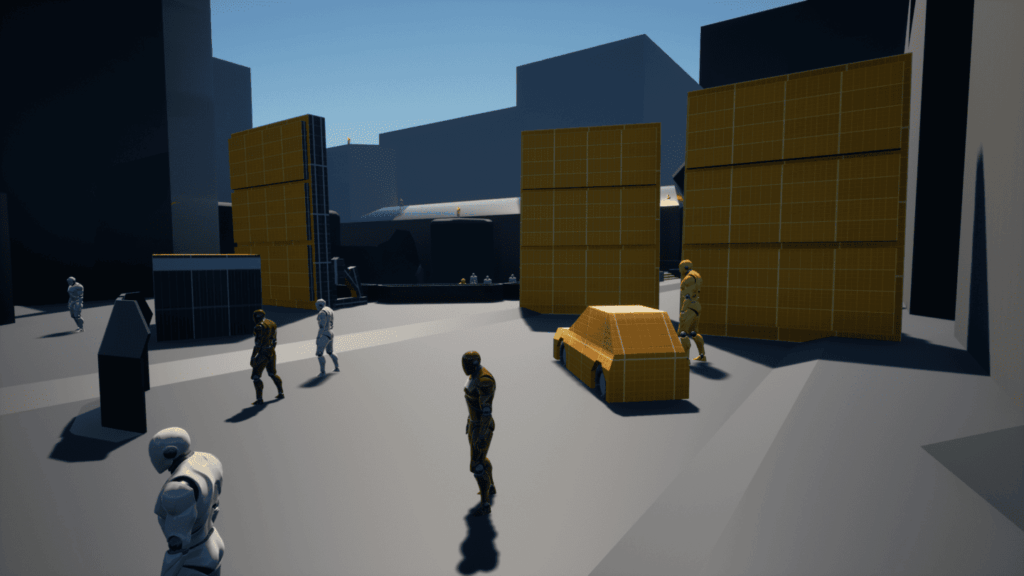
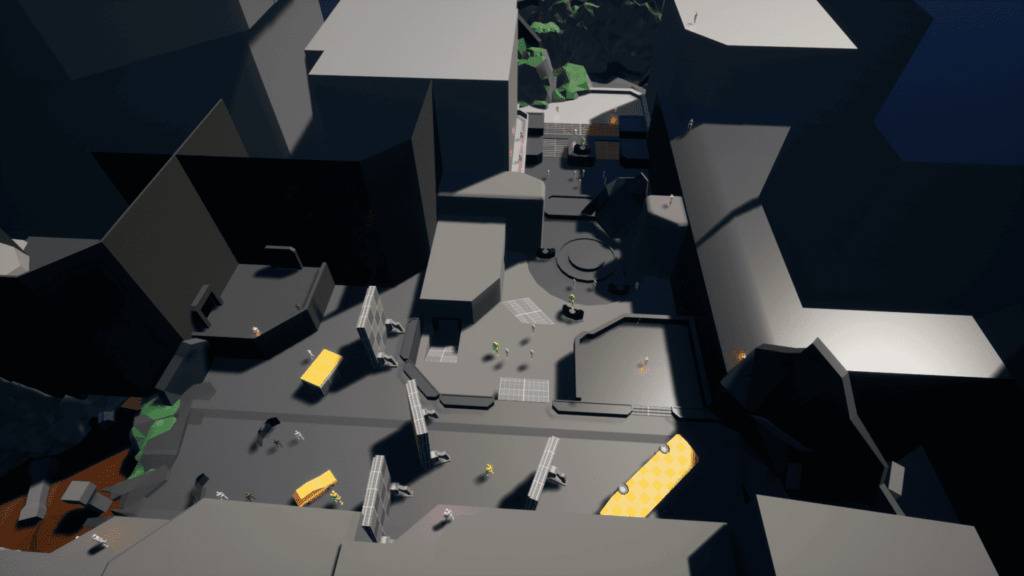
第三轮迭代参考了导师与同学的游玩测试反馈,本次调整重点为第二区域的整体重做。该区域早期版本将出口设置在高处,位置隐蔽不易察觉。测试过程中,多数玩家难以找到出口,不仅产生困惑,也打乱了场景探索的流畅节奏。
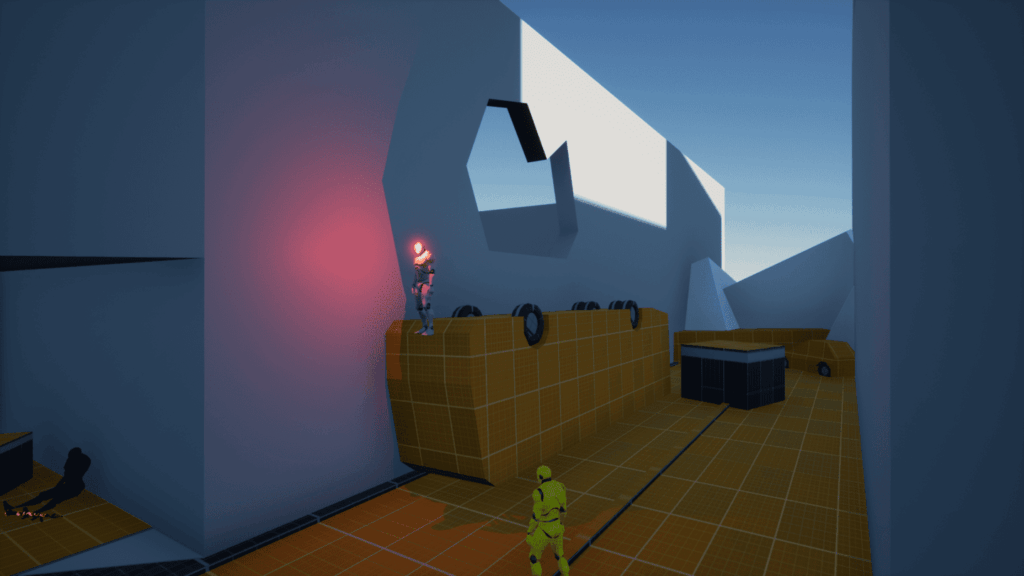
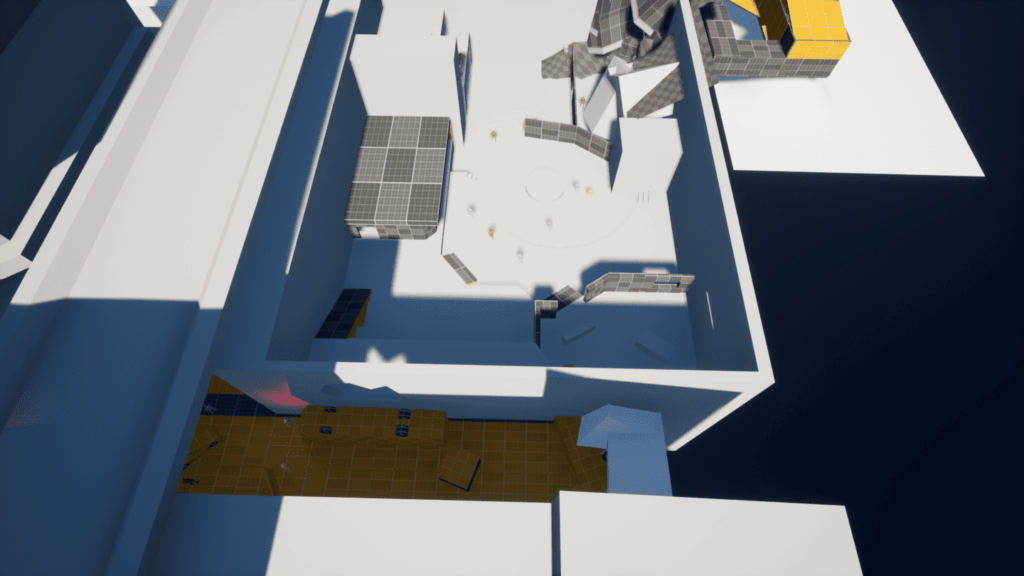
最终版本:
我取消了原先位置偏高、不易辨识的出口,并重新规划该区域的空间布局,将原本封闭的建筑内部改造为视野更开阔、导向更清晰的空间结构。如今玩家进入该区域后,从远处就能明确看到终点与出口,方位感知能力得到大幅提升,即便没有界面指引,也能顺畅地推进关卡流程。
关卡流程与战斗区域设计介绍:
该关卡由
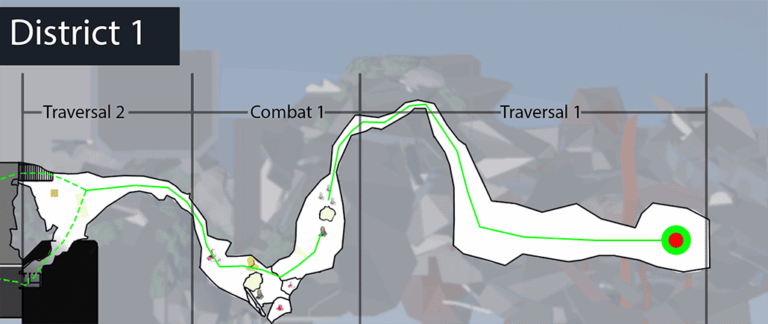
徒步区域 1 – 战斗区域 1- 徒步区域 2 – 战斗区域 2- 徒步区域 3-战斗区域 3 – 徒步区域 4- 战斗区域 4
这样的在战斗环节直接衔接没有战斗的徒步区域来对应本关卡所参考的沙漏式关卡结构
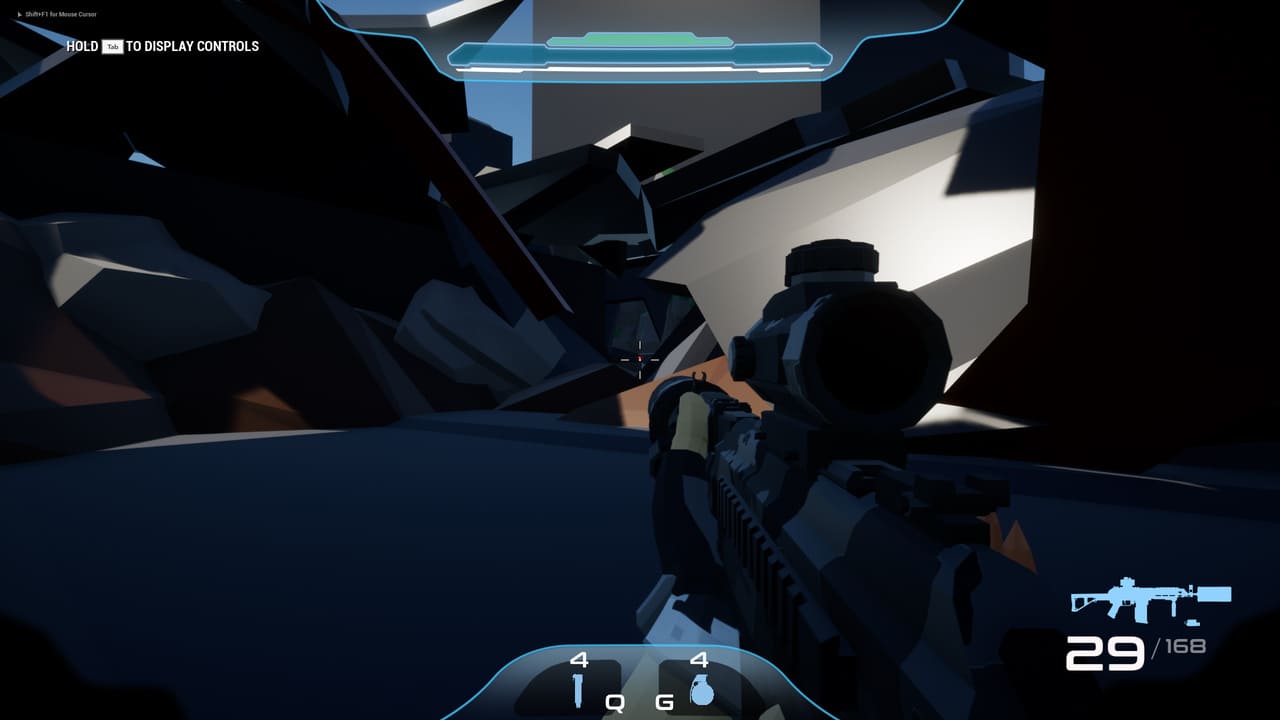
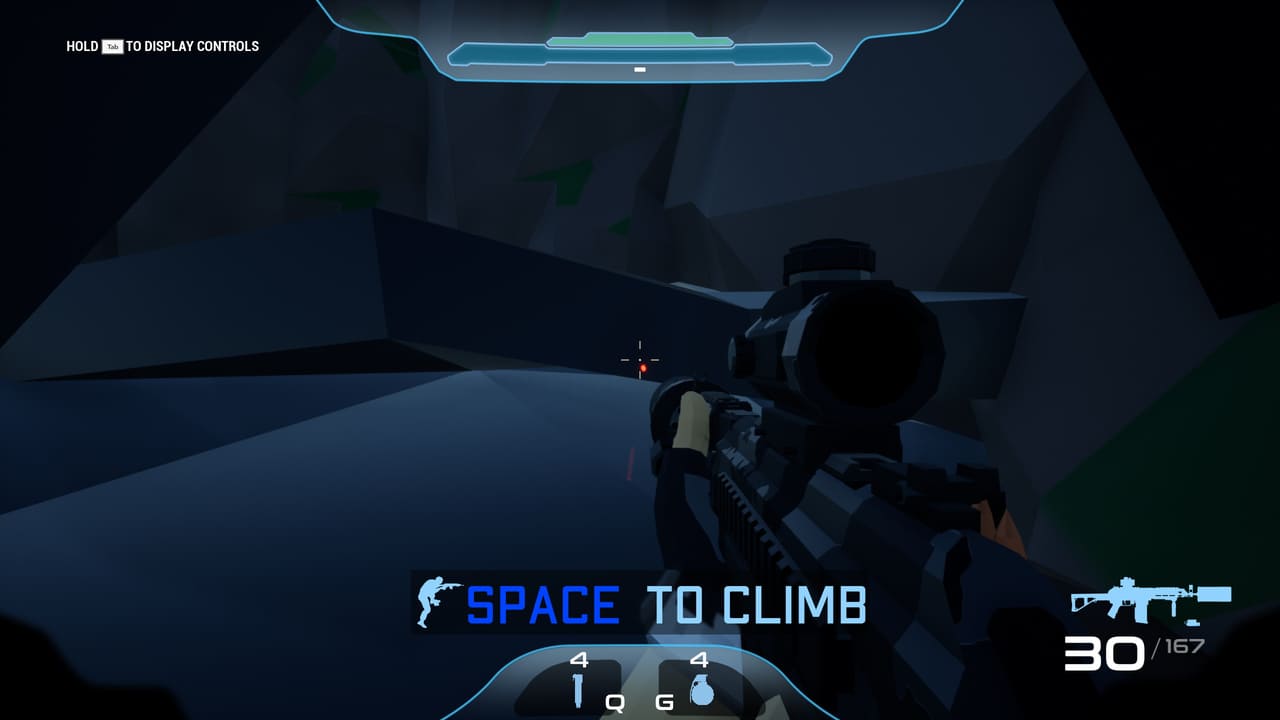
1. District 1 – Introduction and Initial Combat
2. District 2 –Multi-Path Entry and High-Intensity Combat
Gameplay: Combat 2- Traversal 3
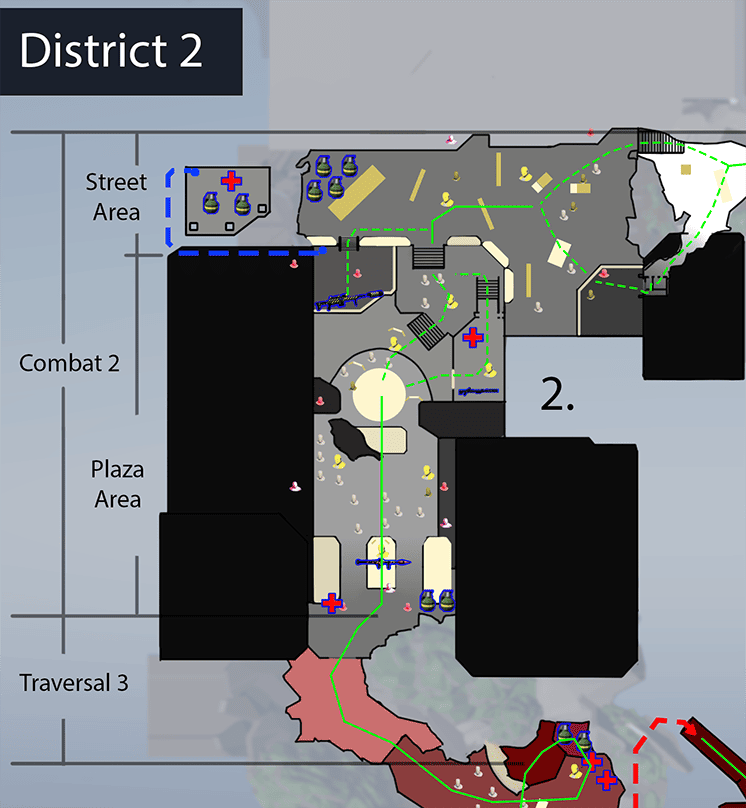
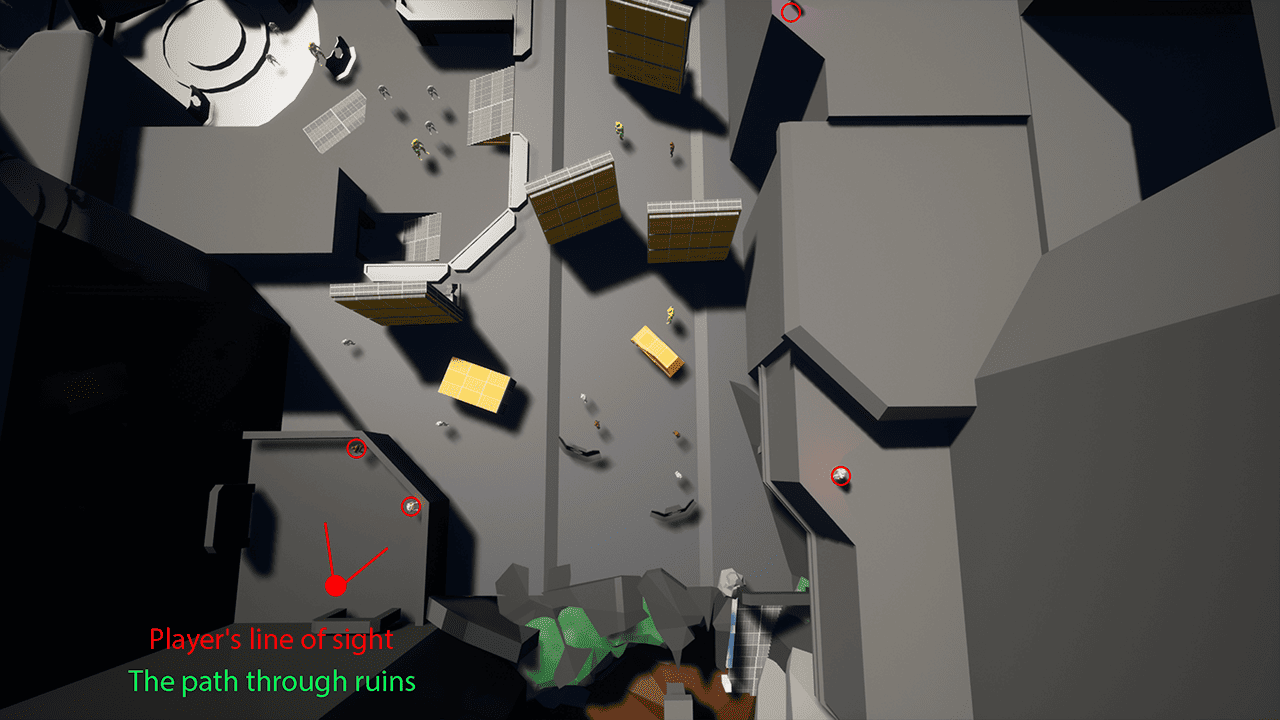
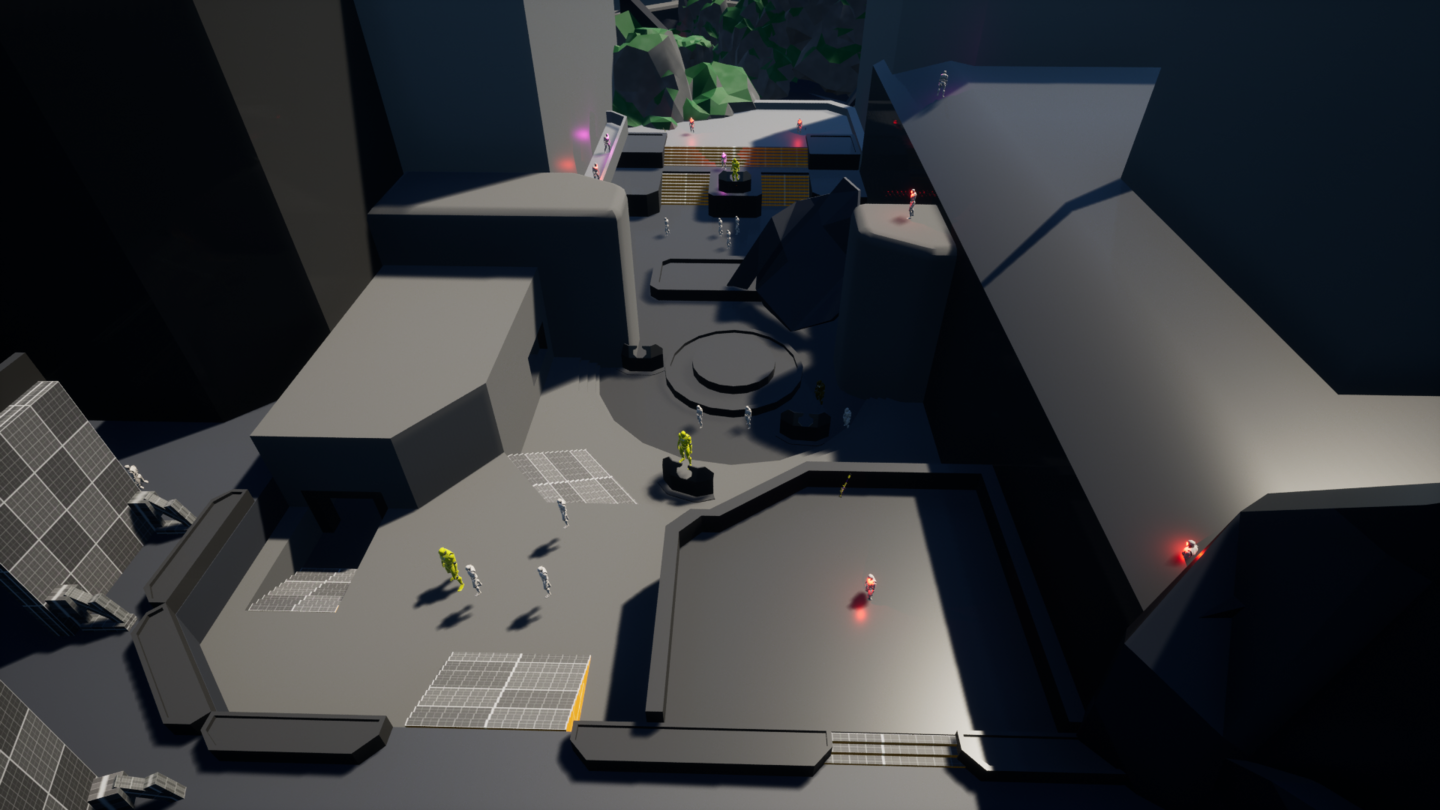
District 2 presents the most intense combat encounters in the level and can be broken into two main encounter: one close and mid-range gunfight along the street and another large-scale battle in an open plaza.
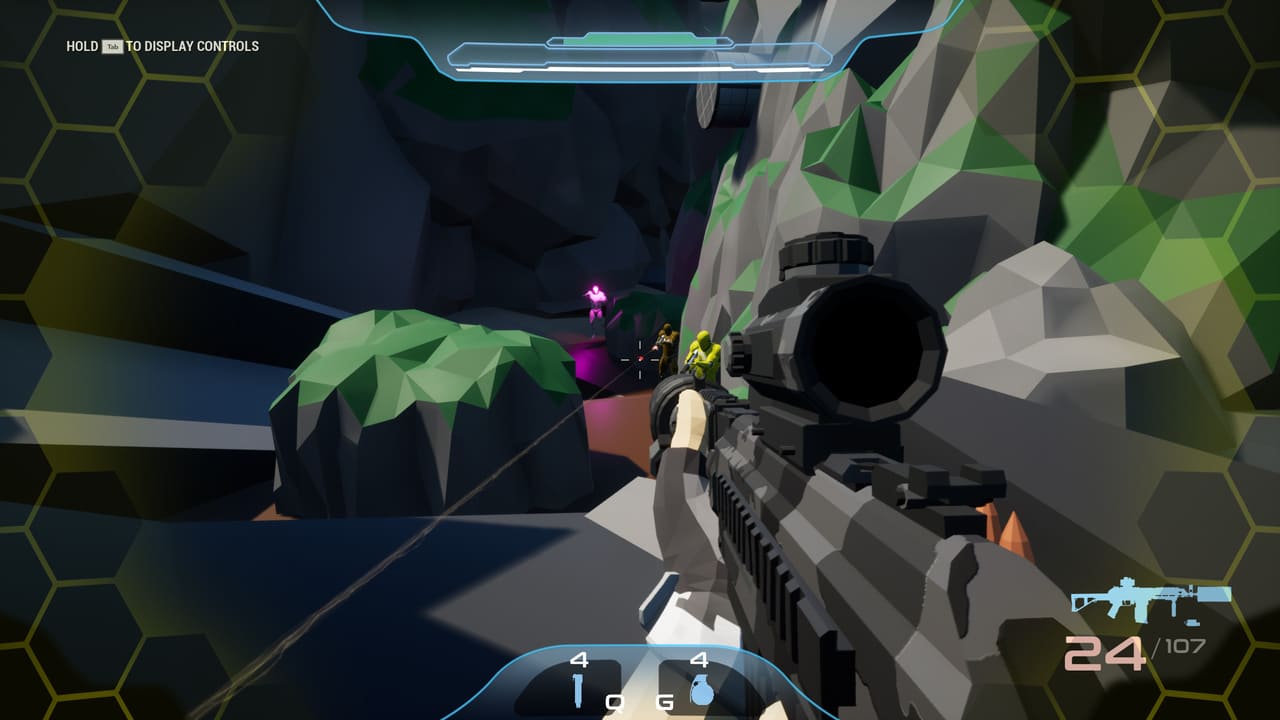
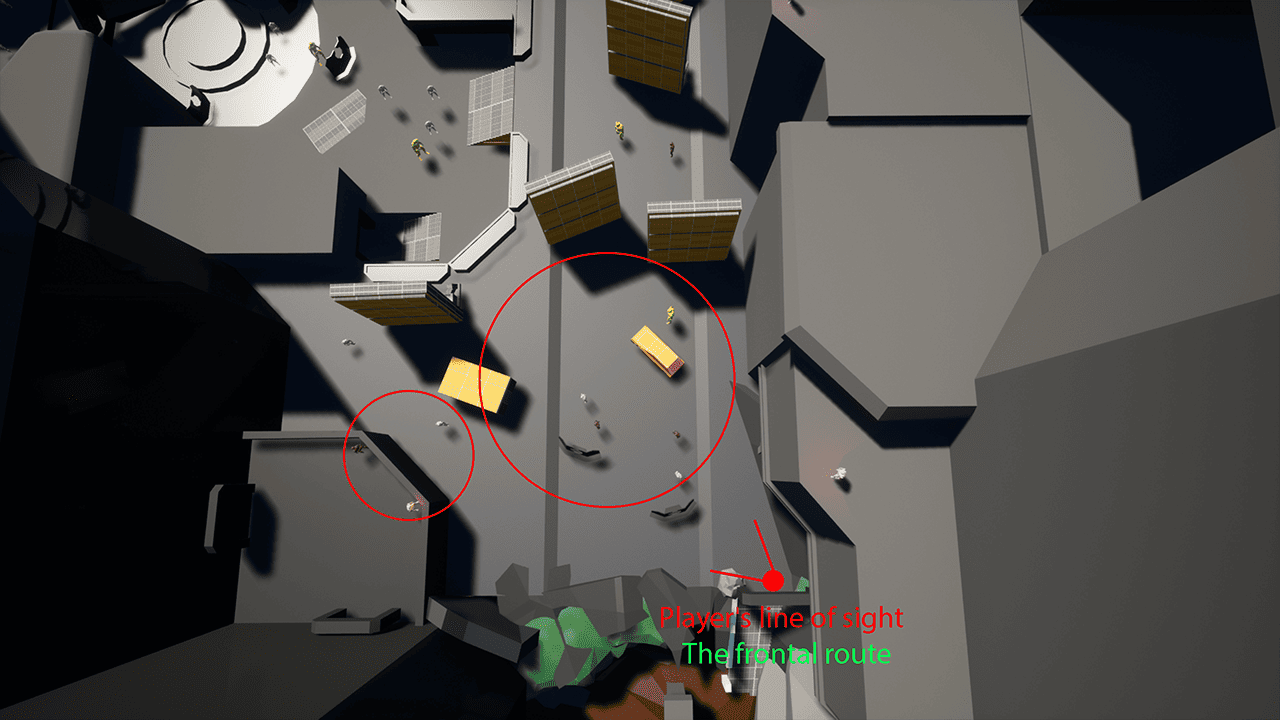
Upon arriving from District 1, the player is offered two entry paths: one leads through a frontal staircase into the street, while the other loops through a side ruin and up to a high platform.
Players choosing the frontal route will face heavy rifle enemy fire head-on and come under suppressive fire from elevated positions on the left. However, this path provides lots of covers, allowing for dynamic exchanges between offense and defence.
Alternatively, players who take the path through ruins must first confront platform enemies and a distant sniper on roof—this route is more challenging at first but grants a significant terrain advantage once the high platform is taking controller by player. Player can then gain a superior vantage point over the street, allowing for effective counterattacks.
By finishing the combat on street area, the player then enter a broader plaza area. Here, no fixed path is imposed, giving players the freedom to decide their approach angles and combat pace. They can independently strategize how to engage the enemy.
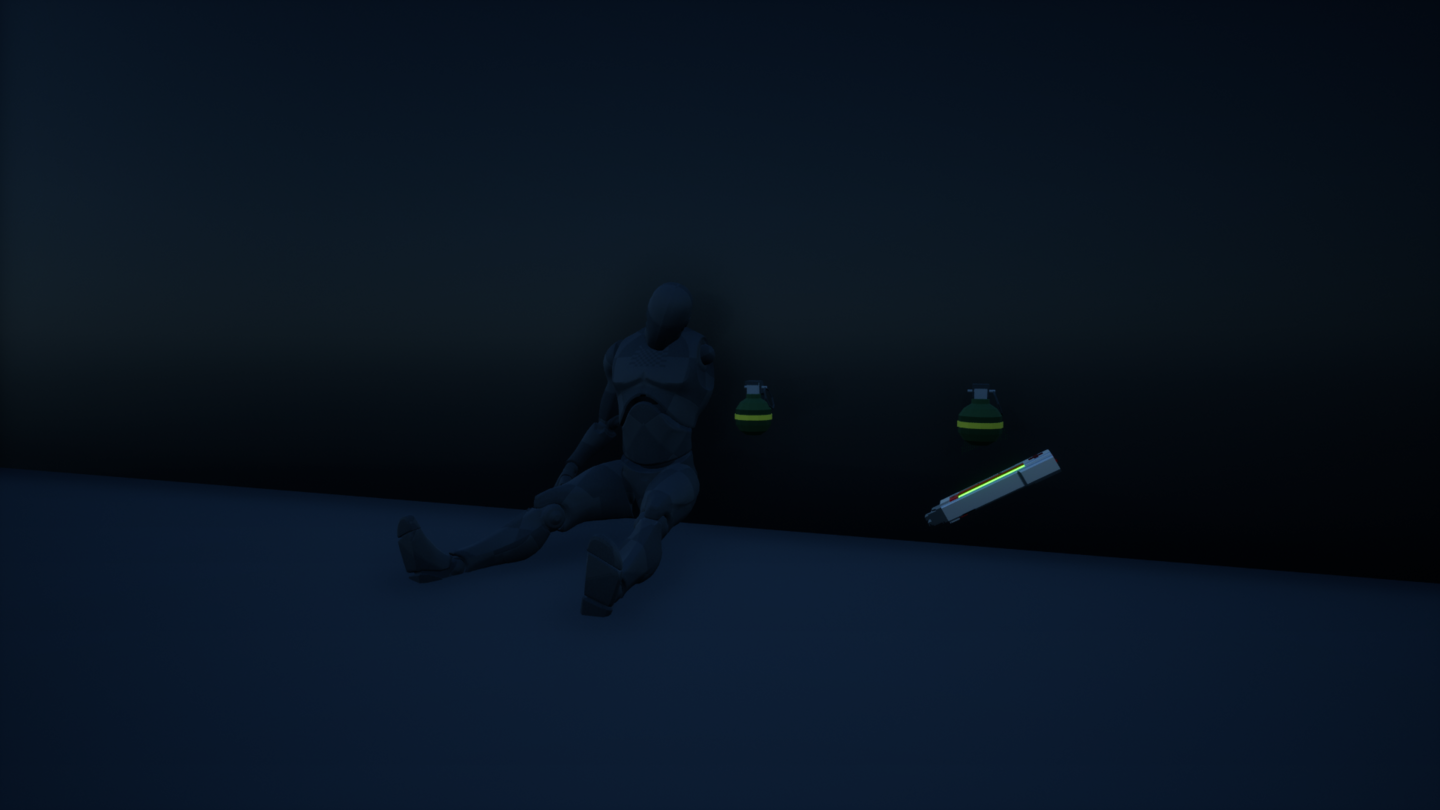
The plaza area also introduces the first instance of human soldier corpses serving as supply point, offering ammo and health. These corpses reappear in later sections, gradually reinforcing a visual language that corpses signal supply opportunities—subtly guiding player behaviour without explicit UI prompts.
Once the plaza battle concludes, the player continues progressing along the road.
Duration: 2 mins
3. District 3 – Pacing Relief and Mechanic Checkpoint
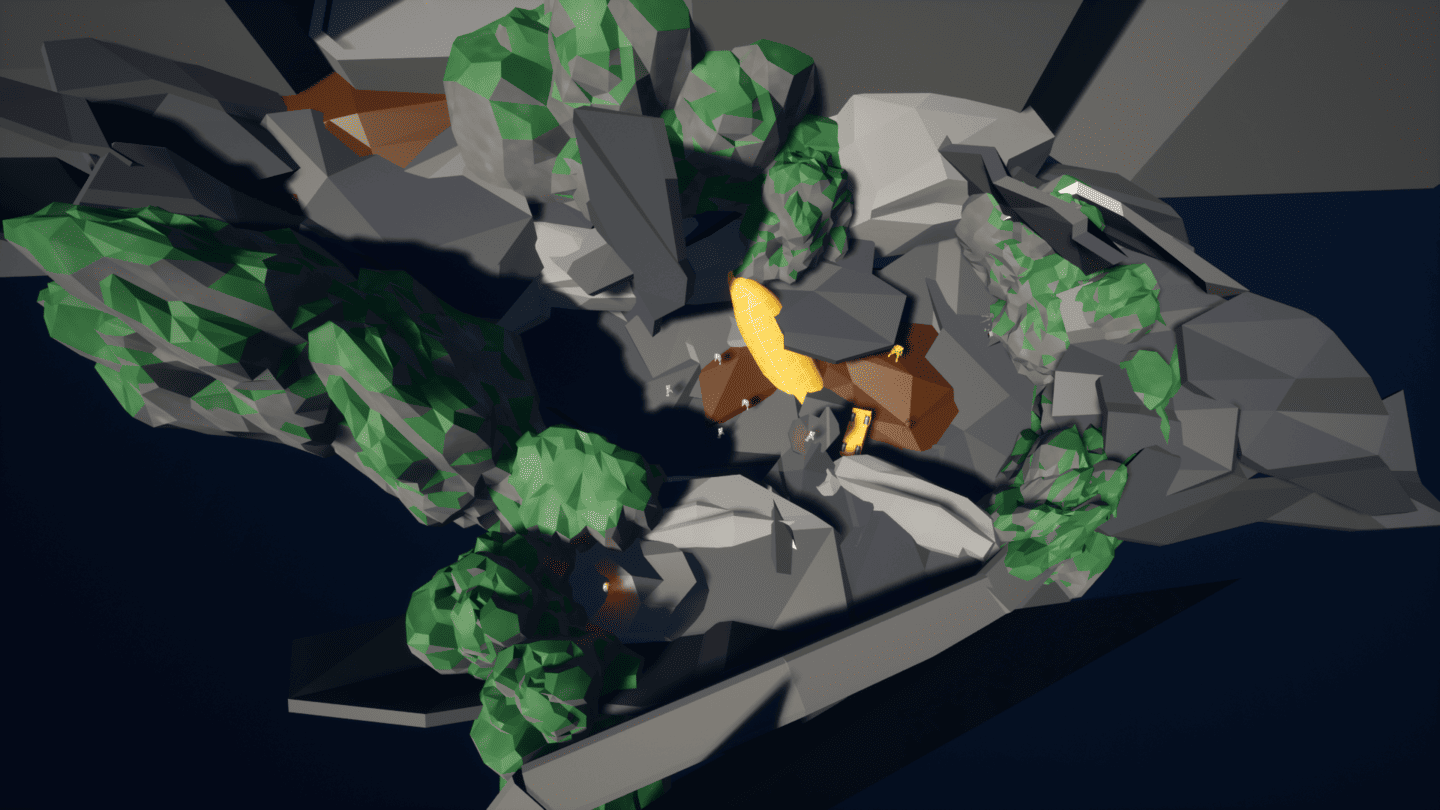
Gameplay: Combat 3- Traversal 4
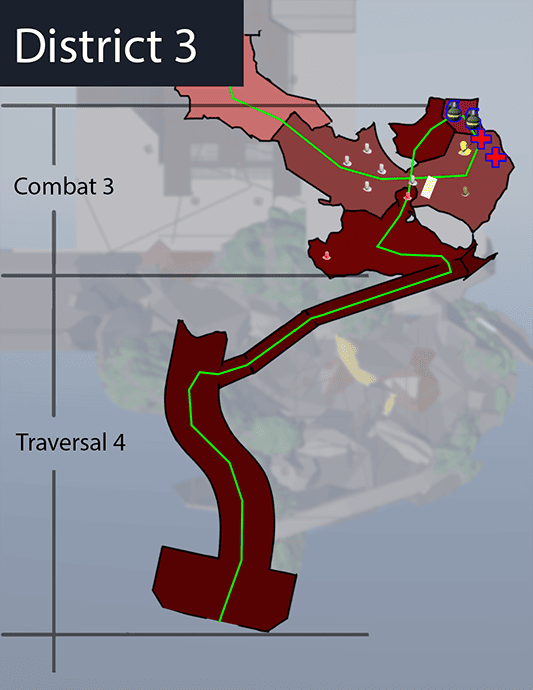
District 3 features a linear layout with significantly reduced combat intensity compared to the previous area, containing only a small-scale skirmish. Player can progress smoothly by simply following the predetermined path.
Following the intense, prolonged combat of District 2, this section intentionally lowers enemy density and offensive pressure to provide a pacing buffer. It offers a moment of recovery from the prior tension, helping players avoid combat fatigue and regain composure.
Additionally, a gap is placed along the path that requires a boost jump to cross. This serves as a subtle test of the player’s understanding of core movement mechanics.
Duration:1 min
4. District 4 – Freeform Advancement and Tactical Restructuring
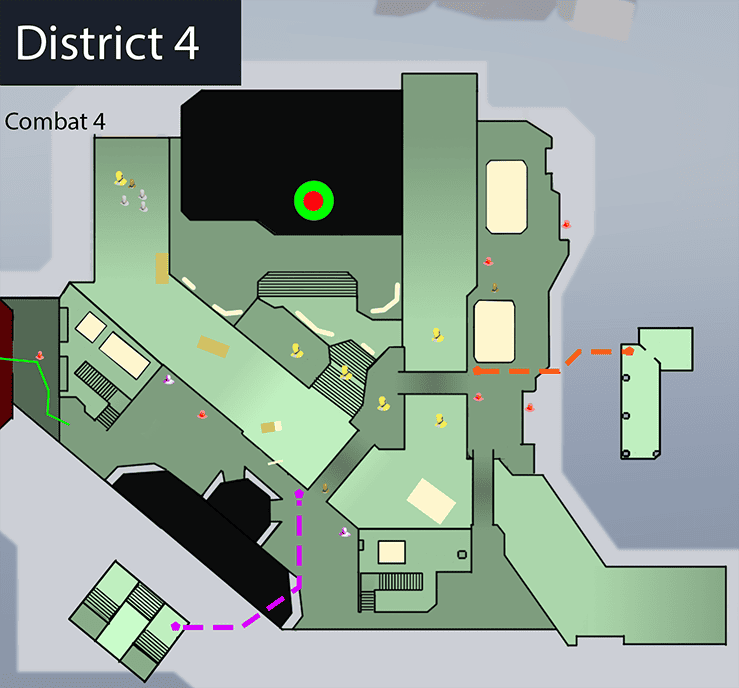
Gameplay: Combat 4
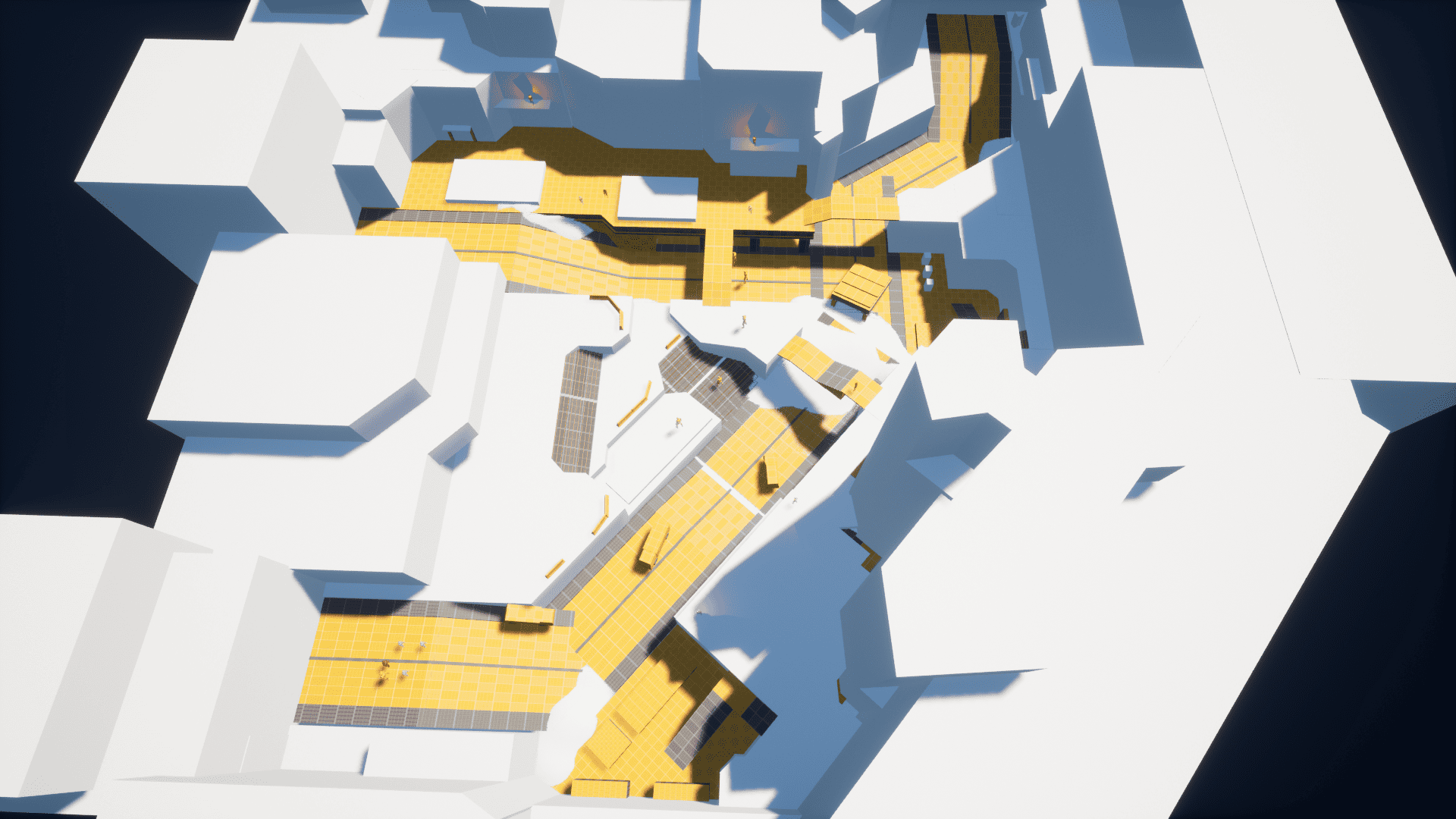
Combat intensity rises again in District 4 compared to District 3, but the space becomes significantly more open, offering players greater freedom of movement. The layout resembles the plaza encounter in District 2, yet this time there is no fixed route of attack—players are simply tasked with reaching the central building in the area.
The battlefield is filled with cover, verticality, and multiple entry points, allowing for diverse strategies to approach the objective. Depending on their condition and battlefield awareness, players can choose to flank, push head-on, or suppress enemies from above. This setup enables more player-driven tactical decisions and pathfinding, allowing players to experience combat on their own terms while maintaining manageable pressure.
Duration: 1 min 30 sec