
Visual Navigation Driven Level Design - Solo Project (Level Designer)
About My Master of Design Project:
During my Master of Design studies, we were allowed to pursue research and creative projects aligned with our personal interests or areas we wished to explore further. I chose to focus on the area I am most passionate about in game design—and one I consider fundamental: level design. However, “level design” as a research topic was considered too broad by my supervisor. Therefore, I refined my focus to a specific subdomain: how to construct effective navigational cues through level elements, guiding the player to follow the intended path set by the designer, all while maintaining immersion.
Based on this direction, I formulated the following research question:
In game design, how can level designers effectively communicate navigational cues to the player without breaking the immersion of the game, thus guiding them to explore the paths predetermined by the level designer? And what are the level elements that can constitute navigation clues?
After completing a contextual review and conducting case studies on several influential titles, I went on to design and produce Empire Under the Ground as a practical experiment. This level aimed to apply and test the navigation design strategies I had identified throughout my research, allowing for critical reflection on their feasibility and effectiveness within an actual gameplay experience.
Production Details:
- Unreal 5 Engine
- Based on IWALSv4
Solo Project
Personal Responsibilities:
- Level Design
- Unreal Engien Blueprint Coding
About the game:
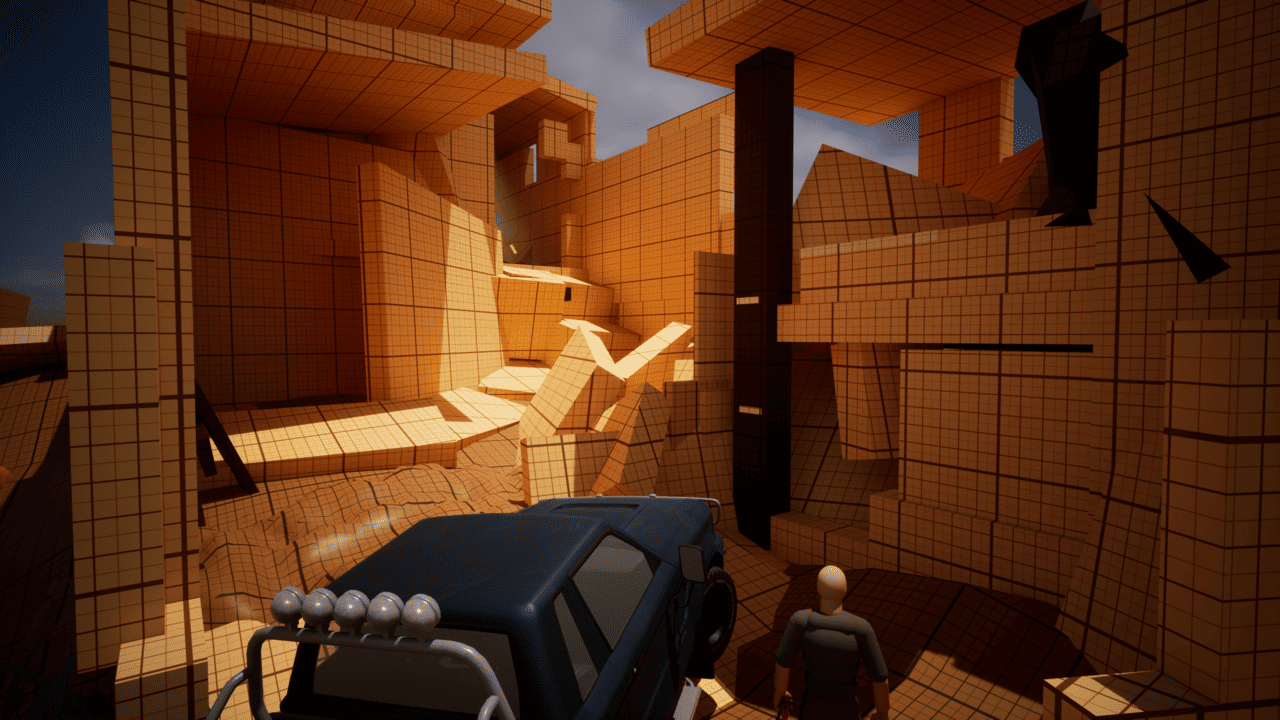
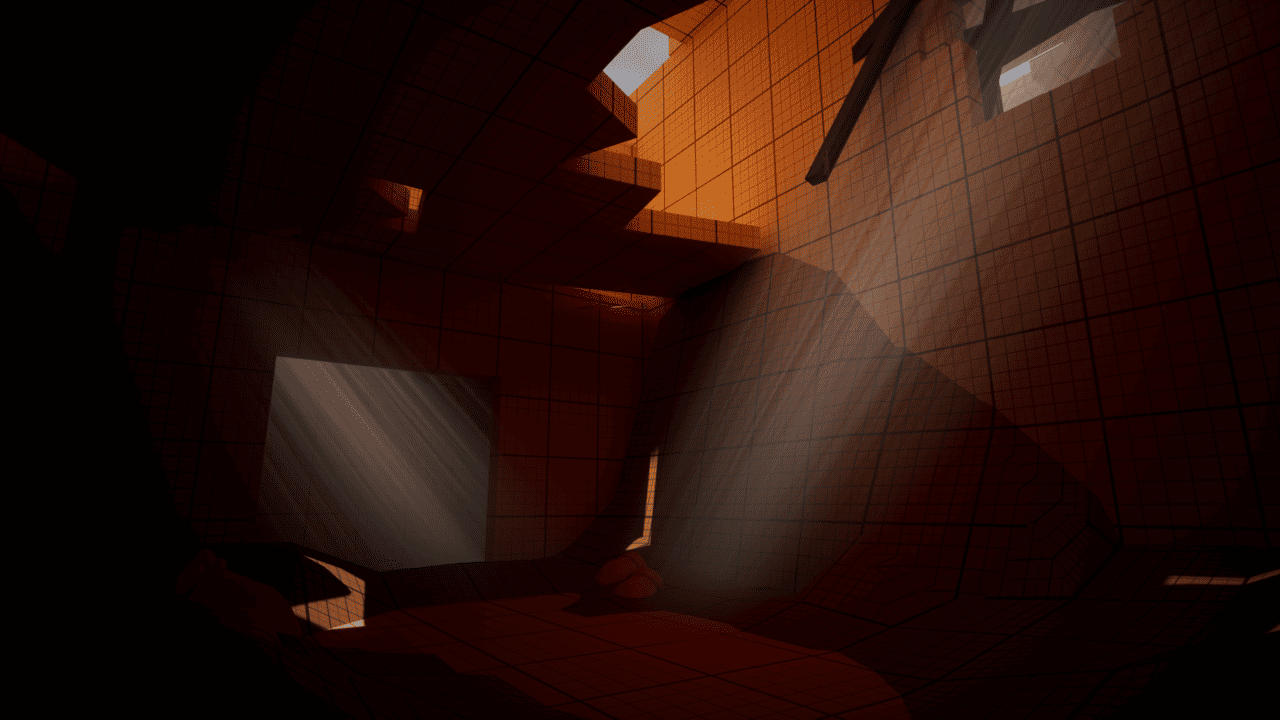
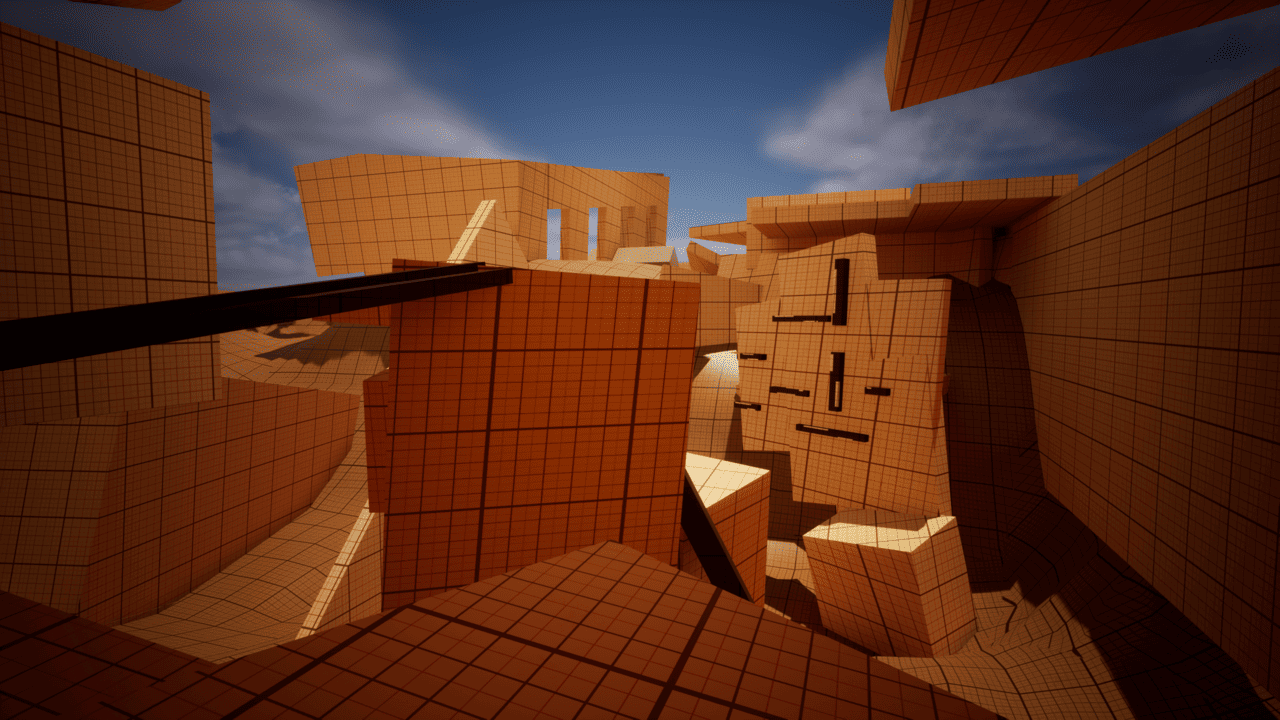
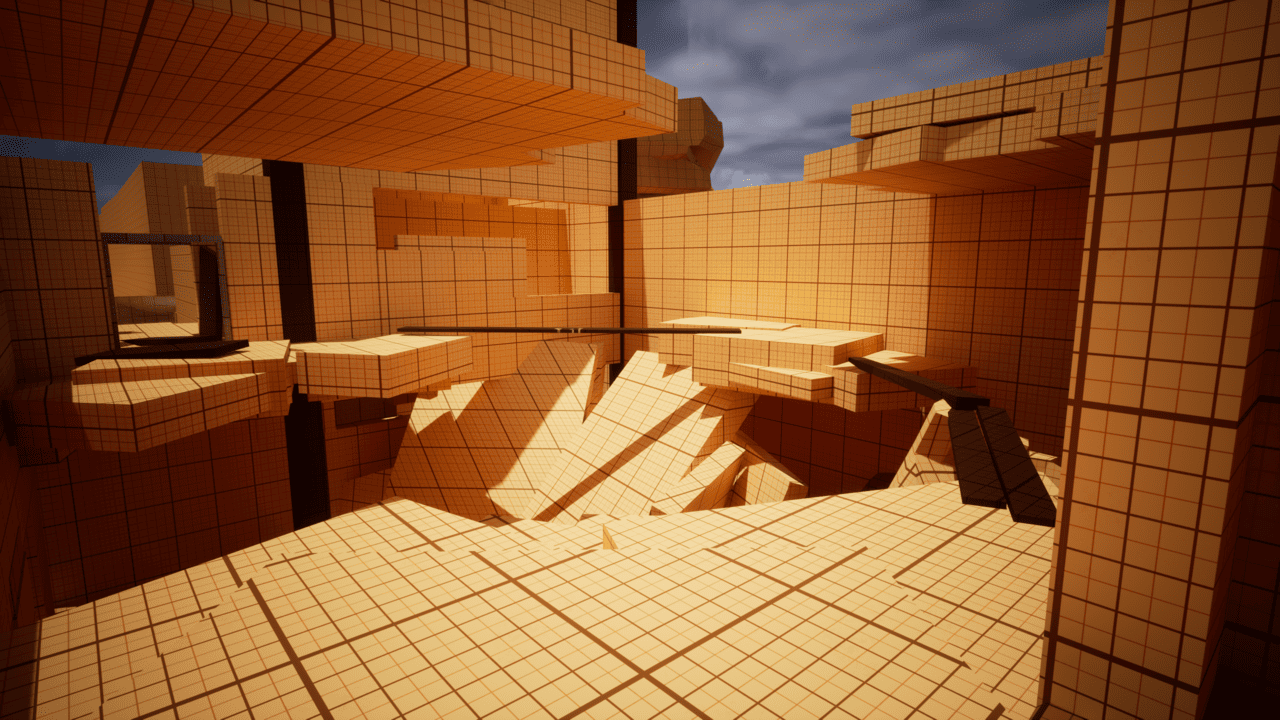
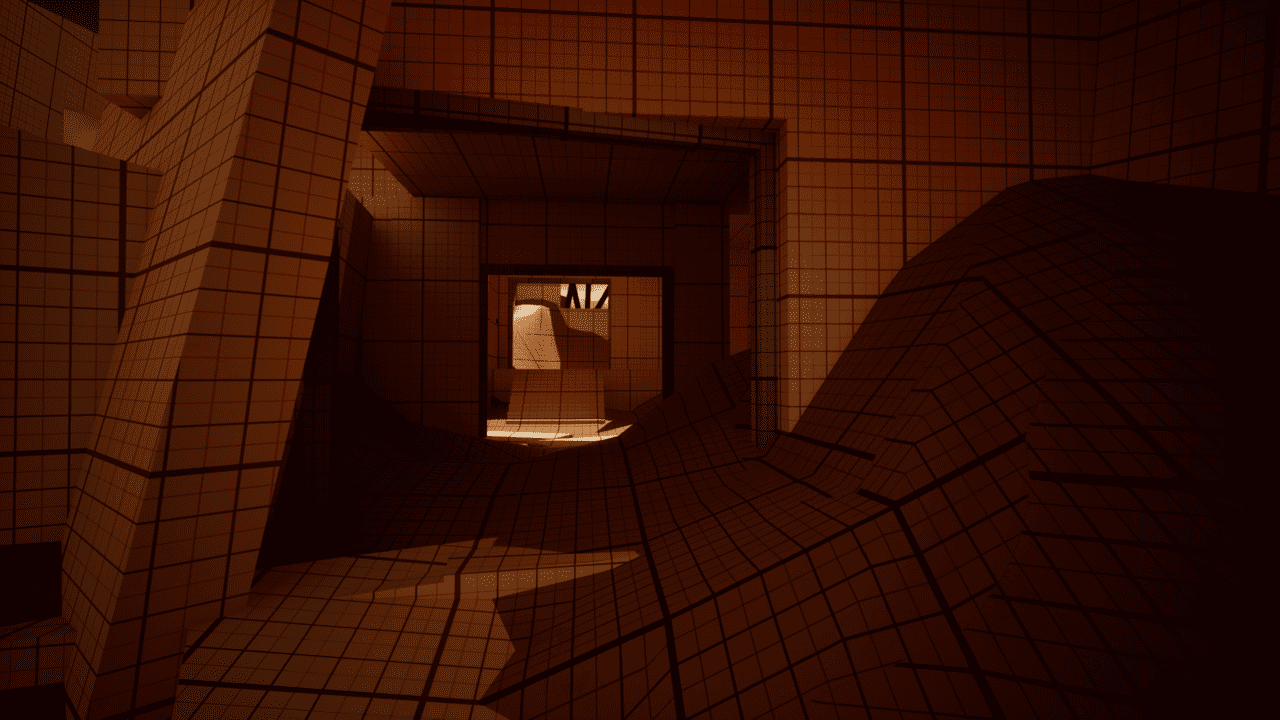
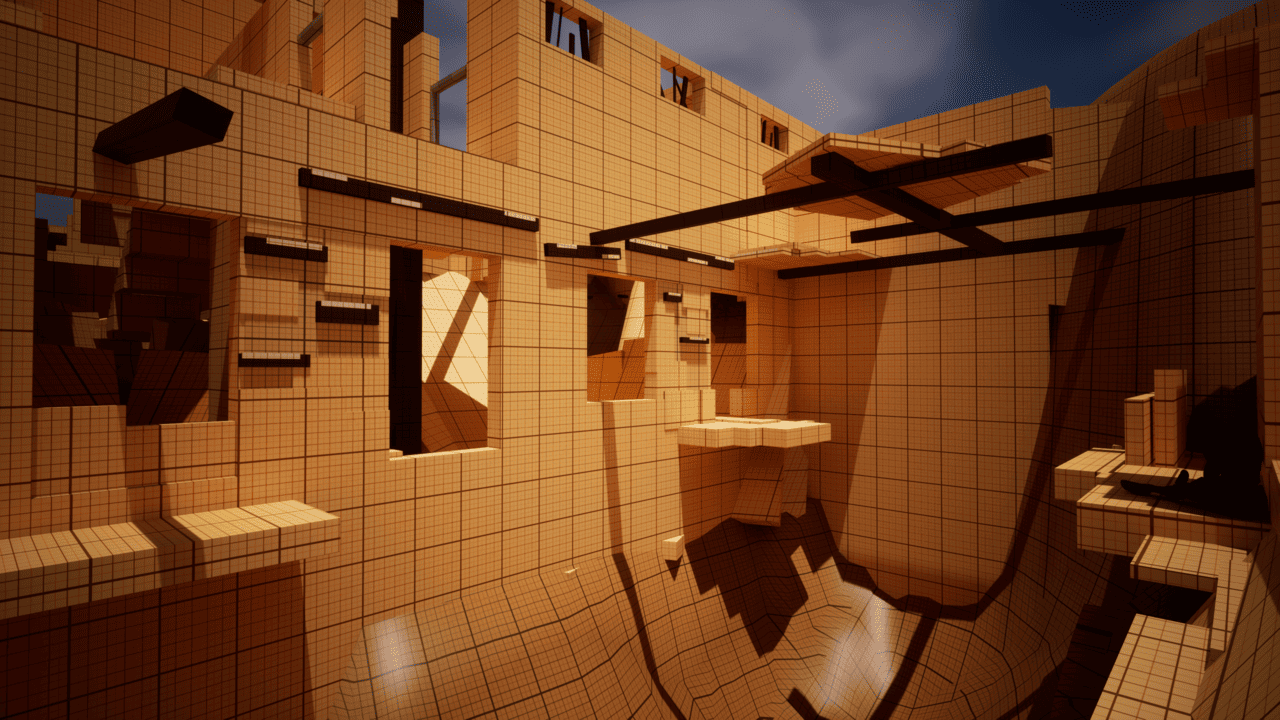
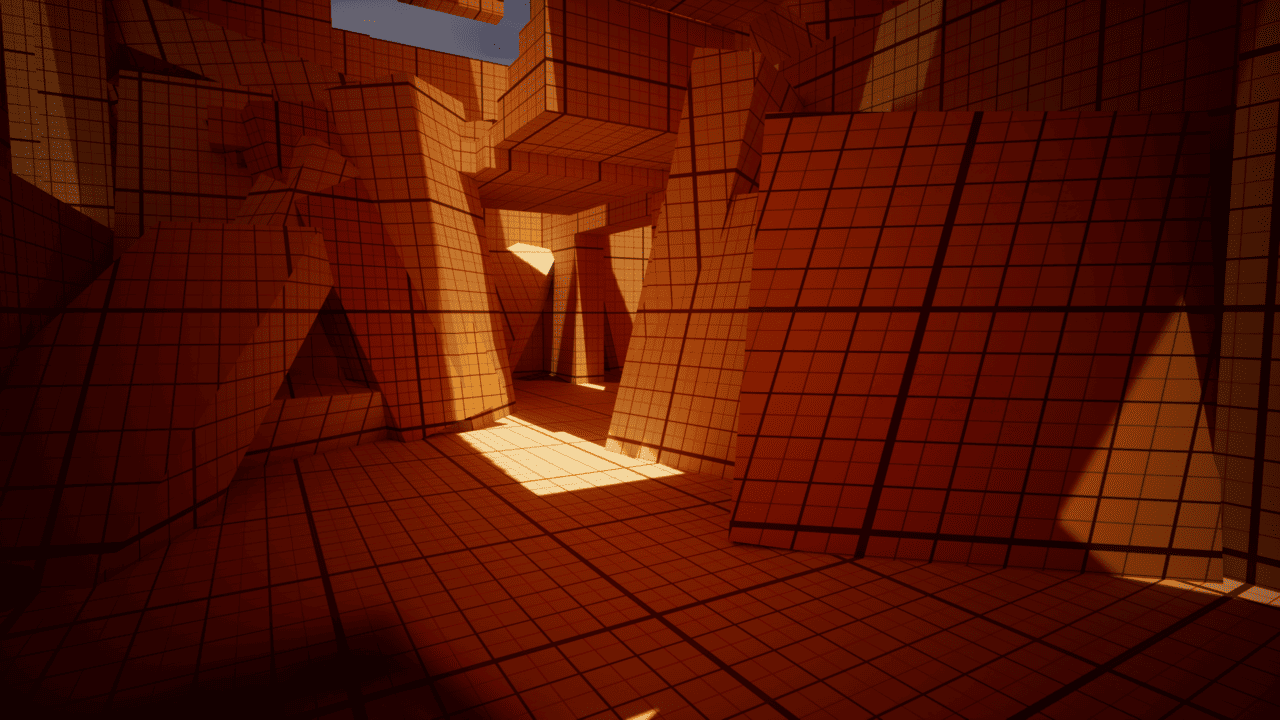
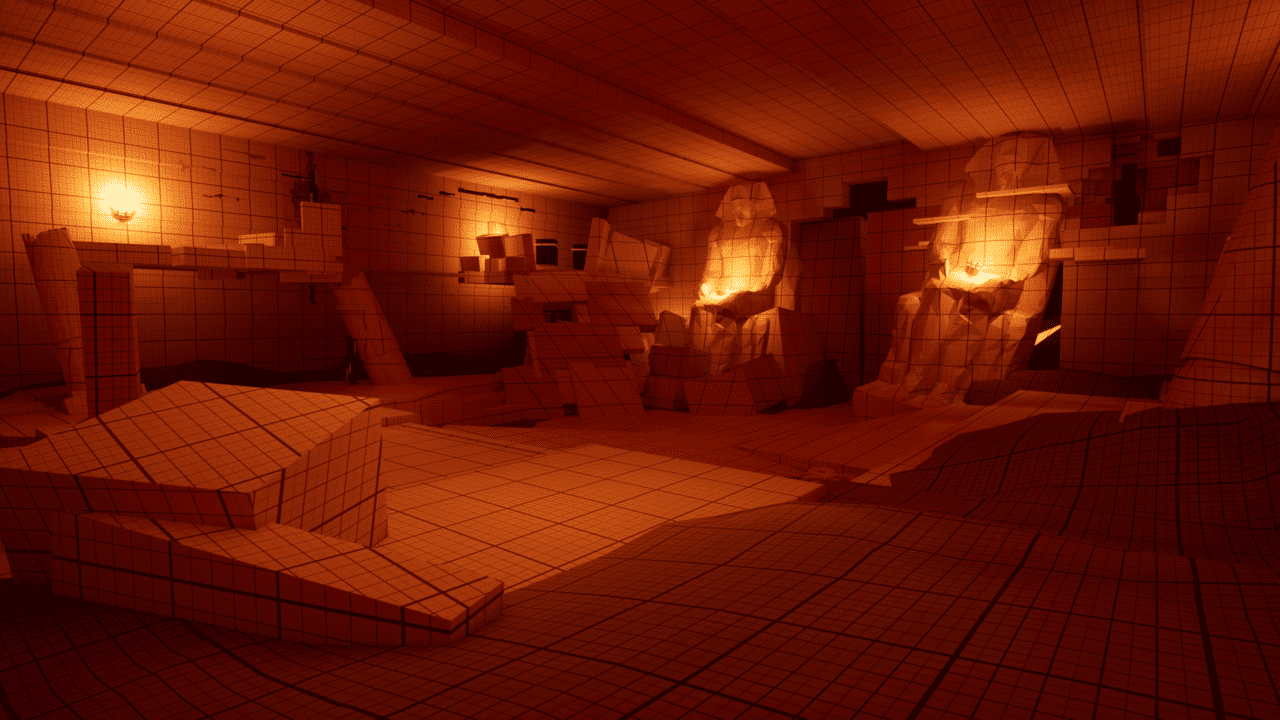
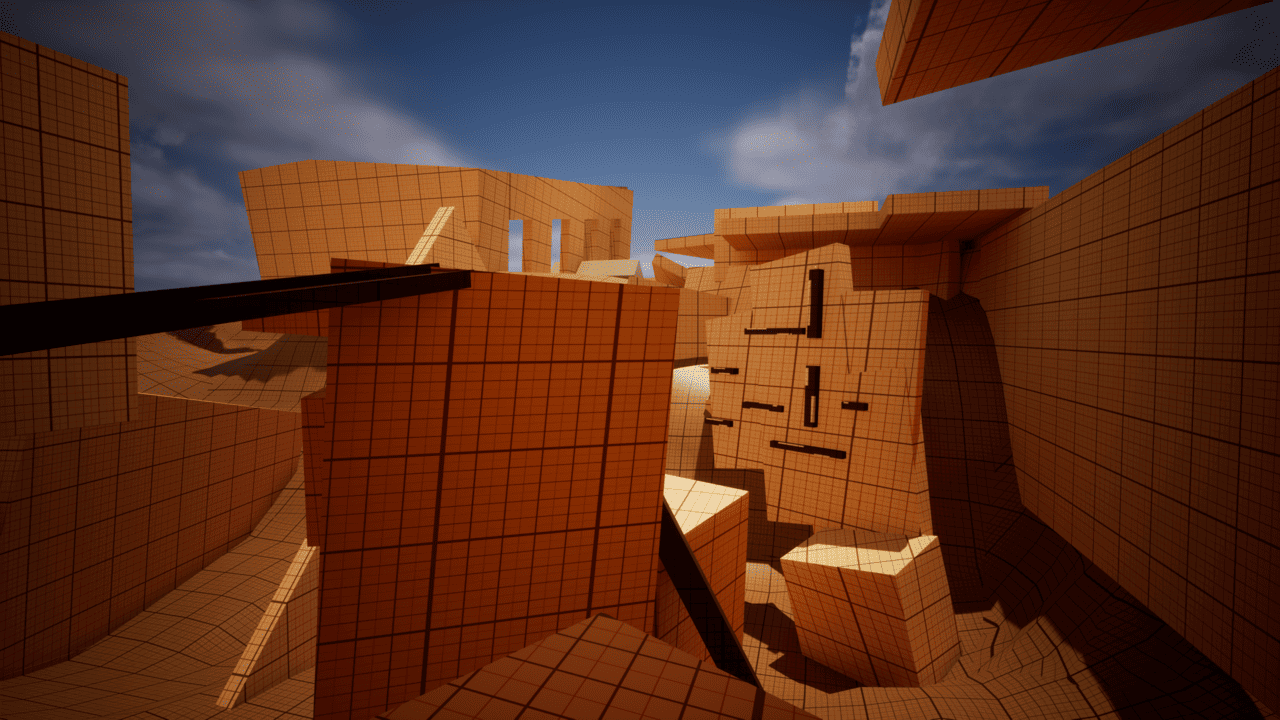
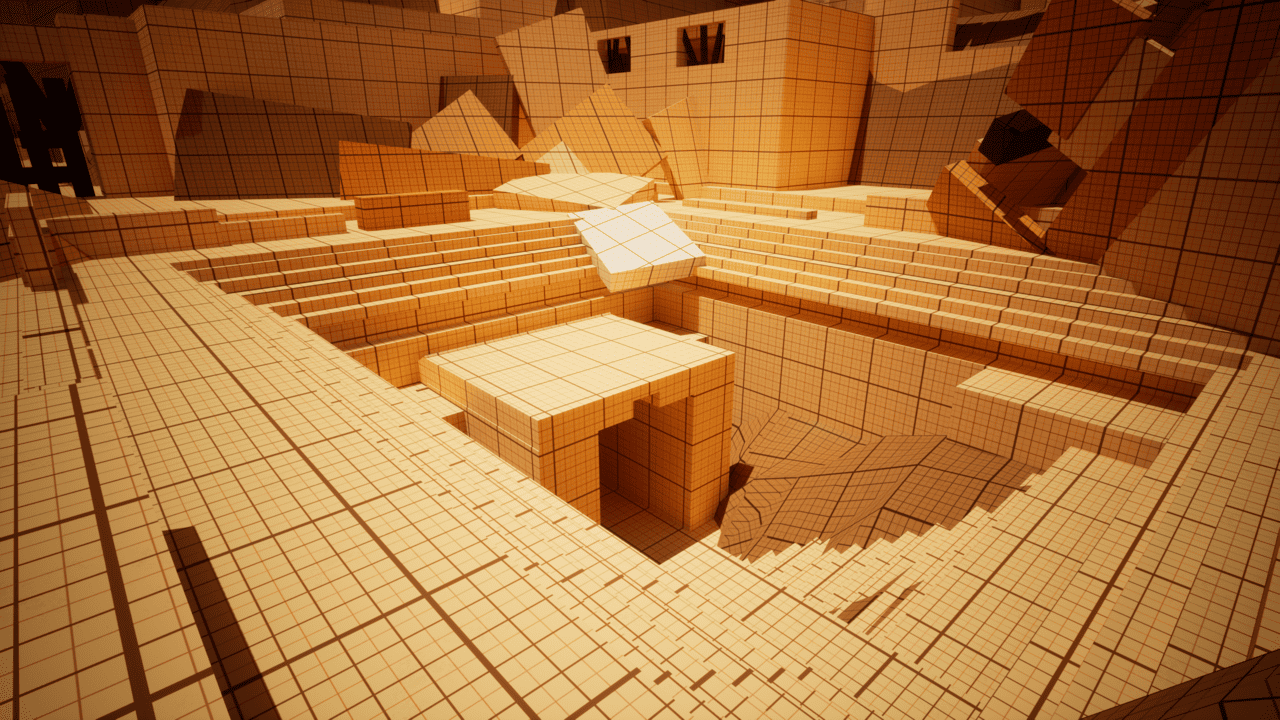
The Level Empire Under the Ground asks the player to assume the identity of a renowned treasure hunter and explorer, venturing into the desolate desert and passing through the ruins of an ancient Egyptian village filled with quicksand. The player then needs to enter the underground empire that Pharaoh Khufu built for himself, seeking Khufu’s true sarcophagus and the mysteriously vanished pyramid’s peak, personally uncovering this millennia-old mystery.
Design Idea:
Empire Under the Ground was inspired by Chapter 19 “Settlement” from Uncharted 3. The hot desert, the ancient ruins standing tall in the sand, and the howling wind left a deep impression on me during my case study of it. This inspired me to conceptualise a linear level, which requires the player to explore the ancient Egyptian village ruins in the desert to find the lost pyramid’s peak and Pharaoh Khufu’s mummy through a written level design document. I then created a moodboard based on the level design document to define the visual style and consistency of buildings, environments, and objects within the level. I used this moodboard as inspiration to determine which level elements could serve as navigation cues.
After conceptualising this level through the level design document, I began drawing the level layout, refining and optimising the design as I translated the concept into a more concrete form. During the drawing process, I observed that the overhead view depicts the connections between spaces within the level. This overlaps with the mental map effect, which aids players in understanding the spatial connections within a level.
Level Layout:
While designing the layout, I started with Oueijian’s five elements of (Paths, Landmarks, Districts, Edges, Nodes) that help players create a clear mental map and use them to structure the level. Consequently, the level blockout, based on this level layout, will naturally assist players in creating a clearer mental map for better navigation.
The entire level is divided into two major districts: the ground and underground kingdom areas. In the ground area, players need to navigate towards a tall tower near the entrance of the underground kingdom, which serves as a local landmark. This tower, acting as a wayfinding aid, symbolises the players’ destination and reinforces the clarity of a mental map.
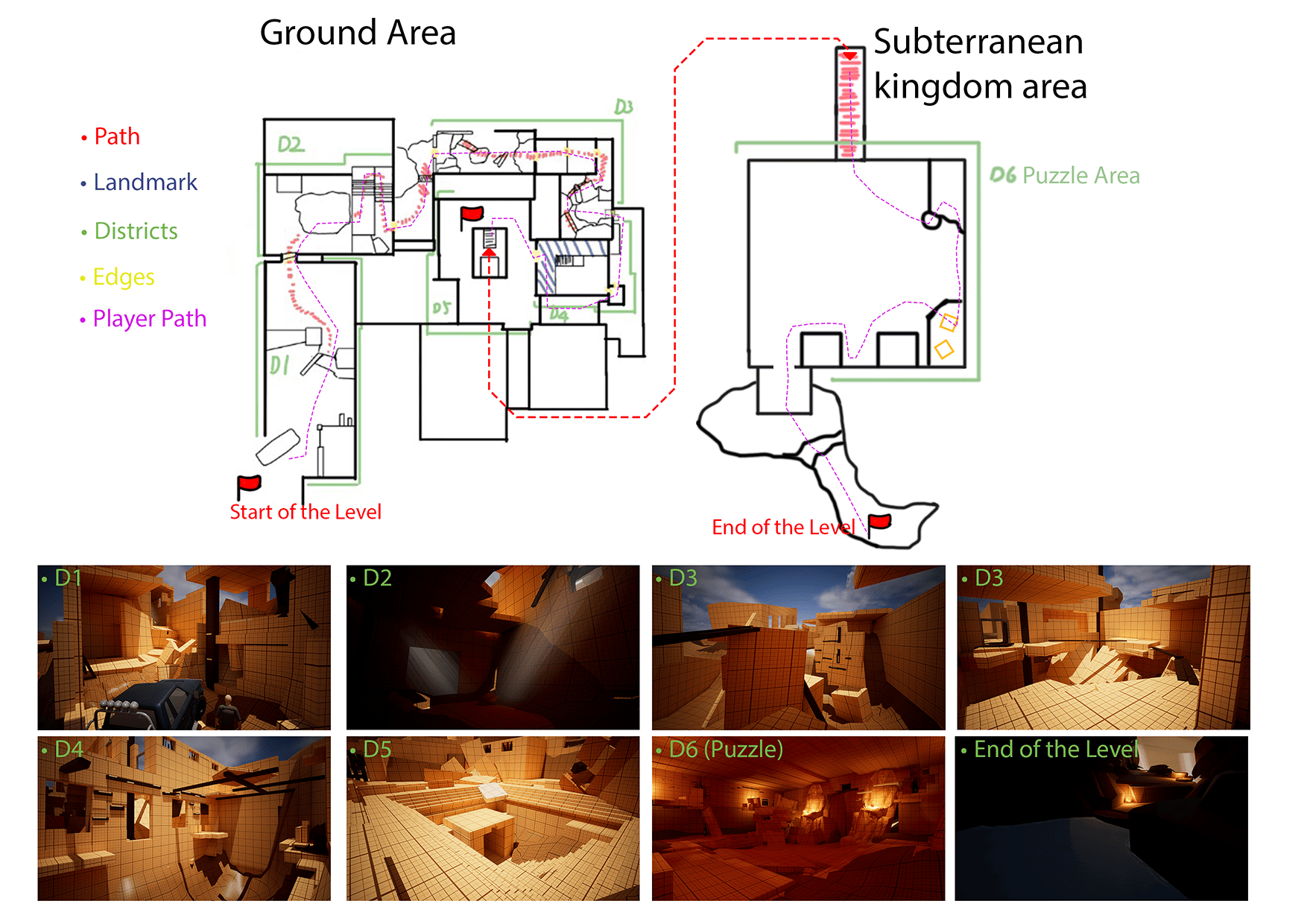
The information that the entrance to the underground kingdom is near the landmark can be conveyed to players through a cutscene in a complete game before they navigate the level. Since this level design research does not include animation production, textual information is provided at the start of the level to inform players.
Different village ruins displayed effectively segment the level into various districts, corresponding to areas marked in green. To ensure diversity in level structure and enhance the interest in navigating through the level, climbing points and interactive mechanisms have been added, requiring player interaction and triggering to move forward.
Navigation related Mechanics & Puzzle Mechanic
Collectables:
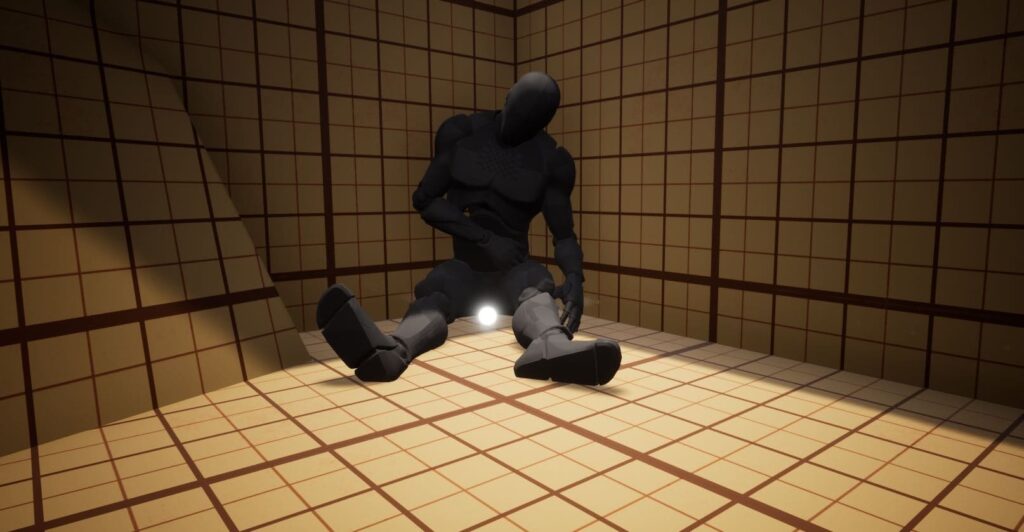
To encourage exploration and make traversal more rewarding, I implemented a simple collectables system. Shimmering materials were applied to make them visually stand out, and they were placed throughout the level. Players automatically collect them when nearby, with a prompt showing their progress. Collecting is optional, relying on the player’s own motivation. Choosing to search for them reinforces their role as a treasure hunter, enhancing immersion.
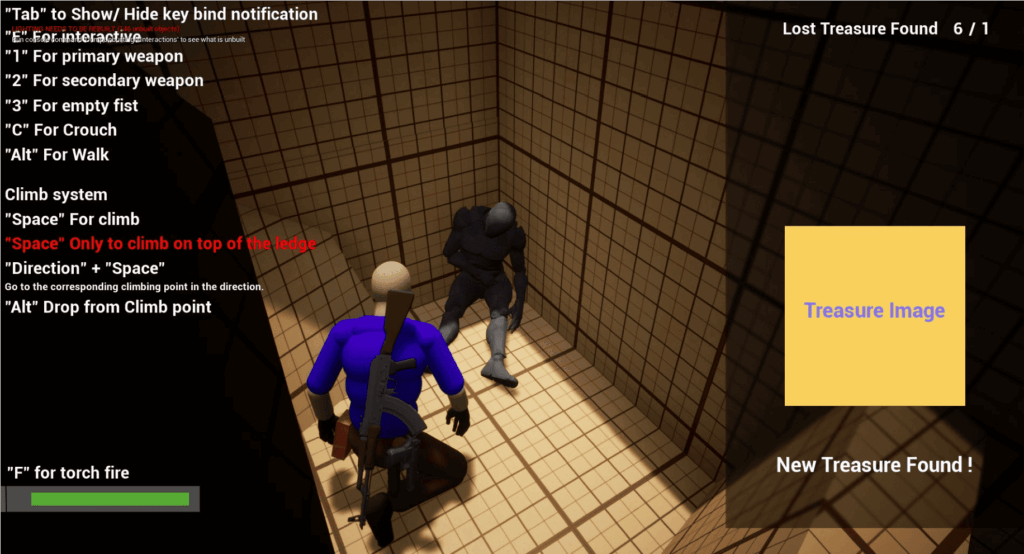
Wood that blocks the player’s progress:
Since the ground area of this prototype is set among ruins, I placed some wooden beams, resembling those that might have fallen due to building collapse, to obstruct the player’s path. Players must interact with these obstacles to proceed. I consider this design as feedback on the ‘travel’ aspect of navigation, aiming to provide players with varied interactions during their travels, thereby enhancing the level’s appeal.
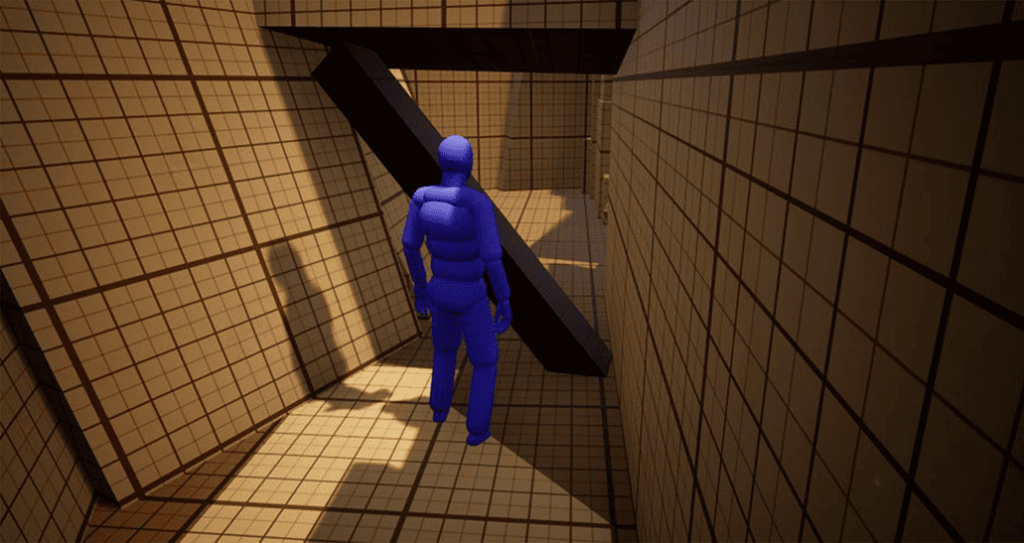
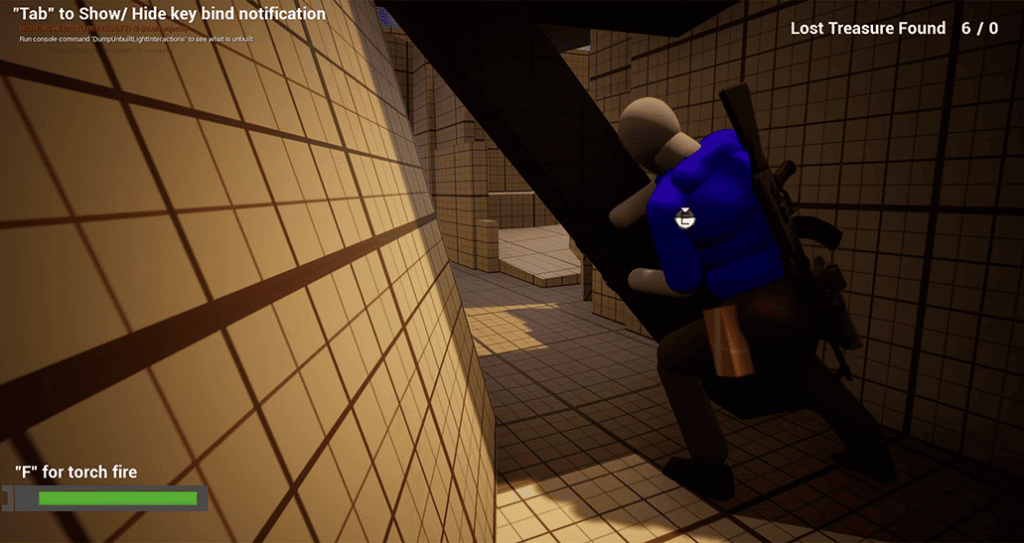
These obstacles were deliberately placed within holes formed by negative space to ensure they served as formal and spatial symbols in the level, training players to interact only with the wooden obstacles found in holes. At the same time, this level element is also placed in a hidden corner of the level, serving as an interaction that players must complete before collecting the scattered collectables throughout the level.
Puzzle design:
To create a suitable challenge for players and prompt them to ask, “How do I get there?” in the wayfinding process, I designed this puzzle area. After leaving the ground level via a passage, the first thing players will see is a tilted statue and a nearby hole, directly indicating the exit from the current area.
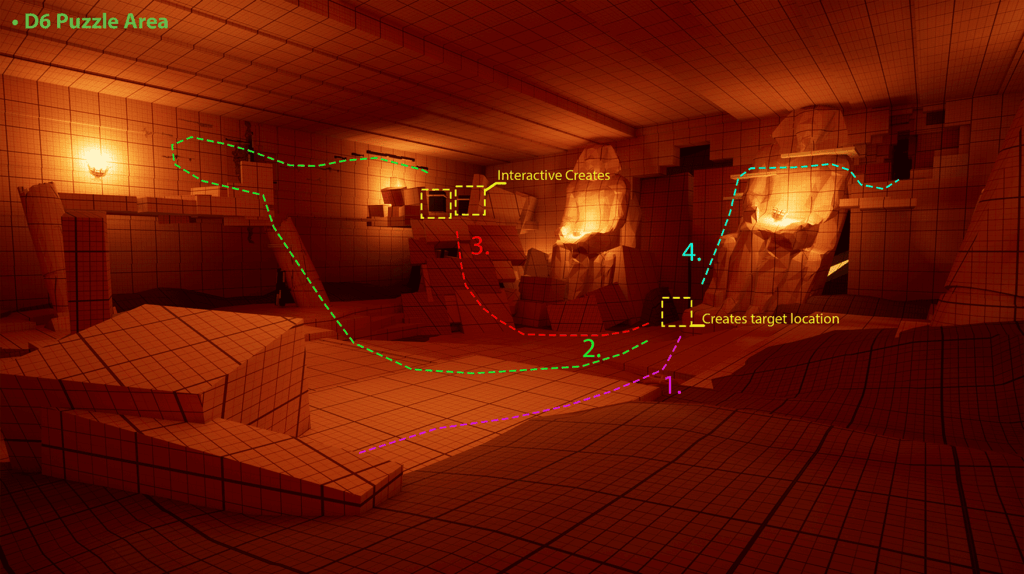
The climbing points on the statue and the nearby wall hint that players can leave the area by climbing these points. However, once they reach the statue, they will realise that the climbing points are too high to access directly (see image above – Path No.1). The solution to the puzzle is not difficult: by carefully observing the surroundings, players can identify other climbable routes in the current area (Path No.2). They simply need to follow these points to find an interactive creates, push it down, and then move it below the previously unreachable climbing point (Path No.3). Using this box, they can reach the climbing point and follow the climbing route to exit the area (Path No.4).
Navigation Design and iterations:
Colour:
By referencing the colour compositions of ancient Egyptian villages, temples, archaeological sites, and desert imagery from the moodboard, I chose three colours suitable for an ancient Egyptian theme to establish the primary colour scheme of the level prototype.
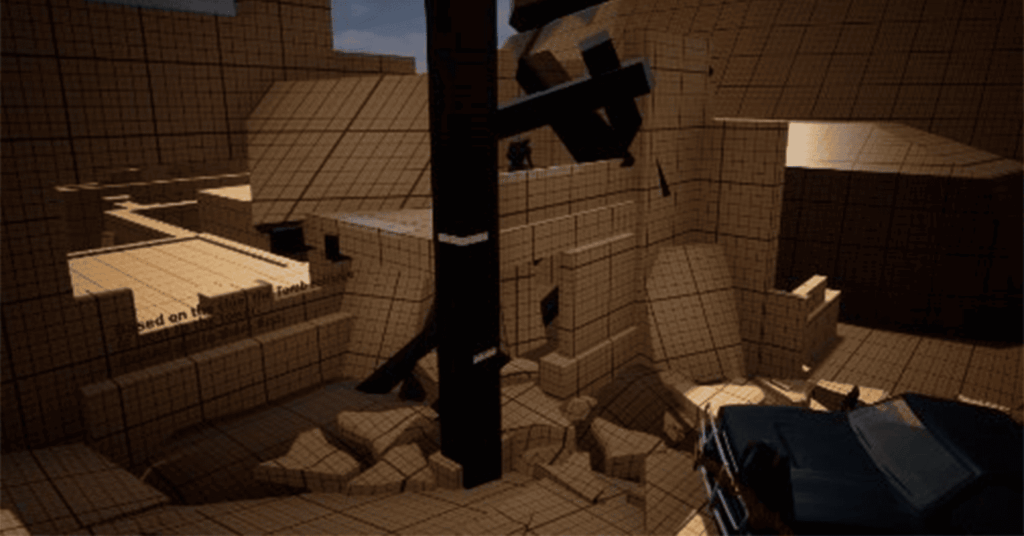
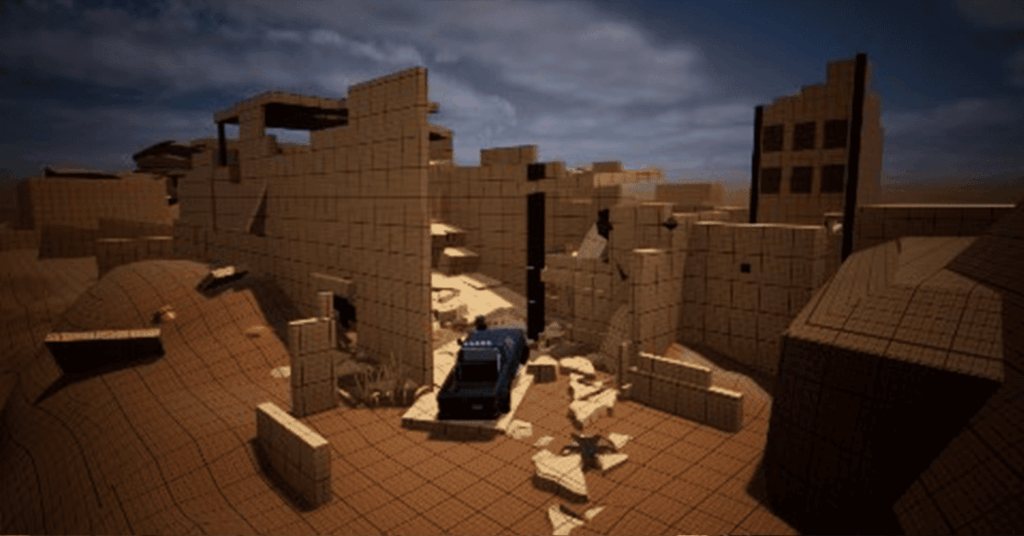
Building on this scheme, I defined a contrasting colour, yellow-white, to guide the player within the level. This hue is similar to the colour seen on broken or cracked walls and wood in reality, akin to why Uncharted 4 uses white to guide the player. This colour ensures players can easily identify these navigation cues while maintaining logical and visual consistency with the game’s environment. I have applied this colour to all climbing points throughout the level, making it a formal and spatial symbol. As gameplay progresses, the player will be trained to find the necessary climbing paths by following these cues.
Light Sources:
In this level prototype, the only light source serving a navigational purpose is the beam of light I created. It is placed in the starting area to attract the player’s gaze and attention, guiding them to start moving through the level. This light beam is essentially a model of three intersecting planes, but after applying a specifically designed material, it serves as a beam in the level.
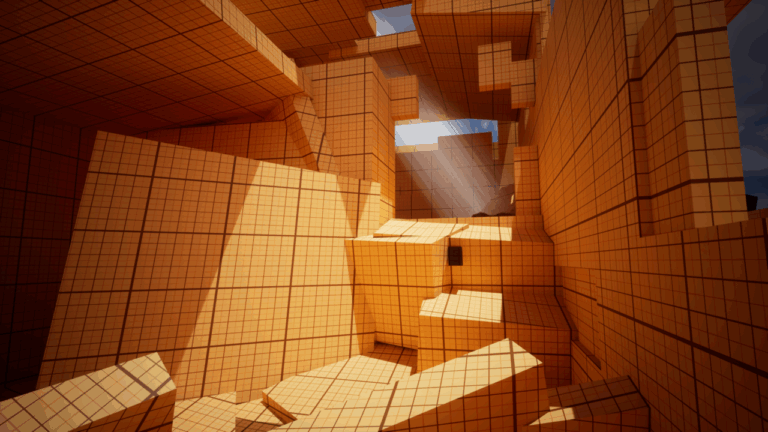
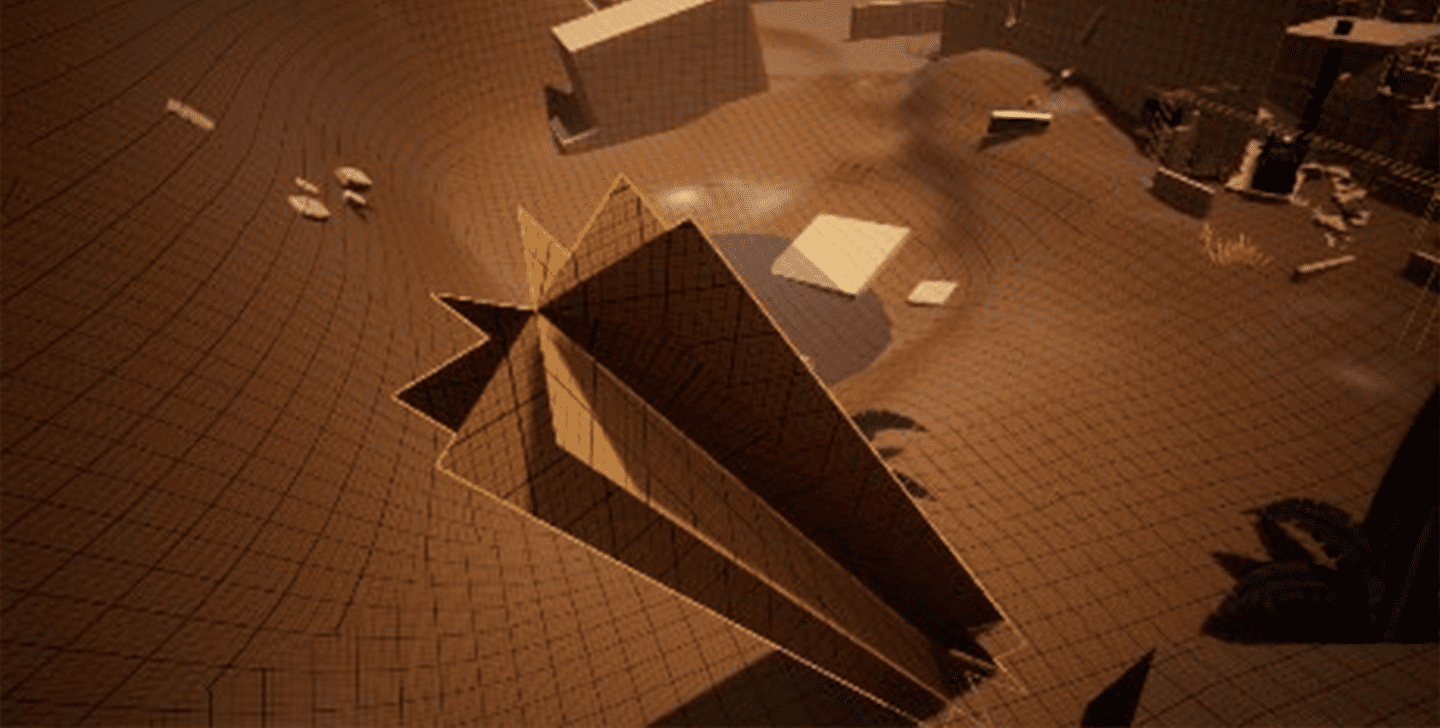
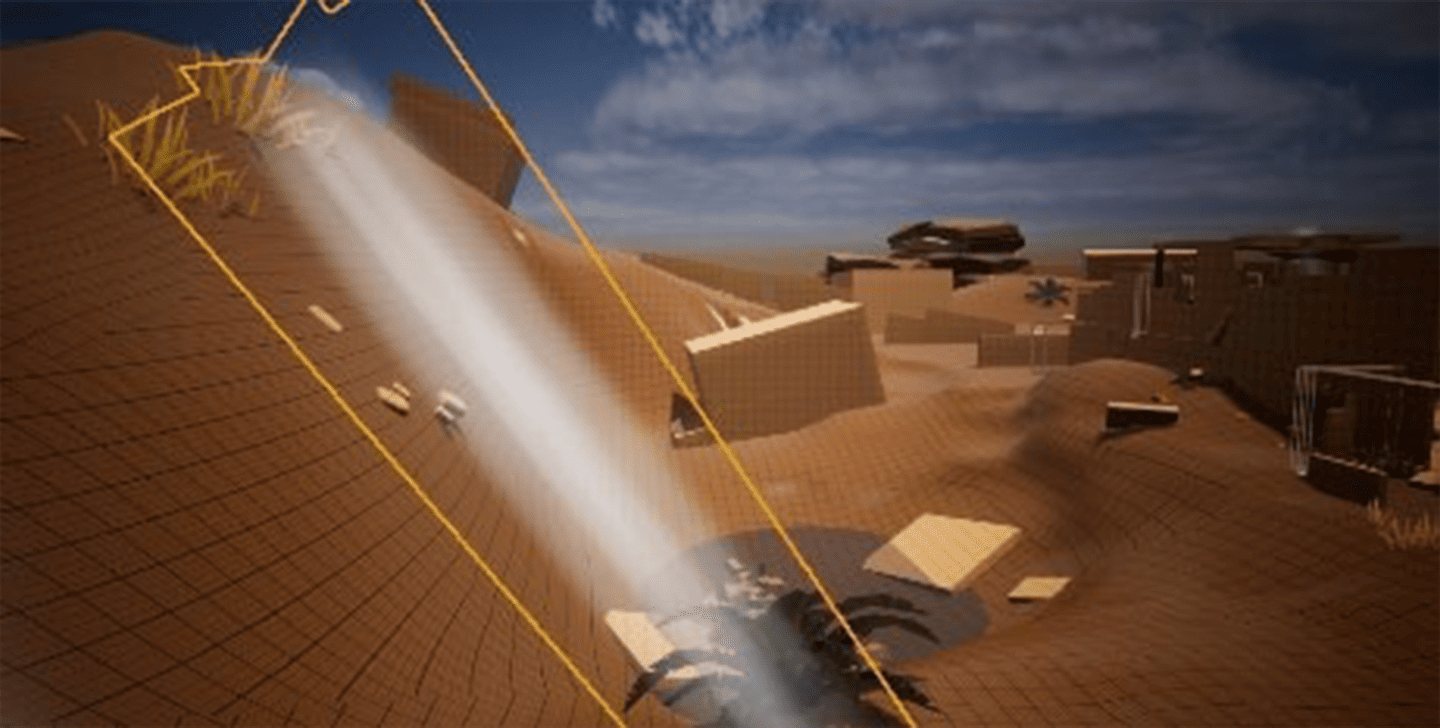
*A model of the three intersecting planes used to realise the light beam. *The effect after the model applied the light material.
Leading lines:
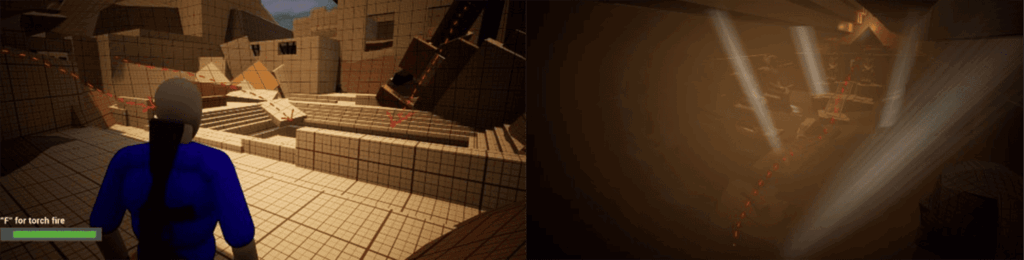
Wooden planks and the building structures are utilised to create practical lines within the level. Both of these level elements are used as leading lines to direct the player’s gaze towards focal points set in the level, such as the destination that needs to be reached, the exit from the current area, climbing points, and the pyramid’s peak that the player needs to see at end of the level.
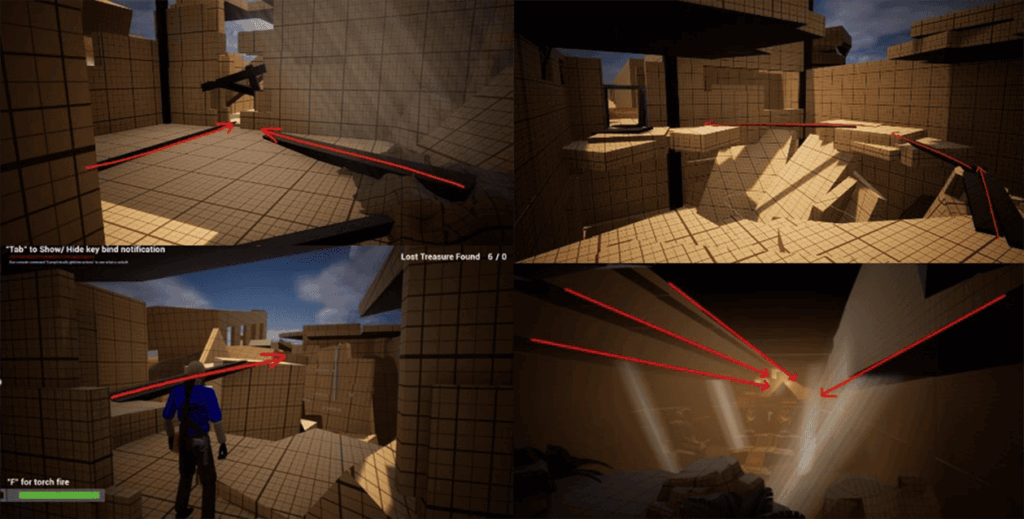
The ruins in the level create the virtual lines forming the leading lines. They guide the player’s gaze toward the entrance to the underground kingdom and point toward the pyramid’s peak as an auxiliary leading line at the end of the level.
Negative Space:
Holes:
Holes are created by building collapses and door frames. For openings that players might overlook, I used objects like wood with well-defined edges as signifiers around the holes to help players locate the exits by leveraging human sensitivity to lines.

*Holes created by building collapse *The hole is highlighted by a line formed by wood plank *Door frames
Framing:
In the starting area of the level, building collapses create framing to help players view the global landmark I placed in the ground area. To ensure players can observe this landmark accurately, I used the desert behind it to create a leading line pointing to it. At the end of the level, framing is formed by natural caves and a light beam to guide the player’s line of sight toward the top of the pyramid.
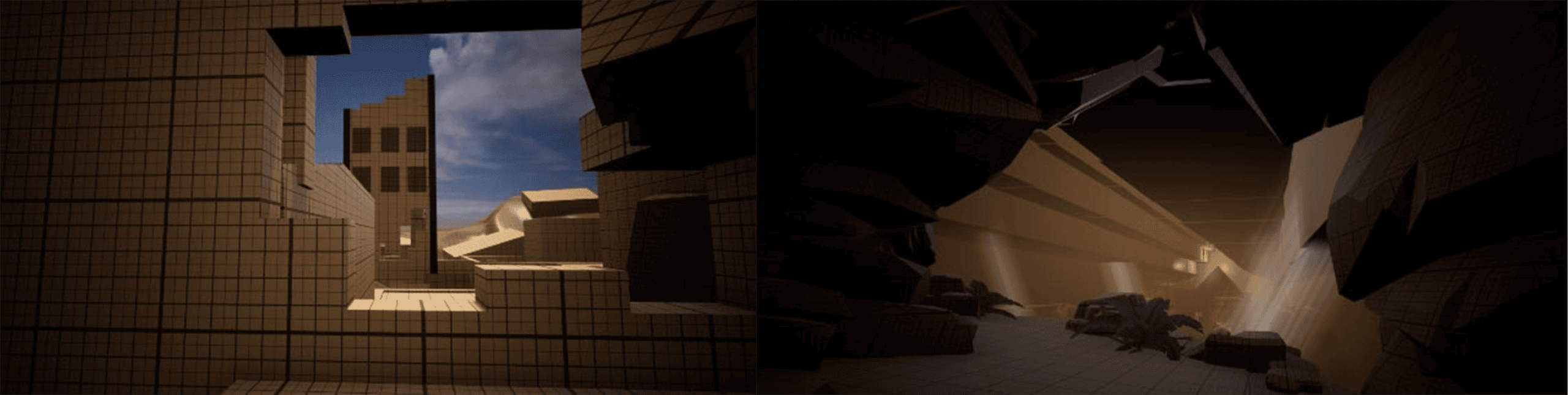
* The landmark highlighted by the framing created by the building collapses
* The framing created by natural caves guides the player’s line of sight toward the top of the pyramid
Affordances:
As navigation cues In this level, the wooden planks placed between cliffs and the tiered terrain that matches player metrics form highly affordance paths designed to attract players.
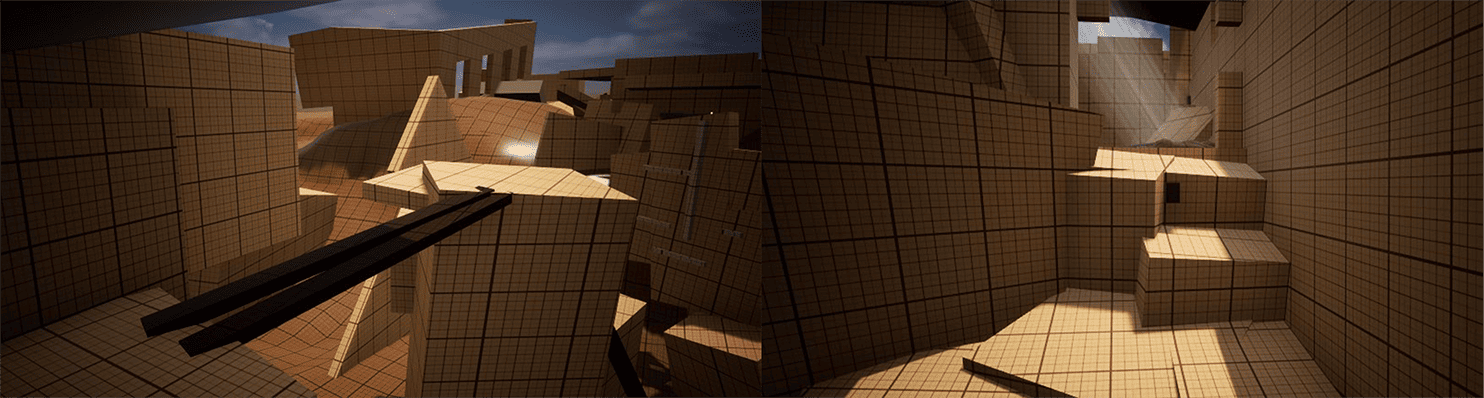
* Wooden planks placed between cliffs as a high affordance path
* Tiered terrain that matches player metrics as a high affordance path
Terrain is also in use to exceeds player metrics to convey non-affordance, preventing interaction with the player. For instance, in the underground area, when the player leaves the passage and enters the puzzle room(D6) the height of the walls prevents the player from returning.
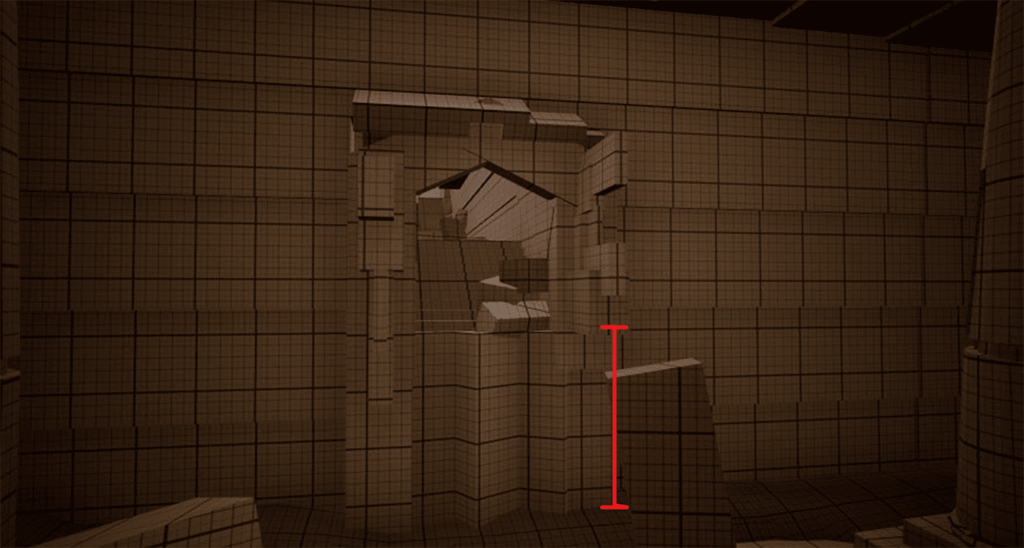
* High walls as non-affordance elements prevent the player from returning back to the passage
Clarify the affordance of level elements:
During the level design testing process, I found that certain areas unintentionally created affordances due to the clean edges of the blocks, leading players astray. For instance, after entering the high tower landmark (D4), players see a floating platform that aligns well with player metrics. The intention behind placing this floating platform was to indicate that it was once a staircase leading to the upper levels of the tower, not to encourage players to climb onto it to progress further.
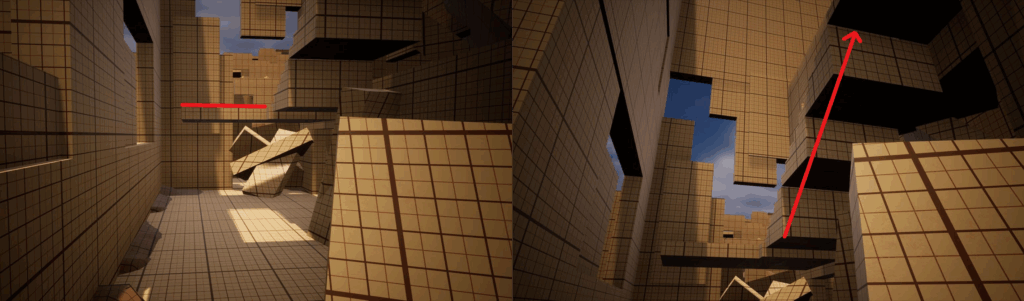
* The unmodified floating platform with staircase leading to the upper levels of the tower on the right side is sending a wrong visual cue to player
However, if players misinterpret the platform’s purpose, they might repeatedly attempt to climb it unsuccessfully, resulting in frustration and confusion as to why a seemingly climbable platform can’t be interacted with, thus damaging the sense of immersion.
To address this issue, I placed blocks haphazardly around and above the platform to create the impression that it has been buried under ruins, eliminating its climbable affordance.
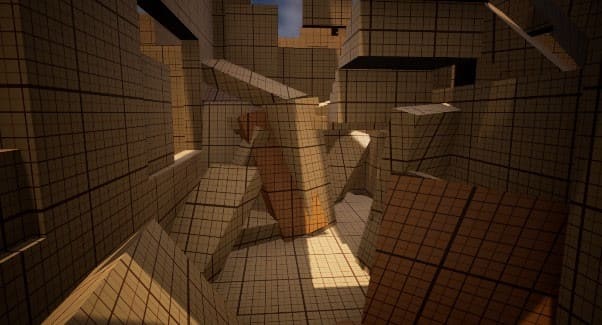
A similar issue arose in the starting area of the level (D2). To create the impression that this ruin was once inhabited, I placed a ladder in the house as decoration. However, the ladder’s affordance and the holes in the roof misled players into thinking they could use the ladder to reach the roof. Thus, in the final version, I removed the ladder and sealed the roof holes to eliminate this misconception.
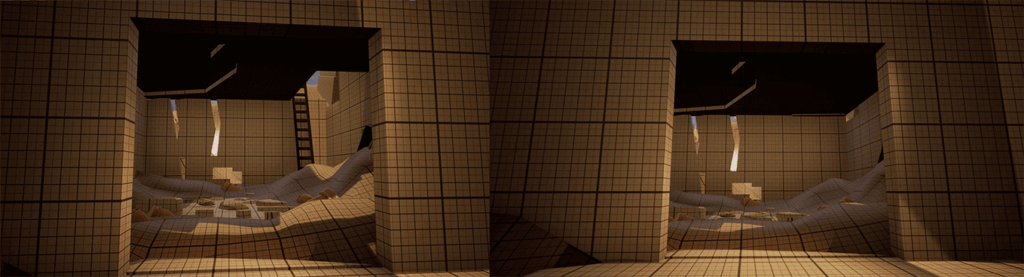
* Previous version of the starting area of the level
* Fixed version of the starting area of the level
Climbing points:
When initially designing the climbing points for this level, I casually placed the climbing points wherever I wanted the player to climb, forming a climbing path without considering the spatial consistency of the game level. This led to walls and wooden frames with climbing paths containing elongated blocks protruding from their surfaces due to these climbing points. Such protrusions on building walls and wooden frames can break the player’s real-world expectations, disrupting spatial consistency in the game.
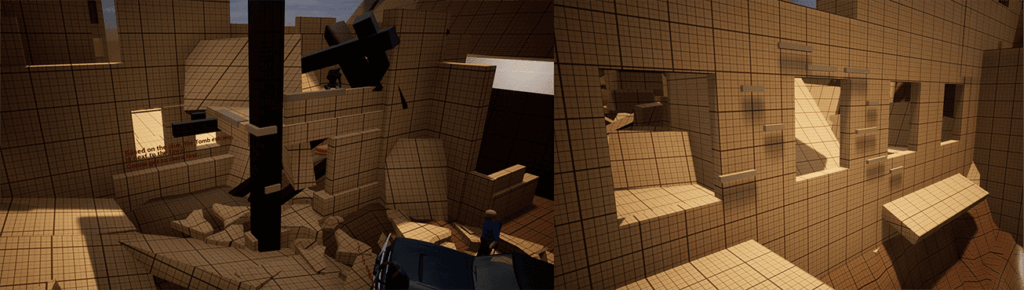
* Climbing paths on wooden frames
* Climbing paths on walls
Therefore, I revised and optimised the climbing paths and points by referencing how Naughty Dog uses colour in Uncharted 4 to ensure spatial consistency without creating unnecessary assets. For example, in the D4 area of the level layout, I redesigned the climbing points near the tower, modifying the original design and adding wooden beams that serve as horizontally traversable climbing points to increase diversity. On the beams that players should climb and reach, I added three small strips to simulate the natural wear and tear from aging wooden beams. By using the perception of the yellow-white colour as a formal and spatial symbol, the player is guided without disrupting spatial consistency.
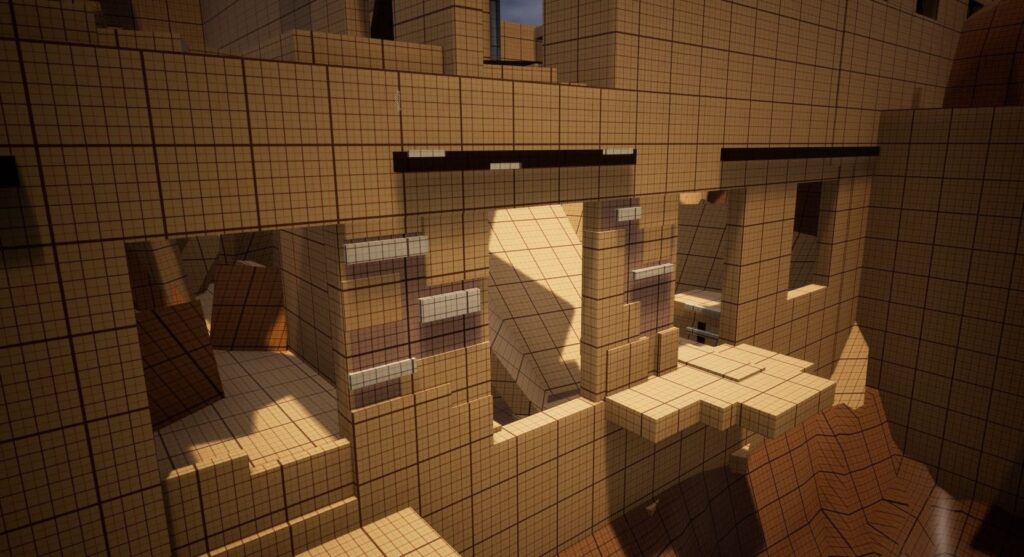
Subsequently, I also modified the climbing path walls in this area to ensure the climbing points appear as if they formed naturally from the walls’ wear and tear. Additionally, I added colour maps that contrast slightly with the wall’s colours below the climbing path, simulating the colour change caused by wall deterioration while also serving as a new navigational cue in the level prototype.
Reflection:
Due to the contextual review and the collective case study I have conducted before designing the level makes it has a solid theoretical background and a practical level design framework before production. As a level designer, I could directly select appropriate navigation cues to guide players through the level, ensuring this level relied exclusively on level-based navigation while overcoming potential issues of cues being overlooked without compromising immersion. This approach effectively guided players along the intended path, providing answers and solutions to the research questions posed.
However, upon reflection, I realised an overlooked issue in the initial design: the significance of navigation cues. Navigation involves both travel and wayfinding. After revisiting this level, I found that despite the cues being well-implemented, the level’s overall size and linear layout limited player exploration and decision-making. Apart from hidden collectables tucked away in corners and the underground kingdom accessible only through observation and puzzles, the rest of the level resembled a narrow corridor where players travelled continuously to reach the endpoint. This level structure rendered the wayfinding aspect meaningless, as players could reach the end even without navigation cues specifically tied to wayfinding.